 +91 72929 29159














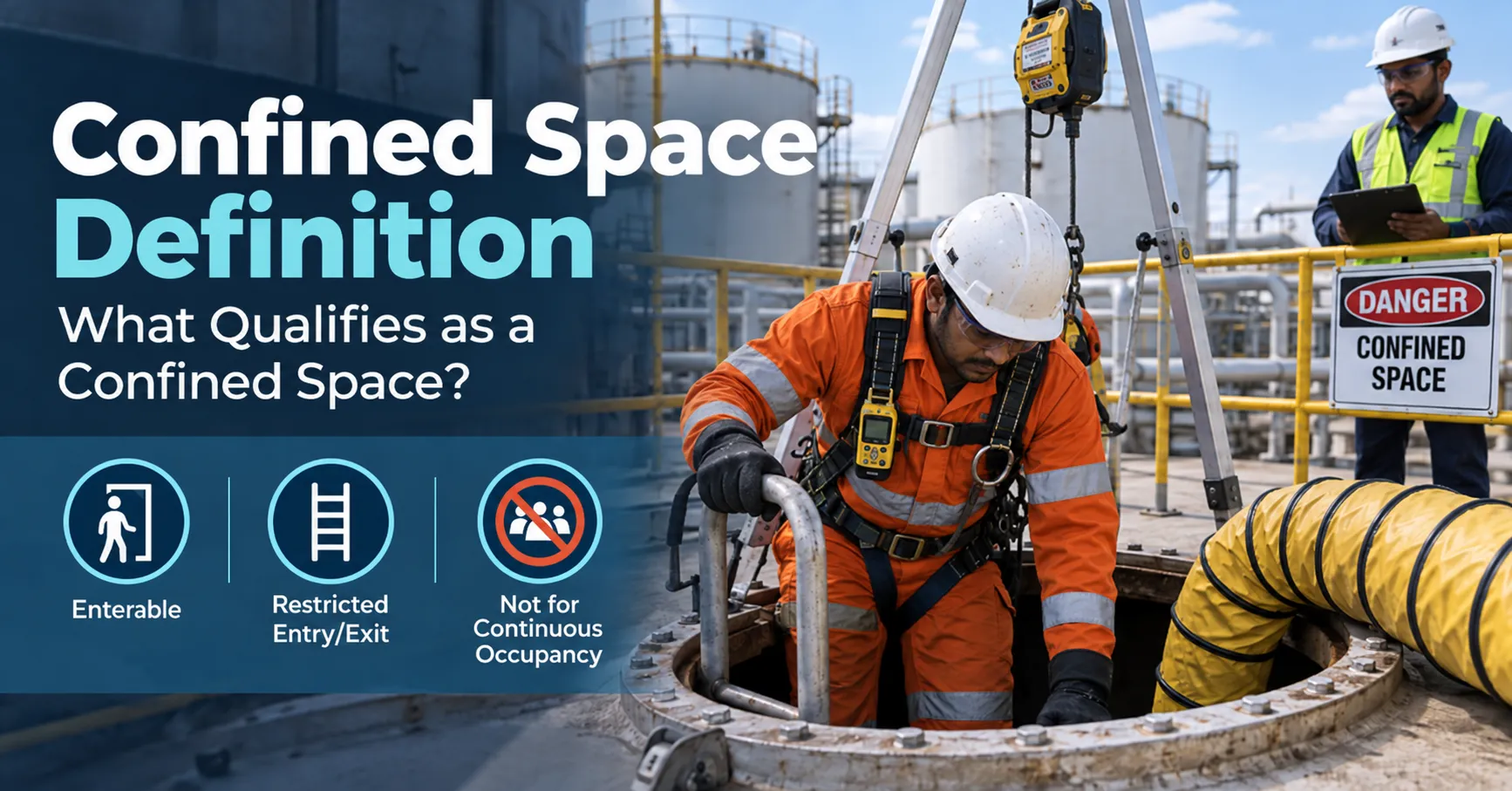
Not every small, enclosed, difficult-to-enter, or hazardous area is automatically a confined space. Classification depends on the space’s configuration, how people enter and exit, and whether it was designed for continuous occupancy. In the United States, OSHA uses a three-part test. Other jurisdictions use their own legal definitions, so employers should check the rules that apply where the work is performed.
What Is a Confined Space?
Under OSHA’s U.S. general-industry rule, a confined space is large enough and configured for an employee to bodily enter and perform assigned work, has limited or restricted means of entry or exit, and is not designed for continuous employee occupancy. A space must meet all three characteristics to fit this definition.
For U.S. general industry, the definition appears in 29 CFR 1910.146. That section does not apply to construction, agriculture, or shipyard employment. Construction work is addressed separately in 29 CFR 1926 Subpart AA, with the confined-space definition in §1926.1202.
What Are the Three Criteria That Define a Confined Space?
1. Large Enough for a Worker to Enter
The first question is whether the space is large enough and configured so an employee can bodily enter it and perform assigned work.
This concerns the physical possibility of entry, not whether the area feels spacious. A tank or pit can be large enough for a person to enter while still being restrictive.
OSHA separately defines entry for permit spaces as occurring when any part of the entrant’s body breaks the plane of an opening. That explains when entry has occurred; the first classification criterion asks whether the space itself is large enough for bodily entry.
2. Limited or Restricted Means of Entry or Exit
The second criterion asks whether getting into or out of the space is limited or restricted.
- tank hatches
- manholes
- ladder-access pits
- narrow openings
- elevated thresholds
- arrangements that make evacuation difficult
OSHA lists tanks, vessels, silos, storage bins, hoppers, vaults, and pits as examples of spaces that may have restricted entry. A door does not automatically make access unrestricted. The overall configuration and ability to enter or leave the space must be considered.
In a 2019 OSHA interpretation involving large industrial furnaces, OSHA explained that an elevated hearth, a special access aid, and remotely actuated doors could make entry or egress restricted.
3. Not Designed for Continuous Employee Occupancy
The third criterion concerns the intended design of the space. Many tanks, silos, vessels, ducts, pits, and utility spaces are designed to contain materials, house equipment, or support a process rather than serve as routinely occupied workplaces.
The question is not simply, “How long will the worker be inside?” It is whether the space was designed for continuous employee occupancy.
Key takeaway: Under OSHA’s general-industry definition, all three characteristics must be present.
What Qualifies as a Confined Space? Use This Simple Test
Ask three questions:
- Can an employee bodily enter the space and perform assigned work?
- Does the space have limited or restricted means of entry or exit?
- Was the space not designed for continuous employee occupancy?
If the answer is yes to all three, the area meets OSHA’s basic confined-space definition. That does not automatically make it permit-required. A separate hazard evaluation is needed to determine whether permit-space criteria are present.
Common Examples of Confined Spaces
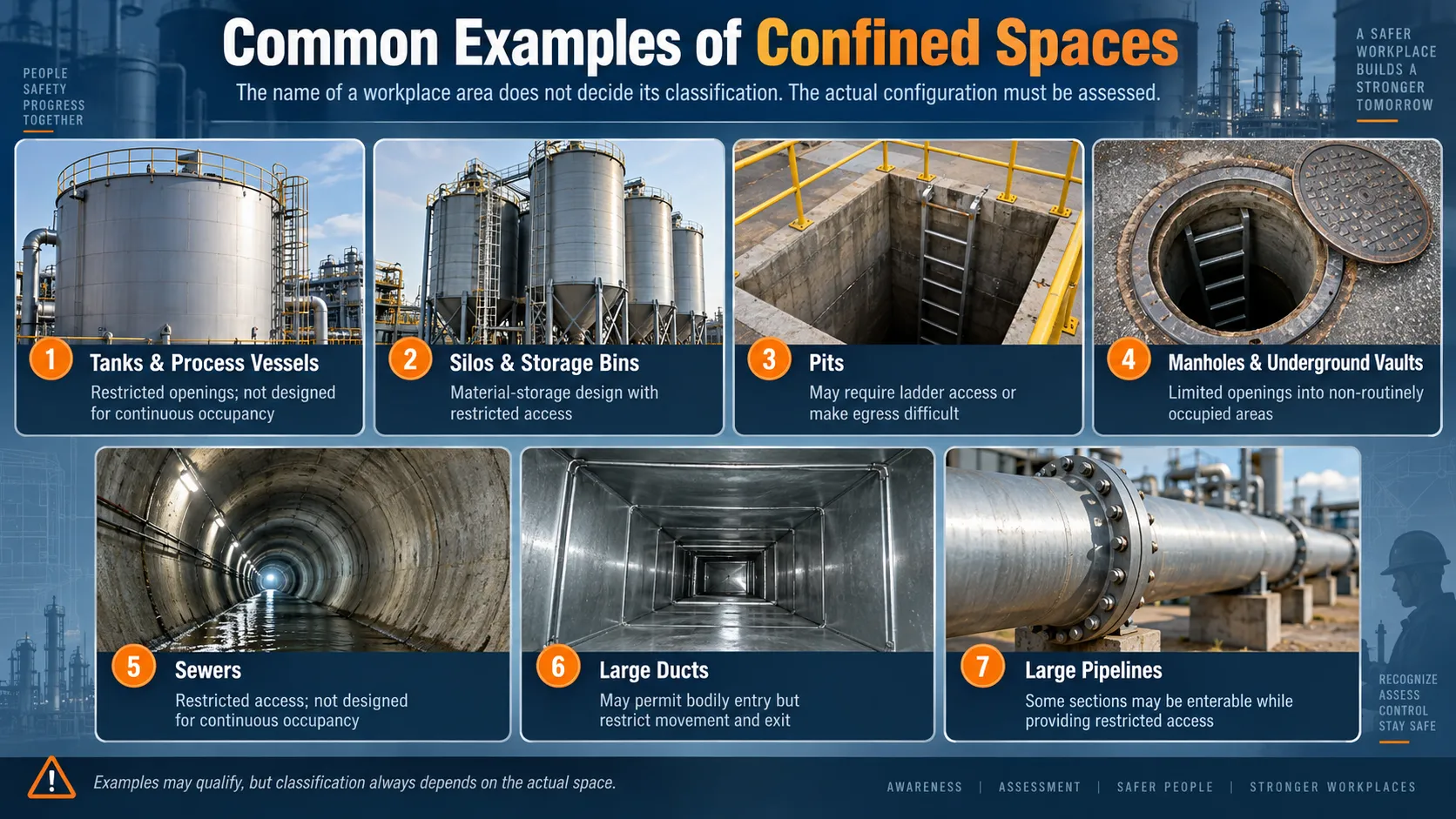
The name of a workplace area does not decide its classification. The actual configuration must be assessed.
| Space | Why It May Qualify |
| Tanks and process vessels | Restricted openings and not designed for continuous occupancy |
| Silos and storage bins | Material-storage design with restricted access |
| Pits | May require ladder access or make egress difficult |
| Manholes and underground vaults | Limited openings into non-routinely occupied areas |
| Sewers | Restricted access and not designed for continuous occupancy |
| Large ducts | May permit bodily entry but restrict movement and exit |
| Large pipelines | Some sections may be enterable while providing restricted access |
OSHA’s construction standard also identifies many of these locations as places where confined spaces may occur. These examples may qualify; classification still depends on the actual space.
When Confined-Space Classification Is Not Obvious
A large furnace can still qualify. In a 2019 interpretation, OSHA explained that a large industrial furnace could have restricted entry or exit where workers had to step over an elevated hearth, use an access stool, or could not freely walk out because doors were remotely actuated.
A normal enclosed room may not qualify. If it is designed for continuous occupancy and has normal entry and exit, walls alone do not satisfy OSHA’s three-part definition.
Construction excavations require separate scope analysis. OSHA’s construction confined-space requirements are in 29 CFR 1926 Subpart AA, but §1926.1201 excludes construction work regulated by Subpart P, Excavations, from Subpart AA. This is a regulatory-scope exception, not a reason to ignore excavation hazards.
What Is Not Necessarily a Confined Space?
A small room is not automatically a confined space. Neither is every enclosed area, hazardous location, pit, or space with one opening.
Apply the three criteria together. A hazardous area with normal access may fail the entry-or-exit criterion. A room intended for continuous occupancy may fail the third. Likewise, a space does not have to look extremely small to qualify. Focus on configuration, access, and intended occupancy rather than appearance alone.
For broader international context, CCOHS notes that confined spaces are not necessarily small, although Canadian definitions and requirements vary by jurisdiction.
Confined Space vs Permit-Required Confined Space
The terms are related, but they are not interchangeable.
| Confined Space | Permit-Required Confined Space |
| Meets the three basic confined-space criteria | First meets the confined-space definition |
| Focuses on configuration, access and intended occupancy | Has one or more additional serious hazard characteristics |
| Does not automatically require a permit | Is subject to permit-space requirements where the applicable OSHA standard applies |
Under OSHA, a permit-required confined space has at least one of these characteristics: it contains or may contain a hazardous atmosphere; contains material that could engulf an entrant; has an internal configuration that could trap or asphyxiate an entrant; or contains another recognised serious safety or health hazard.
First determine whether the area is a confined space. Then determine whether permit-required hazards are present.
How to Determine Whether a Workplace Area Is a Confined Space
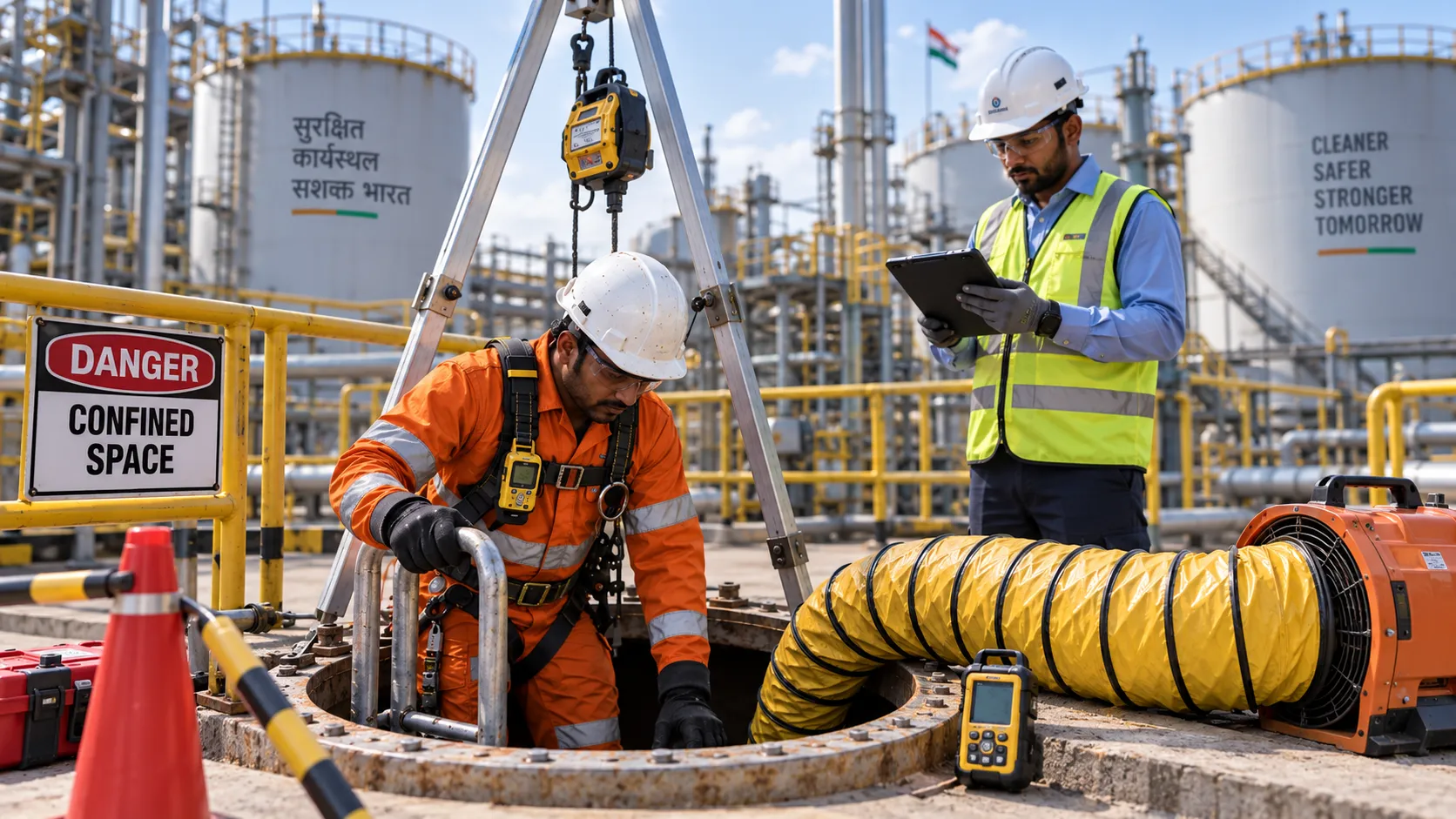
Start with the space itself, not the hazard list. Confirm whether a worker can bodily enter, examine the actual means of entry and exit, and determine whether the area was designed for continuous employee occupancy. If all three criteria are present, classify the space under the applicable rule and then evaluate whether additional hazards make it permit-required. Before entry, teams can use a confined space safety checklist to verify that key precautions and controls have been considered.
Outside the United States, use the definition in the applicable jurisdiction. The UK, for example, uses a different legal approach based on enclosure together with reasonably foreseeable specified risks. See HSE guidance on confined spaces.
Conclusion
A confined space is defined by its configuration, access, and intended occupancy, not simply by whether it looks small, enclosed, or dangerous. Under OSHA’s U.S. framework, classify the space using the three basic criteria, then assess whether additional hazards make it permit-required. Understanding why confined space safety training matters can also help organisations prepare workers to recognise these environments and understand their responsibilities before entry.
Correct classification provides the foundation for appropriate controls, procedures, and worker preparedness. Where employees are required to work in or around these areas, appropriate confined space safety training can help strengthen awareness, competency, and safe-work practices.
Authoritative Source Recommendations
- OSHA 29 CFR 1910.146 – Permit-Required Confined Spaces – Primary source for the U.S. general-industry definition, entry terminology, restricted entry/exit examples and permit-required criteria.
- OSHA 29 CFR 1926 Subpart AA – Confined Spaces in Construction – Correct construction-standard reference.
- OSHA §1926.1202 – Definitions – Use specifically for the construction confined-space definition.
- OSHA §1926.1201 – Scope – Use for scope exceptions, including work regulated by Subpart P, Excavations.
- OSHA 2019 Interpretation – Large Industrial Furnaces – Useful information-gain example showing how restricted entry or egress can be interpreted in a real configuration.
- UK HSE – Introduction to Working in Confined Spaces – Use only for international-jurisdiction context; do not merge the UK definition with OSHA’s.
- CCOHS – Confined Space Introduction – Useful for broader international context and the point that confined spaces are not necessarily small.