 +91 72929 29159














Safety training can explain a hazard, but the bigger question is whether workers will know what to do when they actually face it.
That is where the comparison between VR training vs traditional training becomes important. Traditional safety training is effective for explaining procedures, regulations and core safety concepts through classroom sessions, demonstrations and discussions. VR safety training, on the other hand, allows workers to experience realistic workplace scenarios and practise decisions in a controlled environment without being exposed to actual danger.
For many industrial workplaces, the best approach is not choosing one over the other, but understanding where each method adds the most value.
What Is VR Safety Training?
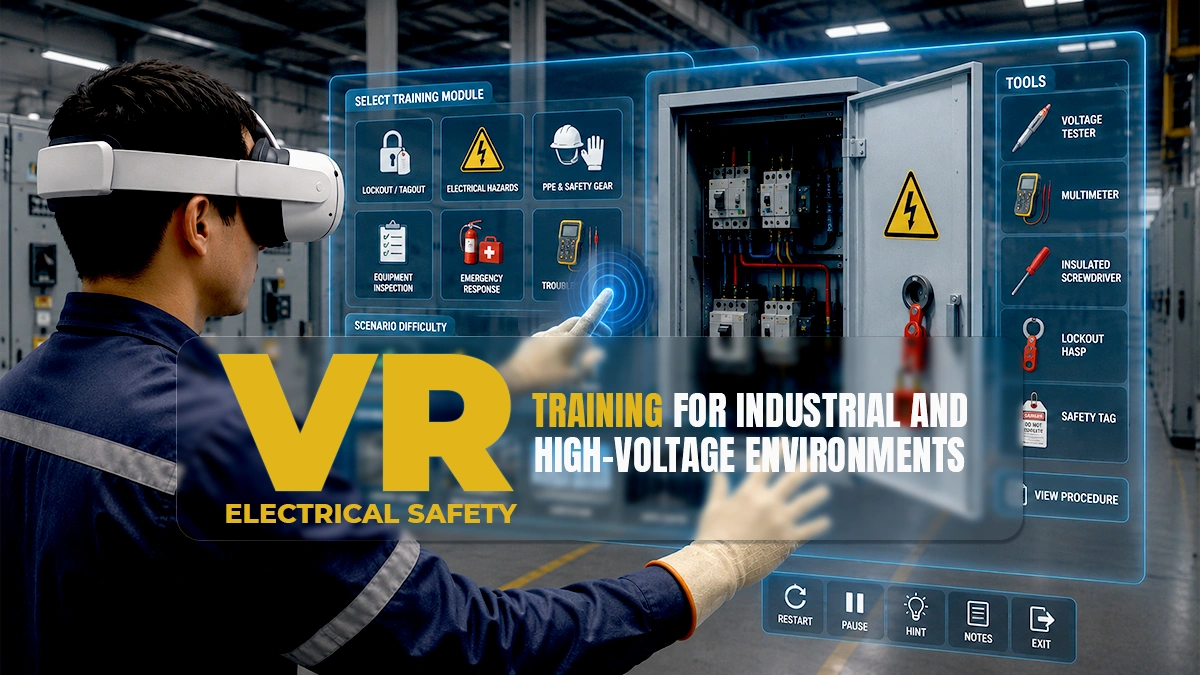
VR safety training uses virtual reality technology to place workers inside realistic, computer-generated workplace environments where they can practise safety procedures without facing real-world danger.
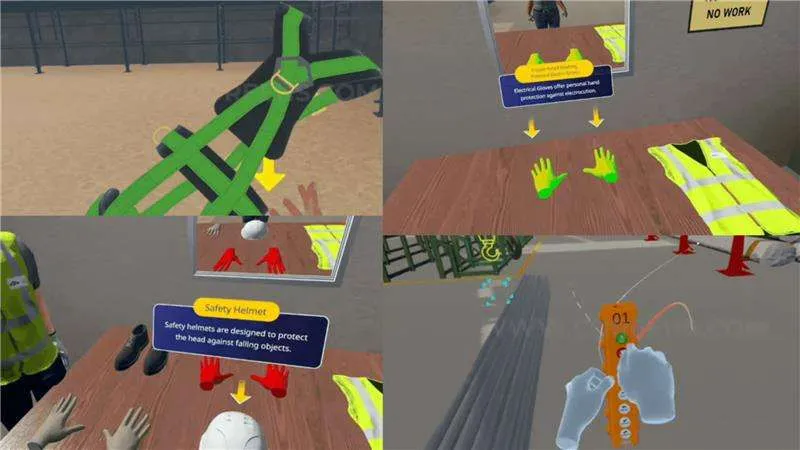
Unlike passive learning methods, virtual reality safety training allows employees to interact with hazards, make decisions and experience the consequences of those decisions in a controlled setting. Workers can practise tasks such as working at height, confined-space entry, electrical safety, fire response or hazard identification before performing them on an actual site.
This type of VR health and safety training is especially useful for high-risk activities where practical exposure may be difficult, costly or unsafe to recreate.
By combining realistic scenarios with active participation, immersive safety training helps turn safety knowledge into practical workplace experience.
What Is Traditional Safety Training?
Traditional safety training usually relies on instructor-led methods such as classroom sessions, presentations, videos, demonstrations, toolbox talks, SOP reviews and written assessments.
These methods are especially useful for explaining regulations, company procedures, safety rules and theoretical concepts. They also allow workers to ask questions, discuss real workplace situations and learn directly from experienced trainers or supervisors.
For many organisations, traditional training remains an important part of workplace safety training because it is practical for awareness programs, compliance topics and group learning.
However, traditional methods may offer limited hands-on exposure when the subject involves complex or high-risk scenarios that cannot be recreated safely in a classroom environment.
VR Training vs Traditional Training: Key Differences
The main difference between VR training vs traditional training is how workers experience the learning process. Traditional training mainly focuses on instruction, discussion and demonstration, while VR safety training allows workers to actively practise tasks inside realistic simulated environments.
| Factor | VR Safety Training | Traditional Safety Training |
| Learning style | Interactive and experiential | Instructor-led or classroom-based |
| Hazard exposure | Safely simulated | Mostly explained or demonstrated |
| Participation | Active | Often more passive |
| High-risk practice | Can be simulated safely | Difficult to recreate in some cases |
| Repeatability | Scenarios can be repeated easily | May require trainers or facilities |
| Feedback | Immediate and scenario-based | Mainly trainer-based |
| Best suited for | Practical and high-risk situations | Theory, compliance and discussion |
Neither method is suitable for every situation. The right choice depends on the training objective, level of risk and how much practical experience workers need.
What Are the Main Benefits of VR Safety Training?

The main VR training benefits come from giving workers a chance to practise safety decisions instead of only learning them in theory.
1. Learn by Doing
VR places workers inside realistic scenarios where they must observe, decide and respond. This active learning approach can make safety procedures easier to understand and apply.
What Research Shows: A 2025 systematic review and meta-analysis of virtual reality in construction safety training found that VR produced significantly better outcomes than traditional methods for measures including worker behaviour, skills and training experience.
2. Practise High-Risk Tasks Without Real Exposure
Activities such as work at height, confined-space entry, electrical work or emergency response can be difficult to recreate safely. Industrial VR training allows these situations to be simulated without exposing workers to the actual hazard.
3. Improve Hazard Recognition
Workers can be asked to identify unsafe acts, unsafe conditions and changing risks inside a virtual workplace. This makes immersive safety training useful for building stronger hazard awareness.
4. Repeat Training and Correct Mistakes
A scenario can be repeated until the learner understands the correct response. Mistakes become learning opportunities without causing injury, equipment damage or operational disruption.
5. Create More Consistent Training
The same VR scenario can be delivered to different workers, shifts or locations, helping organisations provide a more standardised training experience.
These VR safety training benefits are most valuable when practical decision-making and realistic hazard exposure are important parts of the learning objective.
When Is Traditional Safety Training the Better Choice?
Traditional safety training is still highly effective when the goal is to explain rules, procedures, regulations or other knowledge-based topics. Classroom sessions also give workers the opportunity to ask questions, discuss site-specific concerns and learn directly from trainers or supervisors.
It can be the better choice for:
- safety inductions and awareness sessions
- policy and compliance training
- toolbox talks
- SOP and procedure reviews
- group discussions and trainer-led Q&A
- simple topics that do not require realistic simulation
VR should not be viewed as a replacement for every form of workplace safety training. In many cases, traditional methods provide the foundation, while immersive training can add practical experience where it is most useful.

Where Does Industrial VR Training Add the Most Value?
Industrial VR training is most valuable when workers need practical experience with hazards that are difficult, dangerous or disruptive to recreate in real life.
Common applications include:
- work at height
- confined-space entry
- electrical and substation safety
- LOTO procedures
- fire and emergency response
- scaffolding safety
- hazard identification
Practical Safety Insight: In high-risk training, knowing the correct procedure and applying it under realistic conditions are two different learning challenges. VR can help reveal where learners hesitate, miss hazards or follow the wrong sequence before they perform the task in the field.
In these situations, VR health and safety training can place workers inside realistic scenarios where they must identify hazards, follow the correct sequence of actions and respond to changing conditions.
This makes virtual training especially useful for high-risk industries where mistakes during real-world practice could lead to serious consequences.
For organisations already using industrial safety training, VR can add another layer of practical learning by allowing employees to experience challenging situations before they face them on the actual job.
Should VR Replace Traditional Safety Training?

Not completely.
VR safety training is highly effective for realistic practice, hazard recognition and high-risk scenarios, but traditional training still plays an important role in explaining concepts, regulations and procedures.
For many workplaces, the strongest approach is a blended training model:
- Use classroom or instructor-led training to explain the concepts.
- Demonstrate the correct procedure.
- Use VR to practise the task or hazard scenario.
- Assess whether the worker can apply the learning correctly.
The right mix depends on the hazard, learning objective, workforce and level of practical experience required.
Instead of asking whether VR should replace traditional training, organisations should focus on where each method can improve learning and reduce gaps between knowledge and real-world performance.
VR or Traditional Safety Training: Which Should You Choose?
The right choice depends on what workers need to learn.
Traditional safety training is effective for theory, procedures, compliance topics and instructor interaction. VR safety training adds more value when workers need realistic practice, hazard recognition, and decision-making experience in high-risk situations.
For many industrial workplaces, the strongest approach is not choosing one method over the other but combining both where appropriate. A blended approach can help workers understand the rules, practise the task, and apply what they have learned before facing similar situations on the job.
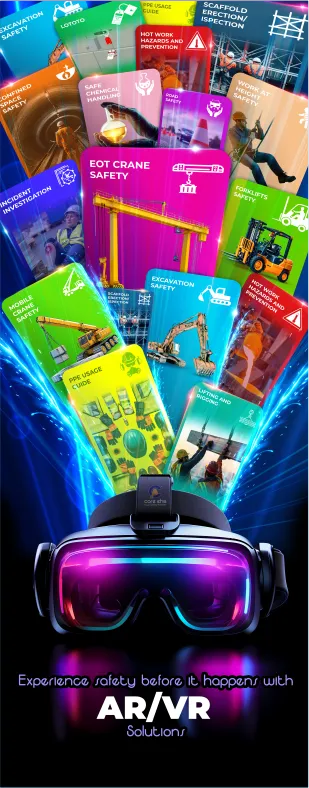
Explore CORE-EHS VR Safety Training Solutions for immersive training designed around real industrial hazards and high-risk activities.
Reviewed for technical accuracy by:
Arun Kumar, Senior HSE Subject Matter Expert, CORE-EHS