 +91 72929 29159














A work at height permit is a critical safety control used to prevent falls and serious injuries in industries like construction, oil & gas, and manufacturing. According to the International Labour Organization (ILO), falls from height account for over 30% of fatal occupational injuries worldwide, making it one of the most preventable causes of workplace death.
Without proper planning and authorisation, even routine tasks at elevated levels can quickly become high-risk. In India, the Building and Other Construction Workers (BOCW) Act 1996 and the Factories Act 1948 both mandate specific controls for height work. Globally, frameworks like OSHA 1926.501 (US) and the UK Work at Height Regulations 2005 define when a formal permit is required.
A structured work at height permit system ensures hazards are identified, safety measures are in place, and work is carried out under proper supervision.
In this guide, you will learn exactly when a permit is required, what it must contain, how the approval process works, and how a digital permit-to-work system improves safety and compliance.
What is a Work at Height Permit?
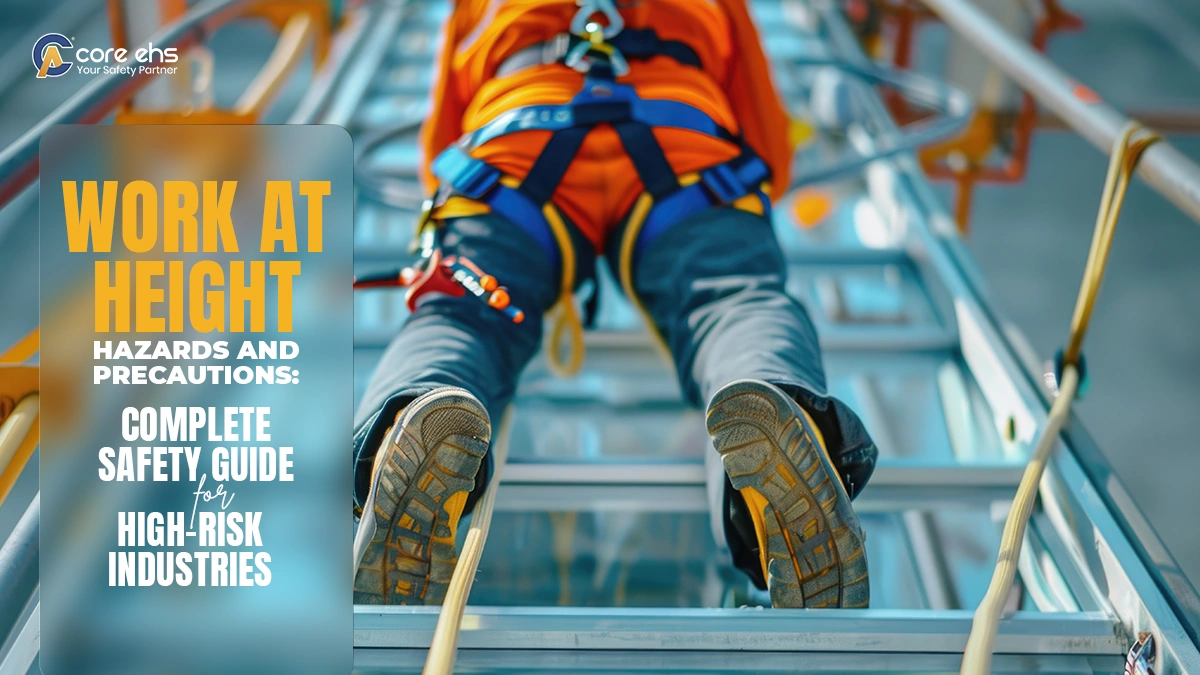
A work at height permit is a formal written authorisation issued before performing any task where a person could fall a distance liable to cause personal injury. It ensures hazards are identified, control measures are implemented, and work is carried out safely under proper supervision.
Under the UK Work at Height Regulations 2005, “work at height” covers any situation, above ground, at ground level near an edge, or below ground level near an opening, where a fall could cause injury. This applies regardless of the height or duration of the task.
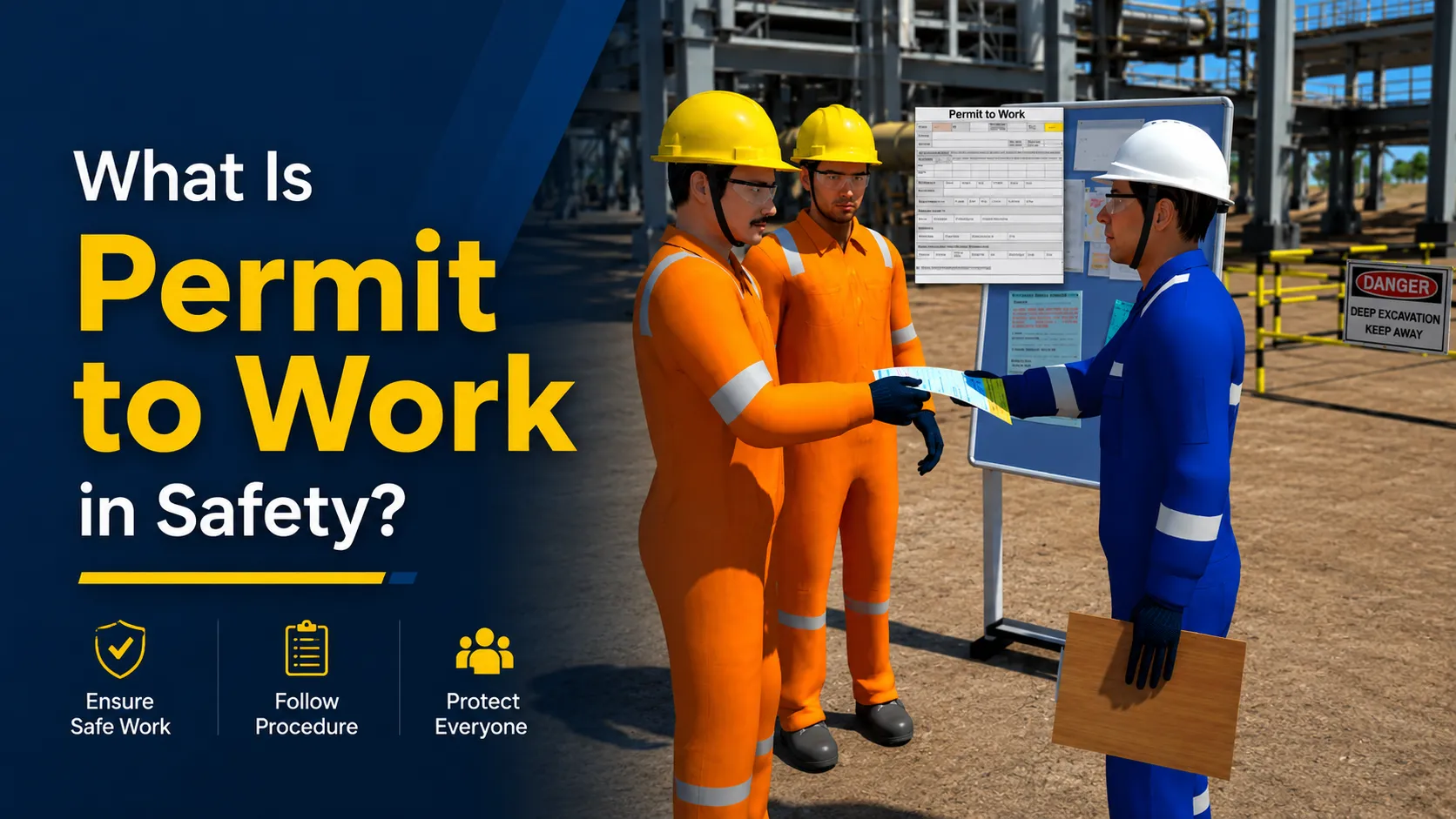
In a structured permit to work (PTW) system, the height work permit acts as a control document that defines the job scope, identified risks, required safety precautions, responsible personnel, and authorisation chain before any work begins.
When is a Work at Height Permit Required?
A work at height permit is required whenever there is a risk of falling and that fall could cause personal injury. The trigger height varies by jurisdiction:
- India (BOCW Act 1996): Any work at height above 3 metres on construction sites requires documented safety controls and competent supervision.
- United States (OSHA 1926.501): Fall protection is mandatory at 1.8 metres (6 feet) in construction, and at 1.2 metres (4 feet) in general industry under OSHA 1910.28.
- United Kingdom (WAH Regulations 2005): A permit is required at any height where a fall could cause injury; there is no minimum height threshold.
- GCC / Middle East: Most operators apply a 1.8-metre trigger or adopt a “height-with-fall-potential” approach regardless of measurement.
The permit applies to both routine and non-routine tasks wherever these fall-risk conditions are present.
A permit is typically required in the following situations:
– Working on scaffolding or falsework above defined safe height limits
– Roof inspection, repair, or maintenance activities, including fragile roof surfaces
– Tower climbing in the telecom, power, and utility sectors
– Steel structure erection and ironwork in construction projects
– Maintenance work on tanks, silos, reactors, or elevated process platforms
– Using mobile elevated work platforms (MEWPs) or scissor lifts
– Rope access and abseiling operations for inspection or maintenance
– Working near unprotected edges, openings, or floor voids
– Any task requiring active fall protection systems such as harnesses, lanyards, or lifelines
Real Scenario:
Real-World Context: In a 2023 incident review by India’s Directorate General Factory Advice Service (DGFAS), a majority of reported fall-from-height incidents at industrial sites involved either a missing permit, an incomplete risk assessment, or unchecked anchor points before the job began. A formal work at height permit directly addresses all three failure points.
- Ensure every high-risk activity at height is properly assessed and authorised before work begins.
Types of Work That Require a Work at Height Permit
A work at height permit applies across a wide range of industrial and construction activities. The common factor in every case is the presence of a fall risk that could cause injury. The table below outlines the main activity categories, typical examples, and associated risks.
| Activity Type | Examples | Risk Involved |
| Equipment Work | Installation and maintenance of machinery at height | Fall from elevated platforms |
| Construction Activities | Structural erection, repair, and scaffolding work | Unstable surfaces, edge falls |
| Cleaning & Painting | Building facade cleaning, coating, and painting | Slippery surfaces, poor footing |
| Inspection Tasks | Audits, surveys, and structural inspections | Limited access, unsafe positioning |
| Utility & Outdoor Work | Tree trimming, electrical line work | Height exposure, environmental risks |
Each of these activities presents unique and dynamic risks. A work at height permit ensures that every risk is identified, controlled, and authorised before a single worker steps off ground level.
Why a Work at Height Permit is Critical for Safety and Compliance
Working at height is consistently one of the leading causes of fatal and serious injuries in industrial workplaces. The UK Health and Safety Executive (HSE) reports that falls from height remain the single biggest cause of workplace fatalities in the construction sector. In the United States, OSHA identifies falls as the leading cause of construction worker deaths each year.
A properly implemented work at height permit directly reduces this risk by forcing a structured review of every fall hazard before work begins.
Real Insight:
Industry Insight: An analysis of fall-from-height incident reports consistently identifies three root causes:
(1) no formal permit was issued
(2) the permit was issued but not followed on-site, or
(3) the risk assessment did not account for changing weather or site conditions. A digital permit to work system addresses all three by enforcing checklists, requiring supervisor sign-off, and logging real-time conditions.
Hierarchy of Controls for Work at Height
Before issuing a work at height permit, safety planning must follow the recognised hierarchy of controls. This is a regulatory requirement under the UK Work at Height Regulations 2005 and is consistent with OSHA’s guidance on fall prevention. Controls must be applied in this order:
1. Avoid the work at height entirely
If the task can be completed safely from ground level — for example, using extension tools, remote inspection cameras, or drones — this is always the preferred option.
2. Prevent the fall (collective protection)
Where height work cannot be avoided, install measures that protect all workers without individual action. This includes edge protection, guardrails, toe boards, safety nets, and working platforms with full enclosure.
3. Minimise the consequences (personal fall protection)
Only when collective protection is not practicable should personal fall protection be used — including full-body harnesses, energy-absorbing lanyards, fall-arrest systems, and inertia reels anchored to certified anchor points.
4. Rescue and emergency preparedness
Every work at height permit must include a pre-planned rescue procedure. A harness without a rescue plan is not a complete fall protection system, suspension trauma (also called harness hang syndrome) can cause unconsciousness within minutes of a fall-arrest event.
Using this hierarchy ensures the permit process is not just a formality but a genuine engineering-led decision on the safest way to complete the task.
Key Components of a Work at Height Permit
A well-designed work at height permit must capture all details needed to plan, control, and close out the job safely. While permit formats vary by site and jurisdiction, the following components are considered standard across OSHA, HSE, and international EHS frameworks.
Every permit should include:
1. Define the work scope:
Clearly identify the task, exact location, estimated duration, and number of workers involved. Vague scope is the most common permit rejection reason.
2. Conduct a risk assessment:
Identify all hazards — fall risks, unstable surfaces, weather conditions, overhead hazards, and dropped-object risks. The risk assessment must be specific to the task location and date.
3. Plan and select safety controls:
Apply the hierarchy of controls — first avoid, then prevent, then minimise. Document required controls: guardrails, lifelines, exclusion zones, and required PPE.
4. Inspect all equipment:
Check scaffolding, ladders, harnesses, anchor points, and hand tools before use. Equipment must be within its inspection validity date. Failed equipment must be tagged out immediately.
5. Issue and authorise the permit:
A competent and authorised person reviews the completed permit, confirms all controls are in place, and signs the permit before work begins. Self-issue is never acceptable.
6. Brief the team and execute under supervision:
Conduct a toolbox talk with all workers before starting. A designated supervisor must be on-site throughout the duration of the permitted work.
7. Monitor site conditions continuously:
Continuously reassess conditions during the job — weather, structural changes, or new hazards. The permit can be suspended at any time if conditions deteriorate.
8. Close the permit:
After completion, verify the work area is safe, all equipment is removed, and the area is handed back. The permit issuer formally cancels the permit and files the record.
Including these details ensures the job is planned, controlled, and executed with full safety oversight, reducing risks and improving compliance across operations.
Step-by-Step Work at Height Safety Permit Process
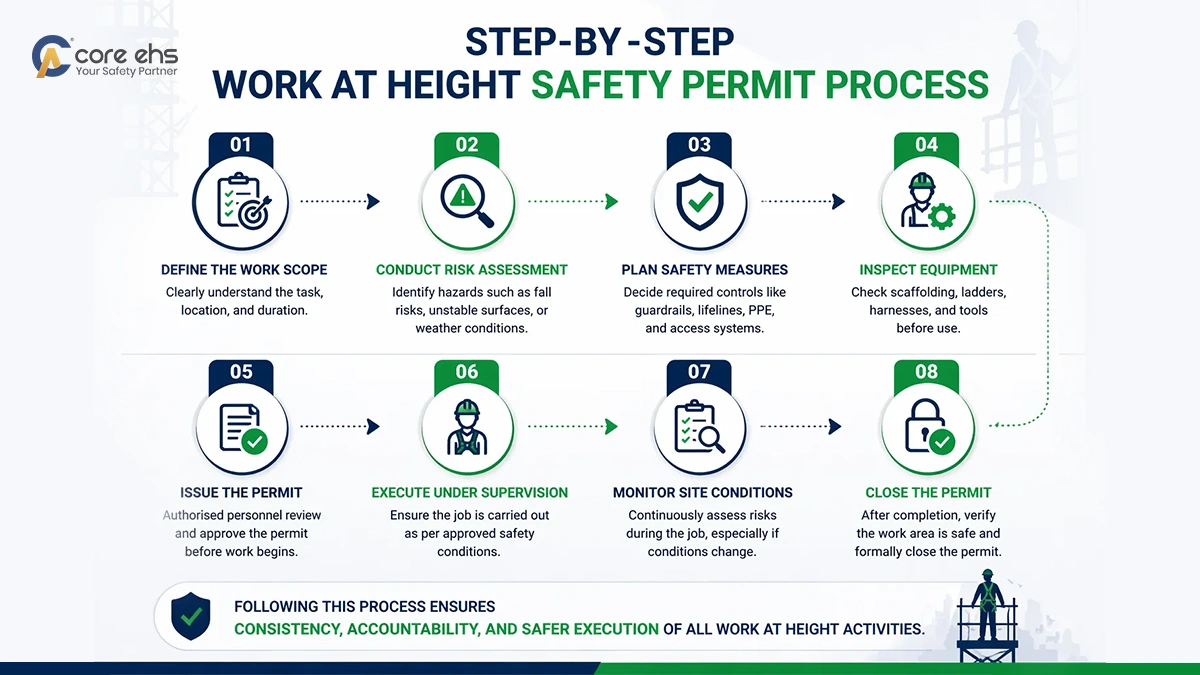
A structured Work at Height Approval process ensures that every task is properly planned, reviewed, and executed with full safety control. Following a clear process helps reduce errors and ensure compliance across teams.
Here is a practical step-by-step approach:
- Define the work scope: Clearly understand the task, location, and duration
- Conduct risk assessment: Identify hazards such as fall risks, unstable surfaces, or weather conditions
- Plan safety measures: Decide required controls like guardrails, lifelines, PPE, and access systems
- Inspect equipment: Check scaffolding, ladders, harnesses, and tools before use
- Issue the permit: Authorised personnel review and approve the permit before work begins
- Execute under supervision: Ensure the job is carried out as per approved safety conditions
- Monitor site conditions: Continuously assess risks during the job, especially if conditions change
- Close the permit: After completion, verify the work area is safe and formally close the permit
Following this process ensures consistency, accountability, and safer execution of all work at height activities.
Digital Permit for Working at Height (Modern Approach)
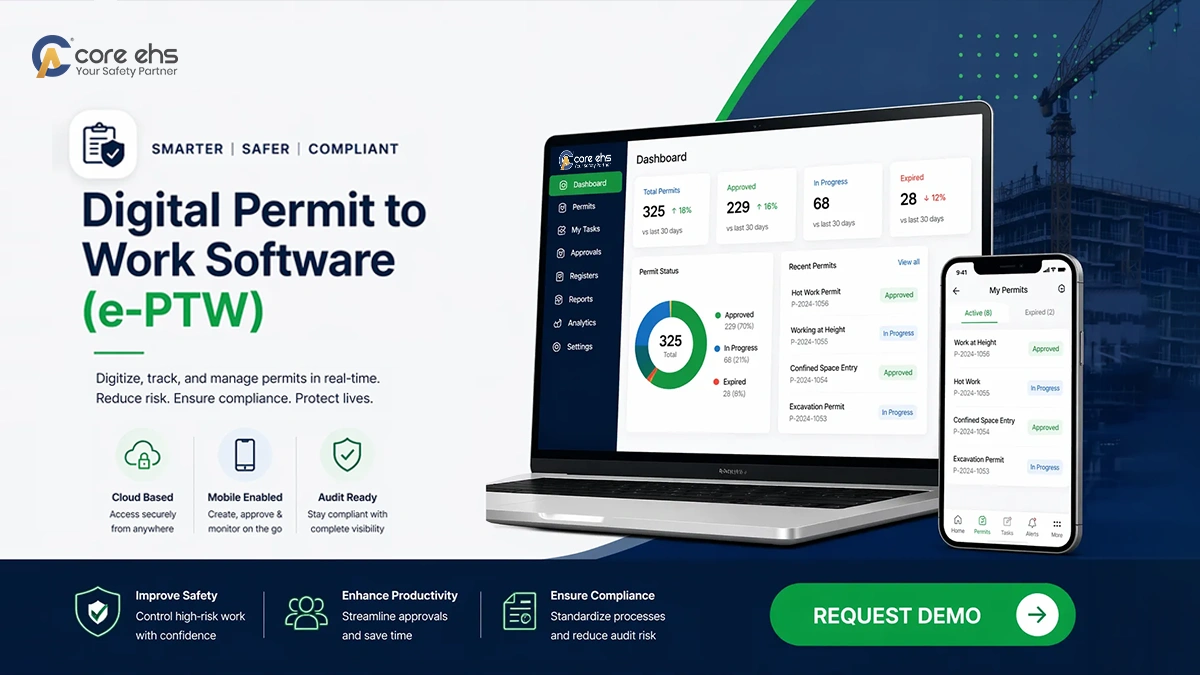
Traditional paper-based permits often lead to delays, incomplete checks, and poor traceability. A digital permit to work system modernises how Height Access Permits are created, approved, and tracked across sites.
Key benefits of going digital:
- Faster approvals: Real-time issuance and multi-level approvals from mobile or desktop
- Standardised workflows: Built-in templates ensure every permit follows the same safety steps
- Integrated risk assessment: Link hazards, controls, and PPE directly to the permit
- Audit-ready records: Automatic logs, timestamps, and document storage for compliance
- Field mobility: Supervisors and workers can access permits on-site via mobile devices
- Better visibility: Dashboards to track active permits, expiries, and high-risk activities
Practical Use Case:
On a large construction site, supervisors can issue and approve permits instantly, verify checklists on mobile, and monitor multiple height work activities without paperwork delays.
Platforms like CORE-EHS help organisations streamline Height Work clearance, reduce manual errors, and improve safety performance without increasing administrative effort.
Next, we will look at common mistakes to avoid in work at height permits.
Conclusion
A Work at Height Permit Software is a critical tool for managing risks, ensuring compliance, and protecting workers involved in high-risk activities. From planning and authorisation to execution and closure, a structured permit system helps organisations maintain control over every stage of work at height.
By implementing standardised processes and moving to an electronic permit to work (ePTW) system, companies can reduce incidents, improve audit readiness, and strengthen overall safety performance with real-time visibility and control.
If you are looking to improve your working at height permit system and streamline safety operations, adopting an ePTW approach is the next step toward operational excellence.
Request a demo or connect with a safety expert to see how CORE-EHS ePTW system can help you digitise permits, reduce risks, and improve workplace safety outcomes.