 +91 72929 29159













PPE stands for Personal Protective Equipment. It includes safety gear such as helmets, gloves, goggles, respirators, safety shoes, earplugs, face shields, and protective clothing used to protect workers from workplace hazards.
PPE Full Form in Safety
PPE full form is Personal Protective Equipment. In workplace safety, PPE refers to protective gear used to protect workers from hazards such as falling objects, chemicals, dust, noise, heat, electrical risks, sharp materials, and other workplace dangers.
PPE does not remove the hazard from the workplace. It acts as the last line of defence when risks cannot be fully controlled through elimination, substitution, engineering controls, or administrative controls.
What is PPE?
PPE is safety equipment worn by workers to reduce exposure to workplace hazards. It includes items such as helmets, gloves, safety goggles, respirators, safety shoes, hearing protection, face shields, and protective clothing.
In industries such as construction, manufacturing, oil and gas, chemicals, logistics, and mining, PPE helps protect workers from injuries, illnesses, and exposure to hazardous conditions.
Examples of Personal Protective Equipment
Examples of PPE include safety helmets, gloves, goggles, face shields, respirators, earplugs, earmuffs, safety shoes, high-visibility vests, flame-resistant clothing, chemical-resistant suits, and protective coveralls.
These PPE items are selected based on workplace hazards such as impact, chemicals, dust, fumes, noise, heat, sharp objects, slips, and electrical risks.
Why PPE is Important in Workplace Safety
PPE plays a critical role in preventing workplace injuries and supporting compliance with safety standards. When selected and used correctly, PPE helps reduce exposure to hazards and protects workers during high-risk tasks.
Key benefits of PPE:
• Acts as a protective barrier against hazards
• Helps prevent injuries, illnesses, and fatalities
• Supports compliance with OSHA, EN, ANSI, and IS standards
• Reduces downtime and operational risks
• Improves worker confidence during hazardous work
Important Note:
In the hierarchy of controls, PPE is the last line of defence. It should be used when hazards cannot be eliminated or controlled through engineering or administrative measures.
Important Note:
In the hierarchy of controls, PPE is the last line of defence. It is used when hazards cannot be eliminated or controlled through engineering or administrative measures.
How Many Types of PPE Are There in Safety?
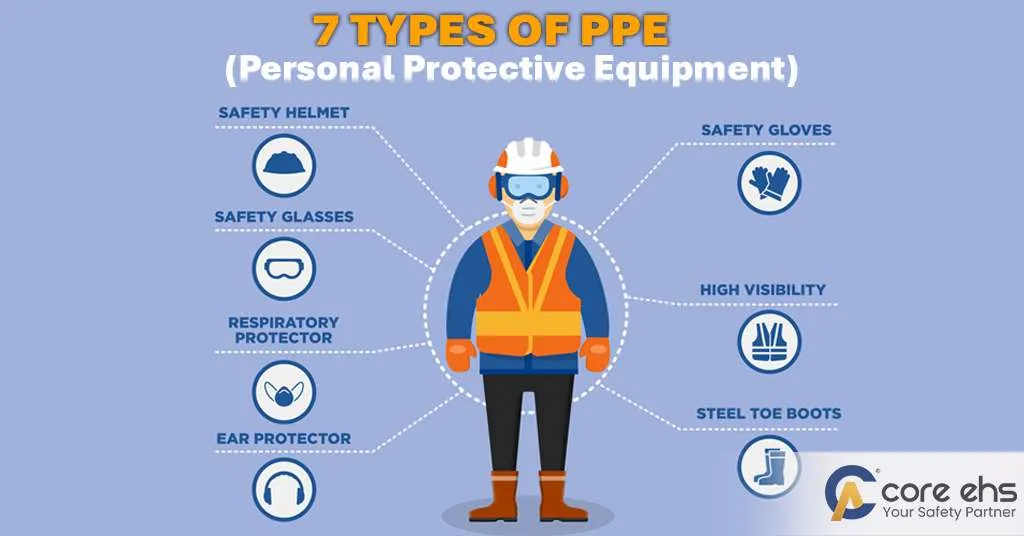
In workplace safety, PPE is commonly categorized into 7 main types: head protection, eye and face protection, hearing protection, respiratory protection, hand protection, foot and leg protection, and body protection.
In some industries, PPE may also be grouped into 4 or 5 broader categories. The number of PPE types may vary based on risk classification, but the purpose remains the same: protecting workers from workplace hazards.
7 Types of PPE and Their Uses (Complete List of 7 Categories)
Below are the seven main PPE categories as per global safety standards. Each category plays a vital role in protecting workers from specific hazards, and choosing the correct gear can dramatically reduce injury risk. Understanding their standards, use cases, and care requirements will help you build a comprehensive and compliant PPE strategy for your workplace.
1. Head Protection
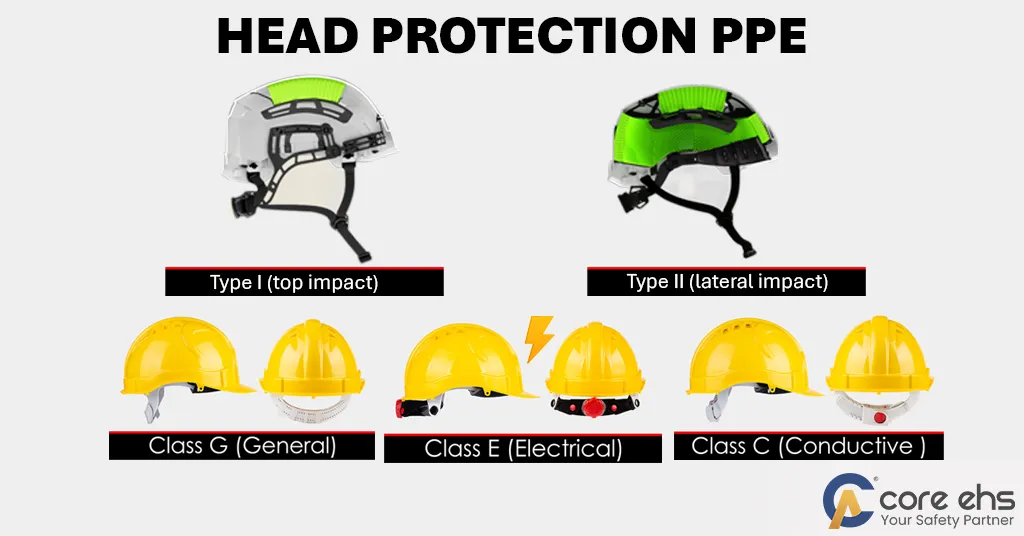
Head protection PPE serves as a critical safeguard against injuries caused by falling objects, accidental head bumps, or electrical hazards. These helmets and hard hats are often mandated on construction sites, industrial zones, and in maintenance areas where there is a high risk of overhead hazards such as suspended loads, scaffolding tools, or exposed wiring. They not only protect the skull from direct impact but also help prevent secondary injuries like concussions and electric shocks when equipped with insulating properties.
- Types: Helmets, Hard Hats
- Standards: IS 2925 (India), EN 397 (Europe), ANSI Z89.1 (USA)
- Classes & Types: Type I (top impact) / Type II (lateral impact); Class G (general), Class E (electrical), Class C (conductive)
- Use Cases: Construction, manufacturing, oil & gas, mining, warehousing
- Inspection Tips: Check for cracks, dents, faded shell, damaged straps; replace every 3–5 years or immediately after any impact
- Extra Tip: Train workers on proper fit and chin strap usage to prevent helmets from falling off
2. Eye & Face Protection
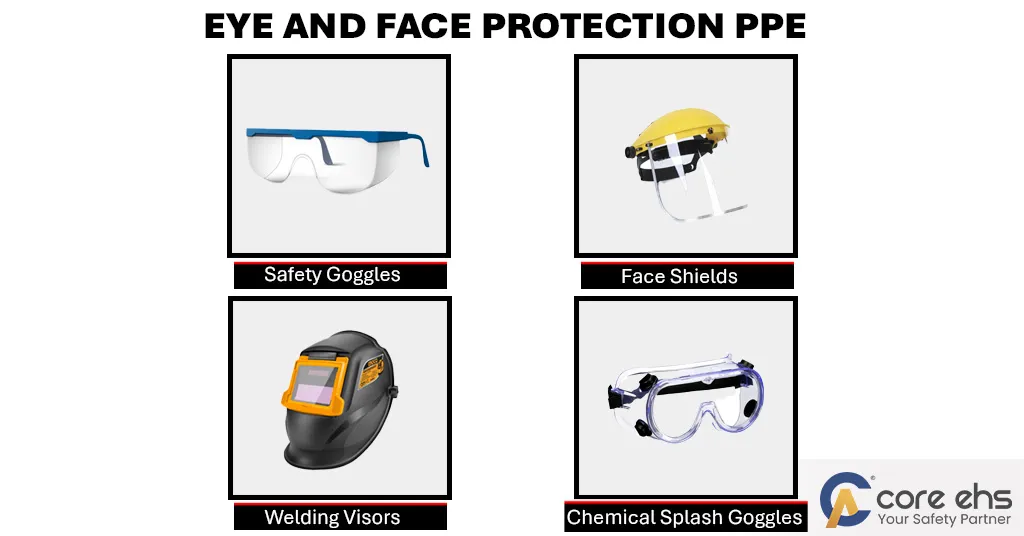
Eye and face protection PPE provides a crucial shield against hazards such as flying debris, chemical splashes, molten metal sparks, and intense light or radiation. It is indispensable in high-speed machining, welding, grinding, and chemical handling tasks where even a small particle or droplet can cause permanent eye damage or facial injuries. This protective gear not only helps prevent immediate trauma like cuts, burns, and corneal abrasions but also reduces the risk of long-term vision problems from repeated exposure to bright flashes or chemical vapors.
- Standards: EN 166, ANSI Z87.1
- Types: Safety goggles, face shields, welding visors, chemical splash goggles
- Maintenance: Clean lenses with anti-fog solution, store in protective cases, replace scratched or loose-fitting gear
- Extra Tip: Choose wraparound styles for better side protection in dusty environments
3. Hearing Protection
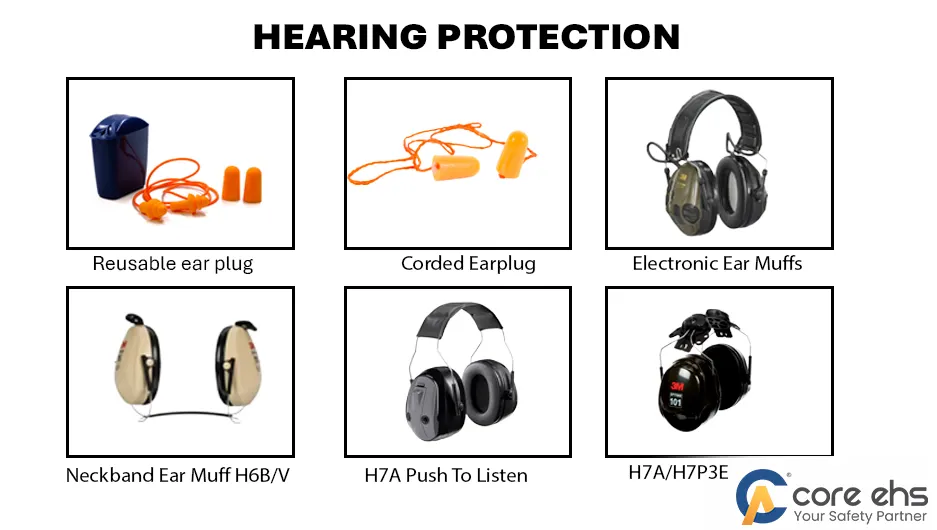
Hearing protection PPE acts as a vital safeguard against harmful noise levels in industrial and construction environments. It reduces noise exposure and helps prevent occupational hearing loss, which is often gradual, permanent, and irreversible if not addressed early. Prolonged exposure to high decibel levels can damage the delicate inner ear structures, leading to conditions like tinnitus, partial deafness, and reduced concentration or alertness at work.
- Types: Earplugs (disposable or reusable) and earmuffs
- Ratings: SNR (Single Number Rating) in Europe, NRR (Noise Reduction Rating) in the USA
- Risks: Prolonged noise >85 dB can cause permanent hearing damage
- Extra Tip: Conduct regular noise level surveys and provide dual protection (earplugs + earmuffs) for extreme noise areas
4. Respiratory Protection (RPE)
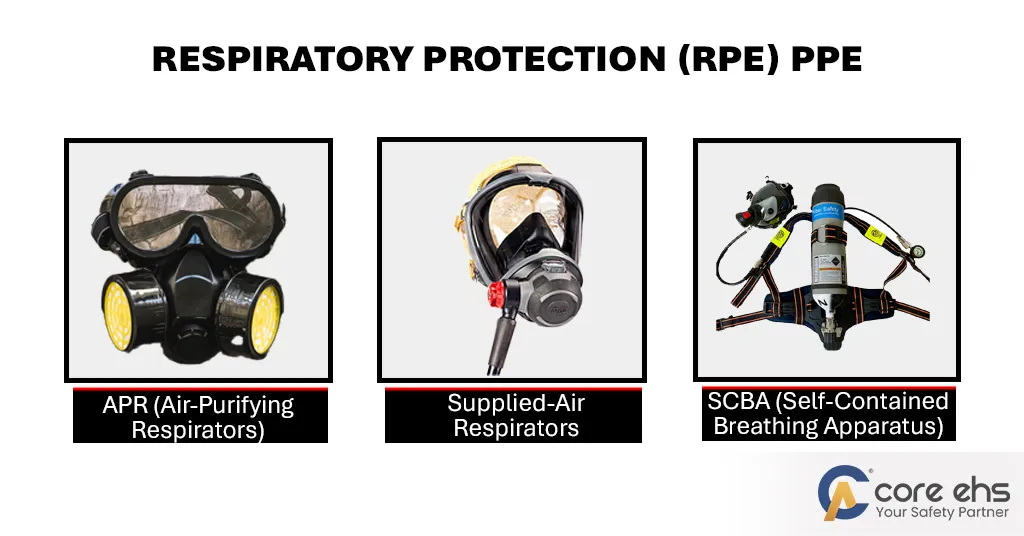
Respiratory PPE serves as a critical barrier between workers and hazardous airborne contaminants. It protects against dust, toxic fumes, harmful gases, vapors, and oxygen-deficient atmospheres that can cause serious respiratory illnesses or even fatalities. This category of PPE is especially crucial during confined space work, painting, welding, chemical handling, or cleanup operations where ventilation is limited and the risk of inhaling dangerous particles is high. Properly selected and fitted respiratory equipment not only prevents immediate health effects like dizziness, irritation, or suffocation but also reduces the risk of long-term conditions such as asthma, lung damage, or occupational lung diseases.
- Types: APR (Air-Purifying Respirators), supplied-air respirators, SCBA (Self-Contained Breathing Apparatus)
- Fit Testing: Perform qualitative and quantitative fit tests regularly
- Limitations: Cartridge life is finite; follow change-out schedules; comply with OSHA 1910 Subpart I
- Extra Tip: Maintain a documented respiratory protection program and train workers on seal checks before each use
5. Hand Protection
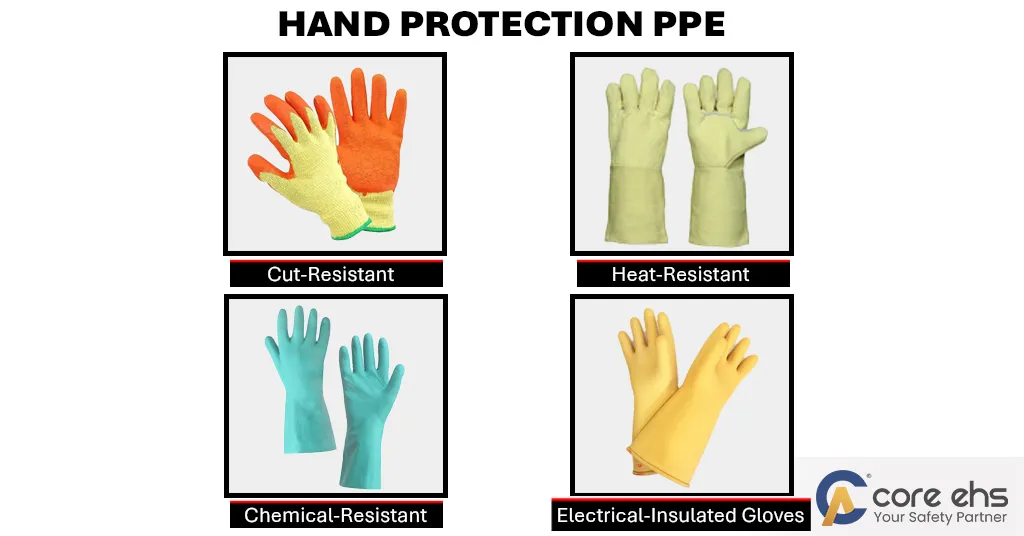
Hand protection PPE plays a vital role in safeguarding workers from a wide range of hazards, including sharp edges, extreme heat, electrical currents, toxic chemicals, and abrasive materials. Hands are the most frequently injured body part in workplaces because they are directly involved in almost every task, from lifting and assembling to operating machinery and handling hazardous substances. Without the right gloves, workers risk severe injuries like deep cuts, thermal burns, chemical burns, electrical shocks, puncture wounds, or skin infections that can result in long-term disabilities or lost productivity.
- Types: Cut-resistant, heat-resistant, chemical-resistant, electrical-insulated gloves
- Tips: Choose gloves by hazard, check breakthrough times, and discard torn or worn gloves
- Standards: EN 388 (mechanical risks), EN 407 (thermal risks), ANSI 105
- Extra Tip: Provide glove liners for comfort and encourage workers to inspect gloves before each use
6. Foot & Leg Protection
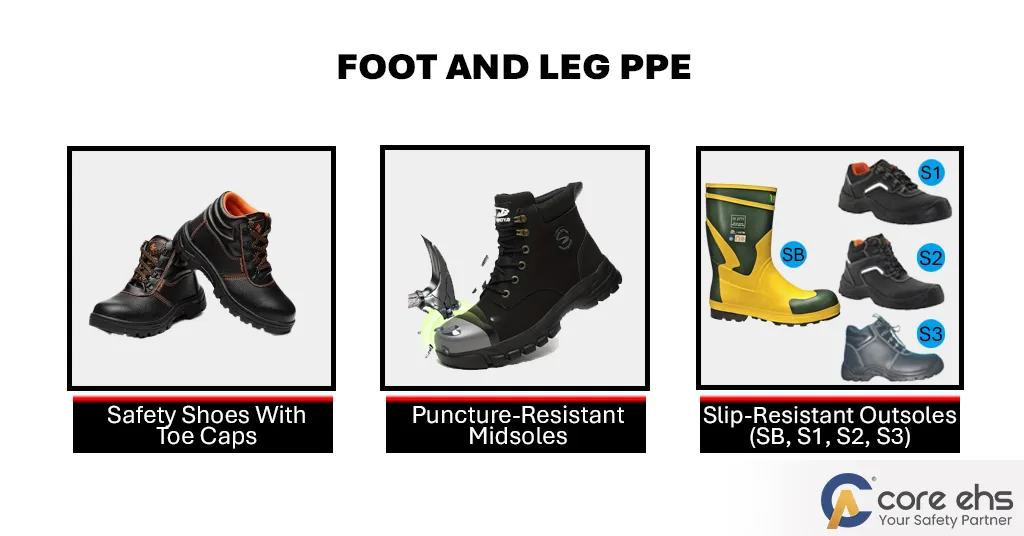
Foot and leg PPE is essential for protecting workers from crush injuries, punctures, slips, trips, falls, and electric shocks that often occur in busy industrial environments. These protective shoes and boots provide structural support to withstand heavy falling objects or rolling equipment, while their slip-resistant soles help maintain stability on oily or wet floors. Properly designed safety footwear can also enhance posture, reduce fatigue from prolonged standing, and prevent musculoskeletal disorders over time, making them a critical part of long-term workplace health and safety.
- Standards: IS 15298 (India), EN ISO 20345 (Europe)
- Types: Safety shoes/boots with toe caps, puncture-resistant midsoles, slip-resistant outsoles (SB, S1, S2, S3)
- Care: Inspect tread wear, replace every 12–18 months or after heavy impact
- Extra Tip: Choose anti-static or electrical-resistant footwear depending on the work environment
7. Body Protection
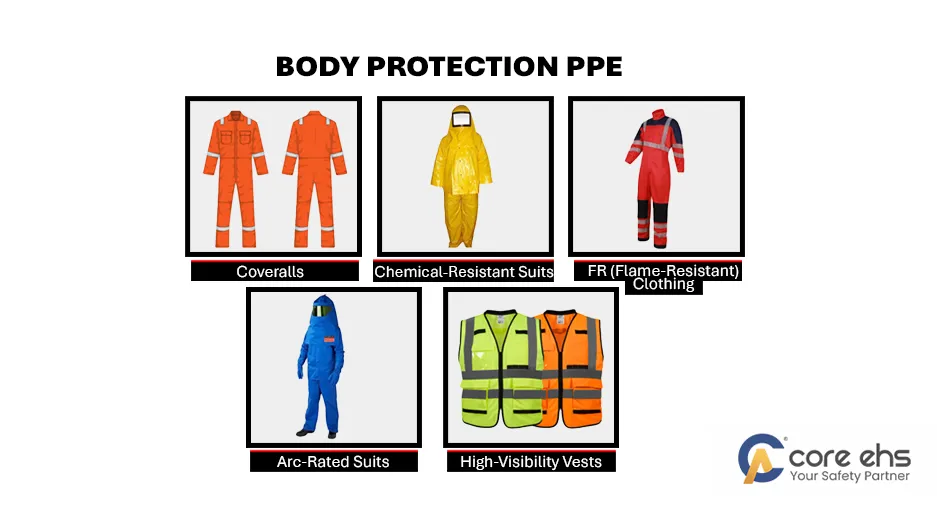
Body protection PPE acts as a comprehensive barrier, shielding workers from intense heat, flying sparks, hazardous chemicals, molten metal, and low visibility hazards in high-risk environments. It is vital in industries like foundries, chemical processing, firefighting, and construction, where the body is exposed to multiple simultaneous dangers. This gear ensures complete coverage when engineering controls and administrative measures are not enough, helping prevent severe burns, chemical absorption, or high-visibility related accidents such as vehicle strikes.
- Types: Coveralls, chemical-resistant suits, FR (flame-resistant) clothing, arc-rated suits, high-visibility vests
- Care: Follow wash instructions, inspect for tears, ensure proper fit for full coverage
- Limitations: May restrict mobility; must match hazard level
- Extra Tip: Layer PPE appropriately in multi-hazard environments (e.g., FR + high-vis)
Hazards vs PPE Types vs Standards
PPE is regulated by global safety bodies such as OSHA, ILO, BIS/IS, EN, and ANSI. Following these standards ensures proper protection, compliance, and improved workplace safety performance.
| Hazard Type | Recommended PPE | Example Use | Limitations |
| Falling / Impact Objects | Safety Helmet / Hard Hat | Construction sites, warehouses, loading areas | Requires regular inspection; not for electrical hazards unless rated |
| Flying Debris / Particles | Safety Goggles / Face Shield | Grinding, welding, and cutting operations | May fog up; does not protect from chemical splash unless specified |
| Loud Noise / Machinery | Earplugs / Earmuffs | Manufacturing plants, airports, mining sites | Incorrect fit reduces effectiveness |
| Dust, Fumes, Gases | Respirators (APR / SCBA) | Painting, chemical handling, confined spaces | Requires fit testing; limited cartridge lifespan |
| Sharp / Hot Surfaces | Cut-resistant / Heat-resistant Gloves | Glass handling, metalwork, hot equipment maintenance | Wrong material choice reduces protection |
| Slips, Falling Objects | Safety Shoes / Steel Toe Boots | Construction, logistics, heavy engineering | Worn-out soles lose grip; requires periodic replacement |
| Chemicals / Heat / Sparks | Protective Coveralls / FR Clothing / Aprons | Foundries, chemical plants, firefighting | May reduce mobility; must match exposure level |
This PPE hazard chart serves as a practical starting point, but always conduct a site-specific risk assessment before selecting equipment to ensure compliance with PPE standards and maximize worker safety.
Improve PPE Safety in Your Workplace
If you’re looking to strengthen workplace safety, explore CORE-EHS solutions:
Build a safety-first culture with expert support and proven systems.
Examples of PPE in Different Industries
- Construction: Helmet, safety shoes, gloves, harness
- Manufacturing: Gloves, goggles, ear protection
- Chemical: Respirators, chemical suits, face shields
- Oil & Gas: FR clothing, helmets, safety boots
How to Select the Right PPE
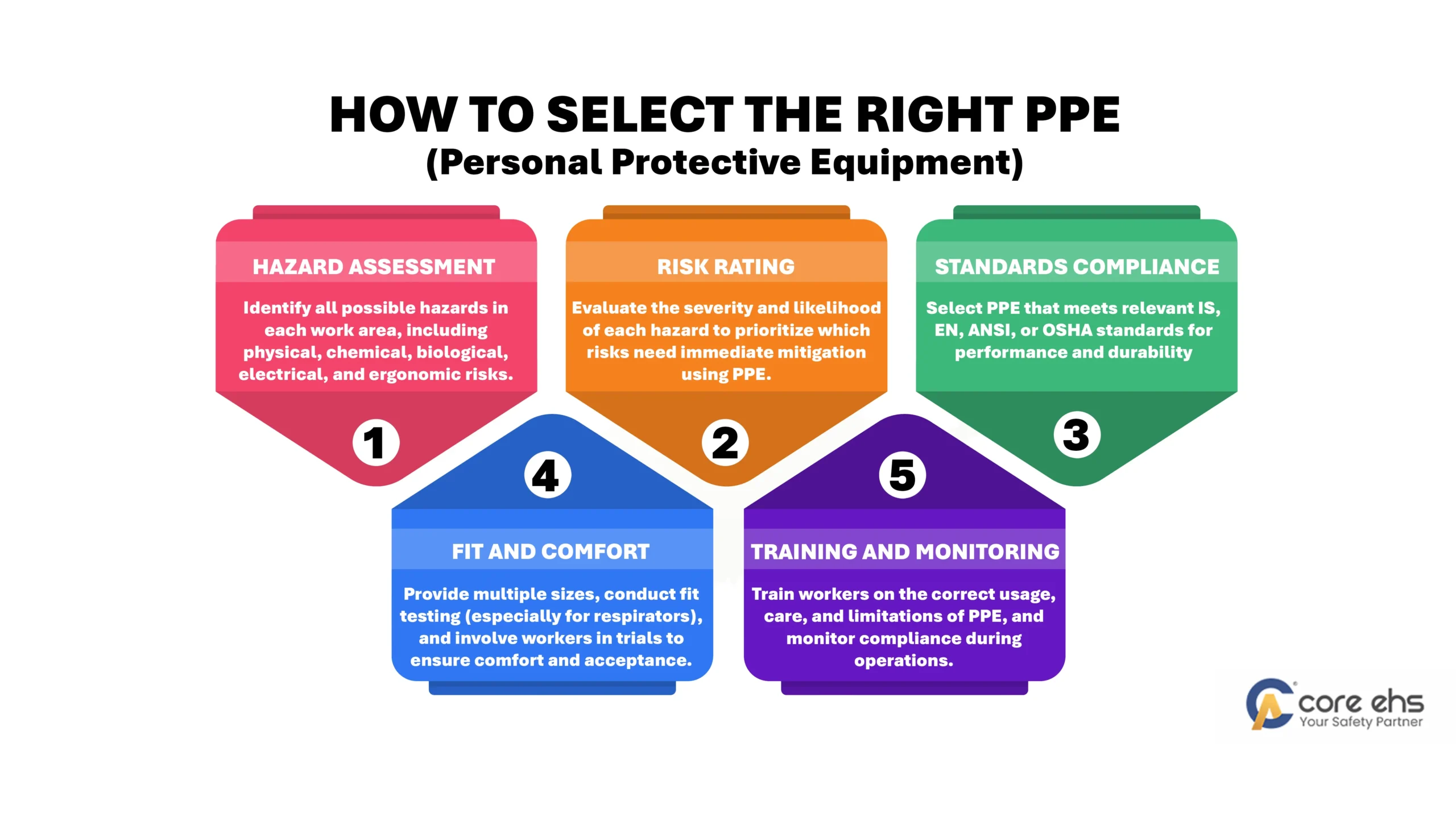
Choosing the correct PPE requires more than just buying protective gear; it involves a systematic process to ensure that each item is suitable for the specific hazards workers face. Follow this 5-step method:
- Hazard Assessment: Identify all possible hazards in each work area, including physical, chemical, biological, electrical, and ergonomic risks.
- Risk Rating: Evaluate the severity and likelihood of each hazard to prioritise which risks need immediate mitigation using PPE.
- Standards Compliance: Select PPE that meets relevant IS, EN, ANSI, or OSHA standards for performance and durability.
- Fit and Comfort: Provide multiple sizes, conduct fit testing (especially for respirators), and involve workers in trials to ensure comfort and acceptance.
- Training and Monitoring: Train workers on the correct usage, care, and limitations of PPE, and monitor compliance during operations.
What Equipment Qualifies as PPE?
Any wearable equipment designed to protect workers from workplace hazards qualifies as PPE. This includes helmets, gloves, safety goggles, respirators, safety shoes, and protective clothing. PPE acts as the last line of defense when hazards cannot be eliminated or controlled.
Fit Testing, Maintenance & Replacement
Ensuring PPE stays effective requires regular fit testing, proper maintenance, and timely replacement:
- Fit Testing: Conduct initial and annual fit tests for respirators, ensuring a proper seal. Helmets and hearing protection should also be checked for correct sizing and secure fit.
- Maintenance: Clean PPE after every use with approved disinfectants or mild detergents, dry completely, and store in a clean, dry area away from direct sunlight and chemicals.
- Inspection: Perform pre-use inspections for cracks, wear, fraying straps, or degraded materials.
- Replacement: Replace PPE immediately after any impact or damage or when it reaches its recommended service life (usually 3–5 years for helmets, 12–18 months for footwear, as per manufacturer guidelines).
Common Mistakes in PPE Usage
Even the best PPE fails if used incorrectly. Some of the most common mistakes include:
- Incorrect Sizing: Wearing PPE that is too loose or too tight reduces its effectiveness.
- Bypassing PPE Due to Discomfort: Workers often remove gear that feels heavy or restrictive, leaving them exposed.
- Using Worn-out or Expired PPE: Old or damaged PPE may look intact but may have lost its protective properties.
- Improper Storage: Leaving PPE in damp, hot, or contaminated areas can degrade its material and shorten its lifespan.
Conclusion
Personal Protective Equipment (PPE) plays a crucial role in safeguarding workers from a wide spectrum of workplace hazards. However, PPE is only effective when chosen correctly, maintained regularly, and worn consistently. By understanding the different types of PPE, their global standards, and how to select, use, and maintain them, organisations can significantly reduce workplace injuries and fatalities.
At CORE-EHS, we go beyond compliance by helping organisations build a strong safety culture. Our expertise spans PPE training programs, safety audits, hazard reporting systems, and digital safety management tools that empower businesses to create safer, more resilient workplaces.