 +91 72929 29159














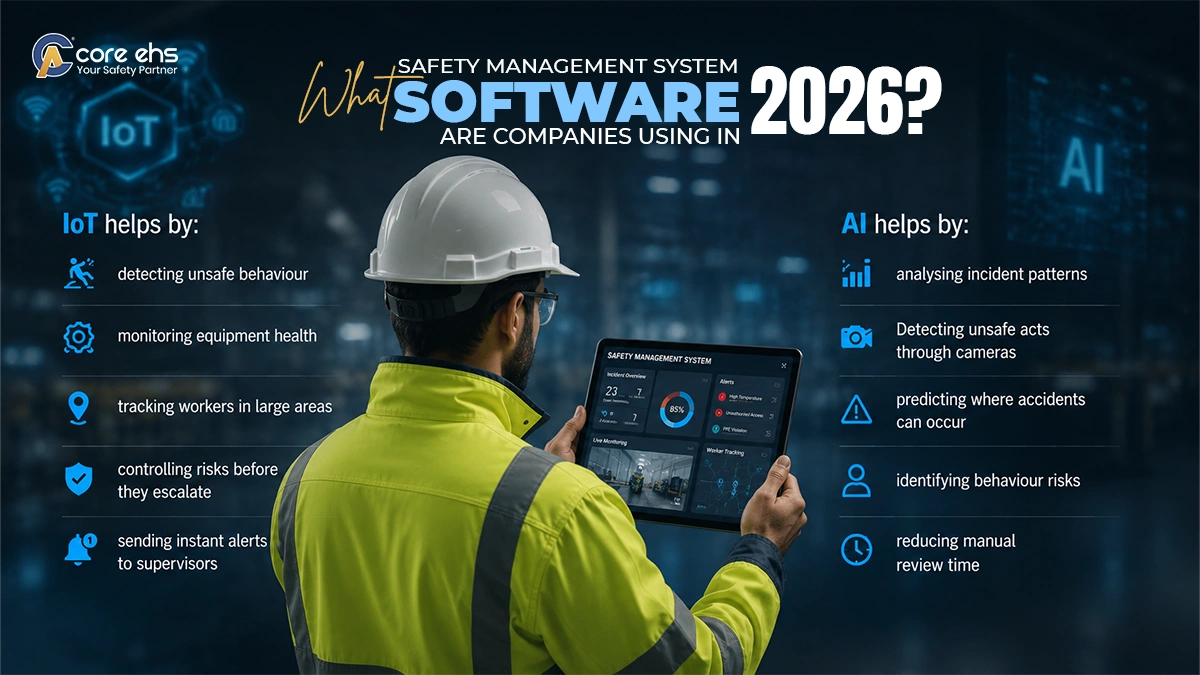
Many organisations still manage workplace safety, compliance tracking, audits, and incident reporting using spreadsheets, paper forms, emails, and disconnected systems. While these methods may work for small operations, they often create delays, poor visibility, missed corrective actions, and compliance risks as businesses grow.
This is where EHS software becomes essential for modern industries. A centralised digital platform helps organisations manage safety and compliance activities more efficiently across multiple departments, projects, and locations.
From incident reporting and permit approvals to inspections, audits, training records, and risk assessments, digital systems help safety teams respond faster and make better decisions using real-time data.
Industries such as manufacturing, construction, oil and gas, chemicals, pharma, logistics, and infrastructure are increasingly adopting digital safety management systems to improve operational control, reduce paperwork, strengthen compliance, and build a stronger safety culture.
For companies operating across multiple sites, having a connected system also improves visibility, accountability, and reporting consistency across the organisation.
What Is EHS Software?
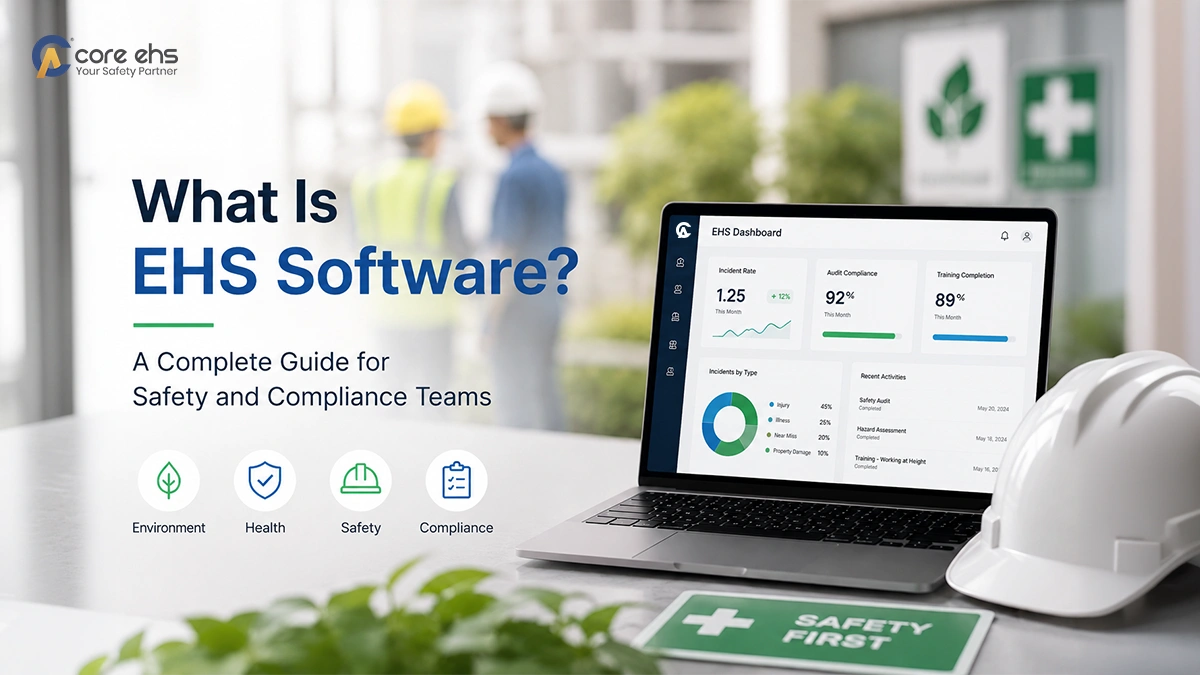
EHS software is a digital platform designed to help organisations manage environmental, health, and safety activities through a centralised system. It helps safety teams track incidents, audits, inspections, permits, compliance tasks, corrective actions, and workplace risks more efficiently.
Modern environmental health and safety software replaces manual spreadsheets, paper-based reporting, and disconnected workflows with real-time monitoring, automated processes, and centralised safety data.
Instead of managing safety information across multiple tools, organisations can use a single platform to improve visibility, accountability, and compliance management across sites and departments.
Most EHS platforms include modules for:
- Incident and near-miss reporting
- Permit to work management
- Safety audits and inspections
- Risk assessments
- Corrective and preventive actions
- Contractor safety management
- Training records and compliance tracking
For industrial organisations, this helps create a more proactive approach to workplace safety, operational risk management, and regulatory compliance.
Today, EHS software is widely used across manufacturing, construction, oil and gas, power, chemicals, logistics, pharma, and infrastructure sectors where safety performance and compliance visibility are critical.
Internal Linking Suggestion: Link to Incident Management Software, Permit to Work Software, and Safety Audit Software pages.
Why Is EHS Software Important for Modern Industries?
Many organisations still rely on spreadsheets, emails, paper permits, and disconnected systems to manage safety processes. As operations grow across multiple sites and teams, these methods often create reporting delays, poor visibility, and compliance gaps.
This is why industries are adopting EHS management software to centralise safety operations, improve reporting accuracy, and track compliance activities more efficiently.
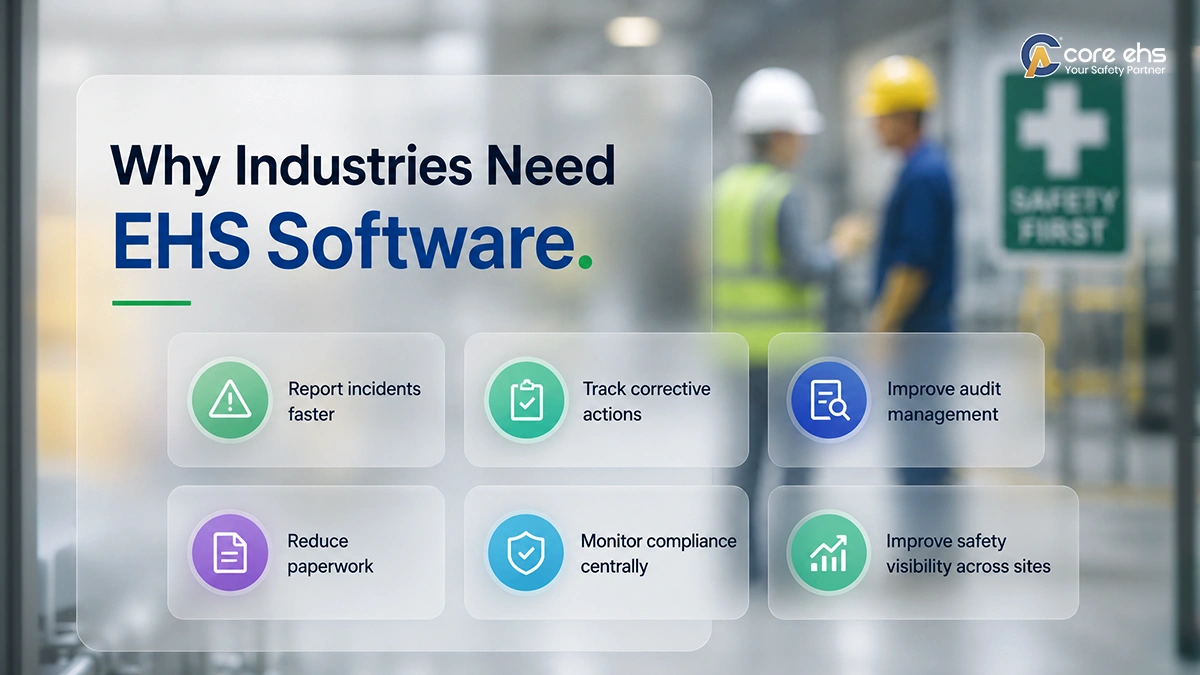
Modern workplace safety software helps organisations:
- Report incidents faster
- Track corrective actions
- Improve audit management
- Reduce paperwork
- Monitor compliance centrally
- Improve safety visibility across sites
For industries such as manufacturing, construction, oil and gas, chemicals, and logistics, digital safety systems have become essential for proactive risk management and operational control.
Key Features of EHS Software
Most EHS software platforms combine multiple safety and compliance functions into one centralised system. This helps organisations manage incidents, permits, audits, inspections, and reporting more efficiently.
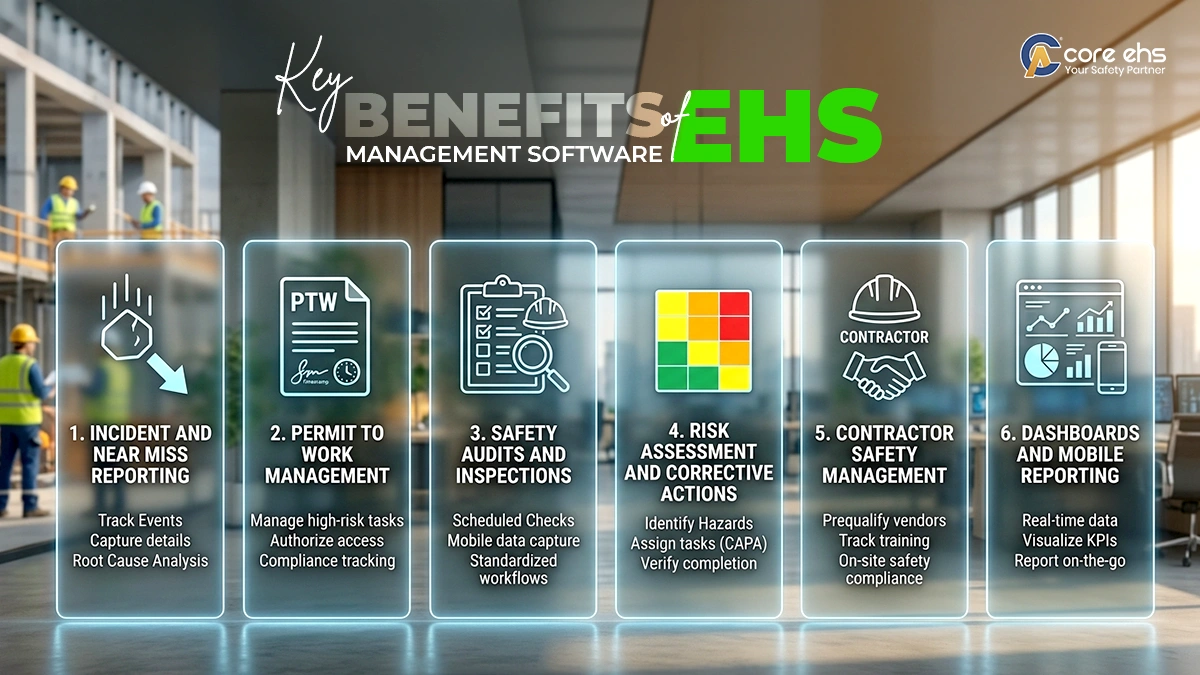
Key features commonly include:
1. Incident and Near Miss Reporting
Track incidents, unsafe acts, unsafe conditions, and corrective actions in real time.
2. Permit to Work Management
Manage approvals for high-risk work activities such as hot work, confined space entry, and electrical isolation.
3. Safety Audits and Inspections
Conduct inspections, assign actions, and maintain audit readiness across sites.
4. Risk Assessment and Corrective Actions
Identify hazards, evaluate risks, and track preventive measures.
5. Contractor Safety Management
Manage contractor onboarding, documentation, and compliance activities.
6. Dashboards and Mobile Reporting
Monitor safety performance, compliance status, and operational risks through real-time dashboards and mobile access.
Benefits of EHS Software for Safety and Compliance Teams
EHS software helps organisations improve workplace safety, compliance management, and operational efficiency through centralised digital processes.
Some key benefits include:
- Faster incident reporting and response
- Better corrective action tracking
- Improved audit readiness
- Reduced paperwork and manual follow-ups
- Better visibility across multiple sites
- Real-time dashboards and reporting
- Stronger compliance management
- Improved safety decision-making
Modern safety management software also helps organisations build a more proactive and data-driven safety culture.
Who Should Use EHS Software?
As businesses expand across multiple sites, departments, contractors, and projects, manual safety processes often become difficult to manage efficiently. This is where a centralised environmental health and safety software platform helps improve consistency, reporting accuracy, accountability, and compliance tracking.
EHS software is commonly used by:
| Teams & Users | How They Use EHS Software |
| EHS Managers & Safety Officers | Manage incidents, audits, inspections, corrective actions, and compliance tracking |
| Plant Heads & Operations Teams | Monitor operational risks, safety performance, and site-level compliance |
| Compliance & Audit Teams | Track regulatory requirements, inspections, and audit readiness |
| Maintenance & Engineering Departments | Manage maintenance risks, permits, and safety procedures |
| Contractor Management Teams | Monitor contractor onboarding, documentation, and safety compliance |
| Site Supervisors & Project Managers | Improve reporting visibility, permit approvals, and field-level safety monitoring |
For organisations aiming to improve workplace safety, operational efficiency, and compliance visibility, EHS software has become an essential part of modern industrial operations.
How to Choose the Right EHS Software
Choosing the right EHS software is important for improving workplace safety, compliance management, and operational efficiency.
Here are a few important things organisations should check before selecting a platform:
- Easy-to-use interface for employees and safety teams
- Mobile reporting for faster incident and inspection updates
- Multi-site management and centralised reporting
- Real-time dashboards and compliance tracking
- Scalable system that supports future operational growth
A well-designed platform should simplify safety operations, improve reporting visibility, and support better decision-making.
Looking to improve workplace safety and compliance processes? CORE-EHS helps organisations implement scalable EHS software solutions designed for modern industrial operations.
Conclusion
EHS software has become an essential tool for organisations looking to improve workplace safety, compliance management, operational visibility, and risk control. By replacing manual processes with a centralised digital platform, businesses can improve reporting accuracy, streamline safety workflows, and make faster decisions using real-time data.
As industries continue moving toward digital transformation, connected safety systems will play an even bigger role in improving compliance performance and building a stronger safety culture.
Looking to digitize your safety and compliance processes? Explore CORE-EHS EHS software solutions built for modern industrial operations.