 +91 72929 29159













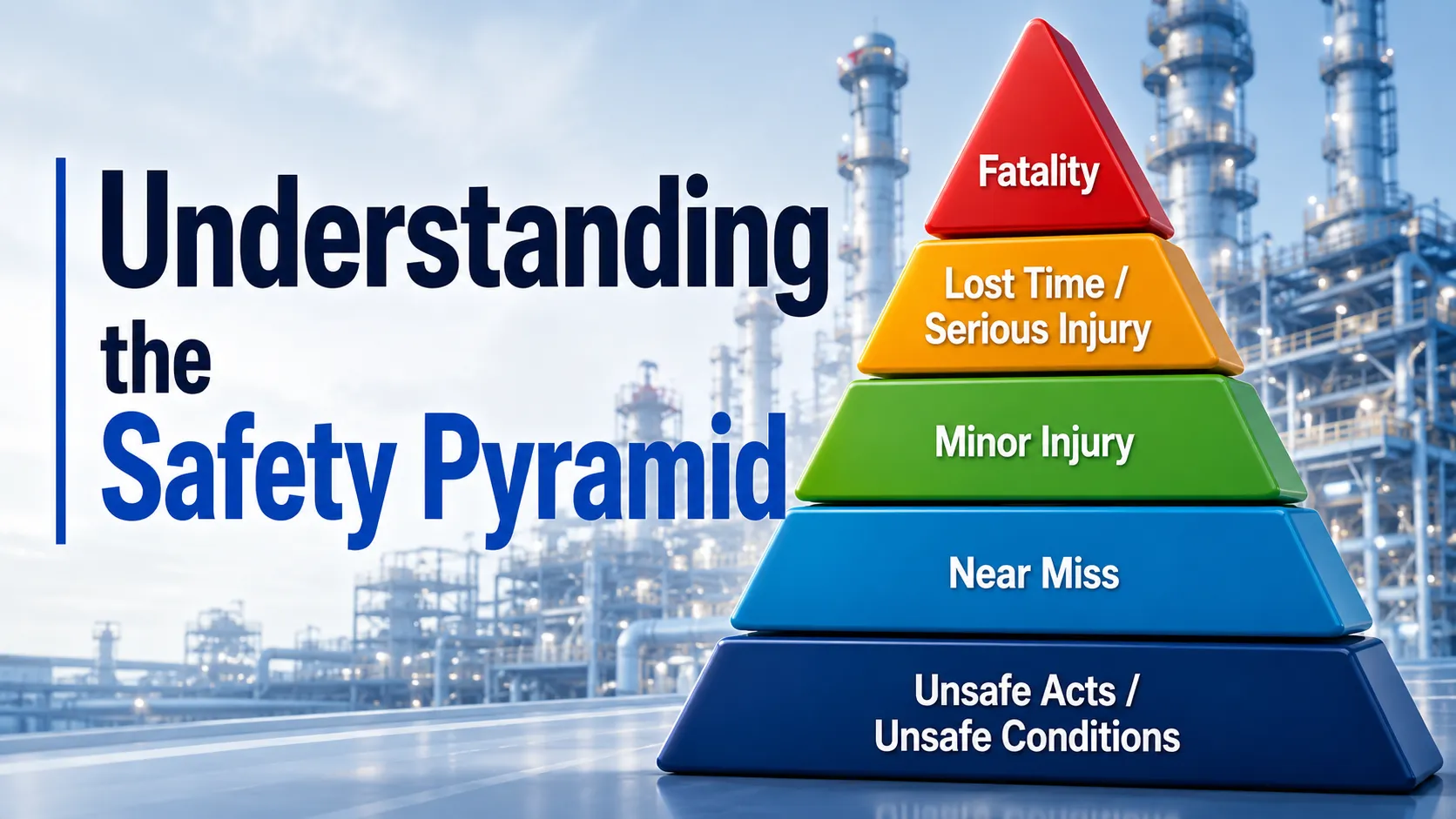
Serious workplace incidents rarely happen without warning. Before a major injury or fatality, organisations often see repeated unsafe acts, unsafe conditions, near misses, minor injuries, or property damage. The Safety Pyramid helps safety teams understand this pattern and focus on prevention before incidents become severe.
For safety managers, EHS officers, supervisors, contractors, and business leaders, the model is useful because it shifts attention from only reacting to accidents to identifying early warning signs. When lower-level safety observations are reported and corrected on time, organisations can improve incident prevention and build a stronger workplace safety culture.
What Is the Safety Pyramid?
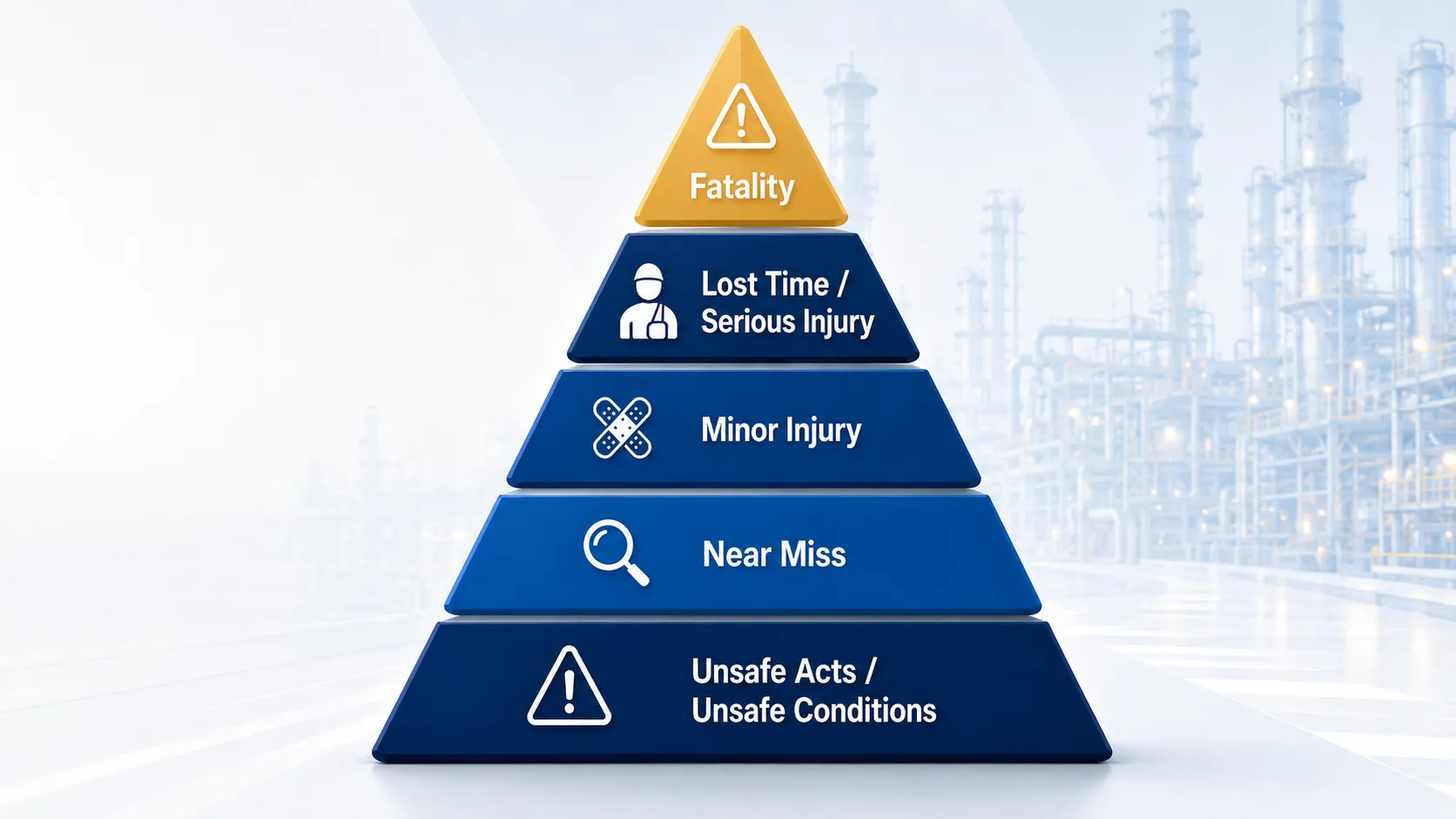
The Safety Pyramid, also called the safety triangle or accident pyramid, is a visual model used in workplace safety. It shows the relationship between unsafe acts, near misses, minor incidents, serious injuries, and fatalities.
The base of the pyramid includes frequent events such as unsafe acts and unsafe conditions. These may include poor housekeeping, unsafe shortcuts, or damaged tools. Above them are near misses, minor injuries, property damage, and finally serious injuries or fatalities at the top.
The main idea is simple: if organisations reduce repeated unsafe conditions, near misses, and minor incidents, they can also reduce the chance of major incidents. The Safety Pyramid does not guarantee exact outcomes, but it helps teams focus on early intervention.
History of the Safety Pyramid
The concept was introduced by H. W. Heinrich in the 1930s. The Heinrich safety pyramid is commonly linked with the 300:29:1 ratio. This means that, in Heinrich’s model, 300 no-injury incidents were linked with 29 minor injuries and 1 major injury.
Later, safety researcher Frank Bird expanded the idea using a larger accident data study. The Bird safety triangle is commonly linked with 600 near misses, 30 property damage incidents, 10 minor injuries, and 1 serious injury or fatality.
Both models made one message popular in industrial safety: lower-level incidents and warning signs matter. However, these ratios should not be treated as fixed rules for every workplace. A steel plant, construction site, chemical unit, warehouse, and office environment may show different incident patterns based on their hazards, controls, reporting culture, and safety management system.
How the Safety Pyramid Works
Unsafe Acts and Unsafe Conditions
The bottom level includes unsafe behaviours and unsafe workplace conditions. Examples include not wearing PPE, poor housekeeping, unsafe shortcuts, damaged tools, blocked access, and ignoring safety procedures. These issues may look small, but repeated exposure can increase risk.
Near Misses
Near misses are warning signs. A worker slipping but not falling, a dropped object missing someone, or a vehicle almost hitting a pedestrian are examples. No injury may occur, but the situation shows that something could have gone wrong.
Minor Incidents
Minor incidents include small injuries, first-aid cases, or property damage. These events often reveal deeper gaps in training, supervision, maintenance, communication, or hazard control.
Serious Injuries and Fatalities
At the top are serious injuries and fatalities. These events are less frequent but have severe consequences. When lower-level warning signs are ignored, the risk of a serious incident can increase.
| Pyramid Level | Meaning | Workplace Example | Preventive Action |
| Unsafe Act / Unsafe Condition | Risky behaviour or unsafe situation | Worker not wearing PPE | Correct behaviour and improve supervision |
| Near Miss | Incident that could have caused harm | Tool falls but misses a worker | Report, investigate, and control the hazard |
| Minor Incident | Small injury or property damage | Slip causing first-aid injury | Identify root cause and close CAPA |
| Serious Injury / Fatality | Severe harm or loss of life | Fall from height | Strengthen high-risk controls and emergency readiness |
Why Is the Safety Pyramid Important?
The Safety Pyramid helps organisations focus on prevention. Instead of waiting for a serious accident, safety teams can use hazard reporting, near-miss reporting, and incident data to identify repeated unsafe patterns.
It also improves hazard identification and builds safety awareness among workers and contractors. When people report small issues without fear, safety teams get better visibility of real workplace risks.
For example, if workers repeatedly report oil leakage near a machine, corrective action such as cleaning, repair, barricading, and root cause analysis can prevent a slip, injury, or serious accident later.
This is why near-miss reporting is one of the most important lessons from the accident pyramid. It helps organisations act before harm occurs.
Limitations of the Safety Pyramid
The Safety Pyramid is useful, but it has limitations. The ratios are not the same for every industry or workplace. Not every minor incident leads to a fatality, and reducing small incidents does not automatically eliminate serious injuries.
Some serious incidents can happen due to high-risk hazards even without many minor incidents before them. Examples include confined space gas exposure, electrical flashover, lifting failure, process safety failure, or work-at-height collapse.
The model should also not focus only on worker behaviour. Unsafe acts are important, but management systems, training quality, supervision, equipment condition, maintenance, leadership, contractor control, and work planning also matter.
Used incorrectly, the pyramid can make teams focus only on counting minor incidents instead of understanding serious risk. The heinrich safety pyramid should be used as a prevention guide, not as an exact formula.
How Companies Can Use the Safety Pyramid Effectively
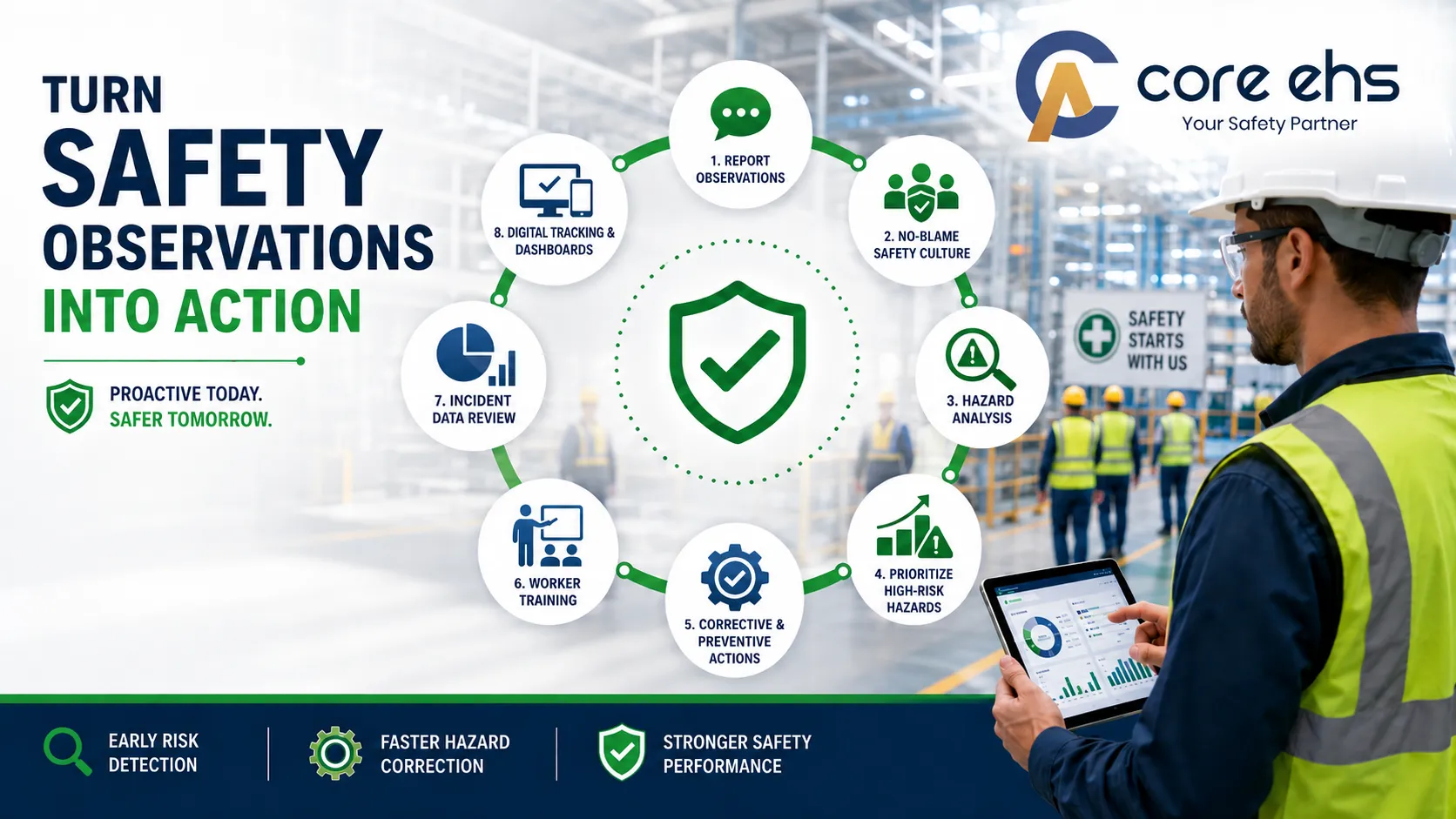
Companies can use the Safety Pyramid effectively by turning observations into action:
- Report near misses and unsafe conditions regularly.
- Encourage a no-blame reporting culture.
- Analyse repeated safety observations.
- Prioritise high-risk hazards.
- Take corrective and preventive actions quickly.
- Train workers and contractors regularly.
- Review incident and near-miss data.
- Use digital tools to track safety performance.
The goal is not only to increase reporting numbers. The real goal is to identify risk early, fix hazards faster, and prevent repeat incidents. When reporting, investigation, CAPA, and leadership review work together, the Safety Pyramid becomes part of a proactive safety management system.
Role of EHS Software in Safety Pyramid Reporting
Modern EHS software helps organisations act on the lower levels of the Safety Triangle. Instead of depending on paper forms or delayed reporting, digital tools make hazard reporting, near-miss reporting, and incident management faster and more transparent.
EHS software can support corrective action tracking, escalation workflows, safety dashboards, trend analysis, and real-time visibility for safety teams. It helps leaders see repeated unsafe acts and unsafe conditions across sites, departments, contractors, and activities.
Organisations can strengthen incident prevention by using digital safety solutions that make reporting, tracking, investigation, and corrective action easier. CORE-EHS digital safety solutions support hazard reporting, incident management, safety dashboards, and proactive safety culture improvement.
Key Takeaways
- The Safety Pyramid explains the link between unsafe conditions, near misses, minor incidents, and serious injuries.
- Heinrich and Bird made the concept popular in workplace safety.
- The ratios should not be treated as fixed rules.
- Near-miss reporting is one of the most important lessons from the model.
- Modern EHS software helps convert safety data into preventive action.
Conclusion
The Safety Pyramid reminds organisations that serious incidents often have early warning signs. When companies report near misses, correct unsafe conditions, and act on safety data, they can move from reactive safety to proactive prevention.
However, the model works best when it is combined with strong leadership, effective training, supervision, contractor safety, equipment maintenance, and a reliable safety management system.