 +91 72929 29159














Audits & Inspections are critical components of industrial safety management.
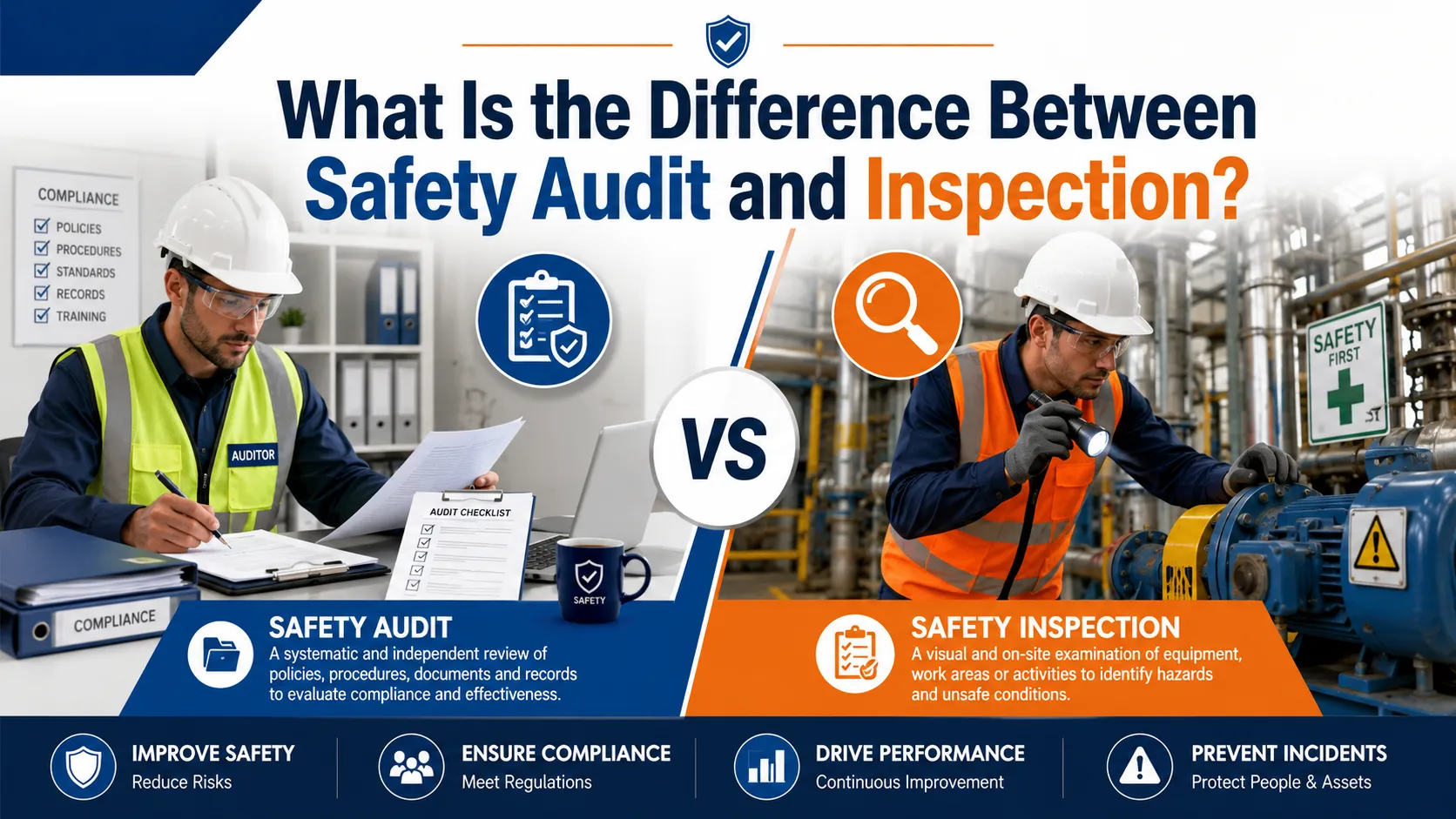
Safety audits and safety inspections are both important parts of workplace safety management, but they are not the same. Many organisations use these terms interchangeably, even though their purpose, scope, and approach are different.
Understanding the difference between safety audit and inspection helps organisations improve compliance, identify workplace risks more effectively, and strengthen overall safety performance.
A safety audit is a systematic review of an organisation’s safety management system, policies, procedures, and compliance processes. A safety inspection focuses on identifying unsafe conditions, unsafe acts, and physical hazards in the workplace.
In simple terms, a safety audit evaluates whether the overall safety system is working properly, while a safety inspection checks whether the worksite is safe on a day-to-day basis.
Both play a critical role in reducing incidents, improving accountability, and creating a proactive safety culture across industrial operations.
Safety Audit vs Inspection (Quick Comparison)
Although both are used to improve workplace safety and compliance, safety audits and safety inspections serve different purposes. The table below highlights the key differences between them.
| Parameter | Safety Audit | Safety Inspection |
|---|---|---|
| Purpose | Reviews safety systems and processes | Identifies workplace hazards |
| Focus Area | Policies, procedures, compliance | Physical conditions and unsafe acts |
| Approach | Systematic and detailed evaluation | Site-level observation and checking |
| Frequency | Monthly, quarterly, or yearly | Daily, weekly, or routine basis |
| Conducted By | Internal or external auditors | Supervisors or safety officers |
| Main Objective | Improve long-term safety performance | Prevent immediate workplace risks |
| Example | Audit of permit-to-work system | Inspection of PPE or scaffolding |
Understanding these differences helps organisations choose the right approach for improving safety management, reducing risks, and maintaining workplace compliance.
What is a Safety Audit?
A safety audit is a structured and systematic evaluation of an organization’s safety management system. It is conducted to verify whether workplace safety policies, procedures, and compliance processes are properly implemented and effective.
Unlike routine inspections, safety audits focus on the overall performance of the safety system rather than only physical conditions at the worksite.
What Does a Safety Audit Evaluate?
- Safety policies and procedures
- Compliance with legal and regulatory requirements
- Risk management processes
- Employee training and competency records
- Permit-to-work and operational controls
- Corrective action tracking and documentation
Safety audits are usually conducted monthly, quarterly, or annually depending on the organization’s compliance requirements and operational risks.
Real-World Example
An organisation conducts a safety audit to review whether its permit-to-work system is being followed correctly across multiple project sites.
A well-planned workplace safety audit helps organisations identify gaps in their management system, improve compliance, and strengthen long-term safety performance across operations.
What is a Safety Inspection?
A safety inspection is a workplace assessment conducted to identify unsafe conditions, unsafe acts, equipment issues, and immediate hazards that could lead to incidents or accidents.
Unlike safety audits, inspections are more focused on the physical work environment and day-to-day operational safety.
What Does a Safety Inspection Check?
- Workplace hazards and unsafe conditions
- PPE usage and compliance
- Equipment and machinery condition
- Housekeeping and access routes
- Scaffolding, ladders, and work-at-height areas
- Emergency exits and fire safety arrangements
Safety inspections are usually performed daily, weekly, or at regular intervals to ensure workplace conditions remain safe and compliant.
Real-World Example
A safety officer conducts a site inspection to check whether workers are using PPE correctly and whether scaffolding is safe for use.
Regular workplace safety inspections help organisations identify risks early, correct unsafe conditions quickly, and prevent incidents before they escalate into serious accidents.
Understanding Different Types of Audits
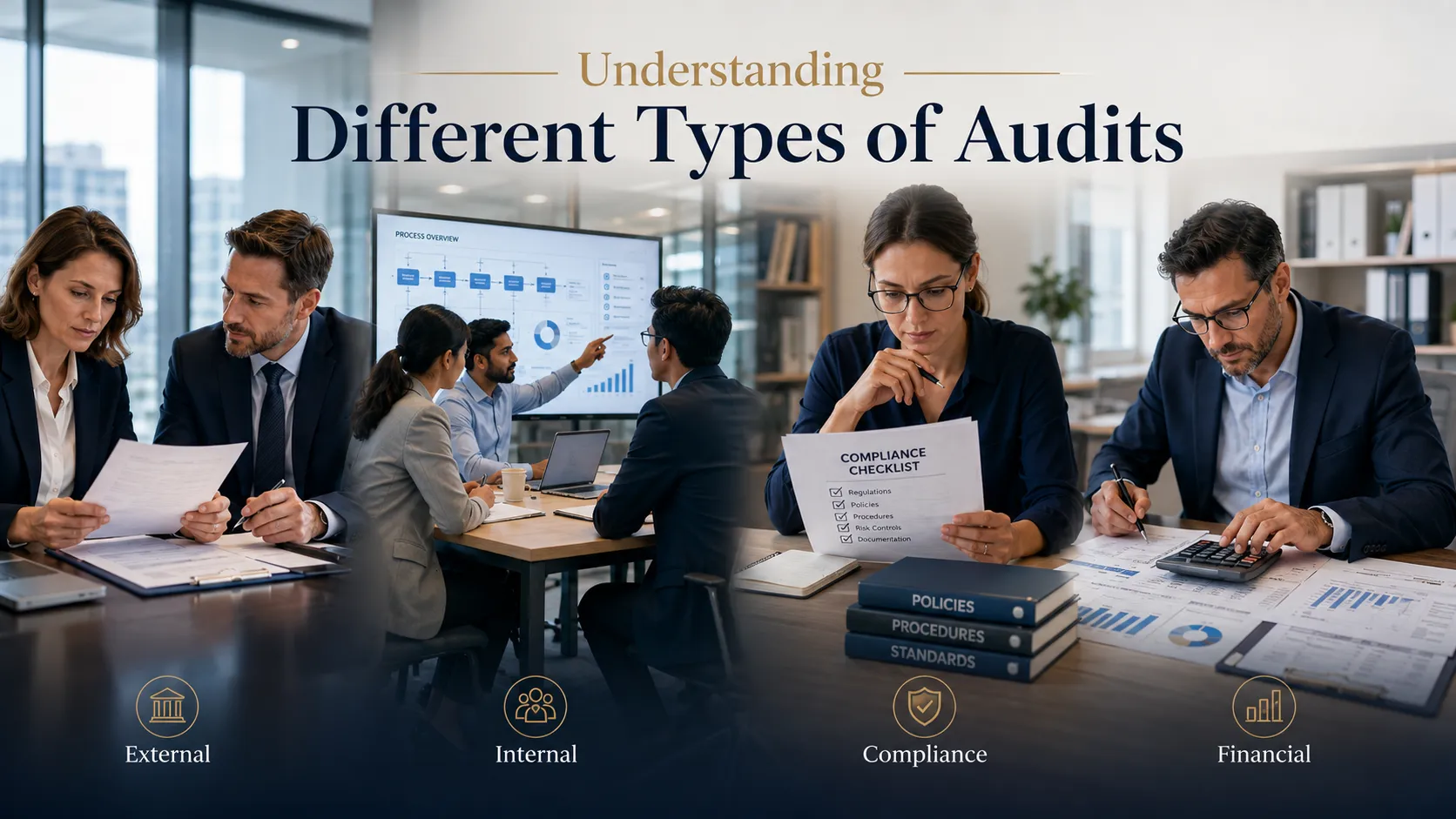
Audits come in various forms, each designed to address specific areas of an organisation’s operations.
1. External Audits
External audits are conducted by independent entities to ensure that an organisation’s financial statements and operations are represented fairly. They provide stakeholders with an objective assessment of the organisation’s compliance with accounting standards and regulations.
2. Internal Audits
Internal audits are crucial in identifying internal issues before they escalate into serious problems. These audits are conducted by the organisation’s own staff to review compliance, performance, and risk management. They are instrumental in fostering continuous improvement and strategic management.
3. Compliance Audits
These audits specifically focus on how well an organisation adheres to regulatory guidelines. Compliance audits protect organisations from fines and legal penalties by ensuring all regulations are strictly followed.
4. Financial Audits
Financial audits examine the accuracy and completeness of an organisation’s financial records. They help in detecting discrepancies, fraud, or misrepresentations that could impact stakeholders’ trust.
When Should Organizations Use Safety Audits and Safety Inspections?
Safety audits and safety inspections are not competing activities. Both are used at different stages of workplace safety management to control risks and improve compliance.
Organisations typically use safety inspections for routine workplace monitoring and immediate hazard identification. These inspections help safety teams quickly detect unsafe conditions before they lead to incidents.
On the other hand, safety audits are used to evaluate whether the overall safety management system is effective, properly implemented, and aligned with compliance requirements.
Common Situations Where Safety Inspections are Used
- Daily site safety monitoring
- PPE and housekeeping checks
- Equipment and machinery inspections
- Work-at-height and scaffolding checks
- Unsafe act and unsafe condition identification
Common Situations Where Safety Audits are Used
- Reviewing compliance with safety standards
- Evaluating permit-to-work systems
- Assessing contractor safety management
- Verifying training and documentation processes
- Measuring overall EHS system effectiveness
Organisations that combine regular inspections with structured audits are better able to identify risks early, improve accountability, and maintain a stronger workplace safety culture.
How Digital Safety Systems Improve Audits and Inspections
best software for safety audits and inspections. Traditional audit and inspection processes often rely on paper-based checklists, manual reporting, and disconnected records. This can lead to delayed reporting, missed observations, incomplete corrective actions, and difficulty tracking compliance across sites.
Digital safety systems help organisations streamline workplace audits and inspections through centralised reporting, mobile access, and real-time monitoring.
Key Benefits of Digital Audit and Inspection Systems
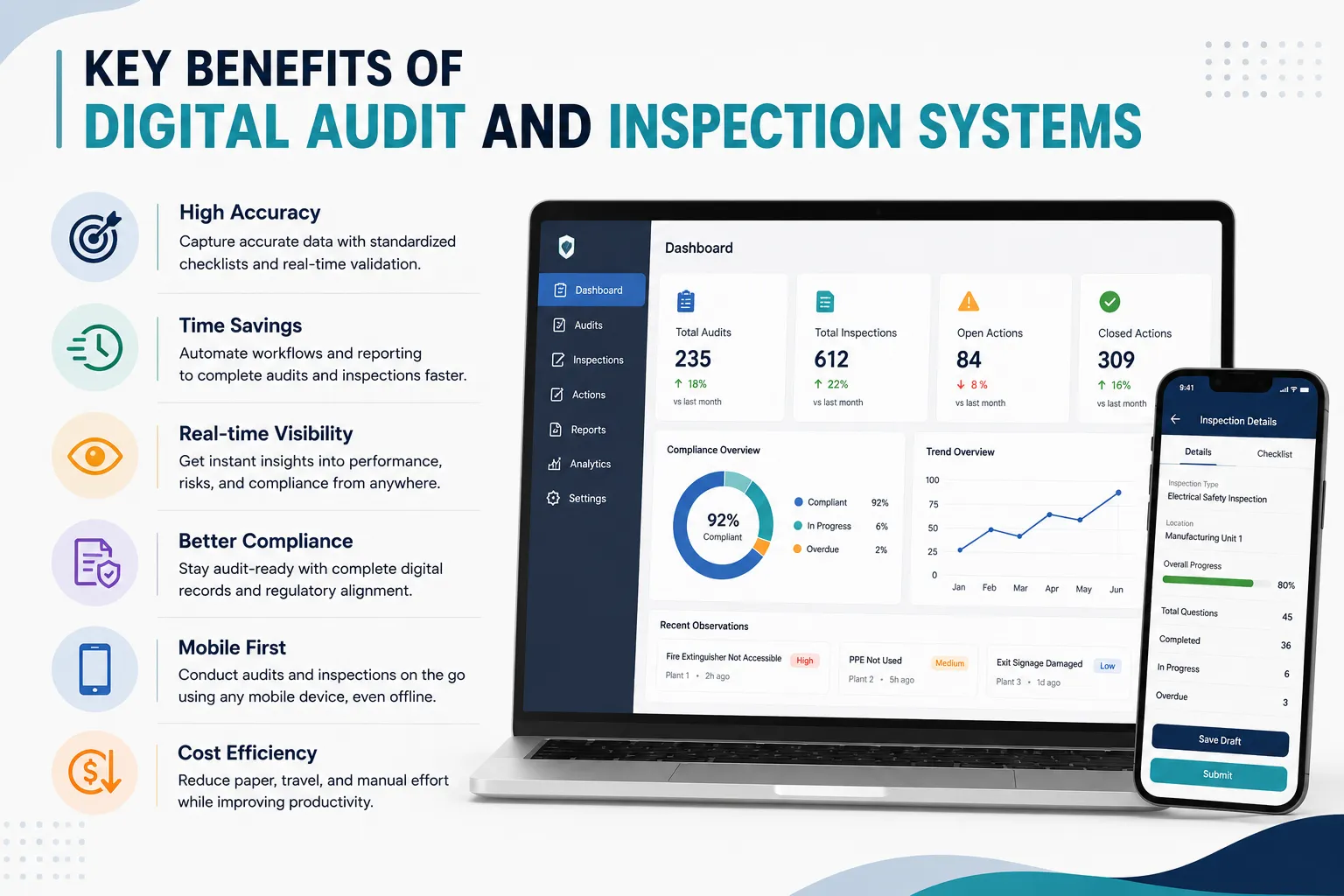
- Real-time inspection and audit reporting from the worksite
- Digital checklists for standardised assessments
- Faster corrective action assignment and tracking
- Centralised records for compliance and audit history
- Better visibility through dashboards and analytics
- Improved reporting accuracy across multiple sites
Get the best software for safety audits and inspectionsto help organisations simplify compliance processes, improve workplace visibility, and strengthen proactive safety management.
By using digital systems, organisations can reduce paperwork, improve follow-up actions, and ensure that safety audits and inspections contribute to continuous operational improvement.
Looking to improve workplace compliance and reporting? Explore CORE-EHS digital safety solutions for smarter audits and inspections.
Best Practices for Effective Safety Audits and Safety Inspections
To improve workplace safety and compliance, organisations should follow a structured and consistent approach for conducting both safety audits and safety inspections.
Best Practices to Follow
- Use standardised audit and inspection checklists across all sites
- Schedule audits and inspections regularly based on operational risks
- Involve supervisors, safety teams, and workers during assessments
- Document observations clearly with photos and supporting evidence
- Assign corrective actions with clear responsibilities and timelines
- Track closure status to ensure issues are resolved effectively
- Review audit and inspection data regularly to identify recurring risks
Organisations that follow these best practices are better able to improve compliance, reduce workplace hazards, and strengthen continuous safety improvement.
Combining structured audits, routine inspections, and digital tracking systems helps create a more proactive and accountable safety culture.
Conclusion
Understanding the difference between safety inspection and audit is important for improving workplace safety, strengthening compliance, and reducing operational risks.
A safety audit evaluates the effectiveness of the overall safety management system, while a safety inspection focuses on identifying immediate workplace hazards and unsafe conditions.
Both activities are essential for proactive safety management. Organisations that regularly conduct audits and inspections are better prepared to identify risks early, improve corrective action management, and maintain safer operations across worksites.
Strengthen your workplace safety processes with structured audits, routine inspections, and digital safety management solutions from CORE-EHS.