
 +91 72929 29159














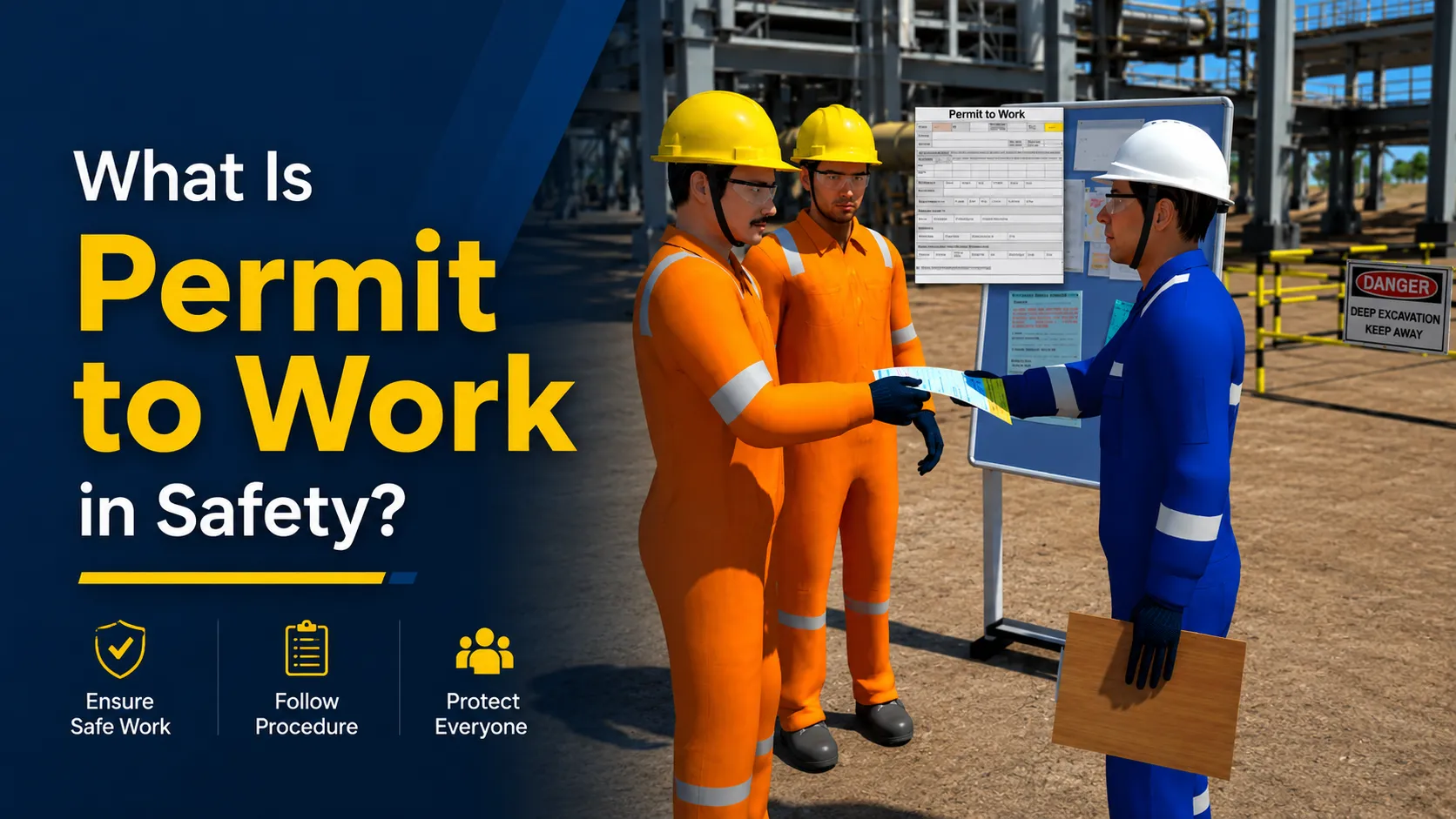
High-risk work should not begin without proper approval, hazard control and clear communication. A Permit to Work system helps ensure that hazardous or non-routine work starts only after the task, risks, precautions and responsible persons have been reviewed.
It is commonly used before activities such as hot work, confined-space entry, electrical maintenance, excavation and work at height.
What Is Permit to Work?
A Permit to Work, also called PTW, is a formal written or digital authorization used to control hazardous or non-routine work. It defines the task, work location, hazards, required precautions, responsible persons, validity period and approval conditions before work begins.
PTW stands for Permit to Work.
In simple words, a Permit to Work gives formal permission to carry out a hazardous task only after the required safety precautions have been checked and approved.
For example, before welding starts in a process area, the work location may need to be inspected, combustible materials removed, gas testing completed and fire-protection arrangements confirmed.
A signed permit does not make the job safe by itself. The precautions mentioned in the permit must be physically implemented, verified and maintained until the work is completed and the permit is properly closed.
CORE-EHS Safety Note: A Permit to Work is not simply a form or signature. It is a safety-control and communication process that confirms hazardous work can begin under clearly defined conditions.
Why Is a Permit to Work Important in Safety?
A Permit to Work is important because it helps control hazardous work before the job begins. Many workplace incidents occur when high-risk activities start without proper planning, authorization, communication or supervision.
A PTW system provides a structured process to:
- Identify the hazards connected with the task
- Confirm that required safety precautions are in place
- Assign clear responsibilities
- Prevent unauthorized work
- Coordinate different teams and activities
- Monitor the work until it is safely completed
It also improves communication between supervisors, safety teams, contractors, maintenance personnel and workers. This is especially important during shutdowns, major maintenance activities and simultaneous operations, where one task may affect another.
A properly managed Permit to Work system supports incident prevention, audit readiness, accountability and compliance with applicable workplace safety requirements.
CORE-EHS Safety Note: A permit should be issued only after the work area and required controls have been physically checked. Signing the document alone does not make the task safe.
When Is a Permit to Work Required?
A Permit to Work is generally required when a task is hazardous, non-routine or cannot be safely controlled through normal operating procedures alone.
It is commonly used when the work may create serious risks to workers, equipment, process systems or the surrounding workplace.
Activities that may require a Permit to Work include:
- Hot work such as welding, cutting and grinding
- Confined-space entry
- Electrical maintenance and isolation work
- Work at height
- Excavation and trenching
- Critical lifting operations
- Line breaking or opening process equipment
- Maintenance on isolated or energized equipment
- Work involving hazardous chemicals
- Work affecting fire-protection or emergency systems
The exact permit requirement depends on the task risk, workplace procedures and applicable safety rules.
Before the permit is approved, the job should be reviewed, hazards identified, isolations confirmed, precautions verified and responsible persons clearly assigned.
The permit should also be suspended or revalidated if the work conditions, team, location, equipment or hazards change.
Common Types of Permit to Work
The types of Permit to Work used by an organisation may vary depending on the industry, task, workplace risks and internal safety procedures.
Common permit types include:
| Type of Permit | Used For |
| Hot Work Permit | Welding, gas cutting, grinding, cutting, or any spark-producing activity |
| Cold Work Permit | Maintenance, repair, or inspection work that does not involve heat or sparks |
| Confined Space Entry Permit | Entry into tanks, vessels, pits, ducts, chambers, or enclosed spaces |
| Electrical Work Permit | Electrical maintenance, isolation, testing, or energised electrical work |
| Work at Height Permit | Roof work, scaffolding, ladders, platforms, or elevated work areas |
| Excavation Permit | Digging, trenching, soil removal, or underground utility work |
| Lifting Permit | Crane lifting, heavy lifting, critical lifting, or material handling operations |
| Chemical Work Permit | Work involving hazardous chemicals, gases, or process materials |
There is no single fixed number of permit types for every workplace. An organisation may use additional permits depending on its operations, risk assessment, legal requirements and safety procedures.
Permit to Work Procedure: Step-by-Step Process
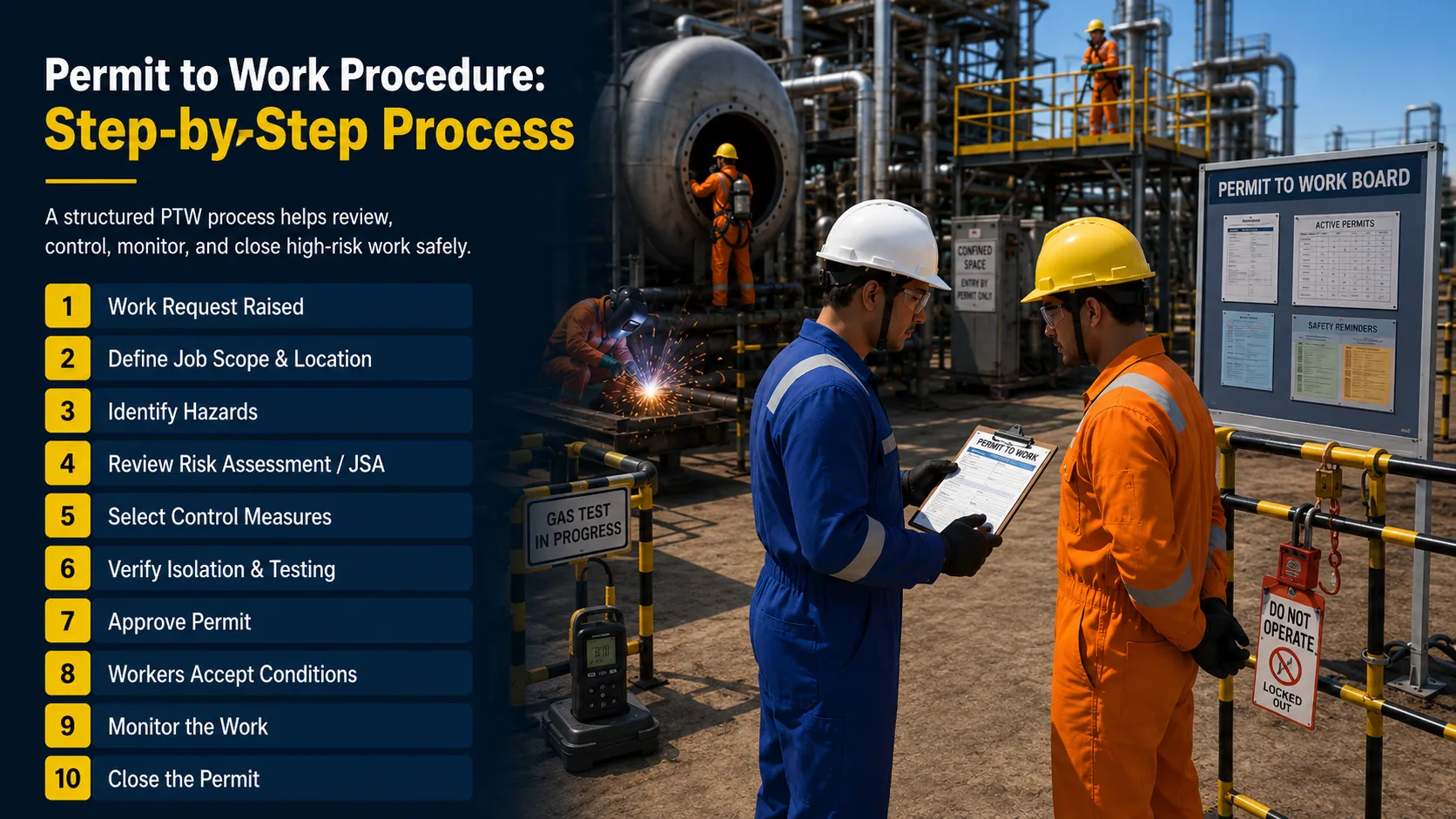
A Permit to Work procedure follows a structured process to ensure hazardous work is properly reviewed, authorised, controlled, monitored and safely closed.
The exact procedure may vary between workplaces, but a typical Permit to Work process includes the following steps:
- Raise the work request
The requester submits details of the task, including the work description, location, expected duration and responsible team. - Define the job scope
The activity, work area, equipment involved and limits of the job are clearly identified. - Identify the hazards
Hazards related to the task, equipment, workplace conditions and nearby activities are reviewed. - Review the risk assessment or JSA
The relevant risk assessment, Job Safety Analysis or method statement is checked before the permit is approved. - Confirm the control measures
Required controls such as PPE, barricading, ventilation, fire protection, supervision and emergency arrangements are verified. - Complete isolation and testing
Electrical isolation, process isolation, Lockout/Tagout, gas testing or other safety checks are completed where required. - Authorise the permit
An authorised person reviews the job conditions and approves the permit only after confirming that the required controls are in place. - Communicate and accept the permit
The work supervisor and performing team review the hazards, precautions, permit limits and emergency requirements before starting work. - Monitor the work
The task is supervised to ensure permit conditions remain effective. The permit should be suspended and reviewed if the work conditions, hazards, team or job scope change. - Complete handback and close the permit
After the work is finished, tools and materials are removed, guards and safety systems are restored, the area is inspected and the equipment is formally handed back before the permit is closed.
CORE-EHS Safety Note: Work should not begin only because a permit has been signed. The safety controls listed on the permit must be physically verified at the work location.
What Information Should a Permit to Work Include?
A permit to work system should capture all important details needed to control the job safely. A clear PTW checklist helps workers, supervisors, safety teams, and approvers understand the work scope, hazards, controls, and responsibilities before the activity begins.
A typical Permit to Work should include:
- Permit number
- Work location
- Job description and scope of work
- Date, start time, end time, and permit validity
- Name of requester, issuer, approver, and performing team
- Hazards involved in the activity
- Required control measures
- PPE requirements
- Isolation or lockout/tagout details
- Gas testing details, if applicable
- Emergency arrangements or rescue plan
- Signatures or digital approvals
- Permit closure confirmation
Including these details makes the permit easy to track, review, audit, and close properly after the work is completed.
Permit to Work Example in Workplace Safety
Here is a simple permit to work example. If welding work needs to be done inside a plant, a hot work permit may be required before the job starts. The work area must be inspected, flammable materials should be removed, fire extinguishers should be available, and nearby equipment should be protected.
If required, gas testing should be completed before approval. Workers must wear the correct PPE, follow safe work instructions, and understand the permit conditions. The authorised person then approves the permit before welding begins.
After the work is completed, the area should be checked again for fire risk, tools should be removed, and the permit should be formally closed.

Digital Permit to Work System
A digital permit to work system helps organisations manage high-risk work with better control, visibility, and accountability. Instead of using paper-based permits, e-PTW software allows safety teams to create, review, approve, monitor, and close permits through a centralised digital platform.
Digital permit to work software can help improve the PTW process through:
- Digital permit creation and approval
- Role-based authorization workflow
- Mobile access for site teams
- Real-time alerts and notifications
- Permit validity tracking
- Integration with risk assessment, LOTO, inspection, and incident systems
- Audit-ready records and reports
- Dashboard visibility for EHS leaders
- Faster closure and compliance monitoring
A PTW software also helps reduce manual errors, missing approvals, delayed communication, and poor recordkeeping. CORE-EHS Digital Permit to Work Software supports organisations in managing high-risk work authorisation, approval, monitoring, and closure through a controlled and traceable safety platform.
Conclusion
A Permit to Work is an important safety control system for managing hazardous, non-routine, and high-risk activities. It helps organisations like Core-EHS identify hazards, define safety controls, assign responsibilities, approve work, monitor execution, and close the job safely.
Understanding what is permit to work in safety is helps workers, supervisors, contractors, and EHS teams follow a structured process before starting critical work. A strong permit to work system improves communication, prevents unauthorised work, supports compliance, and reduces the chances of workplace incidents.
With digital permit to work software from CORE-EHS, organisations can make the PTW process faster, more transparent, and easier to track.