 +91 72929 29159









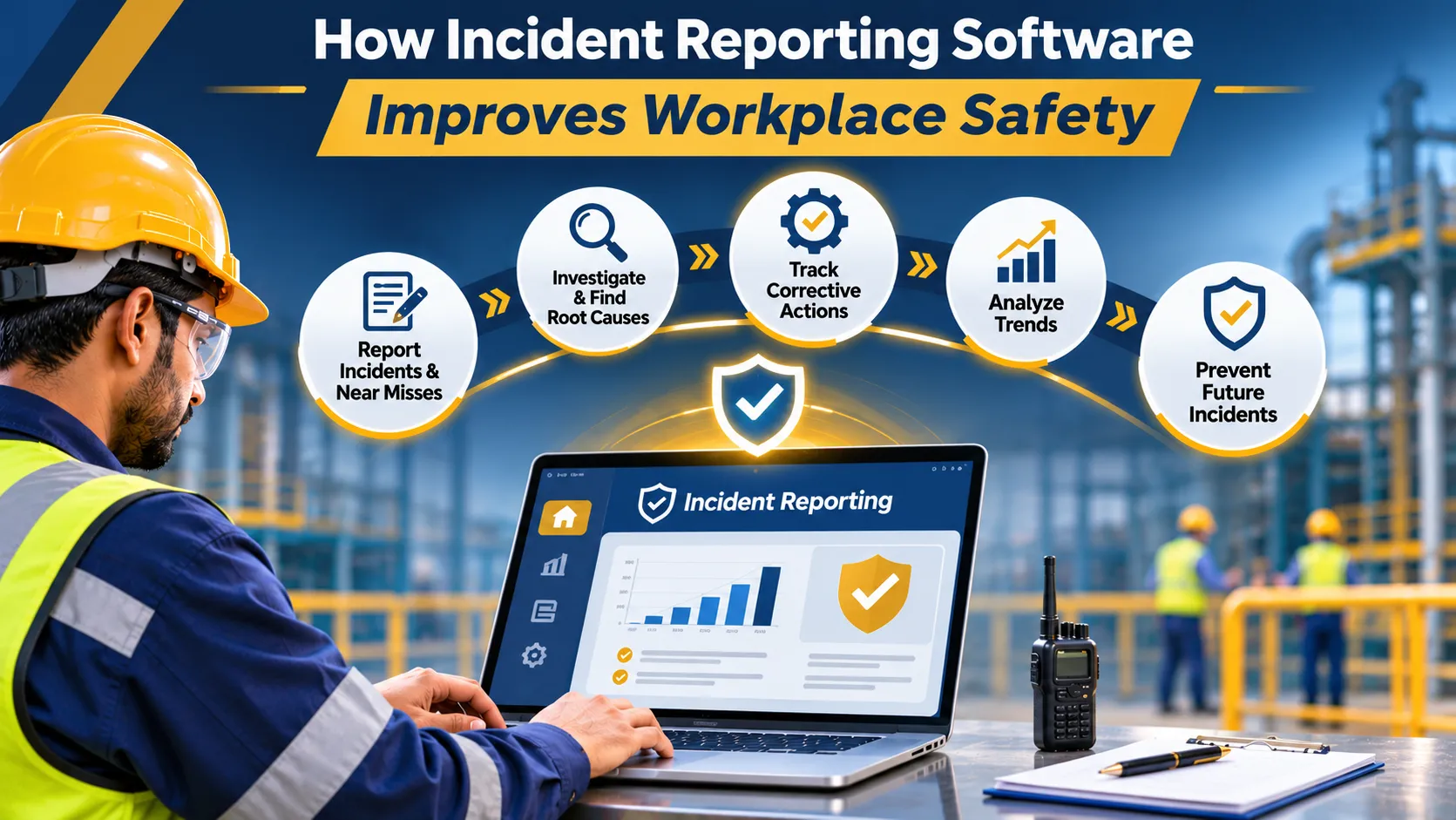
A near miss is reported at a manufacturing plant. The report is recorded, but the investigation is delayed, corrective actions remain pending, and the same hazard continues to expose workers to risk.
This is where incident reporting software can make a difference.
By connecting incident reporting, investigations, corrective action tracking, and safety data analysis in one system, organizations can identify recurring hazards, improve accountability, and address risks before they contribute to serious accidents.
Improving workplace safety requires more than recording incidents. It requires turning every report into meaningful preventive action.
What Is Incident Reporting Software?
Incident reporting software is a digital system used to record, organize, and track workplace incidents, near misses, and unsafe conditions. It replaces scattered paper forms and spreadsheets with a centralized reporting process.
A workplace incident reporting system allows employees and safety teams to document events, capture supporting evidence, and monitor reporting status.
When integrated with broader incident management capabilities, digital incident reporting also supports investigations, root cause analysis, corrective action assignments, and follow-up.
This creates a structured process for turning reported incidents into actionable safety improvements.
Why Do Traditional Incident Reporting Methods Create Safety Gaps?
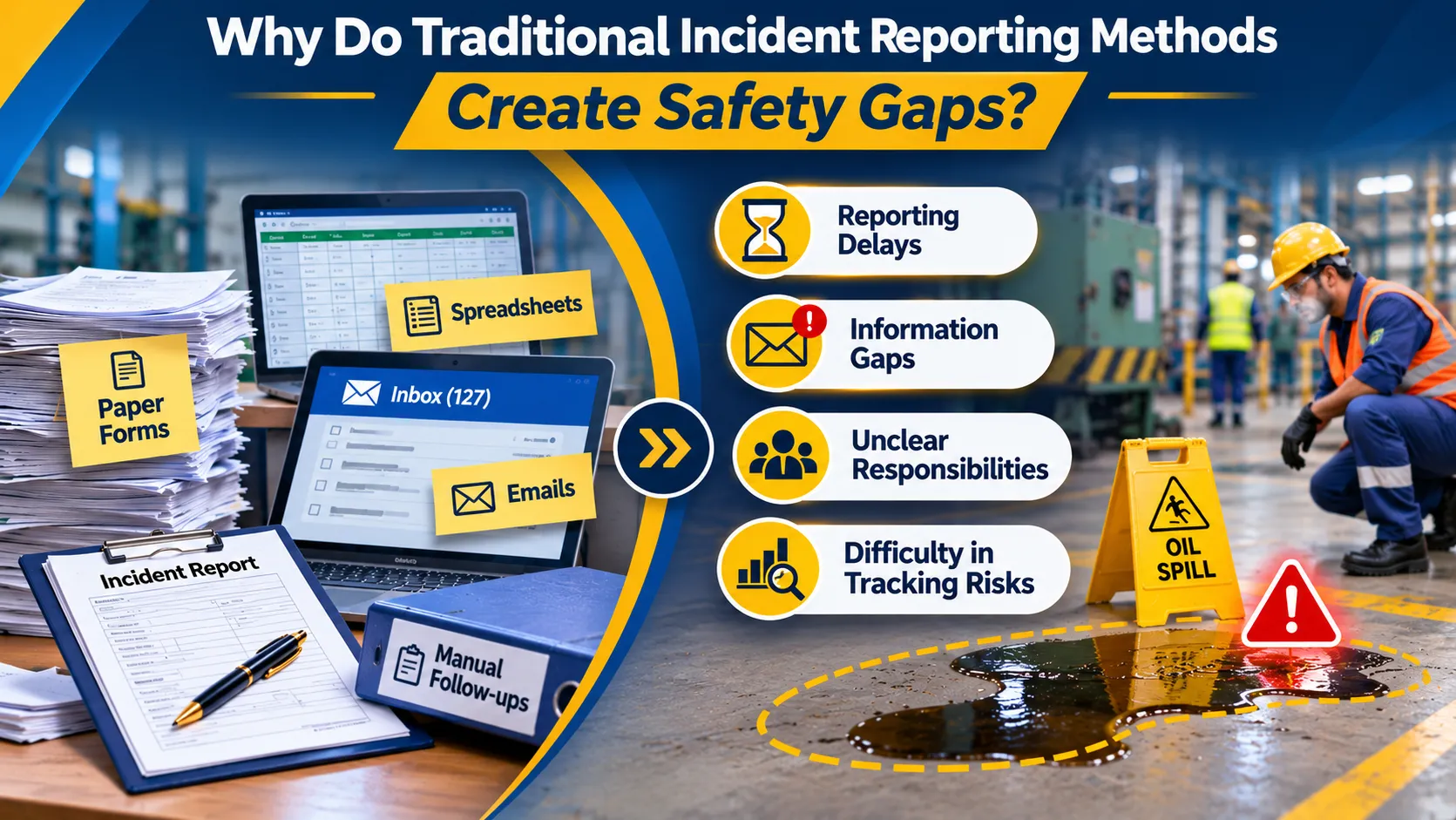
Traditional incident reporting often relies on paper forms, spreadsheets, emails, and manual follow-ups. While these methods can document workplace incidents, they may create delays and information gaps that affect timely safety interventions.
A reported near miss might remain in an email inbox, investigation findings may be stored separately, and corrective actions may lack clearly assigned responsibilities or deadlines.
For example, a worker narrowly escapes being struck by a falling object at a construction site. If the report is not promptly communicated to the responsible supervisor, the underlying cause may remain unaddressed, increasing the likelihood of a similar event resulting in a serious injury.
Without a centralized reporting process, tracking recurring hazards, monitoring corrective actions, and verifying their effectiveness becomes more difficult.
The real safety gap is not simply how incidents are recorded, but whether reported risks are investigated and addressed before they cause harm.
6 Ways Incident Reporting Software Improves Workplace Safety
Incident reporting software strengthens workplace safety by connecting incident reporting with investigations, corrective actions, and ongoing risk monitoring. Here are six ways it supports a more proactive approach to incident prevention.
1. How Does Digital Reporting Improve Incident Visibility?
Delayed reporting can leave workplace hazards unaddressed. Digital incident reporting enables employees to submit incident details, photographs, and supporting evidence through a centralized system.
Safety teams can access reports promptly, assess their severity, and initiate appropriate responses. This improved visibility reduces communication gaps and allows potentially hazardous conditions to receive attention before they escalate.
2. How Does Software Support Near Miss Reporting?
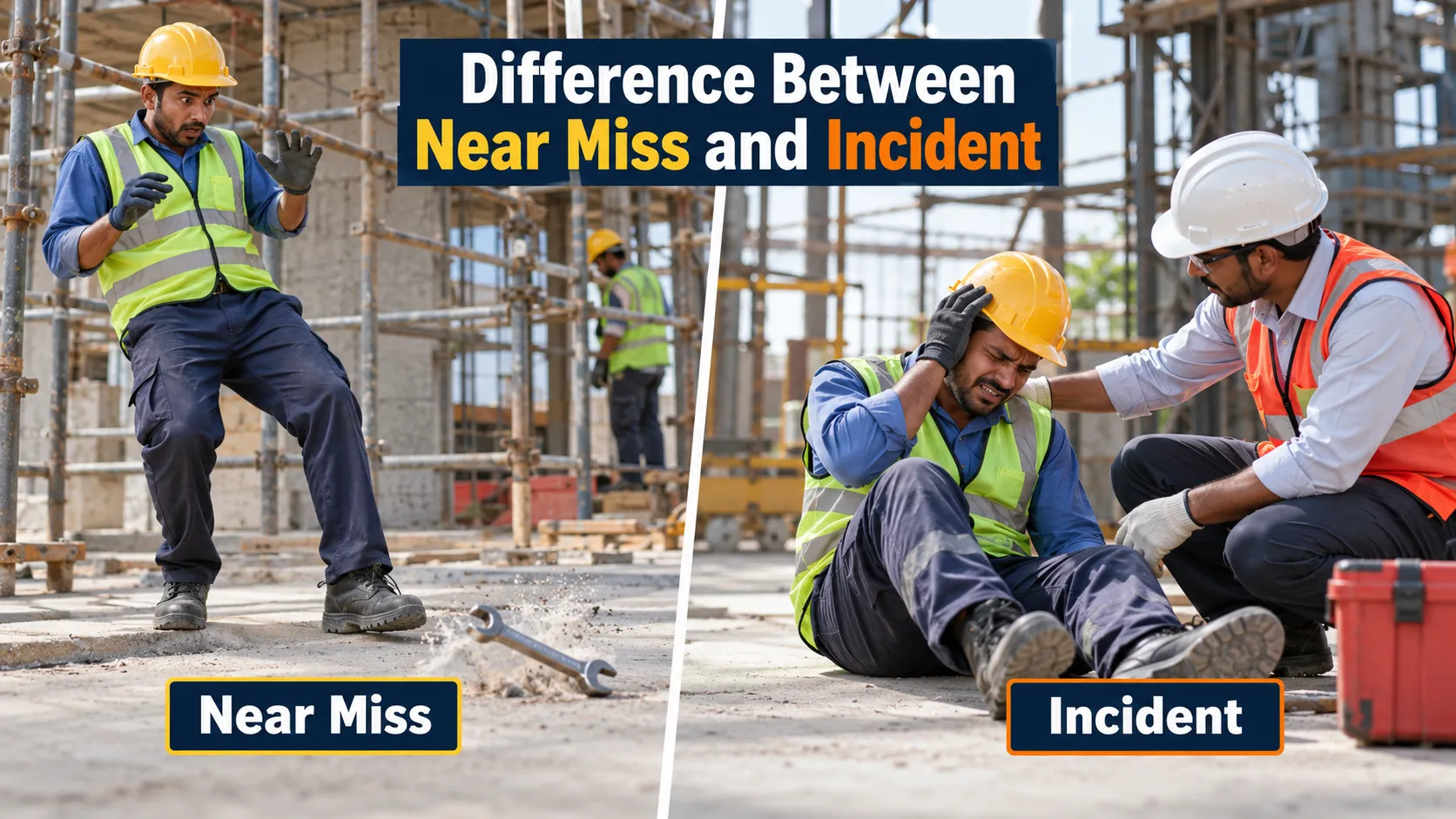
Near misses provide valuable warnings about hazards that could lead to future accidents.
Near miss reporting software makes it easier for workers to document events that did not result in injury or damage but had the potential to cause harm.
By reviewing these reports, EHS teams can identify recurring hazards, investigate contributing factors, and introduce preventive measures before similar events result in serious incidents.
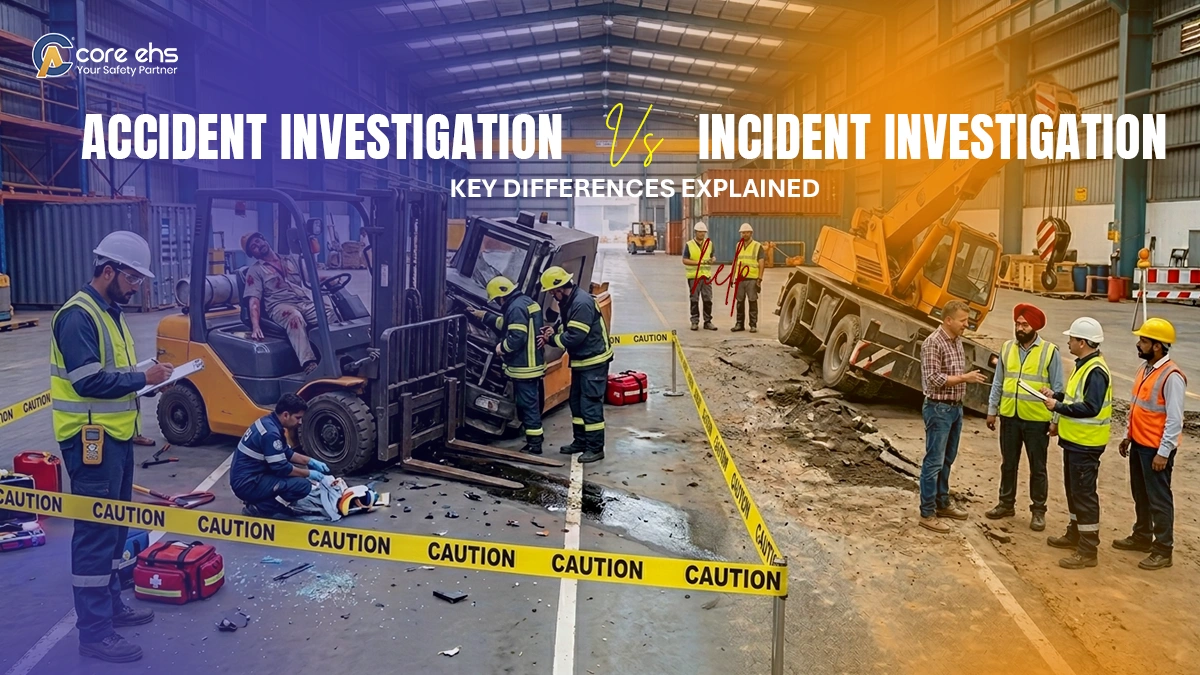
3. How Does Software Improve Incident Investigation?
Effective incident investigations require accurate evidence, structured documentation, and identification of underlying causes.
Incident investigation software centralizes witness statements, photographs, investigation findings, and supporting records.
It also supports structured root cause analysis by maintaining investigation workflows and documenting contributing factors. This enables investigation teams to move beyond immediate causes and recommend corrective actions that address underlying system weaknesses.
4. How Does Software Strengthen Corrective Action Tracking?
Identifying the cause of an incident is only useful when appropriate corrective actions are implemented.
Corrective action tracking enables safety teams to assign responsibilities, establish deadlines, monitor progress, and follow up on pending actions.
Automated reminders and escalation notifications can reduce overlooked tasks. However, closing an action should require suitable evidence and, where necessary, effectiveness verification to confirm that the identified risk has been adequately controlled.
5. How Does Incident Data Reveal Recurring Safety Risks?
Individual incident reports may appear unrelated, but combined data can reveal patterns that are difficult to identify manually.
Incident trend analysis allows EHS teams to examine recurring hazards, incident categories, affected locations, and contributing factors through centralized dashboards.
These insights support risk-based decisions, allowing organizations to prioritize inspections, strengthen controls, and direct safety resources toward areas requiring greater attention.
6. How Does Digital Reporting Improve Accountability?
Incident investigations often involve multiple departments, supervisors, and action owners. Without clear responsibilities, important follow-up activities can be delayed.
A digital incident tracking system creates visibility into assigned tasks, investigation progress, deadlines, and action status.
Notifications, escalation workflows, and audit trails strengthen accountability by making it easier for management to identify pending actions and verify whether required safety measures have been completed.
How Does Incident Reporting Software Work in a Real Industrial Scenario?
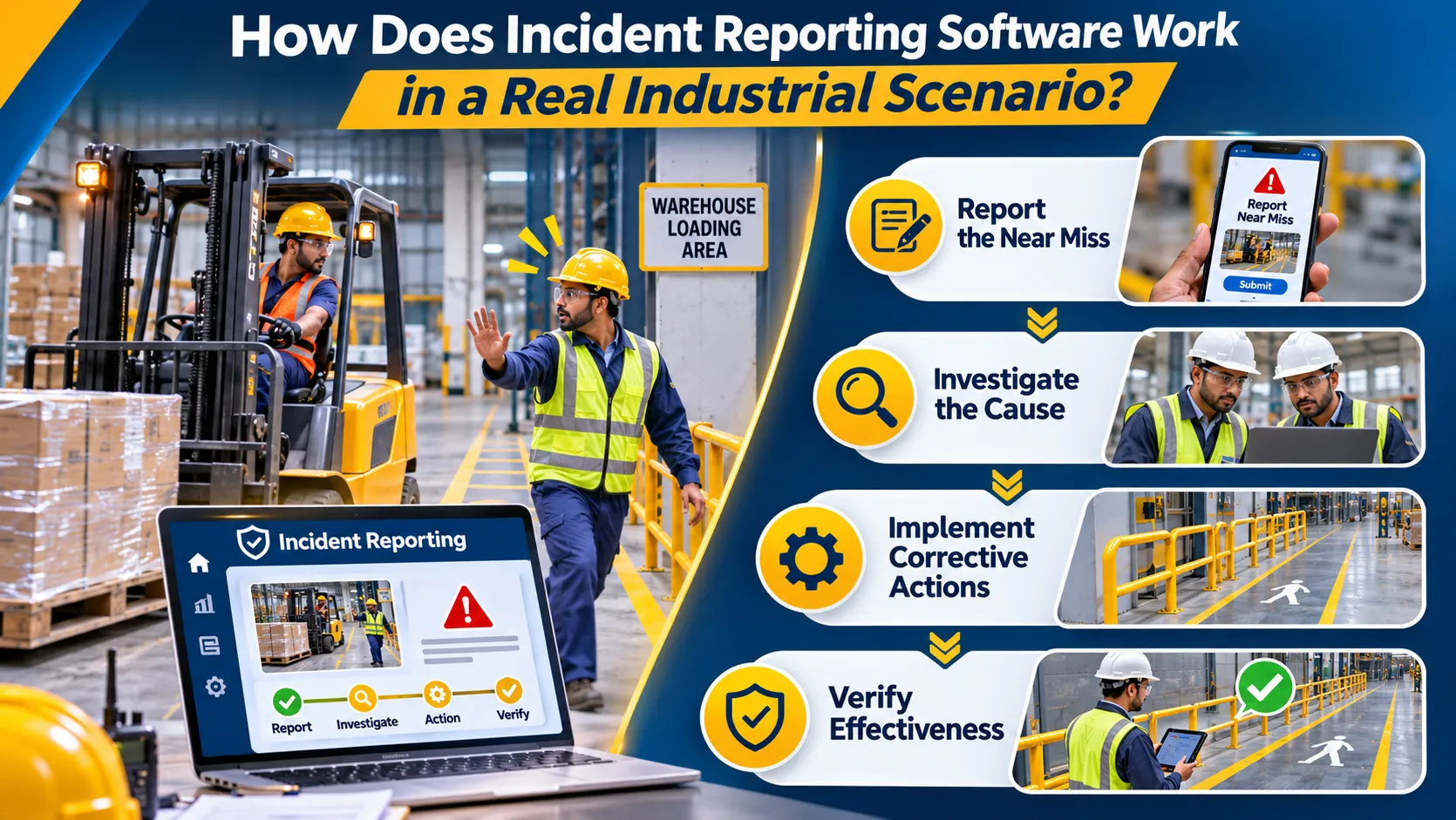
Consider a near-miss incident at a manufacturing facility where a forklift narrowly misses a pedestrian near a warehouse loading area. Although no injury occurs, the incident reveals a potential risk of a serious collision.
Here’s how incident reporting software supports a structured response:
- Report the Near Miss: A worker records the incident using a digital reporting system, including the location, event details, and supporting photographs.
- Investigate the Cause: The EHS team reviews the report and identifies contributing factors, such as inadequate pedestrian segregation or obstructed visibility.
- Implement Corrective Actions: Responsible personnel are assigned actions, such as improving pedestrian barriers, marking designated walkways, and reviewing traffic management procedures.
- Verify Effectiveness: Supervisors inspect the implemented controls, document evidence, and monitor whether similar near misses recur.
This incident reporting workflow turns an early warning into an opportunity for preventive action. The software provides traceability, while effective risk controls and management follow-through deliver the actual safety improvement.
Incident Reporting Software vs Manual Reporting: What Changes?
Traditional reporting methods can document workplace incidents, but managing investigations and corrective actions across paper forms, spreadsheets, and emails often requires additional administrative effort.
Digital incident reporting centralizes these activities, giving EHS teams better visibility into incident status, assigned responsibilities, and unresolved safety concerns.
The table below highlights the key differences:
Manual Incident Reporting |
Incident Reporting Software |
| Reports stored across paper forms, spreadsheets, or emails | Incident records maintained in a centralized system |
| Investigation updates tracked separately | Investigation findings and supporting evidence linked to incident records |
| Corrective actions require manual reminders and follow-ups | Assigned actions tracked through deadlines, notifications, and status updates |
| Incident trends require manual data compilation | Dashboards support analysis of recurring incidents and workplace hazards |
While software improves efficiency and traceability, effective workplace safety still depends on accurate reporting, thorough investigations, and verified corrective actions.
How Can CORE IRIS Support Better Incident Management?
Effective incident management requires more than recording incidents. Organizations need a structured system to investigate causes, monitor corrective actions, and prevent recurring workplace hazards.
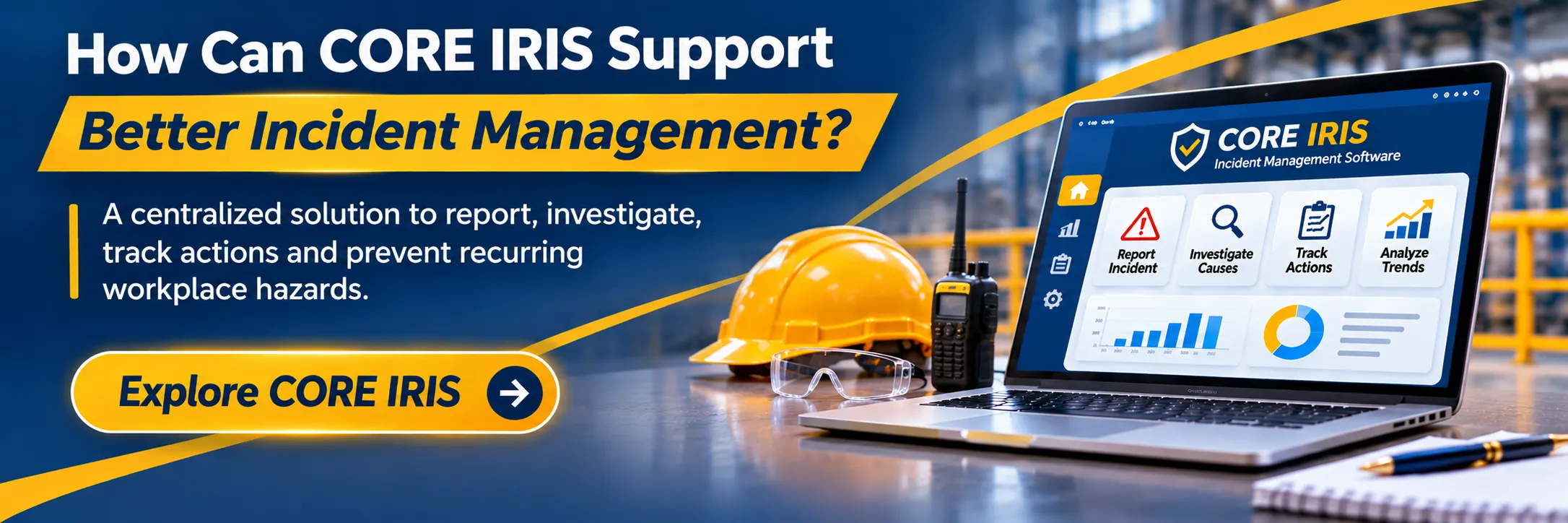
CORE IRIS Incident Management Software centralizes incident and near-miss reporting, investigation records, and corrective action tracking within a digital platform.
With structured investigation workflows, automated notifications, and centralized dashboards, EHS teams can monitor investigation progress, identify pending actions, and analyze incident trends across worksites.
By improving visibility and accountability throughout the incident management process, CORE-EHS IRIS supports informed safety decisions and continuous improvement.