+91 72929 29159


EHS Document Management Software
In large and compliance-driven organizations, managing EHS documents manually can quickly lead to version errors, outdated policies, and missed renewals — all of which increase regulatory risk.




 Solutions

All your EHS & ESG needs
Empowering responsible decisions through unified EHS and ESG solutions

Read our success stories
Explore how we have transformed safety cultures with our EHS solutions.

.
.
Resources
About Us
Our Mission
Our mission is to empower industries to achieve their safety, health,and environmental objectives, integrating Environmental, Social, and Governance (ESG) principles into our strategic insights, expert guidance, and innovative solutions. We are dedicated to advancing sustainable and responsible practices across all sectors.
Our Vision
Our vision is to become the foremost provider of exceptional safety services, enabling organizations to not only meet but excel in their safety, health, and environmental goals, while fully embracing and
implementing ESG standards for a sustainable future.
Connect Every EHS Process in One Digital Platform
CORE-EHS360 connects incidents, hazards, audits, CAPA, training, contractors, permits and environmental workflows through one integrated EHS management platform.
CORE-EHS360 is an integrated EHS management platform designed to connect safety, compliance, environmental and operational workflows across sites, departments and business units. Instead of managing incidents, audits, corrective actions, permits, contractors and training through disconnected systems, organizations can manage these processes through one configurable platform.








EHS360 – Trusted Safety Software for Modern Industries
EHS safety management software improves safety and compliance with real-time reporting, faster investigations, and risk prevention.
Contact Us
Manage incidents, hazards, inspections, audits, risk assessments, CAPA, training and compliance activities through connected digital workflows.

Monitor site performance, open risks, overdue actions and EHS trends through centralized dashboards and management reports.

Report hazards, near misses, unsafe conditions and incidents through simple web and mobile reporting tools.
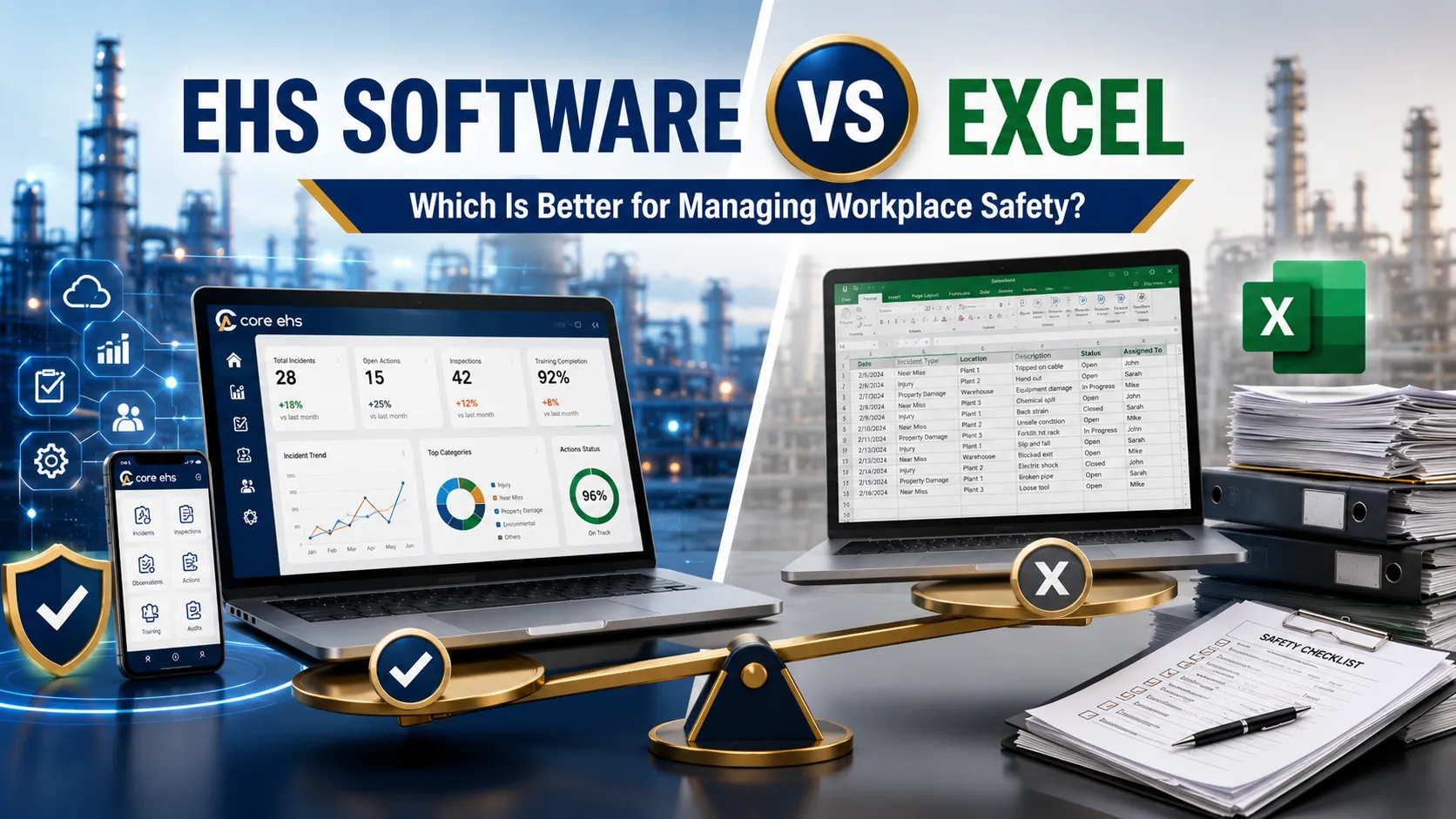
Organizations relying on spreadsheets, paper forms and disconnected EHS tools often struggle with reporting delays, limited visibility, weak accountability and inconsistent safety processes.

Data remains divided across spreadsheets, emails and standalone tools.

Important information reaches decision-makers too late.

Leadership cannot easily compare safety performance across locations.

Corrective actions remain overdue because ownership and escalation are unclear.

Paper-based tracking slows approvals and increases human error.

Complicated reporting processes discourage employees from reporting issues.
With a top-notch Integrated EHS Management Software (EHS360), businesses can experience:

Capture, track, and analyze incidents to prevent recurrence.

Identify unsafe conditions and take corrective actions promptly.

Digitize audit workflows with checklists, CAPA, and real-time tracking.

Schedule and monitor workforce skill development and compliance training.

Manage PPE issuance, inspection, and compliance status.
Oversee contractor onboarding, training, and performance.
Track waste disposal, emissions, and environmental KPIs.
Visualize safety performance metrics with powerful, real-time dashboards.
Stay informed with smart reminders and compliance alerts.
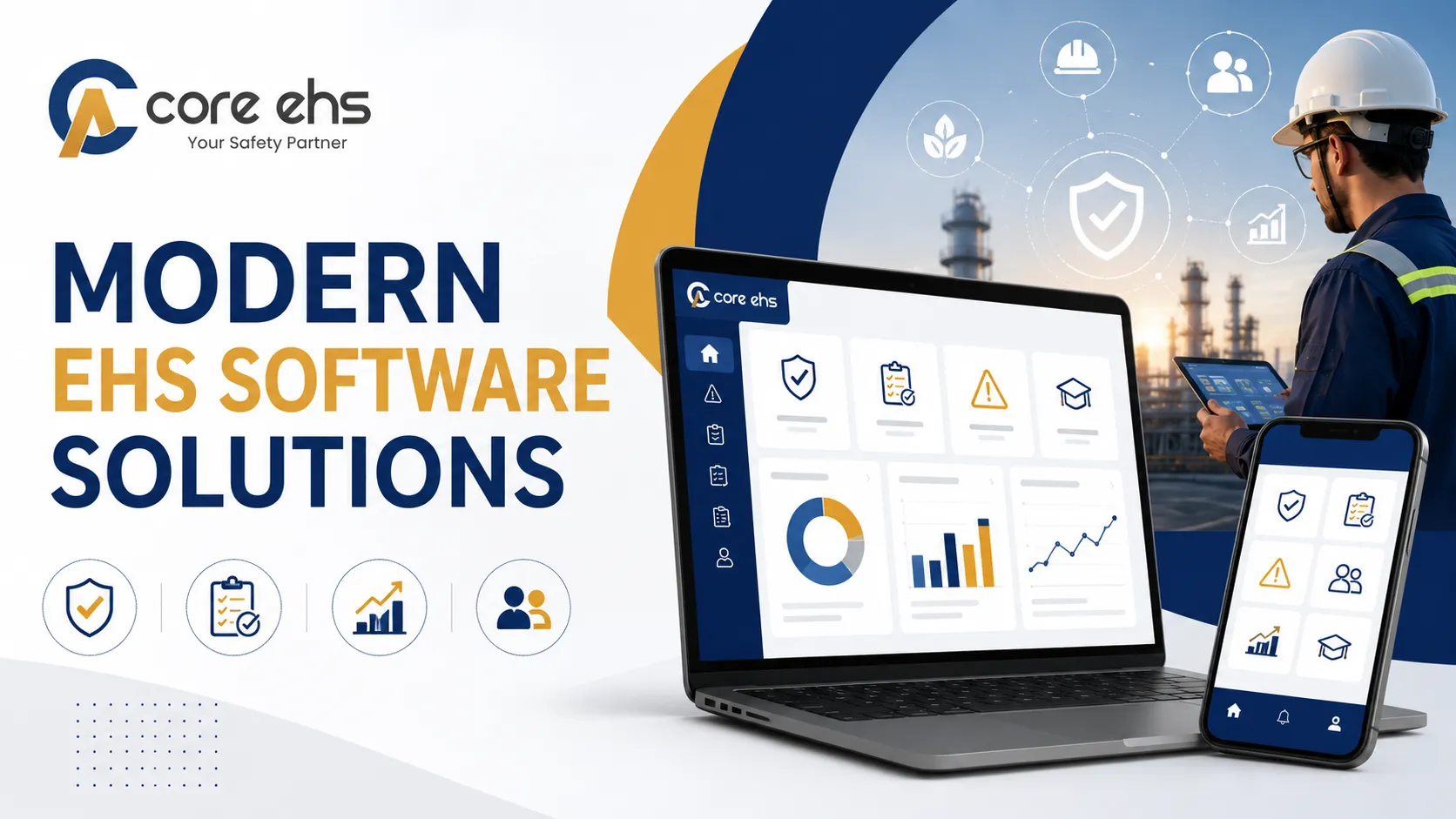
Explore how teams report safety events, track corrective actions and monitor EHS performance through web and mobile dashboards.
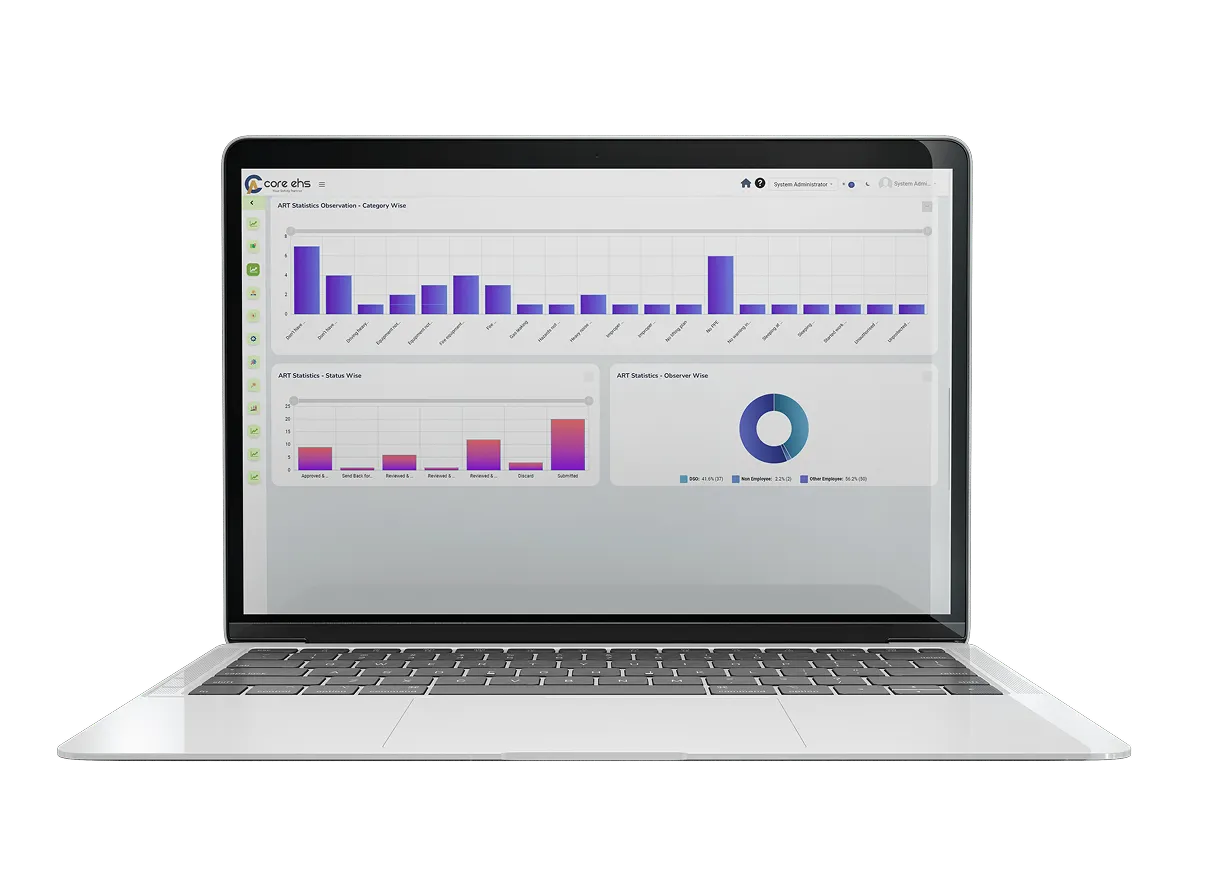
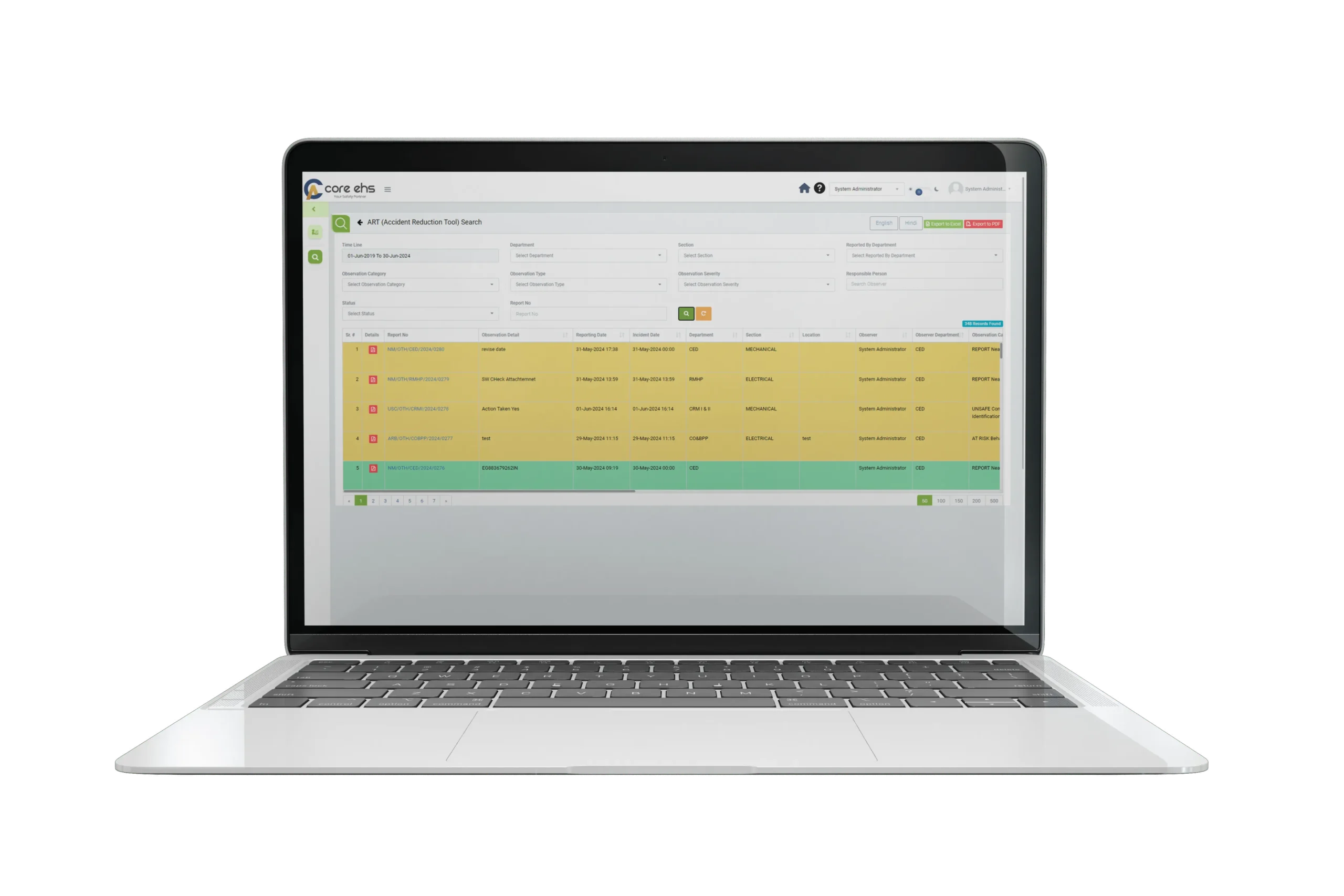
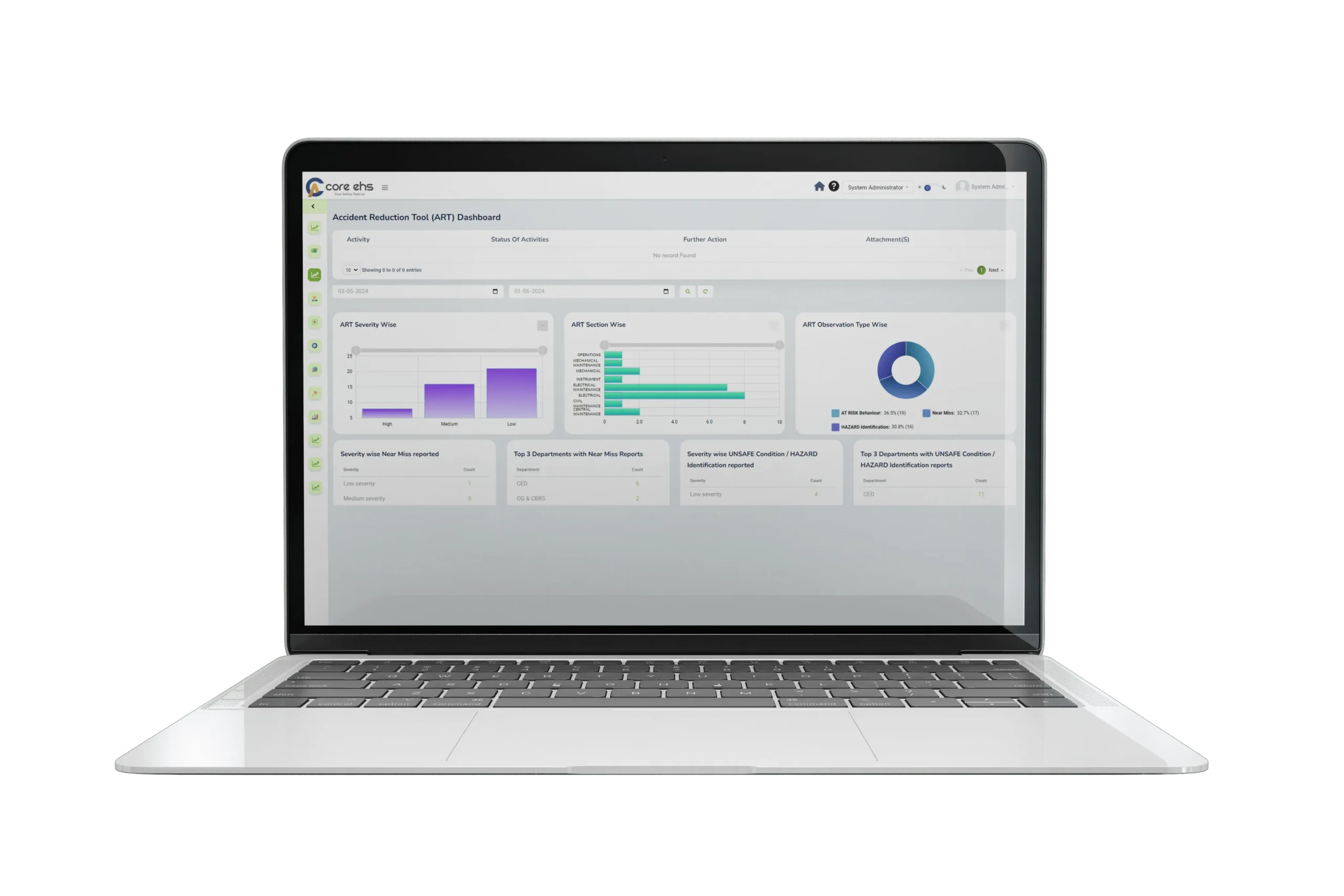
CORE-EHS360 supports safety, compliance and risk-management processes across complex, multi-site industrial operations.

Engineering

Automobiles

Automotive & Mobility

Power

Iron & Steel

Cement Industry

Metal & Mining

Shipping & Marine

Construction & Infrastructure

Chemicals & Fertilizer

Pharmaceutical& Life Science

Food FMCG & Agriculture

Electrical & Electronics

Retails & Consumer Durable
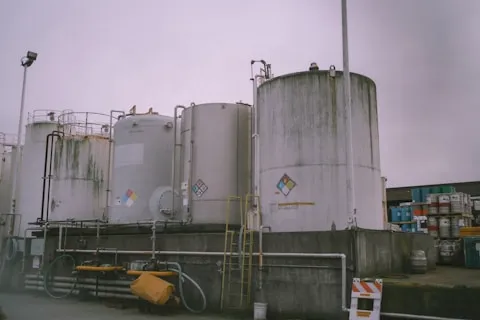
Petrochemical, Oil, Gas & Refinery
With CORE-EHS, organizations gain access to a range of powerful capabilities, such as








Extend your EHS management system with specialized modules for document control, safety dashboards, inspections and corrective-action tracking.
To know more about us
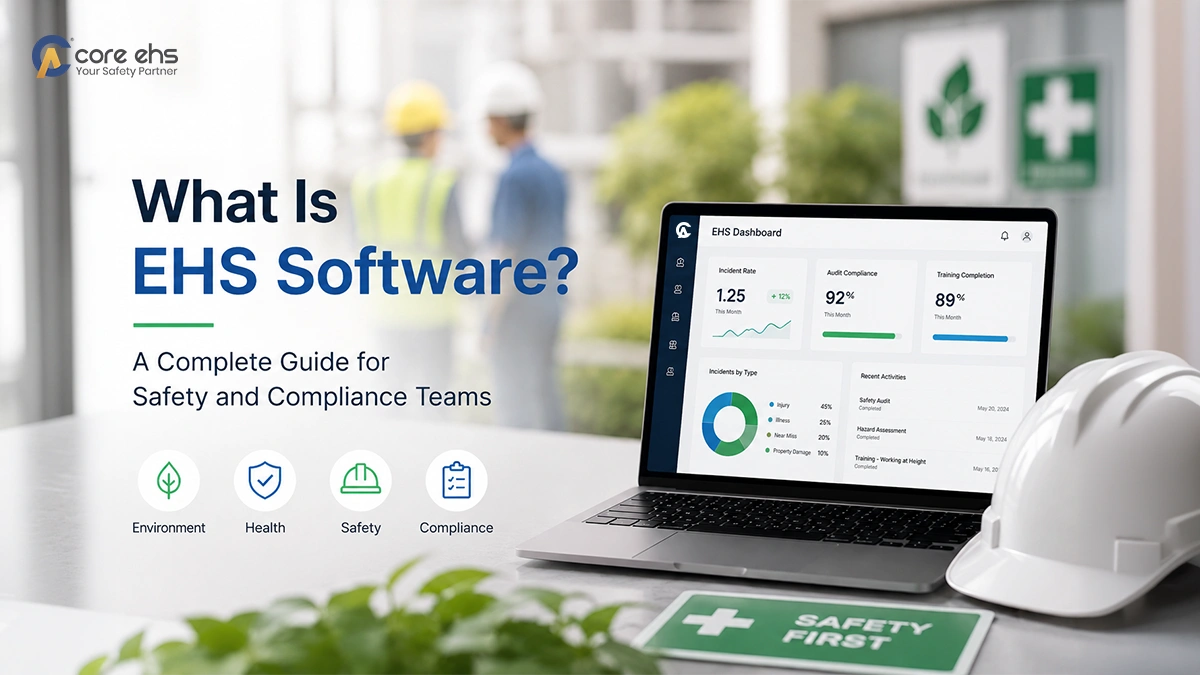
EHS management software helps organizations manage environment, health and safety processes through one digital system. It can bring incident reporting, risk assessments, audits, inspections, corrective actions, training records and compliance documentation into structured workflows with clearer responsibility and progress tracking.
An integrated system can help safety and operations teams manage incidents, hazards, audits, permits, contractors, training, environmental records and corrective actions. It reduces dependence on disconnected spreadsheets, emails and paper-based records by bringing related EHS activities into a coordinated platform.
CORE-EHS360 is designed for organizations that need to manage EHS activities across plants, projects, departments or business units. It can help standardize processes while giving authorized teams visibility into site-level activities and consolidated performance.
Multi-site hierarchy and reporting capabilities should be confirmed during the demonstration.
A digital system can replace many spreadsheet-based processes by providing standardized forms, assigned responsibilities, notifications, status tracking and centralized records. This makes it easier to monitor open actions, find supporting evidence and maintain consistent information across locations.
The platform can help teams plan audits, record findings, assign corrective actions, store evidence and monitor closure status. It can also provide more traceable records for internal reviews, management reporting and external audits.
Software can support compliance processes, but it does not automatically guarantee compliance with ISO 45001, OSHA or other regulatory requirements.
Field reporting capabilities can allow employees and supervisors to record incidents, hazards, near misses and unsafe conditions closer to the point of work. Depending on the enabled functionality, users may also add descriptions, photographs, severity details and location information.
Mobile, web and offline capabilities should be verified with the CORE-EHS team.
After an incident, hazard, inspection finding or audit observation is recorded, the responsible team can review the issue and assign corrective actions. Users can then monitor responsibility, target dates, progress, supporting evidence and closure status through the relevant workflow.
Approval, escalation and closure stages may vary according to the configured process.
The platform may be used by EHS managers, safety officers, employees, supervisors, plant heads, operations teams, compliance managers, contractors and senior leadership. Access and dashboard visibility can be configured according to each user’s role and responsibilities.
Role-based access functionality should be confirmed before publication.
Enterprise integrations may connect EHS data with systems such as ERP, HRMS, LMS, identity-management platforms, IoT devices or business-intelligence tools. The available integration method may include APIs, data imports, single sign-on or custom connectors.
Integration scope and technical requirements should be evaluated during product discovery.
Pricing generally depends on the number of selected modules, users, sites, integrations, configuration requirements, data migration, training and support. Organizations should request a tailored proposal based on their operating structure and priority EHS processes.
Stay updated with insights on safety software, risk management, process safety, and regulatory compliance.
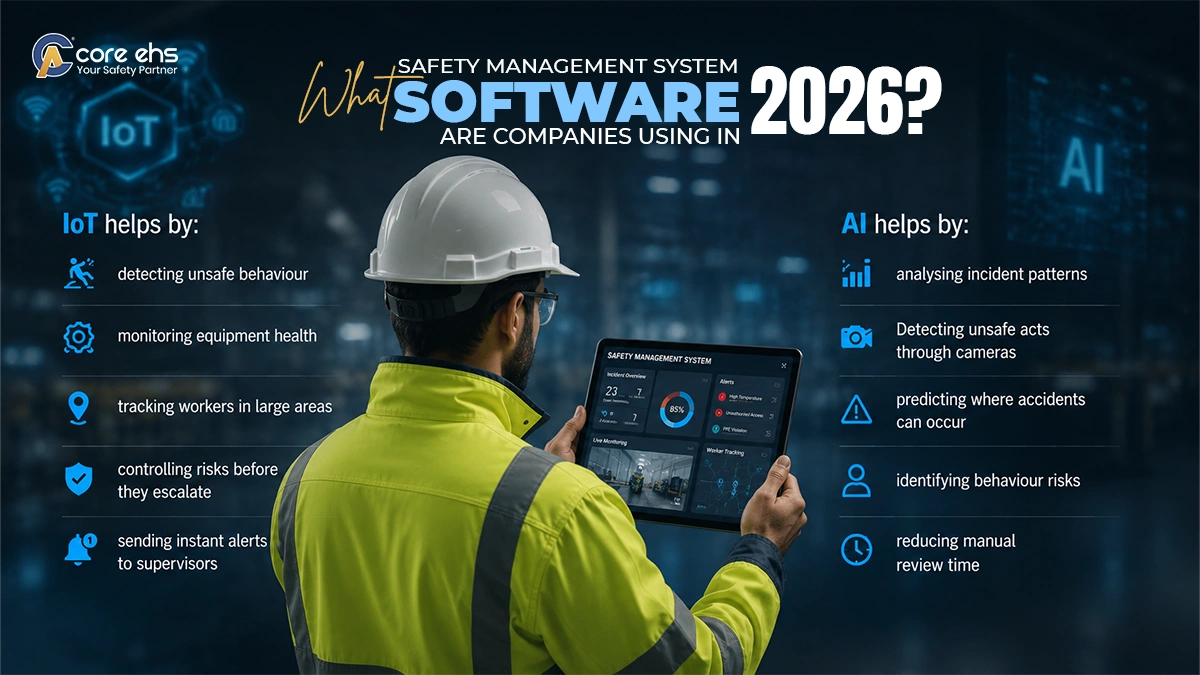
Safety expectations around the world are changing fast. Companies across oil and gas, manufacturing, construction, chemicals, power plants, logistics, and many other sectors now depend on digital tools to keep workers safe