
 +91 72929 29159














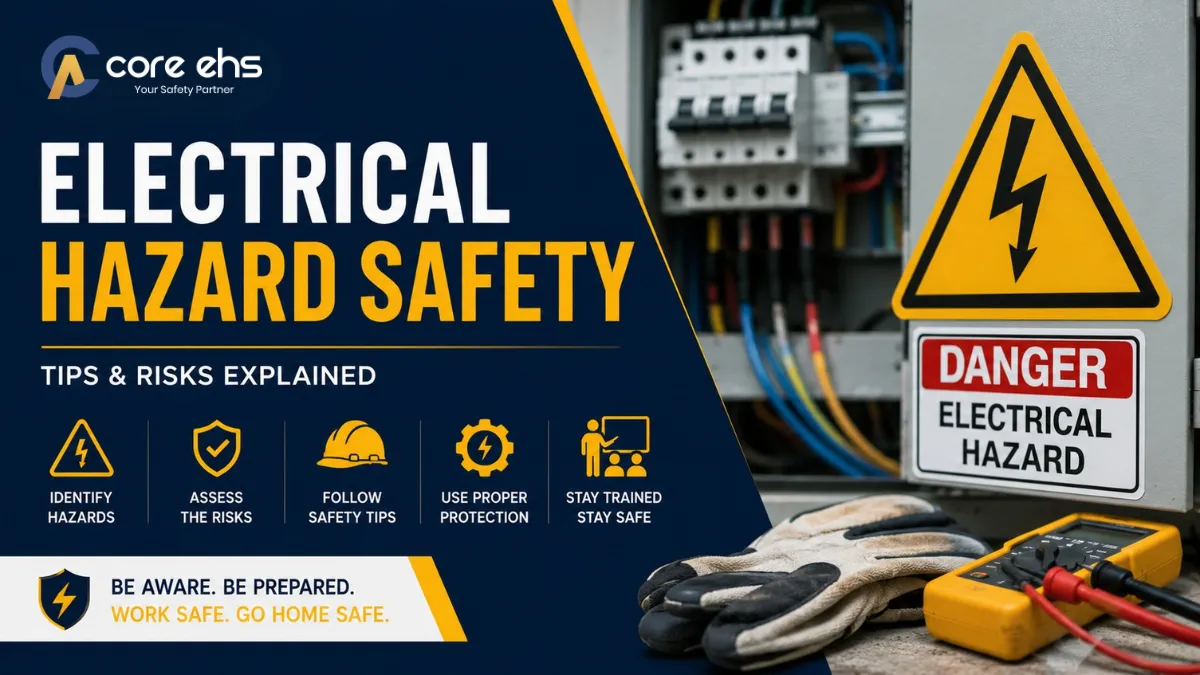
Electrical hazards are a serious concern in both homes and workplaces. They pose risks of electric shock, burns, and even fires. Understanding these electrical risks is crucial for ensuring electrical safety and overall power safety.
Many people are unaware of the dangers lurking in their electrical systems. Exposed wires, overloaded circuits, and faulty appliances are common culprits. Recognising these risks can prevent accidents.
Safety measures and awareness are key to preventing electrical mishaps. Proper installations and regular maintenance play a vital role. Using a warning electrical hazard sign, standardised electrical hazard symbols, and clear electrical hazard warning signs can alert individuals to potential dangers.
This guide will explore common electrical hazards and provide practical safety tips. By following these guidelines, you can protect yourself and others from electrical risks. Stay informed and prioritise electrical safety in your environment, and consider suitable electrical protection where appropriate.
What is an Electrical Hazard?
People often ask, “what is electrical hazard?” An electrical hazard refers to a condition that can cause electric shock, fire, or burns. These hazards occur when electrical systems are not properly maintained or installed. Understanding what constitutes an electrical hazard is key to preventing accidents.
There are several types of electrical hazards that individuals should be aware of. These include:
- Exposed or damaged wires
- Overloaded circuits
- Faulty electrical appliances
- Improper earthing
- Wet areas near electrical installations
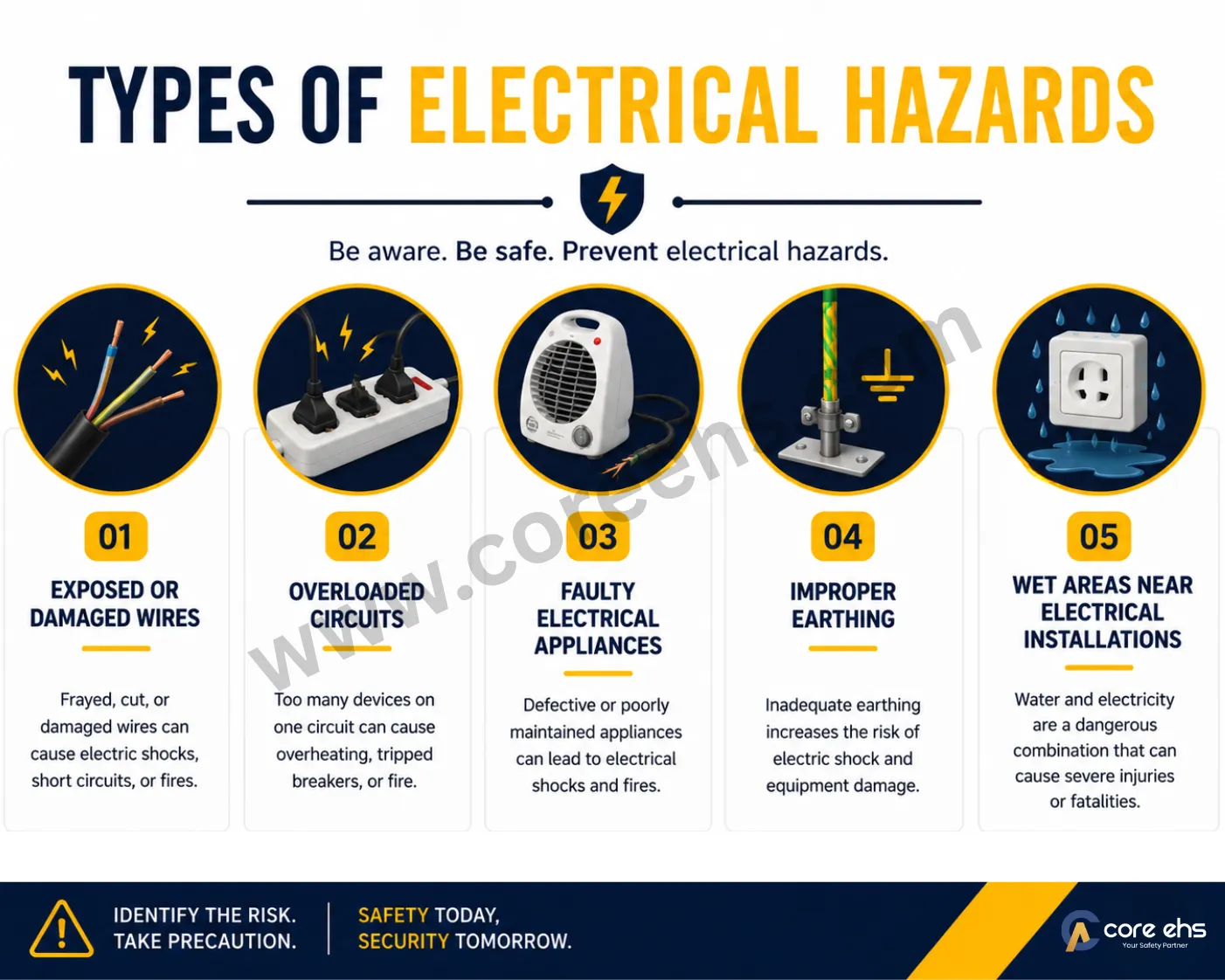
The presence of an electrical hazard sign or the familiar lightning-bolt electrical hazard symbol often indicates these dangers. These hazards can be found in both residential and commercial settings. Identifying and addressing them promptly is crucial for safety. Regular inspections can help detect potential issues before they turn hazardous. Educating yourself on electrical hazards and taking precautionary measures can significantly reduce the risk of accidents. Prioritise safety by staying informed about these dangers and ensuring all installations follow safety standards for safe installations.
Related Read: Difference Between Hazard and Risk in Safety
Common Electrical Hazards: Examples and Risks
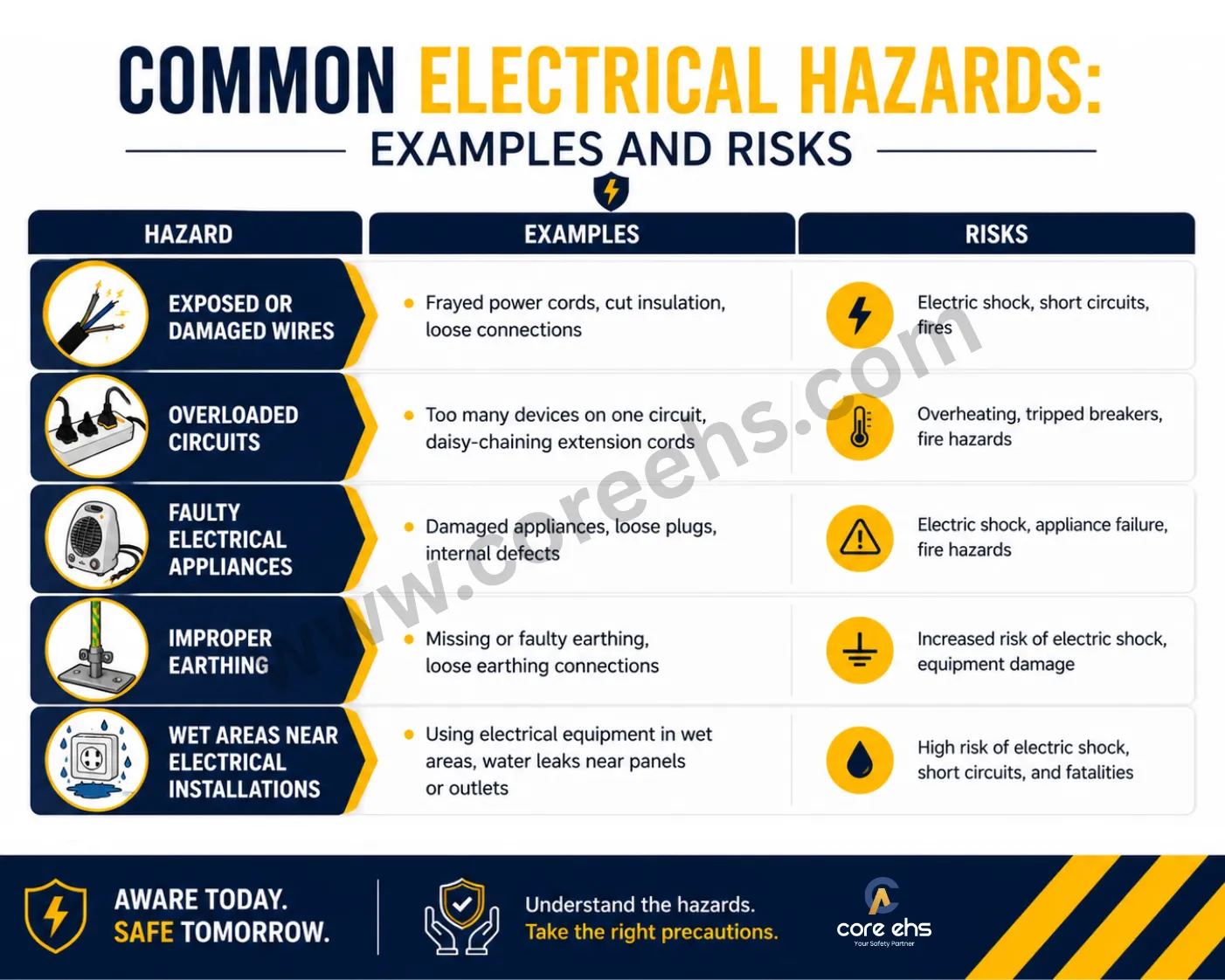
Electrical hazards pose serious risks in everyday environments. Recognising these dangers is the first step in mitigating them. Common electrical hazards examples include frayed wires, which can expose you to electric shock or even start a fire.
If you’re wondering which of the following are electrical hazards, common examples include frayed wires, overloaded circuits, faulty appliances, improper earthing, and wet areas near installations.
Overloaded circuits are another risk often found in homes and workplaces. Plugging too many devices into one socket can cause overheating. This might not be immediately obvious, but it can lead to dangerous fires over time.
Faulty appliances also contribute to electrical hazards. An appliance with worn-out or damaged parts can malfunction, increasing the risk of shock or fire. Regular maintenance and inspections help in identifying such issues early.
Improper use of extension leads is a frequent hazard.
Many people overlook the importance of using leads correctly, leading to risks like overheating and short circuits. Always use leads rated for your devices and avoid running them under carpets.
Wet areas near electrical sockets should be avoided at all costs. Water conducts electricity and can cause severe shocks or damage to electrical systems. Ensuring that sockets are placed away from sinks and other sources of moisture is crucial for safety.
Staying informed of these examples helps in identifying potential risks. Taking proactive measures reduces the likelihood of accidents and injuries related to electrical hazards. Continual vigilance and adherence to safety protocols go a long way in ensuring a safe environment.
Electrical Hazard Signs, Symbols, and Stickers
Electrical hazard signs, symbols, and stickers play a crucial role in promoting safety. These visual cues are essential for warning individuals of potential electrical dangers. Clear and recognisable symbols can prevent accidents by alerting people before they come too close to hazards.
The use of electrical hazard signs is common in areas with high electrical risks. They serve as a visual reminder that precautions need to be taken. Facilities such as electrical rooms or power stations often have multiple warning signs in place to enhance safety measures. In many workplaces, a “Warning Electrical Hazard” sign or a “Danger: Electrical Hazard” notice is used to highlight higher-risk areas.
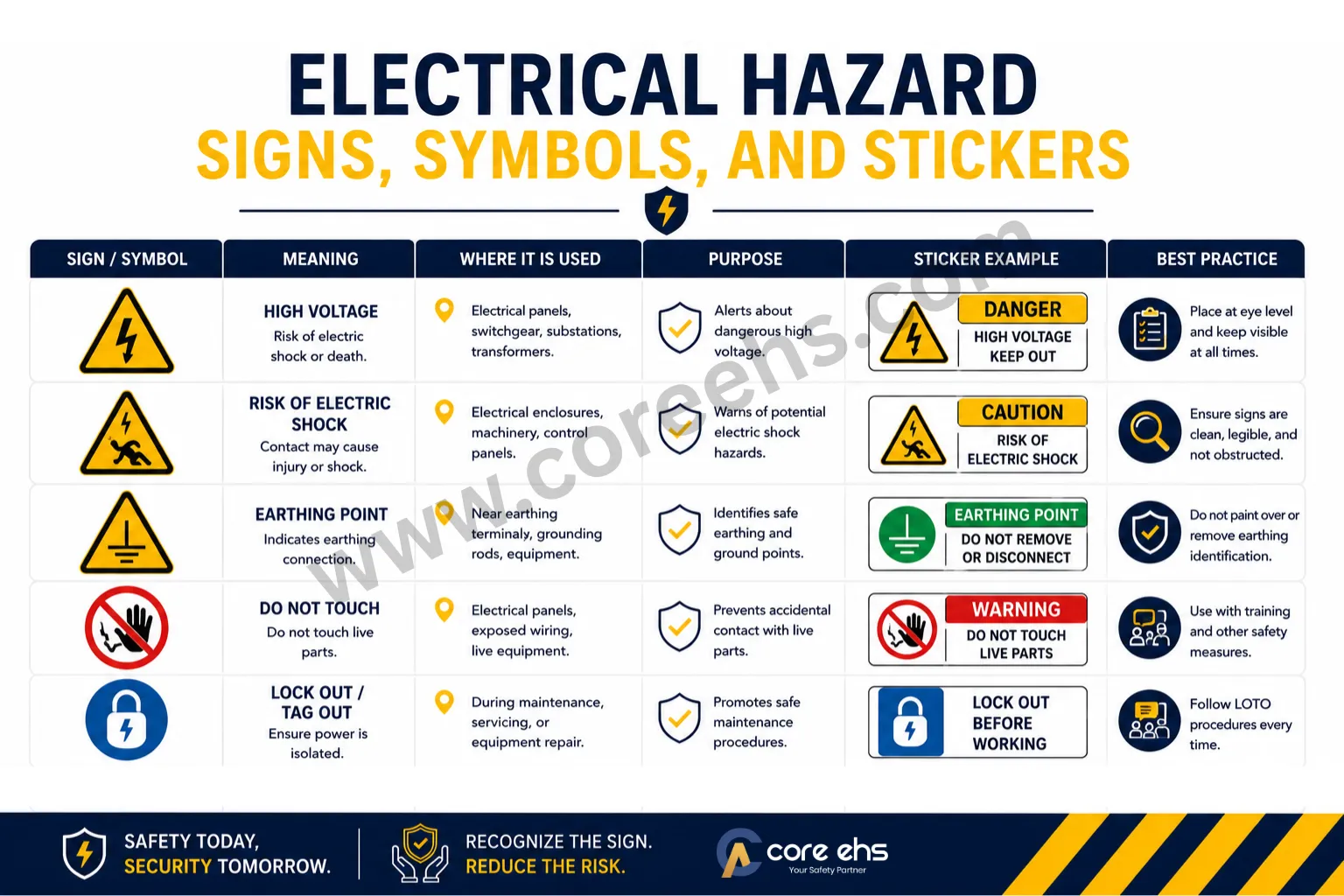
Electrical hazard symbols provide a standardised way of signalling danger. These symbols are internationally recognised, making them effective in any language or country. For instance, a lightning bolt symbol typically indicates a risk of electric shock.
Electrical hazard stickers are also a cost-effective means to label equipment and areas with potential dangers. They can be placed on machinery, switchboards, and outlets to ensure constant awareness. Such stickers are an indispensable part of any comprehensive safety plan.
By incorporating these signs, symbols, and stickers into environments, businesses and homeowners can significantly reduce the incidence of electrical accidents. These visual tools are a straightforward yet effective way to enhance overall safety and ensure hazard awareness.
Electrical Hazards and Control Measures
Electrical hazards pose significant risks, but control measures can help mitigate these dangers. Understanding these measures is crucial for both personal and workplace safety. Every setting requires specific strategies to manage these risks effectively. Effective electrical hazards and control measures should also include training and clear labelling.
A comprehensive approach to electrical safety involves using various control measures. Personal Protective Equipment (PPE) is essential for anyone working near electrical components. PPE such as insulated gloves and non-conductive boots provide a first line of defence and support electrical protection.
Regular maintenance and inspections are also critical. Equipment should be routinely checked for signs of wear, and any faults must be addressed promptly. This proactive maintenance helps prevent issues such as frayed cords or faulty machinery from becoming serious hazards.
Here are some effective control measures:
- Use PPE and insulated tools.
- Conduct regular equipment inspections.
- Follow lockout/tagout procedures.
- Ensure proper earthing of systems.
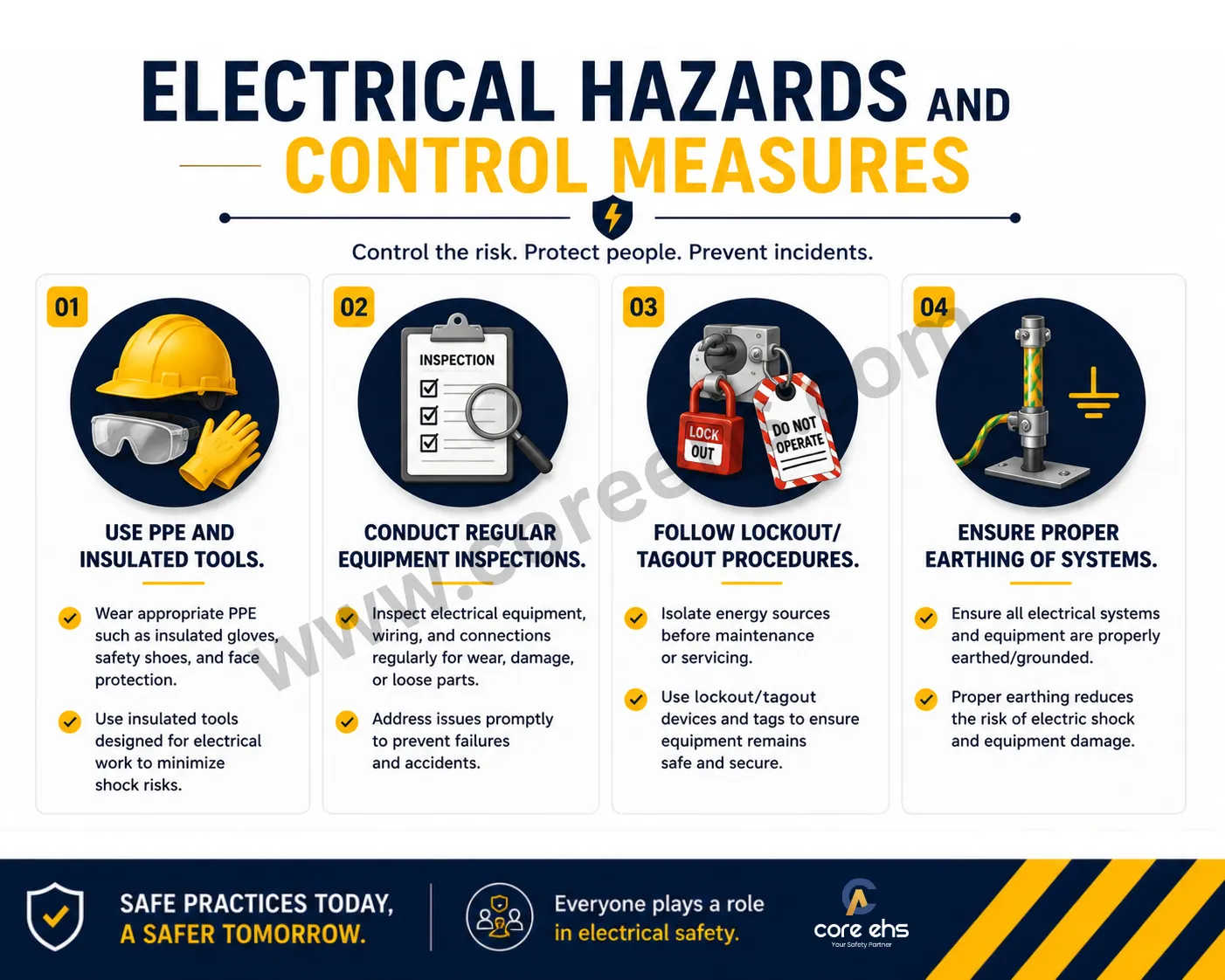
Implementing these control measures can significantly decrease the potential for electrical incidents. Consistent education and training should reinforce these safety practices. By doing so, both individuals and organisations can maintain a safer environment.
Safe Installations and Power Safety Practices
Creating safe electrical installations starts with adhering to established codes and standards. Compliance ensures systems are correctly installed, reducing risks of shock or fire. Professional electricians should handle all electrical work to guarantee safety.
Electrical safety practices also play a vital role in maintaining a safe environment. Sockets should not be overloaded with multiple high-wattage devices. Overloading increases the risk of electrical fires, causing severe damage and injury.
Extension leads should be used judiciously. They are not meant for permanent wiring and must be kept away from water to prevent shock. Only use leads with proper insulation and within their load capacity.
Key practices for safe installations include:
- Follow local and national electrical regulations.
- Use sockets with safety covers.
- Hire certified electricians for all installations.
- Avoid DIY electrical repairs.
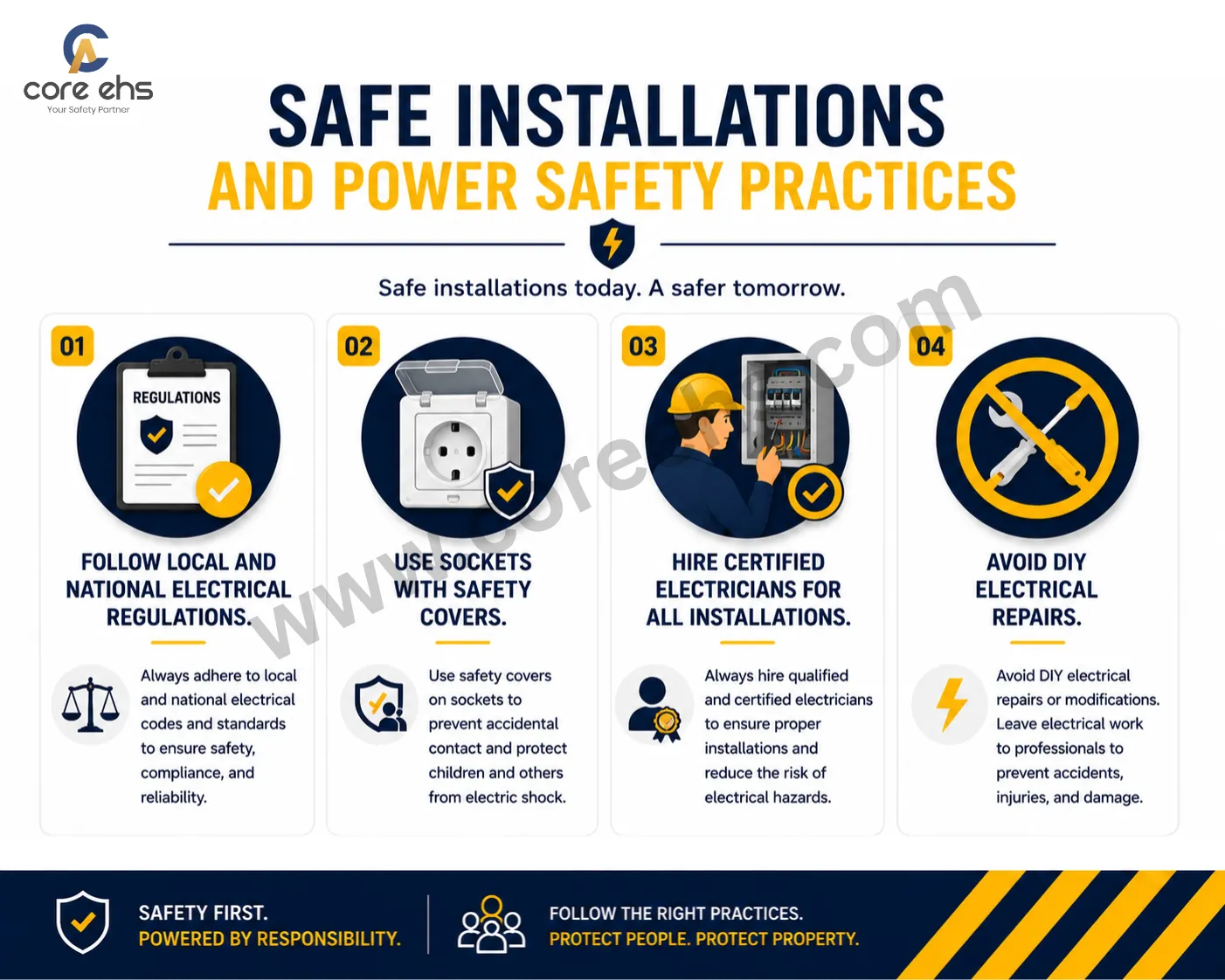
Routine inspections of electrical systems help identify potential dangers. Regular checks ensure all components function efficiently and safely. These power safety steps support safe installations and long-term electrical protection. Implementing these practices greatly reduces electrical risks, safeguarding both property and lives. Remember, electrical safety is paramount in all settings.
Shock Prevention and Electrical Protection Devices
Shock prevention is crucial for maintaining electrical safety. Residual Current Devices (RCDs) are essential for reducing shock risk. RCDs detect earth faults and cut power to prevent injury.
Insulated tools provide another layer of protection. When handling electrical components, use tools designed to prevent accidental shocks. Insulation acts as a barrier, reducing direct contact with live wires.
Electrical protection devices are vital for safeguarding both people and equipment. Surge protectors defend against voltage spikes that could damage electronics. Circuit breakers are designed to shut off electricity if overcurrent conditions arise.
Important devices for electrical protection include:
- RCDs for shock prevention.
- Insulated tools for safer handling.
- Surge protectors against voltage surges.
- Circuit breakers for overload protection.
Regular testing and maintenance of these devices ensure they function properly. Proactive inspection and updating equipment keep environments safe. By prioritising shock prevention and using the right protection devices, electrical accidents can be effectively minimised.
Hazard Awareness: Training and Education
Understanding electrical dangers involves knowing how to spot them. Training and education are key to building hazard awareness. Well-informed individuals can identify and manage risks effectively.
Training programmes should cover electrical safety basics for all individuals. Both home and workplace environments benefit from education. Safety drills and workshops help reinforce these lessons.
Essential topics for hazard awareness include:
- Identifying electrical hazards in everyday settings.
- Understanding the role of electrical protection devices.
- Knowing proper responses to electrical emergencies.
- Recognising the significance of warning signs and labels, including electrical hazard warning signs.
Promoting a culture of safety ensures that everyone is informed. Employees and family members should participate in regular safety reviews and updates. With the right education, individuals can create safer environments both at home and work.
Electrical Safety Tips for Home and Workplace
Maintaining electrical safety at home and work is crucial. Simple steps can make a big difference in reducing risks. Always prioritise regular checks and maintenance of electrical systems.
Ensure that all sockets are not overloaded. Overloading can lead to overheating and fires. Use only the recommended wattage for appliances and lights.
Keep water and electricity far apart. Wet conditions increase the chances of electric shock. Be cautious in kitchens, bathrooms, and outdoors.
Implement the following tips to enhance safety:
- Inspect and replace damaged cables immediately.
- Use surge protectors for electronic devices.
- Install RCDs in moisture-prone areas.
- Train family and staff on emergency procedures.
- Place warning electrical hazard signs where needed.
Educating everyone in the household or workplace about these tips is essential. Clear communication encourages safer habits. Regular reminders help reinforce the importance of these practices.
By following these safety tips, you create a safer environment. You also reduce the chance of accidents. Emphasising these practices boosts overall safety awareness.
Conclusion: Promoting a Culture of Electrical Safety
A focus on electrical safety protects both people and property. Awareness and education are key to preventing hazards. Regular training keeps safety protocols at the forefront.
Encouraging a safety-first mindset reduces risks and accidents. By adopting these practices, communities can create safer spaces for everyone. Embrace and share safety knowledge widely to strengthen hazard awareness and power safety.