 +91 72929 29159













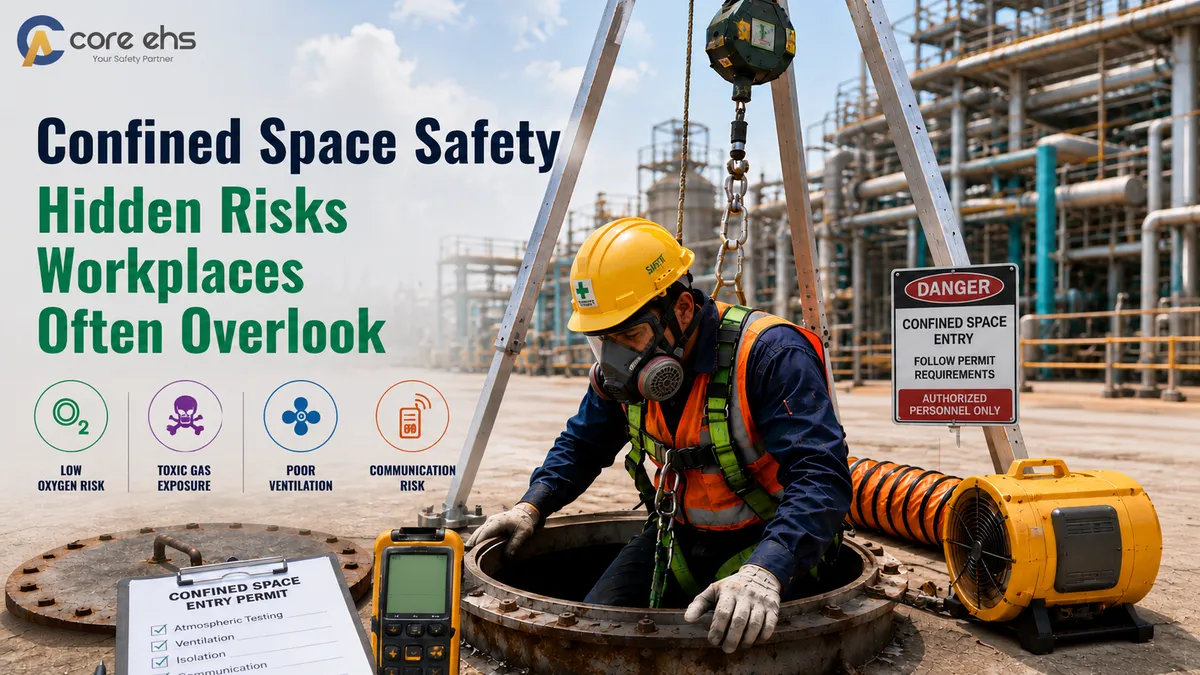
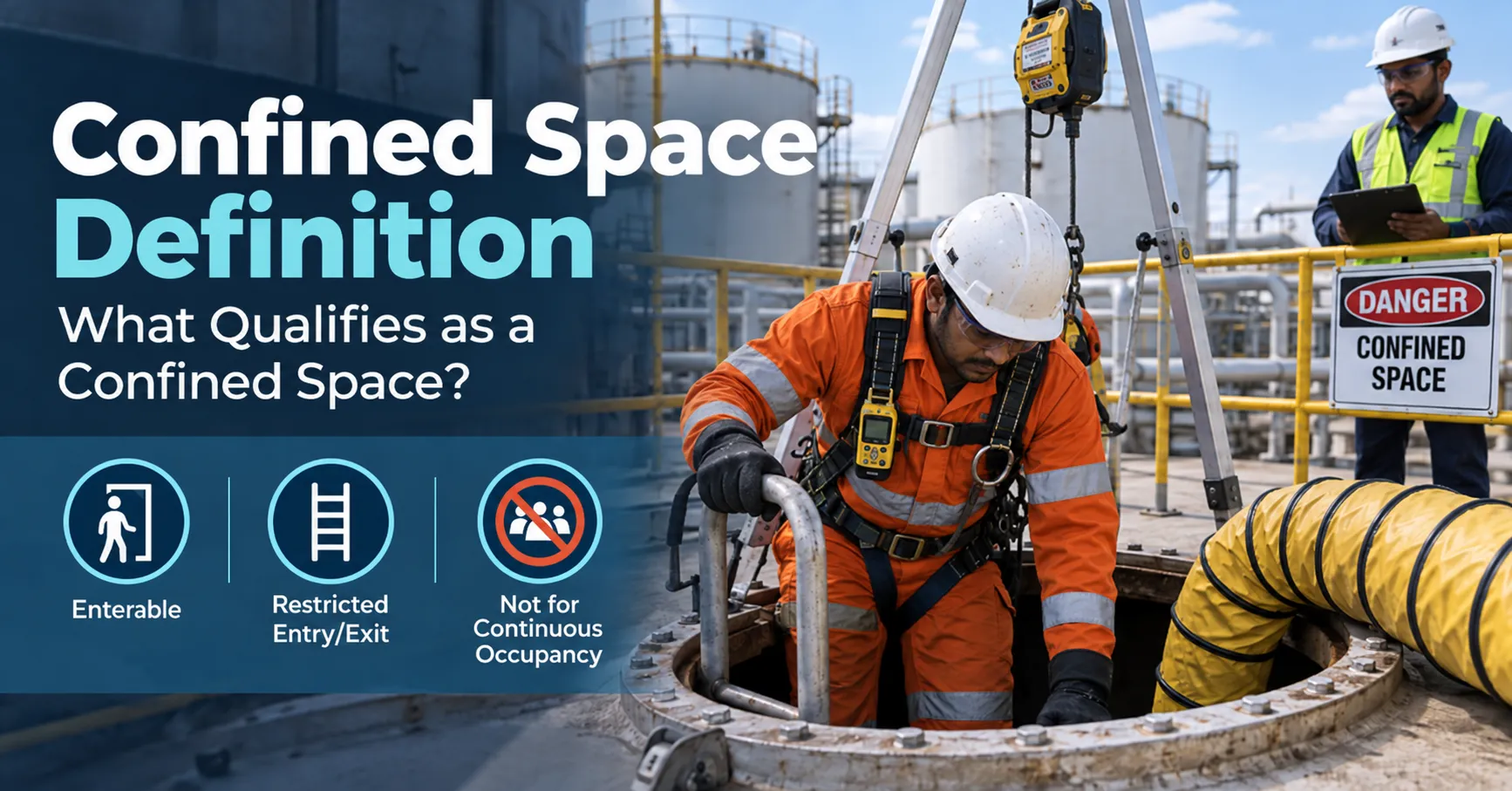
Imagine standing at the entrance of a tank.
Nothing looks unusual.
The space isn’t on fire.
There’s no smoke.
No alarms are sounding.
No one is shouting that something is wrong.
In fact, if someone took a photograph of the scene, it would probably look completely normal.
And that’s exactly what makes confined spaces so dangerous.
Unlike many workplace hazards, confined space risks rarely announce themselves. Workers can’t see oxygen deficiency. They can’t always smell toxic gases. They can’t hear poor ventilation.
The space may look safe.
The atmosphere inside may tell a very different story.
Over the years, some of the most serious workplace incidents have occurred because people trusted what they could see and underestimated what they couldn’t.
A worker enters to perform a routine task.
A colleague follows to help.
Within minutes, a routine job becomes an emergency.
This is why confined space safety isn’t just about permits, gas detectors, or procedures.
It’s about understanding that some of the most dangerous workplace hazards are completely invisible.
In this guide, we’ll explore the hidden risks workplaces often overlook, why confined space incidents continue to happen, and the practical steps organizations can take to protect workers before entry ever begins.
Why Confined Space Incidents Continue to Happen
Ask someone why confined space incidents happen, and you’ll often hear answers like:
“The worker didn’t follow the procedure.”
“The permit wasn’t followed.”
“The gas test wasn’t conducted properly.”
Sometimes that’s true.
But if confined space safety were only about procedures, these incidents would have disappeared long ago. The reality is often more complicated.
Many confined space incidents begin with a simple assumption:
“I’ve done this job before.”
The tank looks the same.
The vessel hasn’t changed.
The pit was entered safely last month.
Nothing appears different.
And that’s where the risk begins.
Unlike many workplace hazards, confined spaces can change without warning. Oxygen levels can fluctuate. Toxic gases can accumulate. Ventilation can become ineffective. Conditions that were safe yesterday may not be safe today.
The danger isn’t always what workers ignore. Sometimes it’s what they assume.
This is why confined space safety relies heavily on verification rather than familiarity. Every entry requires fresh testing, clear communication, proper authorization, and a healthy respect for the fact that invisible hazards don’t care how many times a task has been performed before.
Before we look at the controls, let’s explore some of the hidden confined space risks that workplaces often underestimate.
Hidden Confined Space Risks Workplaces Often Overlook
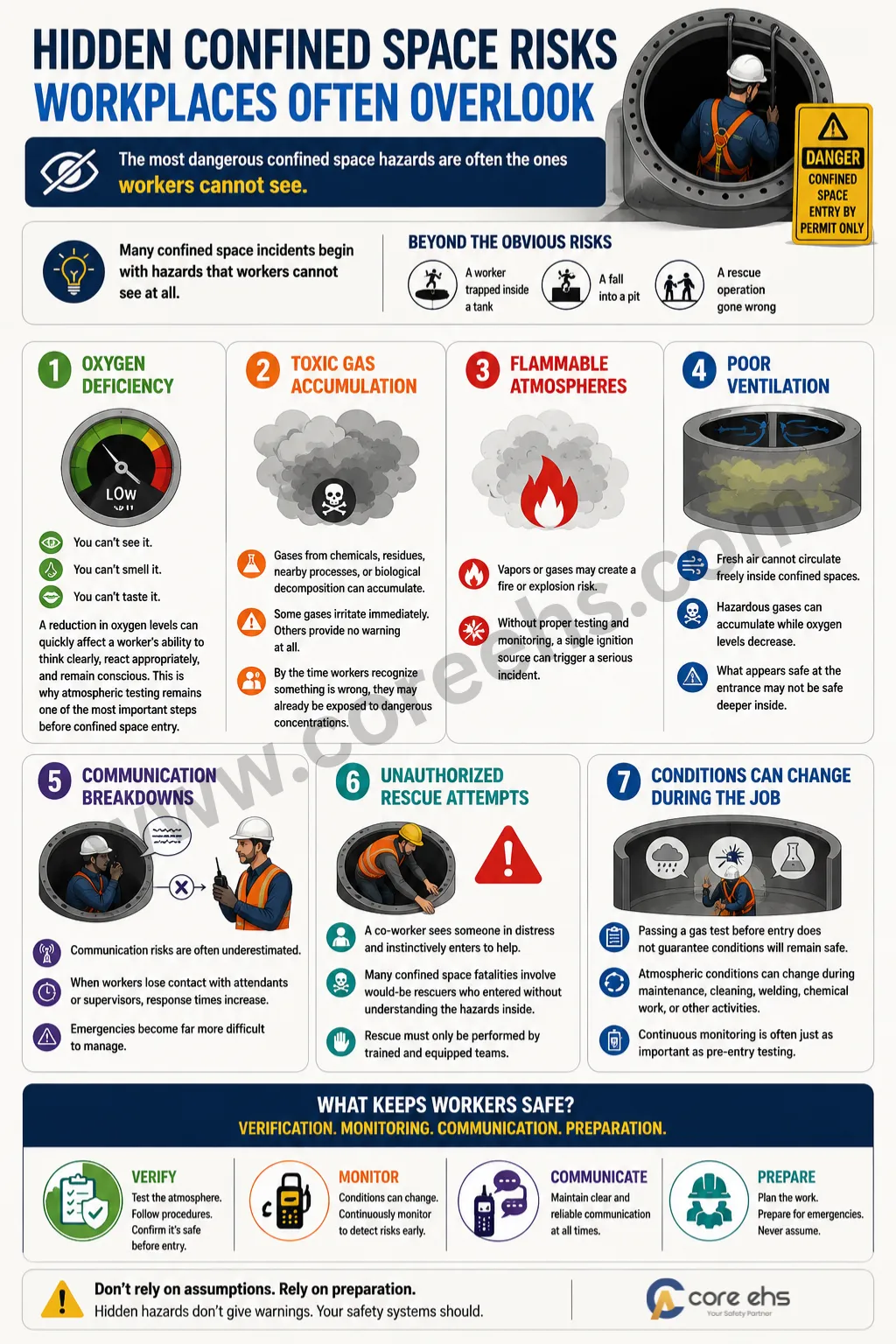
When people think about confined space hazards, they often imagine the obvious risks.
A worker trapped inside a tank. A fall into a pit. A rescue operation gone wrong.
While these scenarios do occur, many confined space incidents begin with hazards that workers cannot see at all.
1. Oxygen Deficiency
You can’t see it.
You can’t smell it.
You can’t taste it.
Yet a reduction in oxygen levels can quickly affect a worker’s ability to think clearly, react appropriately, and remain conscious. This is one of the reasons atmospheric testing remains one of the most important steps before confined space entry.
2. Toxic Gas Accumulation
Confined spaces can accumulate hazardous gases from chemicals, residues, nearby processes, or biological decomposition.
Some gases irritate immediately. Others provide no warning at all.
By the time workers recognize something is wrong, they may already be exposed to dangerous concentrations.
3. Flammable Atmospheres
A confined space may contain vapors or gases that create a fire or explosion risk. Without proper testing and monitoring, a single ignition source can trigger a serious incident.
4. Poor Ventilation
Fresh air cannot always circulate freely inside confined spaces. As a result, hazardous gases can accumulate while oxygen levels decrease. What appears safe at the entrance may not be safe deeper inside the space.
5. Communication Breakdowns
Many organizations focus heavily on atmospheric hazards but underestimate communication risks.
When workers lose contact with attendants or supervisors, response times increase and emergency situations become far more difficult to manage.
6. Unauthorized Rescue Attempts
One of the most overlooked confined space risks occurs after an incident begins. A co-worker sees someone in distress and instinctively enters the space to help. Unfortunately, many confined space fatalities involve would-be rescuers who entered without understanding the hazards inside.
7. Conditions Can Change During the Job
Passing a gas test before entry does not guarantee conditions will remain safe.
Atmospheric conditions can change during maintenance, cleaning, welding, chemical work, or other activities performed inside the space. This is why continuous monitoring is often just as important as pre-entry testing.
The most dangerous confined space hazards are often the ones workers cannot see. That’s why successful confined space safety programs focus on verification, monitoring, communication, and preparation rather than assumptions.
7 Practical Confined Space Safety Measures Every Workplace Should Implement
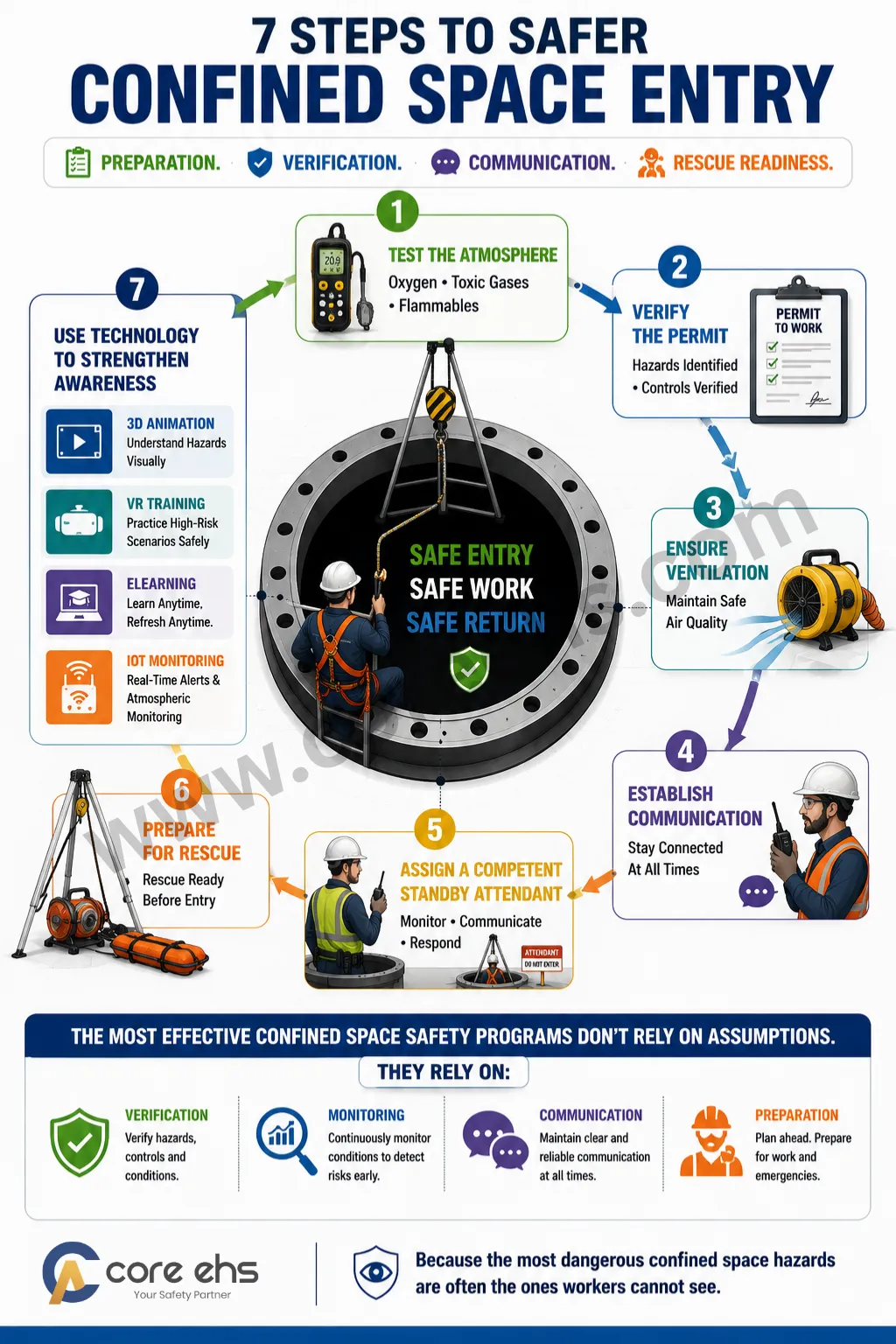
Confined space safety begins before a worker enters the space, or even long before the entry permit is signed. The safest confined space operations focus on preparation, verification, communication, and rescue readiness before work starts.
1. Never Skip Atmospheric Testing
No confined space should be entered based on assumptions.
Always test for oxygen levels, toxic gases, and flammable atmospheres before entry. If conditions can change during the task, continue monitoring throughout the operation.
2. Verify the Permit-to-Work Process
A permit should do more than authorize entry.
It should confirm that hazards have been identified, controls have been implemented, isolation is complete, and everyone involved understands the task and associated risks.
3. Ensure Ventilation Is Effective
Ventilation helps maintain a safer atmosphere inside the space.
Before entry, verify that ventilation systems are functioning properly and continue operating as required throughout the job.
4. Establish Clear Communication
Workers inside the space and personnel outside should be able to communicate at all times.
When communication fails, response times increase and emergency situations become far more difficult to manage.
5. Assign a Competent Standby Attendant
A confined space entrant should never work alone.
A trained standby attendant plays a critical role in monitoring conditions, maintaining communication, and initiating emergency procedures if required.
6. Prepare for Rescue Before Entry Begins
Many organizations focus heavily on entry procedures and give less attention to rescue planning.
Before anyone enters a confined space, verify rescue equipment, emergency response procedures, and rescue team readiness.
7. Help Workers Visualize the Risks
Use Technology to Strengthen Confined Space Safety Awareness. Many confined space hazards remain invisible until something goes wrong.
That’s why organizations are increasingly moving beyond traditional classroom training and adopting technology-driven safety learning and monitoring solutions.
3D animated safety videos help workers understand confined space hazards, entry procedures, atmospheric risks, and emergency scenarios by visually demonstrating situations that are often difficult to explain through presentations or manuals.
https://youtube.com/watch?v=4vCXuc-nt3w%3Fsi%3DDZipP7WFZcnSKvp
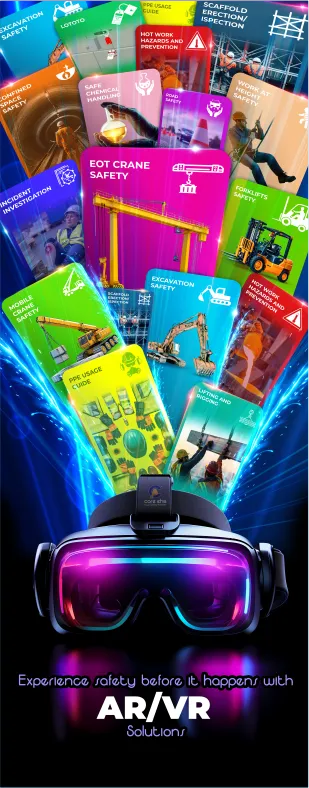
For high-risk activities, VR-based training allows workers to experience realistic confined space scenarios in a controlled environment. This helps them practice decision-making, hazard recognition, and emergency response before entering an actual confined space.
To reinforce learning over time, organizations are also using eLearning modules that employees can access at their own pace. These refresher programs help workers revisit critical procedures, strengthen knowledge retention, and stay updated on safety requirements whenever needed.
Technology can also support workers during the job itself. IoT-enabled monitoring systems can continuously track atmospheric conditions, detect abnormal situations, and provide alerts when conditions become unsafe. Real-time notifications help teams respond faster to developing risks and take corrective action before an emergency occurs.
The more workers understand the risks before entry and the faster they receive warnings during the job, the safer confined space operations become.
Conclusion
Confined space hazards rarely make themselves obvious.
Workers can see a moving vehicle. They can hear a machine malfunction. They can often identify a slippery surface before stepping on it.
Confined space risks don’t always offer those warning signs.
Oxygen deficiency, toxic gas accumulation, poor ventilation, communication failures, and changing atmospheric conditions can develop quietly and quickly. By the time someone realizes something is wrong, the situation may have already escalated.
This is why confined space safety cannot depend on experience, assumptions, or routine. It must depend on preparation, verification, communication, and continuous awareness.
The most effective confined space safety programs don’t just focus on compliance. They focus on helping workers understand the risks, recognize warning signs, follow procedures consistently, and remain prepared for changing conditions.
Because in confined space operations, what workers don’t see can hurt them.
And what organizations do before entry often determines what happens after entry.
Strengthen Your Confined Space Safety Program with CORE-EHS
Creating safer confined space operations requires more than permits and procedures. It requires awareness, competency, communication, and the right safety technologies.
At CORE-EHS, we help organizations strengthen confined space safety through:
✔ Confined Space Safety Training Programs
✔ 3D Animated Safety Videos
✔ VR-Based Safety Simulations & Immersive Learning
✔ eLearning & Refresher Training Modules
✔ IoT-Based Atmospheric Monitoring Solutions
✔ Hazard Reporting & Incident Management Systems
✔ Safety Audits, Assessments & Advisory Services
Whether you’re looking to improve workforce awareness, strengthen entry procedures, enhance emergency preparedness, or build a stronger safety culture, our team can help.
Don’t wait for an incident to reveal a hidden hazard.
Connect with CORE-EHS today and take the next step toward safer confined space operations.