 +91 72929 29159














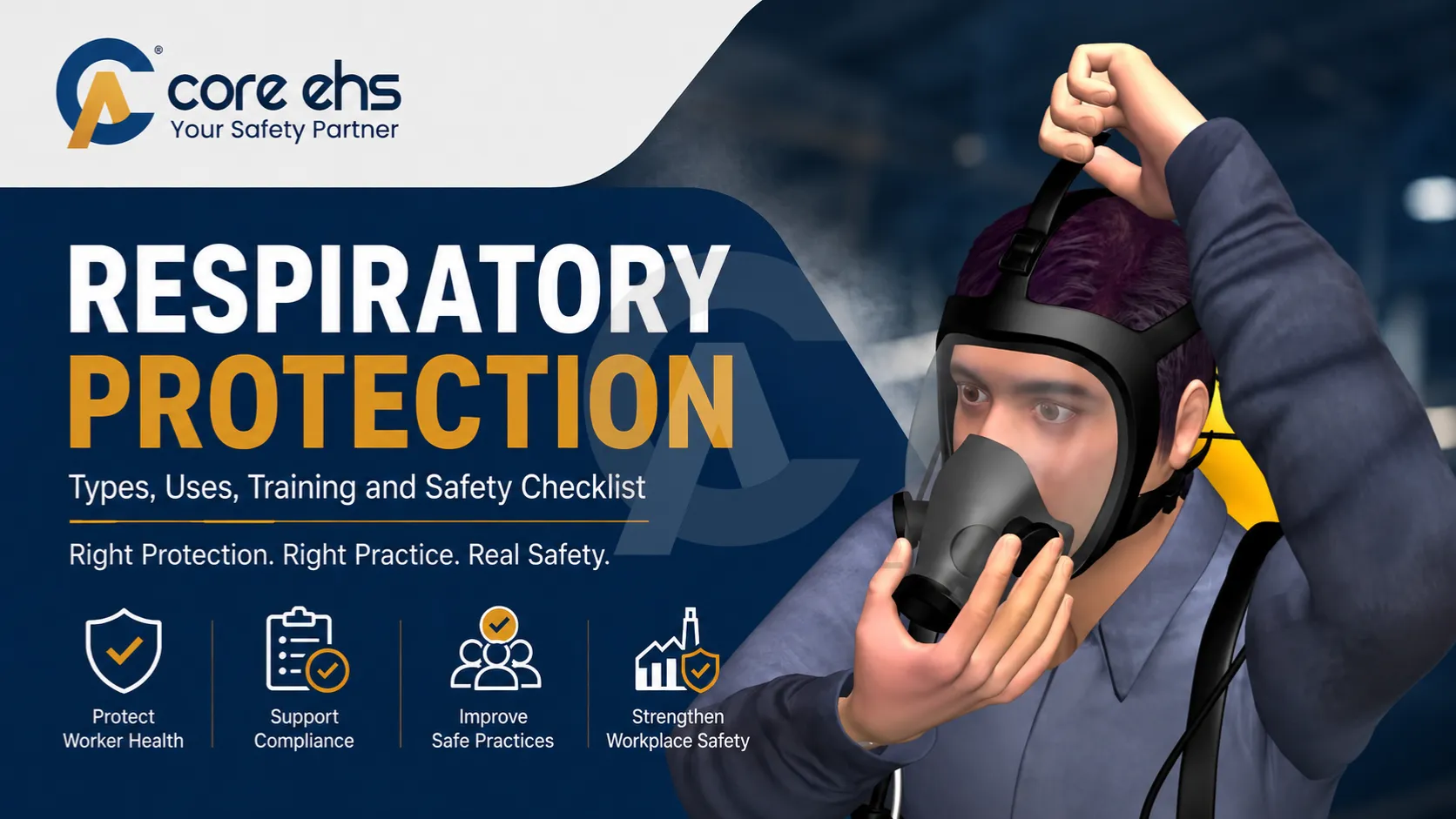
Respiratory protection is used to protect workers from inhaling harmful airborne hazards such as dust, fumes, gases, vapours, mists, fibres, and oxygen-deficient atmospheres. In industrial workplaces, these hazards may come from activities like cutting, grinding, welding, chemical handling, painting, spraying, confined space entry, demolition, or material processing.
The challenge is that many respiratory hazards are not always visible. A work area may look normal, but the air may contain silica dust, welding fumes, chemical vapours, asbestos fibres, toxic gases, or fine particles that can enter the lungs and affect worker health over time.
This is why respiratory protection is not just about wearing a mask. It is about selecting the right respiratory protective equipment for the actual hazard, ensuring proper fit, training workers, inspecting the equipment, and maintaining it correctly.
A respirator used without proper hazard assessment can create a false sense of safety. Workers may feel protected, but the exposure may still continue if the equipment is not suitable for the task.
In this guide, we will understand what respiratory protection means, when it is required, the types of respiratory protective equipment, the difference between a mask and a respirator, key training requirements, common mistakes, and a practical pre-task checklist for safer breathing at work.
Respiratory Protection Training
Respiratory protection is a workplace safety control used to protect workers from breathing harmful airborne hazards such as dust, fumes, gases, vapours, mists, fibres, and oxygen-deficient air. In simple terms, if we need to define respiratory protective equipment, it refers to the protective devices and supporting practices used to reduce a worker’s inhalation exposure during hazardous tasks.
The respiratory protective equipment meaning is not limited to a mask or respirator alone. It includes the complete system of protection: respirators, filters, cartridges, canisters, fit testing, user training, inspection, cleaning, maintenance, storage, and a written respiratory protection program. A respirator will only work properly when it is suitable for the hazard, correctly fitted to the worker, used as instructed, and maintained in good condition.
This is why respiratory personal protective equipment should never be selected casually. The right protective respiratory equipment depends on the type of contaminant, exposure level, oxygen availability, work duration, workplace conditions, and the worker’s ability to wear the equipment safely.
In OSHA-covered workplaces, the key respiratory protection standard is 29 CFR 1910.134. OSHA states that when respirators are necessary to protect employee health, employers must provide suitable respirators and establish a written respiratory protection program. The standard also includes requirements related to respirator selection, training, fit testing, use, maintenance, and program evaluation.
For industrial workplaces, this means respiratory protection equipment should not be treated as a simple PPE purchase. It should be part of a structured safety process that helps ensure workers are protected before, during, and after the task.
Common Airborne Hazards That Require Respiratory Protection
Respiratory protection becomes important when workers may inhale harmful airborne contaminants that cannot be fully controlled through ventilation, isolation, safe work methods, or other control measures. The type of respiratory protection equipment required depends on the hazard, exposure level, task duration, and work environment.
For example, respiratory protection for silica dust may be required during cutting, grinding, drilling, or breaking concrete and stone. Silica dust respiratory protection must be selected carefully because fine respirable particles can enter deep into the lungs.
Similarly, respiratory protection for welders is important where welding fumes, metal particles, gases, or coatings may create inhalation risks. The right welding respiratory protection or welding respiratory protective equipment depends on the welding process, base material, ventilation, and exposure level. A welder respiratory protection plan should also consider hot work conditions and other nearby hazards.
| Workplace Hazard | Common Source | Respiratory Concern |
| Silica dust | Cutting, grinding, drilling concrete/stone | Fine respirable dust |
| Welding fumes | Welding, cutting, hot work | Metal fumes and gases |
| H2S | Oil & gas, confined spaces, wastewater | Toxic gas exposure |
| Hexavalent chromium | Stainless steel welding, coatings | Toxic airborne contaminant |
| Asbestos fibres | Old insulation, demolition, maintenance | Fibre inhalation risk |
| Chemical vapours | Solvents, paints, chemical handling | Vapour inhalation |
| Low oxygen | Confined spaces, tanks, vessels | Oxygen deficiency |
Some hazards need special attention. H2S respiratory protection is critical in oil and gas, wastewater, and confined space work where toxic gas exposure may occur. Respiratory protection for hexavalent chromium may be required in stainless steel welding, surface treatment, or coating-related activities. Asbestos respiratory protection is important during demolition, renovation, insulation removal, and maintenance work involving asbestos-containing materials.
For these tasks, respiratory protection should be linked with proper risk assessment, worker training, supervision, emergency planning, and safe work procedures.
When Should You Wear Respiratory Protection?
One of the most important questions in workplace safety is: when should you wear respiratory protection? The answer depends on the airborne hazard, exposure level, ventilation, task type, and the effectiveness of other control measures.
In general, industrial respiratory protection may be required when workers are exposed to contaminated or oxygen-deficient air and the risk cannot be fully controlled through elimination, substitution, engineering controls, ventilation, or administrative controls. OSHA explains that respirators are used to protect employees from contaminated or oxygen-deficient air when effective engineering controls are not feasible or while they are being implemented.
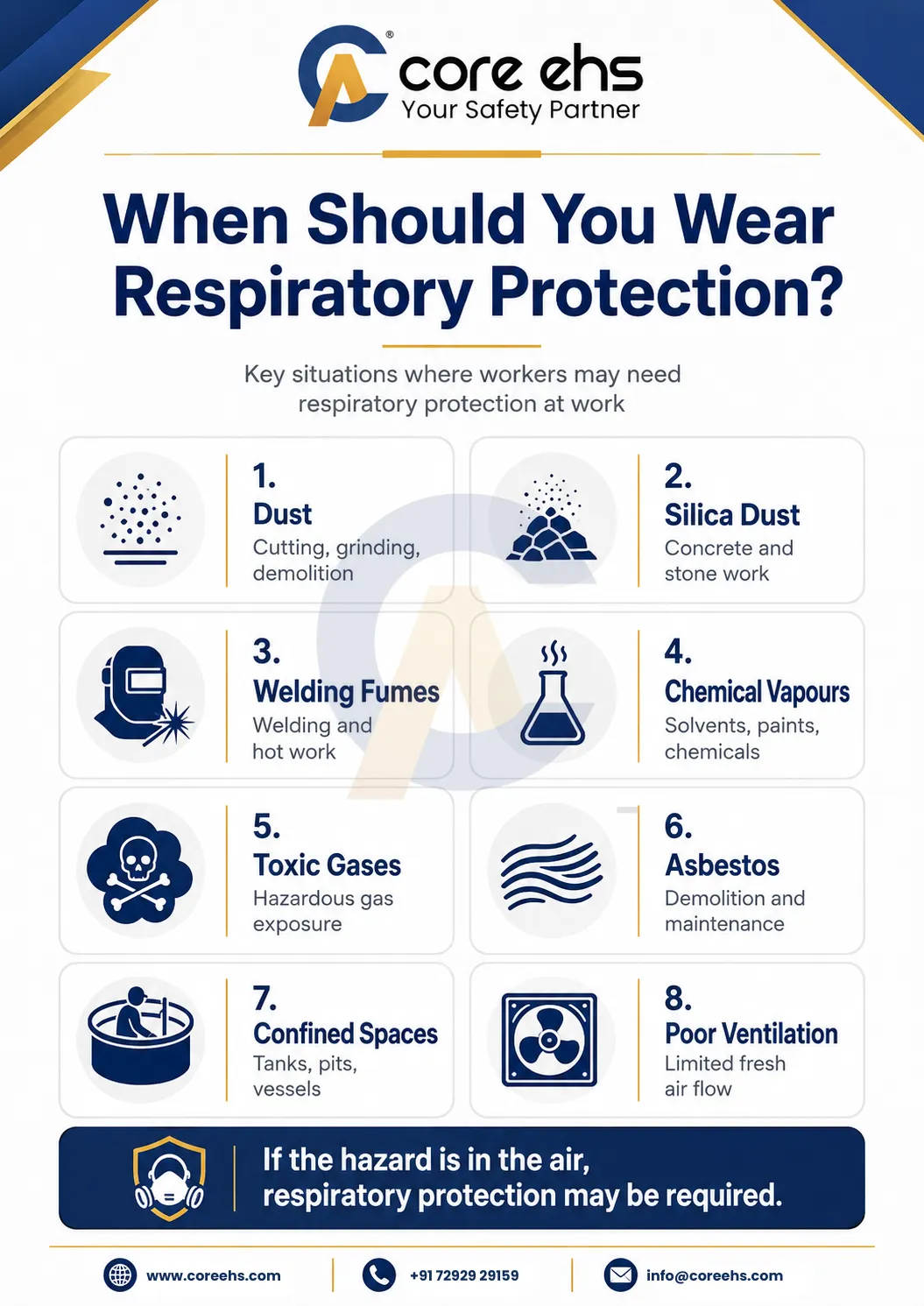
Workers may need PPE respiratory protection during tasks such as:
- Cutting, grinding, drilling, or demolition
- Welding, cutting, brazing, or hot work
- Handling chemicals, solvents, vapours, or gases
- Working in confined spaces, tanks, pits, or vessels
- Spraying, painting, coating, or cleaning activities
- Working where ventilation is inadequate
- Entering areas where oxygen deficiency is possible
- Performing tasks where the SDS, risk assessment, or permit-to-work system requires respiratory protection
The importance of respiratory protection is that it helps reduce inhalation exposure when airborne hazards cannot be avoided. However, respirators should not be used as a casual substitute for proper hazard control. They should be selected only after the workplace hazard is identified and evaluated.
For anyone asking when should you wear respiratory protection OSHA, the key point is this: respirators must be suitable for the purpose intended, and where respirators are necessary or required by the employer, a written respiratory protection program must be established and implemented.
Types of Respiratory Protective Equipment
There are different types of respiratory protective equipment, and each one is designed for a specific level of protection. The two types of respiratory protection are generally grouped as air-purifying respirators and atmosphere-supplying respirators.
Air-purifying respirators filter contaminants from the surrounding air before the worker breathes it in. These may include a disposable respiratory protection mask, half-face respirator, full-face respirator, or powered air-purifying respirator. However, this type should only be used where the oxygen level is safe and the correct filter, cartridge, or canister is selected.
Atmosphere-supplying respirators provide clean breathing air from another source. These respiratory protection devices are used for higher-risk atmospheres, oxygen deficiency, or emergency conditions. NIOSH lists respirator types such as filtering facepiece respirators, elastomeric respirators, PAPRs, supplied-air respirators, and SCBA.
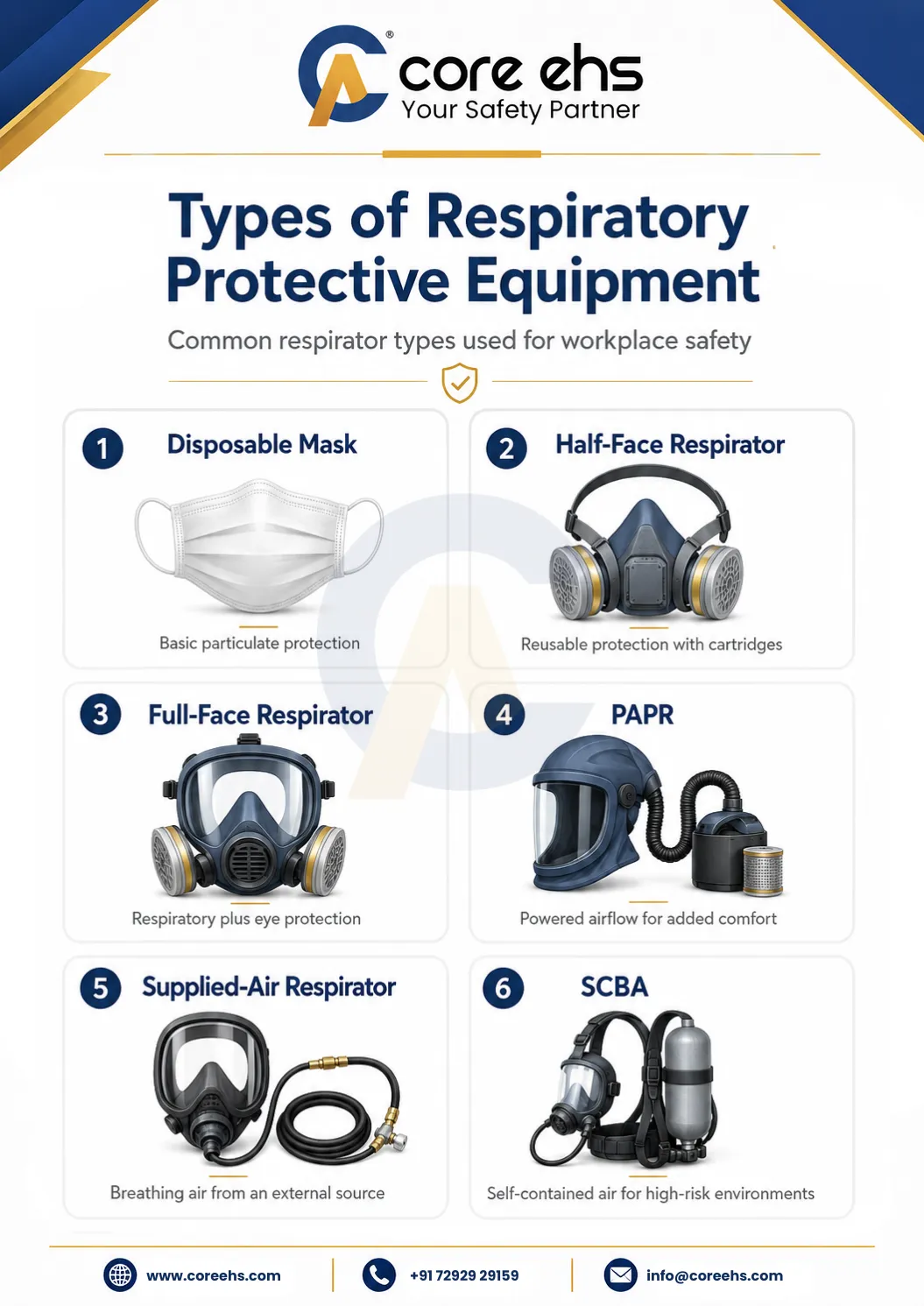
| Type | Common Use | Important Note |
| Disposable filtering facepiece | Dust/particles | Limited use and hazard-specific |
| Half-face respirator | Dust, fumes, vapours with correct filters | Requires proper fit |
| Full-face respirator | Respiratory + eye/face protection | Useful where eye irritation is a concern |
| PAPR | Longer duration work, comfort needs | Battery-powered airflow |
| Supplied-air respirator | High-risk atmospheres | Requires breathing air source |
| SCBA | Emergency/IDLH conditions | Self-contained breathing air |
A respiratory protection mask should not be chosen only by appearance or comfort. For effective mask respiratory protection, the equipment must match the hazard, fit the worker, and be supported by training, inspection, and maintenance.
OSHA Respiratory Protection Standard and Program Requirements
The key OSHA respiratory protection standard is 29 CFR 1910.134. This respiratory protection standard OSHA guidance applies when respirators are necessary to protect workers from contaminated or oxygen-deficient air, or when respirator use is required by the employer. In such cases, employers must establish and implement a written respiratory protection program with worksite-specific procedures.
A proper OSHA respiratory protection program is not limited to issuing respirators. It should cover respirator selection, medical evaluation, fit testing, correct use, training, cleaning, maintenance, storage, and program evaluation. OSHA also states that the program must be administered by a suitably trained program administrator.
For anyone searching for OSHA CFR for respiratory protection, OSHA requirements for respiratory protection, or respiratory protection plan OSHA, the main reference is 29 CFR 1910.134. OSHA also provides supporting resources such as the OSHA respiratory protection fact sheet, major requirements guidance, and the OSHA Respiratory Protection Small Entity Compliance Guide PDF, which includes practical guidance, checklists, and commonly asked questions for employers and workers.
Workplaces looking for a respiratory protection program template, respiratory protection program PDF, or OSHA respiratory protection standard PDF should not copy a generic document without reviewing actual site conditions. The program should reflect the specific airborne hazards, tasks, respirator types, worker roles, training needs, and maintenance practices at that workplace.
For organizations that want to check whether their respiratory protection practices are aligned with applicable requirements, this is where CORE-EHS EHS Audit, EHS Consulting, and Safety Compliance Gap Assessment services can be internally linked.
Fit Testing, Facial Hair and Correct Use
Proper fit is one of the most important parts of respiratory protection training. Tight-fitting respirators must seal correctly against the face. If contaminated air can leak through gaps around the facepiece, the worker may still inhale the hazard even while wearing the respirator.
This is why fit testing is required for tight-fitting respirators. It helps confirm whether a specific respirator model and size fit the worker properly. Workers should also conduct a user seal check each time they put on a tight-fitting respirator. OSHA identifies fit testing, training, maintenance, and proper use as key parts of an effective respiratory protection program.
Facial hair and respiratory protection is another important issue. Beards, stubble, sideburns, or moustaches that come between the sealing surface and the face can affect the respirator seal. OSHA states that tight-fitting respirators should not be worn where facial hair interferes with the face-to-facepiece seal or valve function.
Effective respiratory protective equipment training should teach workers how to wear the respirator, perform seal checks, remove it safely, clean and store it, inspect filters, cartridges, straps, and facepieces, and understand what the respirator cannot protect against. A respirator is only reliable when the worker knows how to use it correctly.
Practical Respiratory Protection Checklist
Before any task involving airborne hazards begins, safety teams should use a practical respiratory protection checklist to confirm that the right controls are in place. This helps ensure that respiratory protection is not treated as a last-minute PPE decision, but as part of planned workplace safety.
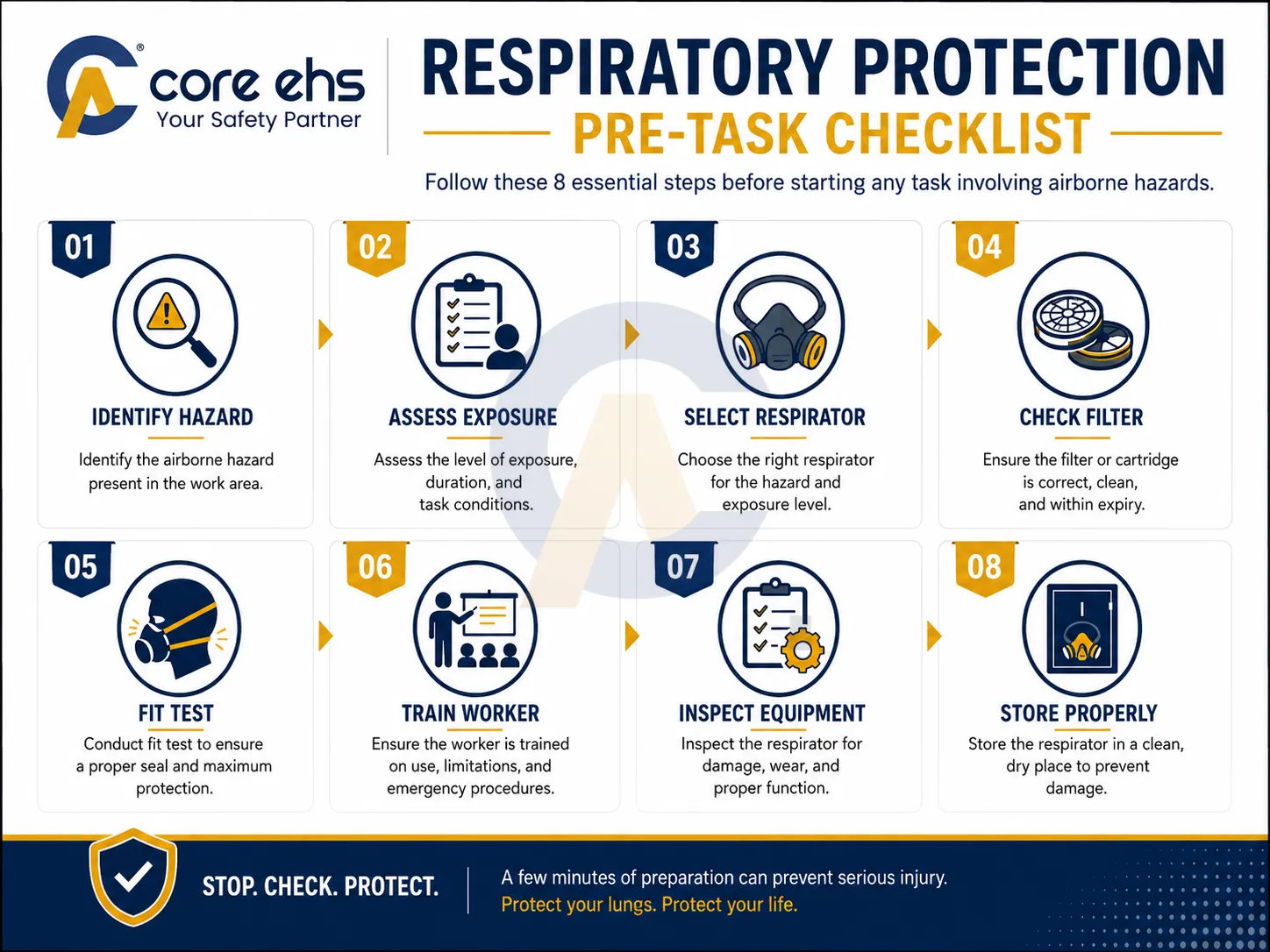
Ask these questions before the task starts:
- Have we identified the airborne hazard?
- Have we assessed exposure level and task duration?
- Is the oxygen level safe?
- Is the selected respirator suitable for the hazard?
- Are the filters or cartridges correct?
- Has fit testing been completed?
- Are workers trained to use the respirator properly?
- Is the respirator clean, inspected, and stored correctly?
- Is there a written respiratory protection program?
- Are incidents, near misses, and unsafe observations being reported?
Respiratory hazards, unsafe conditions, and equipment gaps should also be reported and tracked properly. Organizations can internally link this section to CORE-EHS ART Hazard Reporting Software for unsafe condition and respiratory hazard reporting, CORE IRIS Incident Management Software for incident reporting, investigation, and corrective action tracking, and CORE PPEVault PPE Inventory & Compliance Management Software for tracking PPE stock, issuance, expiry, maintenance, compliance records, and worker-wise PPE accountability.
This is especially useful for respiratory protection because respirators, filters, cartridges, and other PPE items must be available, suitable, inspected, and compliant before the task starts.
Respiratory Protection Training: What Workers Should Learn
Respiratory protection training is essential because even the right respirator can fail if the worker does not know how to use it correctly. Training should help workers understand when respiratory protection is required, what airborne hazard they are exposed to, which respirator is suitable, and what limitations the equipment has.
Effective respiratory protective equipment training should cover:
- How to wear the respirator correctly
- How to perform a user seal check
- How to identify the correct filter or cartridge
- How to remove the respirator safely
- How to clean, inspect, and store the equipment
- When to replace filters, cartridges, straps, or facepieces
- What to do if breathing becomes difficult or the respirator is damaged
- Why facial hair, poor fit, or wrong selection can reduce protection
For high-risk tasks, training should go beyond classroom explanation. Workers often understand respiratory hazards better when they can see realistic examples of dust exposure, welding fumes, chemical vapours, confined space risks, or incorrect respirator use. This is where modern formats such as 3D animated safety videos, eLearning modules, and VR-based safety training can make respiratory protection more practical, visual, and task-based.
For example, a 3D animation can show how invisible airborne particles enter the breathing zone. An eLearning module can help workers revise respirator selection and seal-check steps at their own pace. VR training can allow workers to experience hazardous work scenarios in a controlled environment before entering the real site.
The objective is not just to complete training records. The objective is to make sure workers can recognize the hazard, choose the right protection, use it correctly, and respond safely when something goes wrong.
Organizations can internally link this section to CORE-EHS Respiratory Protection Training, PPE Safety Training, Hazardous Material Handling Training, Confined Space Safety Training, 3D Animated Safety Training Videos, eLearning Safety Courses, and VR Safety Training Solutions where relevant.
Make Respiratory Protection a Planned Safety Control
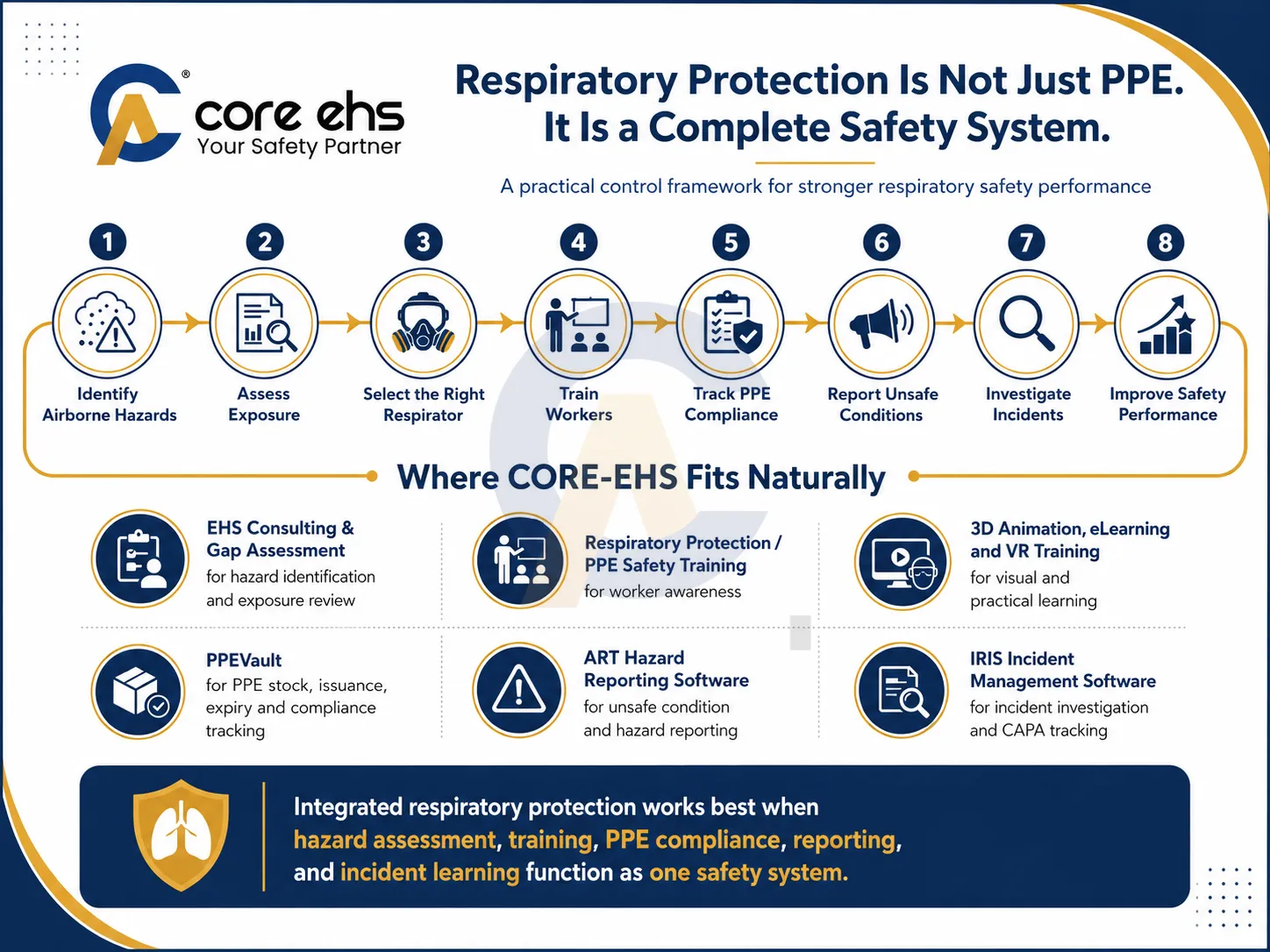
Respiratory protection is not just about wearing a respirator at the worksite. It starts much earlier, with identifying the airborne hazard, assessing exposure, selecting suitable respiratory protective equipment, ensuring proper fit, training workers, and maintaining the equipment correctly.
Whether the risk comes from silica dust, welding fumes, chemical vapours, toxic gases, asbestos fibres, or oxygen-deficient spaces, the same principle applies: the protection must match the hazard. A mask, filter, cartridge, or respirator chosen without proper assessment can create a false sense of safety and leave workers exposed.
A strong respiratory protection program helps organizations move from reactive PPE use to planned risk control. It ensures that workers know when respiratory protection is required, how to use it correctly, how to check its condition, and what limitations it has.
For workplaces aiming to improve respiratory safety, training, audits, PPE compliance tracking, hazard reporting, and incident management should work together as one safety system.
CORE-EHS supports organizations with workplace safety training, EHS consulting, PPE compliance solutions, hazard reporting tools, and incident management software to help strengthen respiratory protection practices and build safer industrial workplaces.