 +91 72929 29159













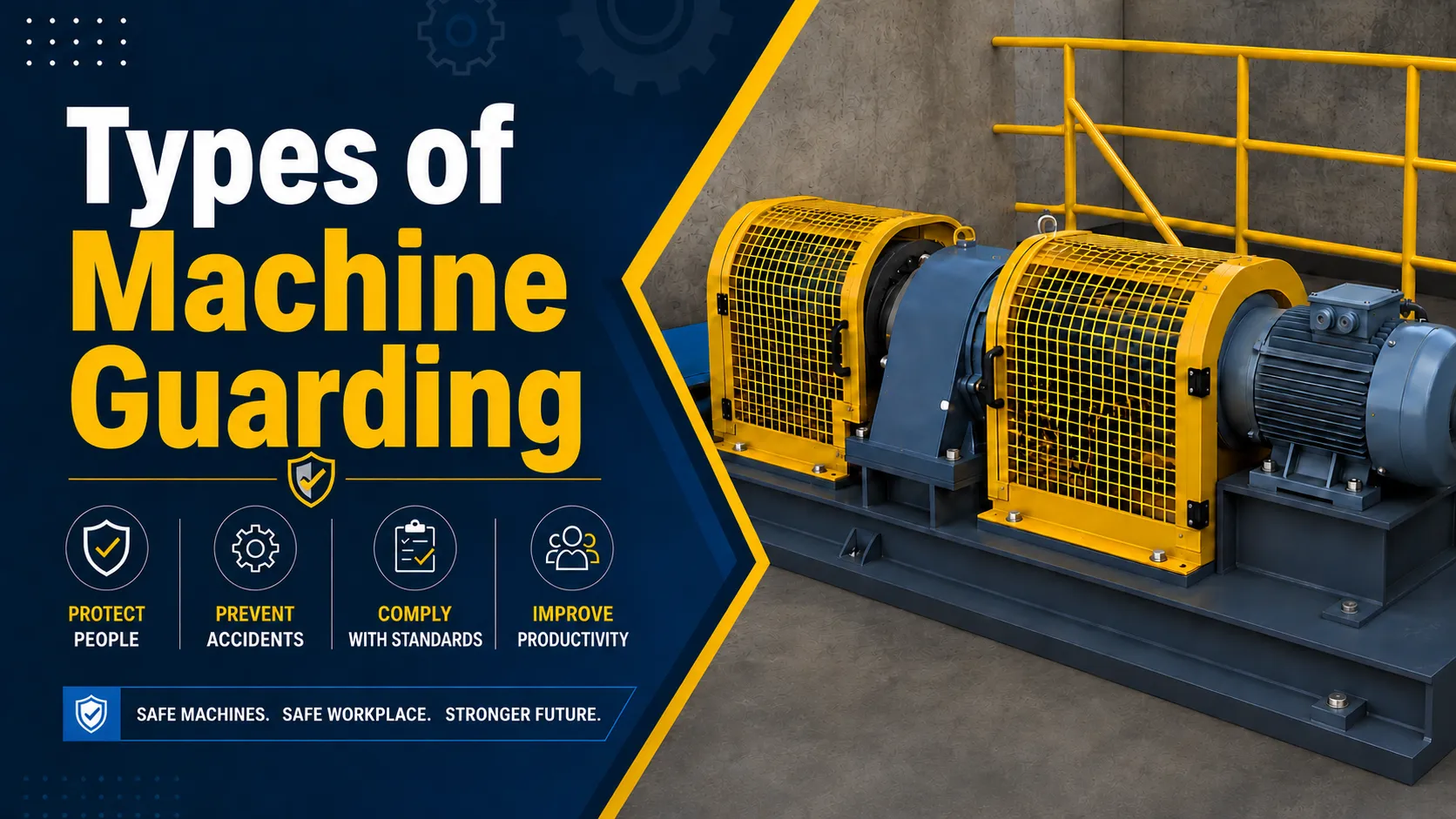
Machine guarding is crucial for workplace safety. It protects workers from the hazards of operating machinery. Without proper guards, the risk of injury increases significantly.
Various types of machine guards exist to suit different needs. Each type serves a specific purpose and offers unique benefits. Understanding these can help in choosing the right solution.
HSE standards provide guidelines for effective machine guarding. Compliance with these standards is essential for maintaining a safe work environment. They help prevent accidents and ensure worker safety.
Machine guards are not just barriers. They are part of a comprehensive safety strategy. This includes training, maintenance, and regular inspections.
Safety devices complement machine guards. They enhance protection and reduce the likelihood of accidents. Together, they form a robust safeguarding system.
Investing in machine guarding solutions is investing in safety.
It protects workers and ensures smooth operations. Prioritising safety is always a wise decision.
What is Machine Guarding?
Machine guarding involves implementing barriers and safety devices. These elements work together to prevent contact with dangerous machine parts. Guards help ensure that only authorised personnel operate machinery safely.
Machine guards come in various forms, such as fixed and adjustable types. Their primary role is to minimise the risk of injury. They are designed to cover moving parts and secure access points.
Key features of machine guarding include:
- Protecting personnel from moving parts
- Preventing flying debris from causing harm
- Creating physical barriers around hazardous zones
In addition to reducing physical contact, guards also serve another vital role. They promote awareness by integrating warnings and signs. These signs remind workers of potential hazards and safe operating procedures.
Why Machine Guarding is Essential for Workplace Safety
Machine guarding plays a pivotal role in maintaining safety at work. It prevents accidents that could lead to severe injuries or fatalities. In doing so, it helps protect both workers and equipment.
Beyond personal safety, machine guarding enhances operational efficiency. It reduces downtime caused by machinery-related injuries. Guards also contribute to a more organised and secure working environment.
Several key benefits of machine guarding include:
- Minimising risk of accidents and injuries
- Boosting worker confidence and productivity
- Ensuring compliance with safety regulations
Implementing proper guarding measures aligns with OSHA standards. It ensures that workplaces comply with essential safety regulations. This compliance not only safeguards employees but also protects employers from potential liabilities.
Machine Guarding Standards and Requirements
The relevant standards cover the general requirements for machine guarding, aiming to protect operators and other employees in the area from the dangers of machine operation. This includes preventing hazards such as rotating parts, flying chips, and sparks.
Employers must ensure compliance with these standards to avoid fines. The regulations specify how guards should be applied and maintained. Adequate guarding significantly reduces the risk of workplace accidents.
According to the standards, machine guarding requirements include:
- Protection against accessible moving parts
- Guards securely affixed to machines
- Devices that prevent workers from reaching into danger zones
Understanding and adhering to these standards is crucial for maintaining a safe workplace. It ensures that machines are equipped with proper safeguards.
These measures ultimately help protect workers from serious injuries.
Main Types of Machine Guards
Machine guards play a vital role in keeping workers safe. They help prevent access to dangerous parts of machinery. Understanding the different types is crucial for choosing the right solution.
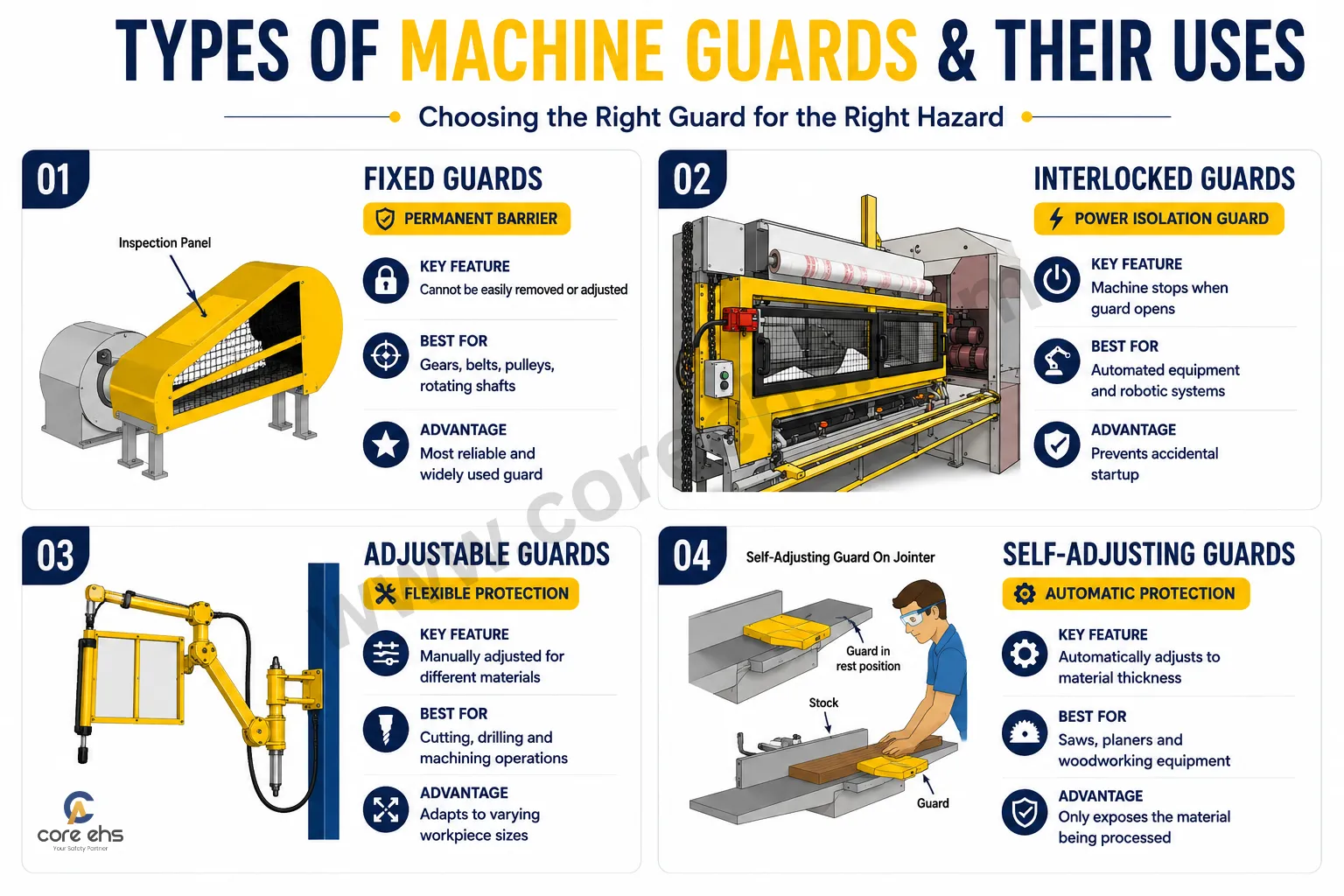
There are several types of machine guards available. Each type offers specific benefits and is suited for particular situations. The main types include:
- Fixed Guards
- Interlocked Guards
- Adjustable Guards
- Self-Adjusting Guards
Knowing these types helps in selecting effective machine safeguarding solutions tailored to your needs. They ensure that machinery operates safely and efficiently.
1. Fixed Guards
Fixed guards provide a permanent barrier between workers and hazards. They are ideal for machines with infrequent access needs. Their robust design ensures consistent protection.
Fixed guards are securely attached and must be removed using tools. markdown This prevents accidental removal or tampering. They offer high reliability and minimal maintenance.
Key benefits of fixed guards include:
- Consistent protection
- High durability
- Minimal maintenance
These guards are essential in environments with straightforward operations. They ensure continuous safety without compromising productivity.
2. Interlocked Guards
Interlocked guards shut down the machine when not in place. This provides an extra layer of safety, as the machine cannot operate without the guard. It’s a critical feature for high-risk machinery.
These guards automatically stop operations when opened or removed. They are highly effective in reducing accidents. Maintenance and adjustments are safer due to the shut-off feature.
Advantages of interlocked guards include:
- Enhanced safety
- Automatic machine shut off
- Easy maintenance
They are especially beneficial for machines requiring frequent access, providing a balance between protection and operational flexibility.
3. Adjustable Guards
Adjustable guards can be modified to fit various operations. They allow changes to the guard position, accommodating different sizes of stock or workpieces. This flexibility makes them suitable for a range of applications.
The ability to adjust these guards reduces downtime. Workers can quickly modify the guards as needed. This enhances efficiency while maintaining safety standards.
Benefits of adjustable guards include:
- Flexibility for various operations
- Quick adaptation to different workpieces
- Timesaving for operators
These guards are ideal for dynamic environments, where equipment or processes frequently change. They maintain safety while allowing for operational adaptability.
4. Self-Adjusting Guards
Self-adjusting guards automatically adapt to the size of the stock. They move as the workpiece enters the danger area, ensuring continuous protection. This automatic feature simplifies operations and enhances safety.
Such guards require minimal intervention, making them user-friendly. They are efficient at handling different sizes and shapes of materials. This makes them versatile and highly beneficial for varied production lines.
Key advantages of self-adjusting guards include:
- Automatic adjustment
- Versatility in material handling
- Ease of use
These guards are perfect for fast-paced or high-volume settings, maintaining safety while reducing manual adjustments. Their automatic operation is ideal for ensuring the safety of diverse tasks.
Additional Machine Guarding Solutions and Accessories
Machine guarding can be enhanced with additional solutions and accessories. These elements increase the effectiveness of standard guards. They provide extra layers of protection in the workplace.
Accessories like locks and warning labels play a crucial role. They deter tampering and alert workers to potential dangers. These simple additions are powerful in promoting a culture of safety.
Furthermore, safety devices like light curtains and pressure-sensitive mats complement guarding systems.
They detect the presence of workers and machinery, allowing for quick responses to potential risks.
Key accessories and solutions include:
- Locks for guard security
- Warning labels for hazard awareness
- Light curtains for invisible barriers
- Pressure-sensitive mats for area monitoring
Incorporating these solutions ensures comprehensive machine safeguarding. This approach minimises risks and supports compliance with safety standards.
Machine Guarding Systems: Panels, Fencing, and Modular Solutions
Machine guarding systems often employ panels, fencing, and modular configurations. These solutions create robust safety perimeters around machinery. They prevent unauthorised access and reduce accident risks.
Panels offer a straightforward method to enclose machinery. They can be customised to fit different machine sizes. This flexibility ensures that they meet specific operational requirements effectively.
Fencing provides a sturdy barrier, often made of metal mesh. It allows visibility while safeguarding workers from moving parts. Modular solutions are easily adjustable, enabling reconfiguration as workplace needs evolve.
Key components in these systems include:
- Machine guard panels for enclosure
- Machine safety fencing for physical barriers
- Modular designs for adaptability
These systems provide a tailored approach to machine safeguarding. They enhance worker safety and help maintain compliance with regulatory standards.
Safety Devices for Machine Guarding
Safety devices are crucial for enhancing machine guarding. They provide an added layer of security to protect workers from injuries. These devices often work in conjunction with physical guards.
Common safety devices include light curtains, which detect when an object or person enters a hazardous area. Pressure-sensitive mats stop machines when weight is applied. These tools are especially useful in dynamic industrial environments.
Notable safety devices are:
- Light curtains for perimeter monitoring
- Pressure-sensitive mats for automatic shutdown
- Emergency stop buttons for immediate halting
Incorporating these devices boosts safety by providing quick responses to potential dangers. They are essential components of a comprehensive machine safeguarding strategy.
Machine Guarding in Automation and Industrial Settings
Automation environments present unique challenges for machine guarding. Rapidly moving parts and complex machinery increase risks. Effective guarding systems are essential for worker safety.
In industrial settings, tailored solutions ensure each guard fits specific machine functions. This includes both static and dynamic safeguarding measures. Customised designs meet diverse operational needs.
Key considerations in these settings include:
- Designing guards for automated machinery
- Integrating guards with machine operations
- Ensuring compliance with regulatory standards
By addressing these factors, industries can reduce accidents and enhance efficiency. Proper machine guarding contributes to safer work conditions and optimal performance.
Machine Guarding Training and Best Practices
Comprehensive training is crucial for effective machine guarding. Workers must understand how to correctly use and maintain guarding systems. This knowledge helps prevent injuries and ensures safety.
Best practices involve regular training sessions and updates on new safety technologies. Employees should be encouraged to report any issues with machine guarding. Maintaining a proactive approach helps in creating an injury-free environment.
Training components should include:
- Importance of machine guarding
- How to inspect and maintain guards
- Procedures for reporting damage or failures
By adhering to these practices, workplaces can foster a culture of safety and awareness. This leads to reduced accidents and improved operational efficiency.
Common Machine Guarding Mistakes and How to Avoid Them
Mistakes in machine guarding can lead to serious accidents. These errors often arise from insufficient knowledge and neglect. Addressing these issues proactively is crucial.
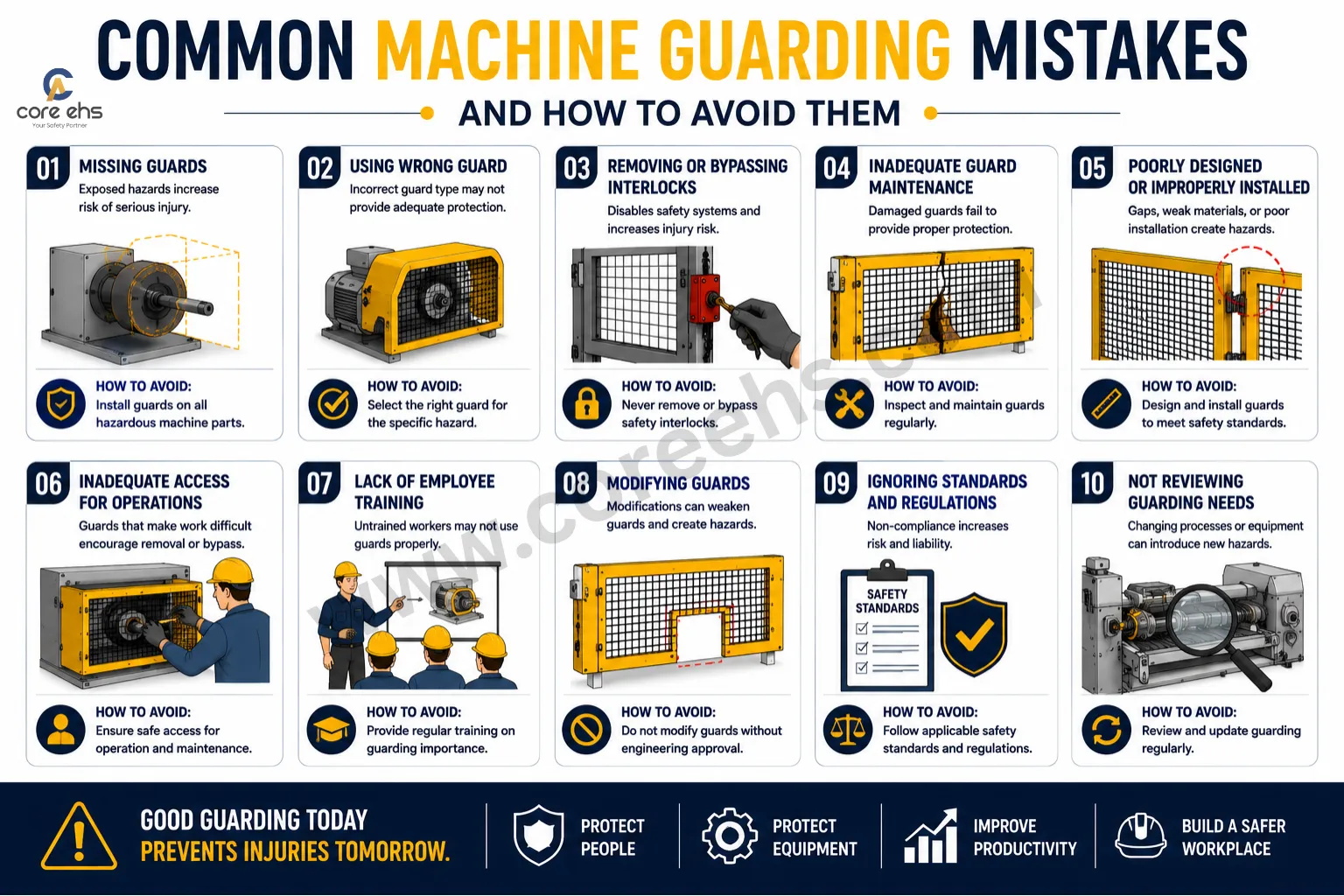
To avoid common pitfalls, regularly review and update machine guarding systems. Ensure all guards comply with OSHA standards and requirements. Encourage worker feedback on the effectiveness of guarding systems.
Common mistakes include:
- Incorrect installation of guards
- Failure to regularly inspect guards
- Ignoring wear and tear on safety devices
By recognising and correcting these mistakes, workplaces can significantly enhance their safety record and protect their workers. Regular audits and training play a pivotal role in maintaining safety standards.
Conclusion: Choosing the Right Machine Guarding Solutions
Selecting the appropriate machine guarding solutions is crucial for workplace safety. Every facility has unique requirements that influence guard selection. Investing time in understanding these needs can greatly improve safety outcomes.
Consider the following when choosing machine guards:
- The type of machinery and its hazards
- Frequency of machine access required
- Flexibility and customisation options
By considering these factors, companies can effectively enhance worker protection. Well-chosen guards reduce risks and comply with safety standards. Prioritising safety and making informed decisions helps create a secure work environment.