+91 72929 29159


Defensive Driving
Defensive driving is a form of training for vehicle drivers that makes them aware about the driving rules, standard driving practices and the required driving mechanics.
Enquire Now



 Solutions

All your EHS & ESG needs
Empowering responsible decisions through unified EHS and ESG solutions

Read our success stories
Explore how we have transformed safety cultures with our EHS solutions.
.
.
Resources
About Us
Our Mission
Our mission is to empower industries to achieve their safety, health,and environmental objectives, integrating Environmental, Social, and Governance (ESG) principles into our strategic insights, expert guidance, and innovative solutions. We are dedicated to advancing sustainable and responsible practices across all sectors.
Our Vision
Our vision is to become the foremost provider of exceptional safety services, enabling organizations to not only meet but excel in their safety, health, and environmental goals, while fully embracing and
implementing ESG standards for a sustainable future.
Practical electrical safety training for workers, electricians, technicians, supervisors, and industrial teams to identify electrical hazards and apply safer work practices.
Book Your Training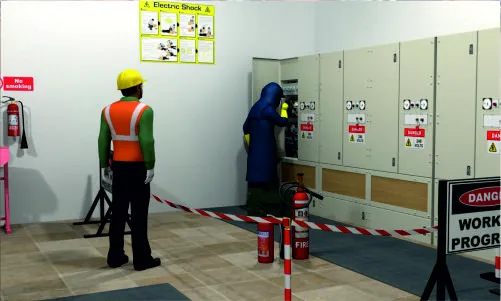




Electrical Safety Training helps workers and supervisors recognise electrical hazards and apply safe work practices around electrical systems, equipment, and installations. Depending on the programme, training may cover electric shock, arc flash, safe isolation, lockout/tagout (LOTO), electrical PPE, risk assessment, emergency response, and controls used in industrial electrical work.
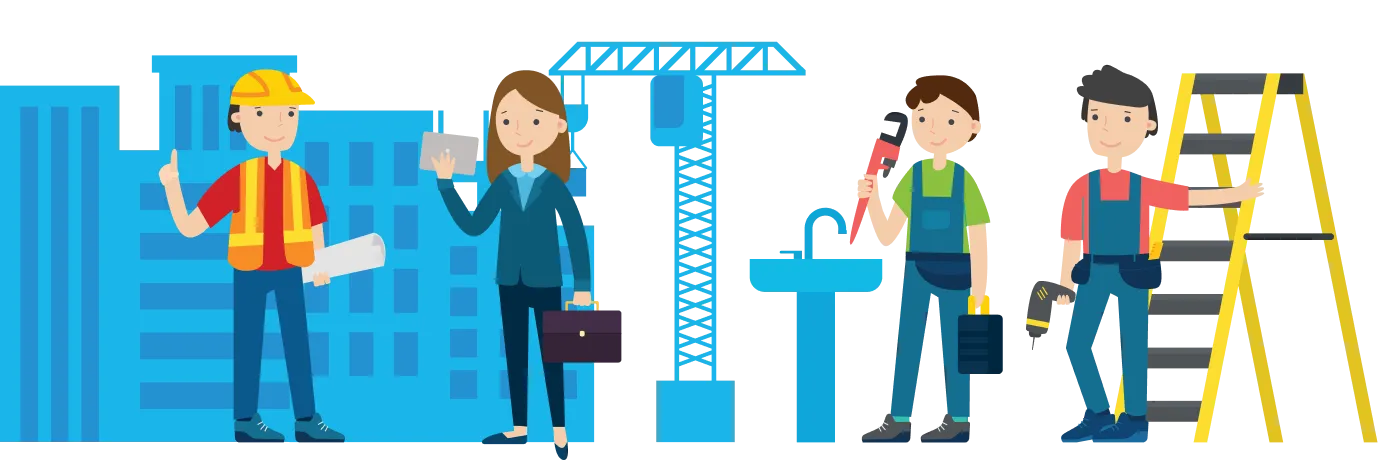
Compare role-based training options for employees, electricians, technicians, supervisors, engineers, and safety professionals.
| Training Program | Ideal For | Duration | Mode |
|---|---|---|---|
Electrical Safety Awareness Training |
Employees, operators, technicians, contractors, and new joiners exposed to electrical hazards | 1 Day | Classroom / Onsite |
Electrical Work Practices & Safe Isolation Training |
Electricians, maintenance teams, supervisors, and engineers involved in electrical work or isolation activities | 1–2 Days | Classroom / Onsite / Practical |
HV & LV Electrical Safety Training |
Electrical engineers, panel operators, testing personnel, maintenance teams, and safety professionals | 1 Day | Classroom / Onsite |
Electrical Risk Assessment, ARC Flash & Permit System Training |
Safety professionals, senior technicians, electrical supervisors, engineers, and facility personnel | 1 Day | Classroom / Onsite |
Electrical safety training combines instructor-led learning, workplace scenarios, visual demonstrations, practical exercises, and participant assessment.












Strengthen electrical hazard awareness, safe work practices, and workforce competency across industrial operations.
Recognize electrical hazards such as electric shock, arc flash, short circuits, and unintended energization.
Apply safe isolation, lockout/tagout (LOTO), and appropriate electrical PPE during electrical work.
Improve hazard checks and safer work practices around panels, equipment, and installations.
Build awareness of emergency response procedures for electrical incidents and unsafe conditions.
Improve workforce competency for electrical work, maintenance, supervision, and contractor activities.
Support compliance with applicable electrical safety procedures, standards, and site requirements.
Reduce the risk of electrical incidents, equipment damage, and unplanned downtime.
Strengthen supervision, accountability, and consistent electrical safety practices across teams.

For personnel who install, operate, inspect, maintain, test, or troubleshoot electrical systems, equipment, panels, and installations.

For maintenance personnel and operators who work around electrical panels, machinery, switchgear, motors, and other energized equipment.

For personnel responsible for planning, authorising, or supervising electrical work, isolation activities, and safe work practices.

For safety personnel responsible for electrical risk controls, permit-to-work, inspections, compliance, and monitoring safe electrical work practices.
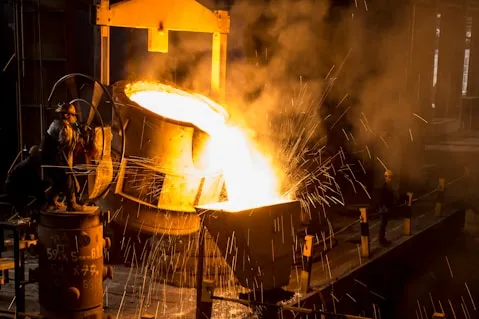
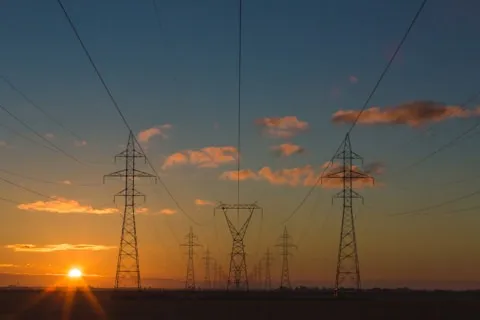
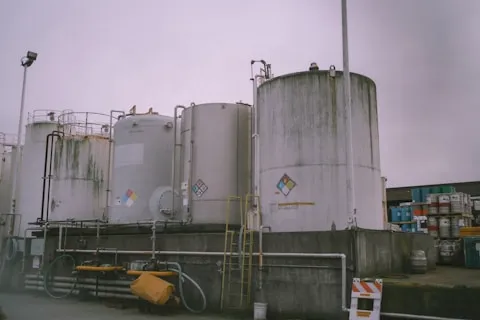
Electrical safety training supports teams across industries where electrical systems, energized equipment, maintenance activities, and power distribution are part of routine operations.

Engineering

Automobiles

Automotive & Mobility

Power
Iron & Steel

Cement Industry

Metal & Mining

Shipping & Marine

Construction & Infrastructure

Chemicals & Fertilizer

Pharmaceutical& Life Science

Food FMCG & Agriculture
Electrical & Electronics

Retails & Consumer Durable
Petrochemical, Oil, Gas & Refinery
After completing the selected program, participants can expect to build practical knowledge and skills in the following areas:
Recognize electric shock, burns, arc flash, faulty wiring, poor insulation, overloading, unintended energization, and other conditions that can lead to electrical incidents.
Apply safer work practices around electrical systems, including suitable PPE, safe access, equipment checks, and controls appropriate to the task.
Understand safe isolation, lockout/tagout (LOTO), verification steps, and precautions used before maintenance or electrical work begins.
Understand immediate response actions for electrical shock, arc flash, electrical fire, and other electrical emergencies, including escalation and first-response precautions.
Build awareness of applicable electrical safety requirements, site procedures, inspection practices, and consistent controls for safer electrical work.

Depending on the program, training can combine visual learning, instructor-led sessions, virtual delivery, and onsite demonstrations to help participants understand electrical hazards and apply safer work practices.
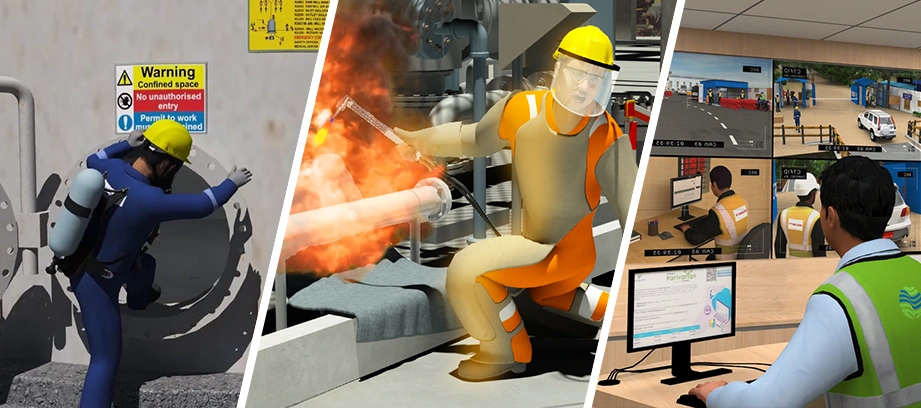
Visualise electrical hazards such as electric shock, arc flash, unsafe energisation, improper isolation, and electrical fire through realistic scenario-based learning.
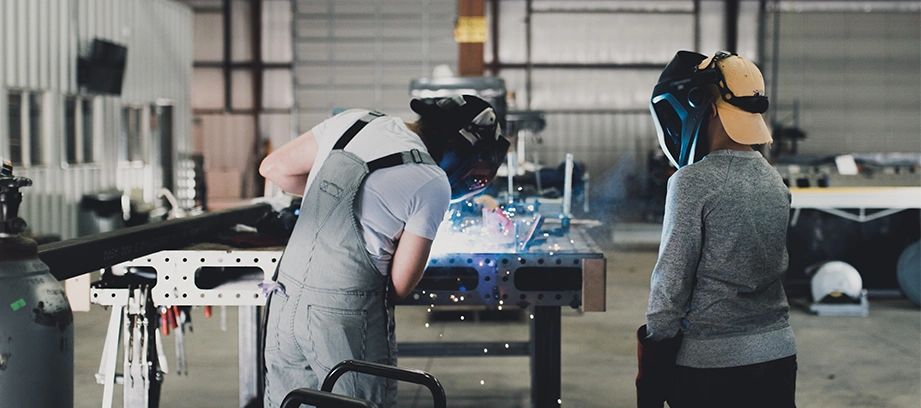
Instructor-led sessions combine electrical safety concepts, workplace scenarios, demonstrations, discussions, and practical exercises where applicable.
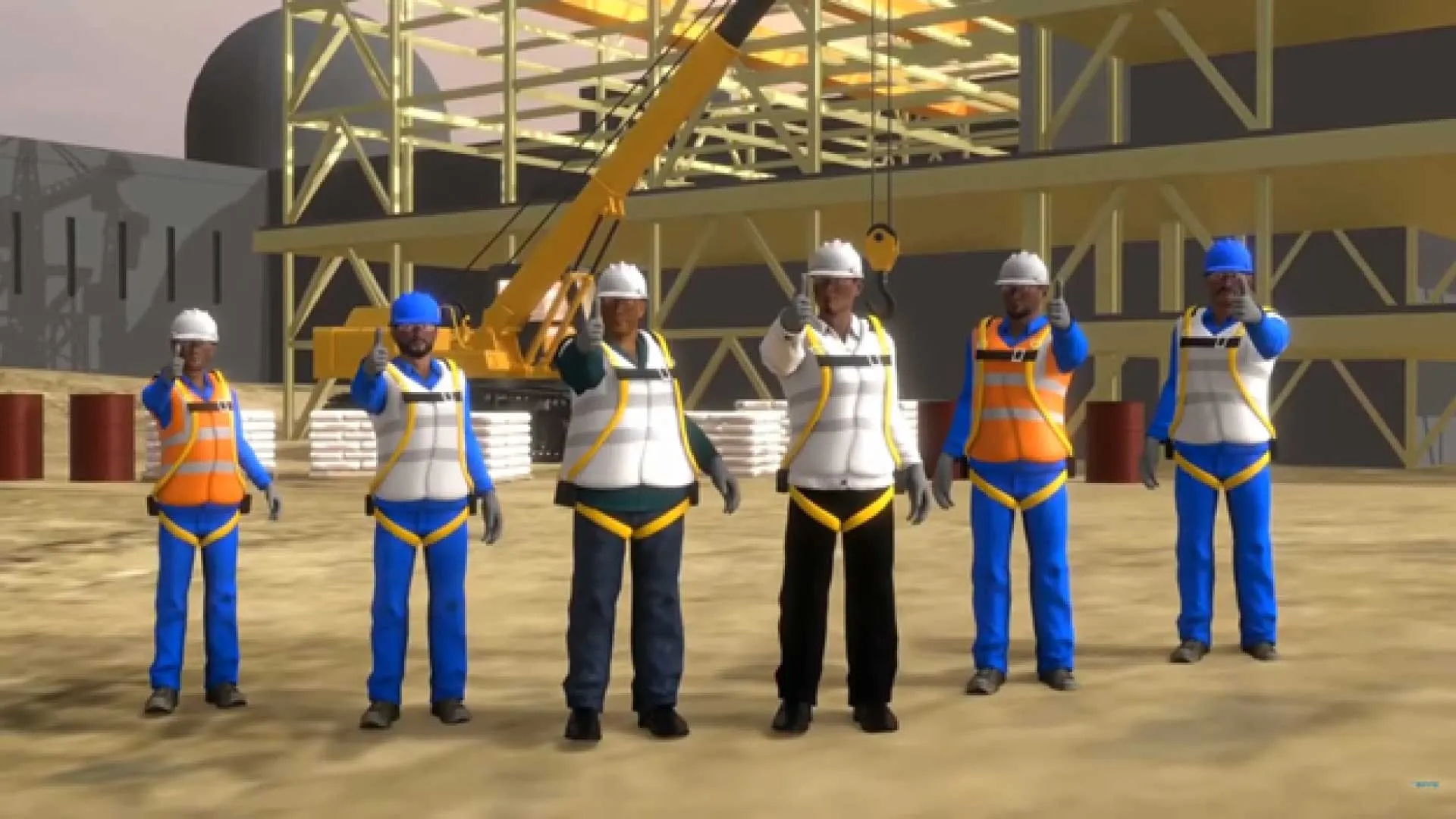
Live online sessions use instructor demonstrations, case studies, and real-time Q&A to make remote electrical safety learning interactive and flexible.

Training delivered at your facility can combine classroom instruction with relevant workplace demonstrations for practical, site-specific understanding.








To know more about us
EHS safety training equips employees with the knowledge, skills, and awareness required to identify workplace hazards, follow safe work practices, respond to emergencies, and comply with applicable Environment, Health, and Safety regulations.
EHS safety training is essential to prevent accidents, reduce unsafe acts, protect employees, and ensure legal compliance. It also strengthens safety culture and improves overall operational performance.
Yes. CORE-EHS provides customised on-site EHS safety training based on your industry, site conditions, hazard profile, job roles, and regulatory requirements, ensuring practical relevance and immediate applicability.
EHS safety training is required across industries such as manufacturing, construction, oil & gas, power plants, chemicals, pharmaceuticals, logistics, infrastructure, and project sites.
Training topics include work at height, confined space, electrical safety, fire safety, rigging and lifting, behaviour-based safety, accident investigation, contractor safety, and emergency response, among others.
CORE-EHS training programs are aligned with applicable Indian safety laws, statutory requirements, and regulatory guidelines, supporting compliance and audit readiness.
CORE-EHS supports organisations through internationally recognised safety frameworks and best practices and can guide learners towards globally accepted certifications such as NEBOSH through structured learning pathways.
Pre and post assessments help measure knowledge gaps, evaluate learning effectiveness, and ensure competency development, enabling organisations to track real improvement rather than just attendance.
Training sessions are conducted by experienced EHS professionals and industry practitioners with hands-on exposure to industrial operations, audits, and safety implementation.
Yes. EHS training directly supports the ‘Social’ pillar of ESG by improving worker safety, competence, and wellbeing, contributing to responsible and sustainable business practices.



Defensive driving is a form of training for vehicle drivers that makes them aware about the driving rules, standard driving practices and the required driving mechanics.
Enquire Now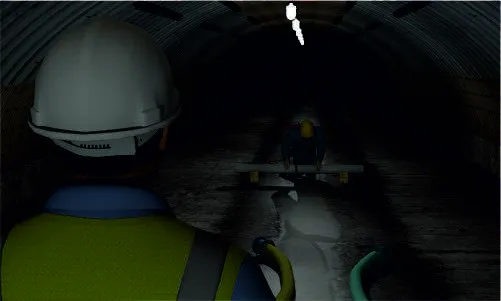
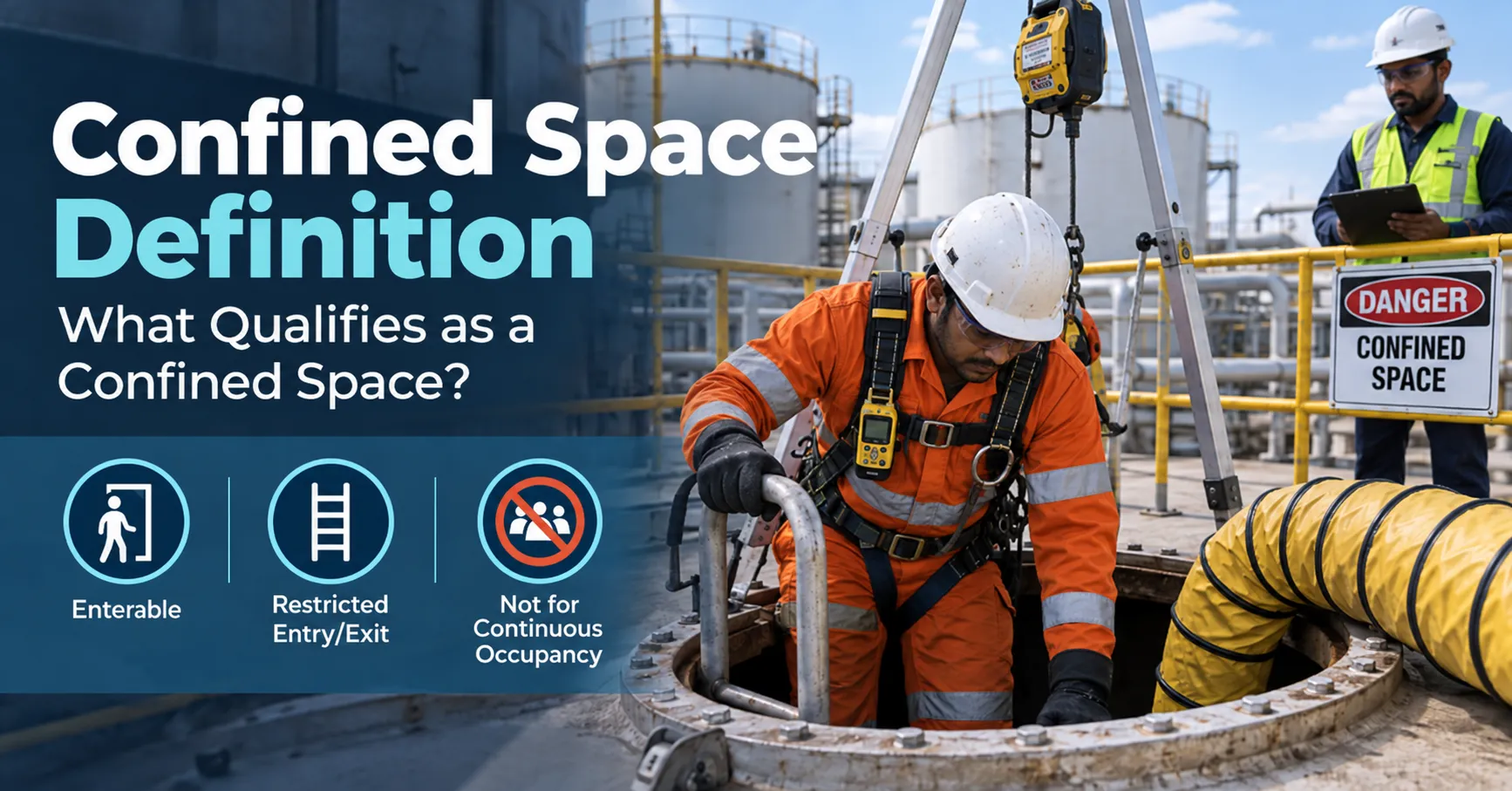
Prevent confined space accidents with certified safety training. Learn hazard control, safe entry, permits, and rescue skills for high-risk work environments.
Enquire Now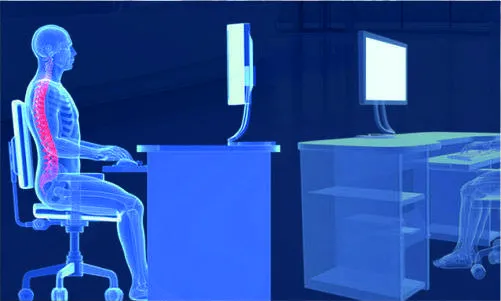
Ergonomic Safety Training focuses on identifying workplace ergonomic risks and adopting safe work practices to reduce strain, prevent musculoskeletal injuries, and improve worker wellbeing.
Enquire NowHere’s what we've been up to recently.