
 +91 72929 29159














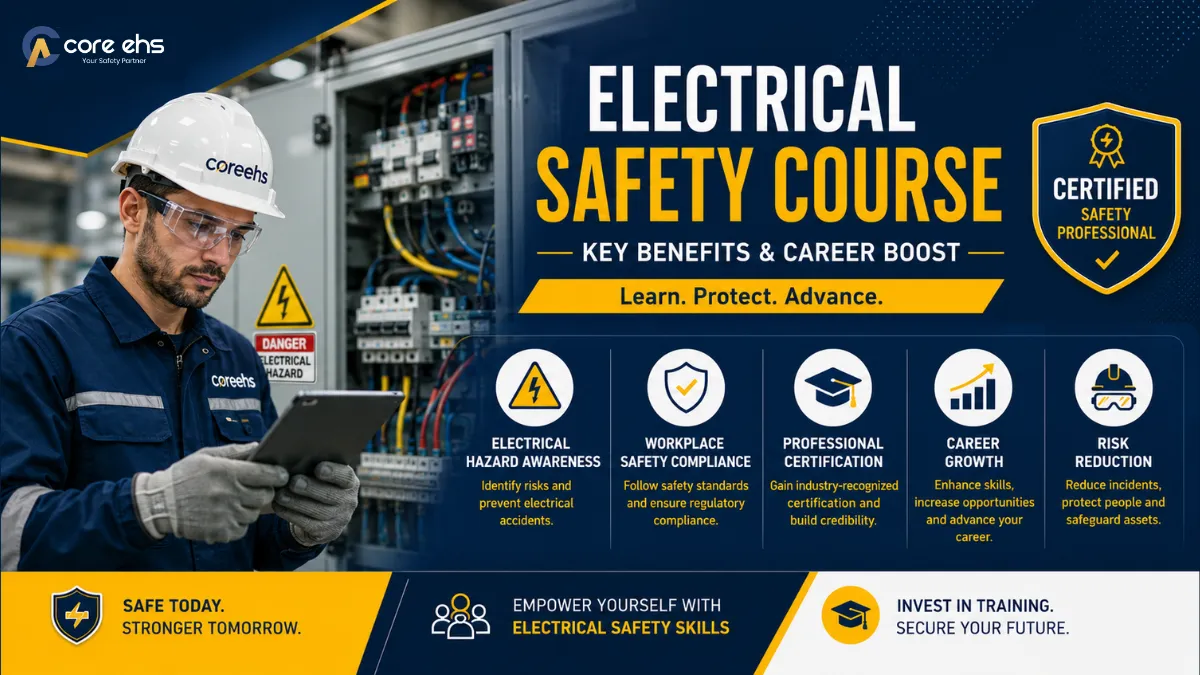
Top Benefits of Taking an Electrical Safety Course
Electrical safety is crucial in today’s technology-driven world. Understanding the risks associated with electrical systems can prevent accidents and save lives. Following electrical safety guidelines and practical electrical safety tips can further reduce risks and strengthen electrical hazard awareness across teams.
An electrical safety course equips individuals with the knowledge to handle electrical systems safely as part of a broader safety training program. These courses cover essential guidelines and best practices for preventing electrical hazards.
Participants learn to identify potential risks and implement effective safety measures. This training is vital for anyone working with or around electrical systems and often complements a workplace safety course pathway.
Whether you’re an electrician, engineer, or safety officer, these courses offer valuable insights – including options suited to those pursuing an electrical safety engineer course. They enhance your ability to maintain a safe working environment.
With options available both online and in-person, electrical safety courses provide flexibility. You can choose an electrical safety course online or attend an electrical safety workshop, depending on your learning style and schedule. They cater to various learning preferences and timelines, making them accessible to all.
Understanding Electrical Hazards and Risks
Electrical systems are vital, but they can also be dangerous if mishandled. Recognising potential hazards is the first step in preventing accidents.
An electrical safety course or an electrical safety awareness course helps individuals identify various types of risks present in electrical environments. Participants learn about both immediate dangers and long-term effects of exposure to electrical hazards.
Here are some common electrical risks you may encounter:
- Electric shock
- Arc flash
- Electrical fires
- Faulty wiring
Understanding these risks is crucial for maintaining safety. Courses often involve detailed instruction on how to mitigate these hazards effectively.
Awareness of electrical risks not only protects individuals but also secures organisational assets. By knowing what to look out for, workers can act promptly to prevent incidents.
Through interactive sessions and real-world examples, students develop the skills needed to spot and manage potential dangers. This training helps create safer workplaces by instilling a proactive safety mindset.
Key Components of an Electrical Safety Course
An electrical safety course is comprehensive, covering essential safety aspects. These courses blend theory with practical skills to promote safety in electrical environments through structured electrical safety training and drills.
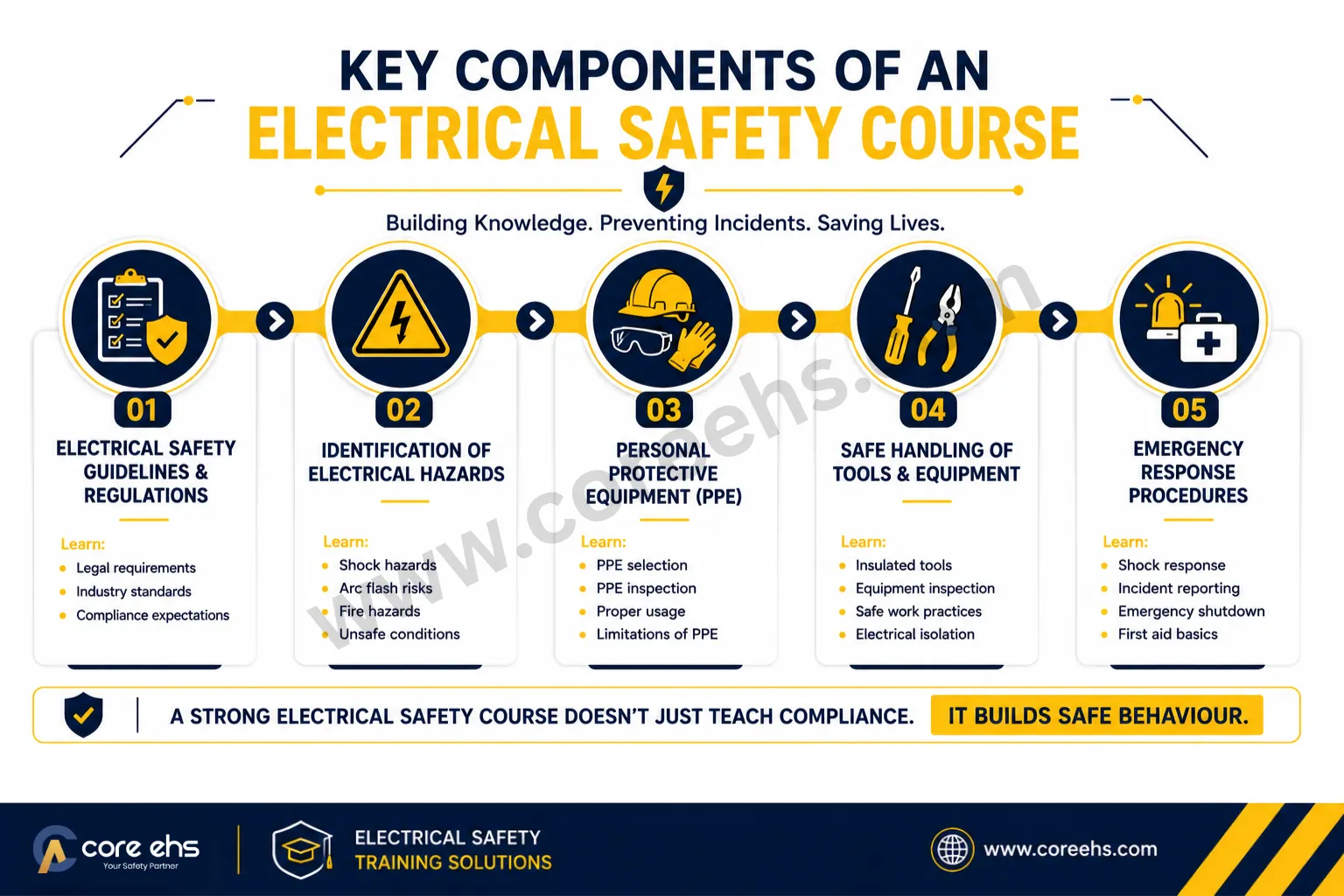
The curriculum typically includes several key components:
- Electrical safety guidelines and regulations
- Identification of electrical hazards
- Use of personal protective equipment (PPE)
- Safe handling of electrical tools and equipment
- Emergency response procedures
Each component plays a crucial role in building a well-rounded understanding of electrical safety. Courses emphasise the importance of adhering to safety regulations and guidelines to maintain compliance.
Interactive elements, such as workshops and simulations, provide hands-on experience. This practical approach enhances learning and retention, equipping participants with confidence to manage real-world situations.
In addition, courses often offer insights into the latest advancements in electrical safety technology. Understanding new tools and techniques can significantly enhance workplace safety and efficiency.
Moreover, participants learn about the importance of regular maintenance and inspections to prevent accidents. These courses aim to build not just knowledge but also a mindset that prioritises safety in all electrical work settings.
Enhancing Workplace Safety and Compliance
Adopting effective electrical safety practices is crucial for enhancing workplace safety. An electrical safety course is a key step towards achieving this goal. These courses provide participants with essential knowledge and skills.
Understanding electrical safety guidelines helps minimise workplace risks. When employees are well-trained, they can easily identify and mitigate potential hazards. This proactive approach is vital for reducing accidents and injuries at work.
Participating in these courses ensures compliance with safety regulations. Compliance not only safeguards employees but also protects the organisation from potential legal issues. Regular updates in training help keep up with changing standards.
Here’s how workplace safety can be enhanced:
- Implementing safety protocols consistently
- Conducting regular safety audits
- Promoting awareness through continuous training
- Ensuring all equipment is maintained and inspected
Courses also emphasise creating a culture of safety within the organisation. When safety is prioritised, employees feel more secure in their work environment. This leads to improved morale and productivity. By investing in safety training programmes (and a complementary online safety course or safety course online for refreshers), companies demonstrate their commitment to employee wellbeing and operational excellence.
Career Advantages of Electrical Safety Certification
Obtaining an electrical safety certification provides significant career advantages. Certified professionals are often more attractive to employers. This credential indicates a commitment to maintaining high safety standards.
A Electrical safety certification enhances a professional’s skill set. It shows proficiency in identifying electrical hazards and implementing preventive measures. This expertise is critical in industries with high electrical risks.
Certification can lead to advanced job opportunities and increased earning potential. Employers value employees who have undergone rigorous safety training. These individuals are often considered for leadership roles within safety initiatives.
Consider these benefits of electrical safety certification:
- Strengthened CV with a recognised credential
- Increased opportunities for promotions
- Enhanced professional reputation
- Access to specialised safety positions
Networking is another advantage of certification. Many programmes connect participants with industry experts. This interaction provides valuable insights and fosters professional growth.
Overall, an electrical safety certification not only advances your career but also enriches your understanding of safety protocols. It’s a worthwhile investment for any professional in the electrical field.
Flexible Learning: Online and In-Person Options
Electrical safety courses come in various flexible learning formats. Whether online or in-person, these options cater to diverse learning needs and preferences. This flexibility is vital for balancing professional commitments with education.
Online safety courses or eLearning Courses offer the convenience of learning from anywhere. Participants can access materials at their own pace and revisit complex topics. This method suits those with tight schedules or living in remote areas, and it makes it easy to complete an electrical safety course online.
In-person courses provide practical experience. They allow for direct interaction with trainers and peers, enriching the learning experience. This format is ideal for those who benefit from practical demonstrations and face-to-face discussions, such as during an electrical safety workshop.
Key benefits of flexible learning options include:
- Accessibility from different locations
- Variety of learning formats
- Opportunities for interactive and practical sessions
- Self-paced or instructor-led options
Ultimately, choosing the right format depends on individual learning styles and career goals. Both online and in-person courses provide valuable knowledge and skills. Flexibility ensures that more professionals can improve their electrical safety awareness.
Specialised Electrical Safety Courses in India
In India, electrical safety courses are tailored to meet regional industry demands. These courses address local challenges, ensuring participants receive relevant and practical training. The focus is on adapting to India’s diverse work environments.
Many courses highlight regional electrical safety guidelines unique to India. Participants gain insights into local laws and regulations, enhancing workplace safety. Understanding these nuances is crucial for compliance and risk management.
Popular options include an electrical safety course in India delivered nationwide, as well as specialised offerings like RPL or Requisition of Prior Learning. These courses often cover industries such as manufacturing, construction, and energy. Such specialisation ensures that training is applicable and job-relevant.
Key components of specialised courses in India include:
- Regional safety regulations and guidelines
- Focus on local industry practices
- Training in culturally relevant safety protocols
- Emphasis on environmental factors affecting electrical safety
By attending these courses, professionals in India can improve their safety awareness. This ensures safer working environments and enhances career prospects in a competitive market.
Practical Skills and Real-World Applications
Electrical safety courses provide hands-on experience, crucial for understanding real-world challenges. They focus on developing practical skills that students can apply in various situations. This type of training empowers participants to handle electrical systems safely.
Courses often include case studies and simulations. These practical exercises help students learn to identify potential hazards. They also practise implementing safety measures effectively. Such experiences enhance confidence in dealing with actual electrical systems.
Participants gain valuable insights into the safe usage of tools and equipment. Training ensures proper handling, reducing the risk of incidents. Emphasis is placed on using personal protective equipment (PPE) appropriately.
Key practical components include:
- Hands-on workshops for equipment handling
- Case studies reflecting real-life scenarios
- Simulations of electrical hazards
- PPE usage and management
Understanding practical applications of safety measures can improve workplace efficiency. By preventing accidents, these skills contribute to smoother operations and increased productivity. Overall, this practical approach to learning makes electrical safety courses vital for anyone in the field.
Building a Culture of Electrical Safety Awareness
Creating a culture of electrical safety awareness is crucial for any organisation. It starts with making safety an integral part of the company ethos. Employees at all levels should value and prioritise safety practices.
Regular training programmes can foster this culture effectively. These sessions encourage discussions on safety protocols and improvements. Providing employees with opportunities to learn – such as a periodic electrical safety awareness course enhances their commitment to maintaining safe practices.
Leaders play a significant role in promoting safety awareness. They should lead by example, reinforcing the importance of safety through actions. Open communication is vital, allowing employees to share concerns and suggestions.
Key elements to build a strong safety culture include:
- Regular safety workshops and training
- Encouraging open dialogue on safety issues
- Leadership commitment to safety
- Continual improvement of safety practices
Developing a proactive approach to electrical safety boosts morale and productivity. Employees feel valued when their well-being is prioritised, leading to higher job satisfaction. Cultivating this culture can significantly reduce workplace accidents over time.
Conclusion: Investing in Electrical Safety Training
Investing in electrical safety training provides numerous benefits for both employees and organisations. It ensures a deep understanding of safety measures essential for preventing accidents. The knowledge acquired helps in maintaining a safe workplace environment.
Training programmes equip employees with the skills needed to handle emergencies efficiently. They learn about the latest safety guidelines and technologies that contribute to minimising risks. This enhances their confidence in dealing with electrical systems safely.
Organisations also benefit from reduced liabilities and improved compliance with safety standards. A strong focus on safety can lead to decreased insurance costs and fewer disruptions. Overall, electrical safety training is a valuable investment that promotes a safer and more productive workplace.