 +91 72929 29159














Every year, as the first rains arrive, many of us are reminded of Bollywood songs that romanticise the monsoon.
“Rimjhim gire saawan…”
The roads look cleaner. The air feels fresher. The temperature finally becomes bearable.
For most people, rain signals relief.
For industries, however, rain signals risk.
While the monsoon may bring welcome weather outside, it also brings a long list of workplace hazards inside industrial facilities, manufacturing plants, warehouses, construction sites, mines, and logistics operations.
A small water leak can become a slip-and-fall incident.
A damp electrical panel can become an ignition source.
Poor visibility can increase vehicle movement risks.
Waterlogged pathways can disrupt emergency response routes.
And what appears to be “just another rainy day” can quickly escalate into injuries, equipment damage, production losses, and costly operational disruptions.
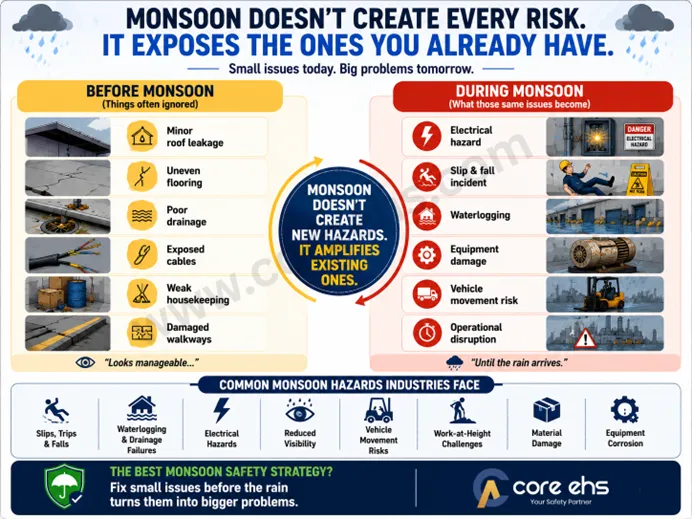
The reality is that monsoon incidents are rarely caused by rain alone. More often, they occur because organisations underestimate how quickly rain can expose existing weaknesses in workplace safety systems.
The good news?
Most monsoon-related incidents are preventable.
With the right planning, inspections, housekeeping practices, electrical controls, and emergency preparedness measures, industries can significantly reduce risks and maintain safe operations throughout the rainy season.
In this complete workplace preparedness guide for 2026, we explore practical monsoon safety tips for industries, key risk areas to inspect, and the preventive measures every organisation should implement before the next downpour arrives.
Why Monsoon Safety Needs More Attention Than Most Industries Give It
Every year, industries prepare for the rainy season in different ways. Some inspect their facilities, some conduct safety briefings, while others focus on housekeeping and drainage improvements. Yet despite these efforts, monsoon-related incidents continue to occur across workplaces.
The reason is simple. Monsoon doesn’t just bring rain; it changes workplace conditions.
A walkway that felt safe yesterday may become slippery today. A small drainage issue can lead to waterlogging. Reduced visibility can affect vehicle movement. Moisture can increase the risk of electrical hazards. Even routine activities can become more challenging when rain, mud, and wet surfaces enter the picture.
This is why monsoon safety in industry requires a different approach. Organisations need to look beyond the weather itself and focus on how changing conditions can affect people, equipment, vehicles, and day-to-day operations.
In many cases, the rain simply exposes weaknesses that already existed. Poor housekeeping, damaged flooring, inadequate drainage, exposed cables, or delayed maintenance can quickly become safety concerns once the monsoon season begins.
Common Monsoon Hazards Industries Face
Some of the most common workplace risks during the rainy season include:
- Slips, trips, and falls on wet surfaces
- Waterlogging and drainage failures
- Electrical hazards caused by moisture ingress
- Reduced visibility during vehicle movement
- Work-at-height risks on slippery structures
- Damage to stored materials and equipment
- Corrosion of machinery and electrical components
- Delays in emergency response during heavy rainfall
These hazards can result in injuries, equipment damage, operational downtime, and project delays if not addressed proactively.
This is why implementing effective monsoon safety tips, conducting pre-season inspections, and strengthening workplace preparedness should be a priority for every organization before the rainy season begins.
The good news is that most monsoon-related incidents are preventable. With proper planning, regular inspections, employee awareness, and preventive controls, industries can continue operating safely throughout the season.
So, what practical steps should organisations take?
Let’s start with the most important monsoon safety tips for industries in 2026.
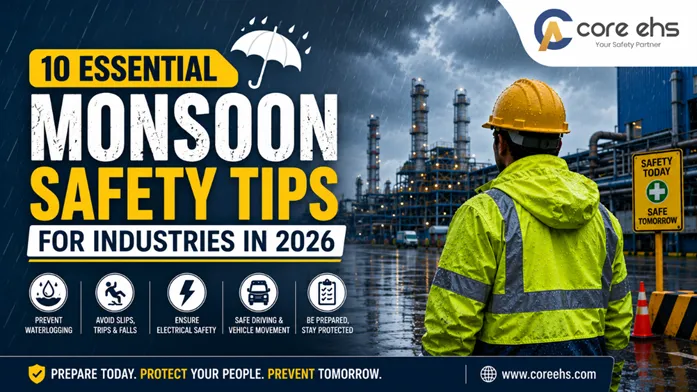
10 Essential Monsoon Safety Tips for Industries in 2026
When it comes to workplace safety during the rainy season, there is no single control that eliminates every risk. Effective monsoon safety is usually the result of several small preventive measures working together.
The good news is that most monsoon-related incidents can be prevented with proper planning, inspections, and employee awareness.
Here are ten practical monsoon safety tips that every industry should consider before and during the rainy season.
1. Don’t Wait for Waterlogging to Expose Your Drainage Problems
One of the first things monsoon reveals is whether your drainage system is actually ready for the season.
A partially blocked drain or damaged gutter may not seem like a major concern during dry weather. But after a few hours of heavy rainfall, these small issues can lead to waterlogging, slippery surfaces, disrupted vehicle movement, and even equipment damage.
Before the monsoon arrives, inspect:
- Stormwater drains and drainage channels
- Gutters and downpipes
- Collection pits and sumps
- Loading bays and vehicle routes
- Low-lying areas where water tends to accumulate
A simple way to assess your preparedness is to ask:
“If heavy rain starts today, where will the water go?”
If the answer isn’t clear, it’s time to inspect and improve your drainage systems. Addressing these issues before the rainy season begins can help prevent many common monsoon-related incidents.
2. Use Housekeeping to Prevent Monsoon-Related Incidents
During monsoon, a small puddle can quickly become a slip-and-fall incident.
Rainwater, mud, wet footwear, packaging materials, and debris can make work areas unsafe within hours. If teams don’t remove these hazards quickly, they increase the risk of injuries and disrupt normal operations.
Pay special attention to:
- Walkways and staircases
- Entry and exit points
- Loading and unloading areas
- Storage zones
- Emergency routes
Remove standing water promptly. Place anti-slip mats at entry points. Keep access routes clear. Encourage employees to report slippery surfaces and unsafe conditions as soon as they spot them.
Don’t treat housekeeping as a cleaning activity during the monsoon. Use it as a safety control that helps prevent incidents before they occur.
3. Don’t Let Moisture Turn into an Electrical Hazard
Water and electricity have never been a safe combination. Yet every monsoon, industries continue to face incidents caused by moisture entering electrical systems.
A leaking roof, a damaged cable, or water collecting near electrical equipment can quickly create unsafe conditions for workers and operations.
Before and during the monsoon season, inspect:
- Electrical panels and switchgear
- Power cables and extension cords
- Outdoor electrical installations
- Earthing and grounding systems
- Areas prone to water ingress
Repair damaged insulation immediately. Keep electrical panels dry. Restrict access to flooded areas where electrical equipment is present. A small leak may look harmless today. Left unattended, it can become a serious electrical hazard tomorrow.
4. Take Slips, Trips, and Falls More Seriously During Monsoon
A wet floor may seem like a minor inconvenience. During monsoon, it can become one of the biggest causes of workplace injuries.
Rainwater, muddy footwear, slippery staircases, and wet walkways increase the risk of slips and falls across industrial facilities. The risk becomes even greater in high-traffic areas where workers, contractors, and visitors move frequently.
To reduce the risk:
- Inspect walkways and staircases regularly
- Install anti-slip mats at entry points
- Display warning signs in wet areas
- Improve lighting in movement zones
- Repair damaged flooring promptly
Don’t wait for someone to slip before taking action. Identify high-risk areas early and put controls in place before the rain turns them into incident hotspots.
5. Slow Down Vehicle Movement Before the Rain Forces You To
Rain changes driving conditions faster than most drivers realise.
Reduced visibility, wet surfaces, longer braking distances, and poor road conditions can increase the risk of vehicle-related incidents both inside and outside industrial facilities.
This is especially important for industries that rely on trucks, forklifts, buses, and material-handling equipment for daily operations.
Before and during the monsoon season:
- Review speed limits within the facility
- Inspect tyres, brakes, wipers, and lights regularly
- Improve visibility at intersections and blind spots
- Train drivers to anticipate changing road conditions
- Encourage defensive driving practices
Don’t assume familiar routes will remain safe during monsoon. A little extra caution behind the wheel can prevent costly incidents on the ground.
6. Inspect Roofs Before They Start Leaking
Many monsoon problems start above our heads.
A loose roof sheet, damaged seal, blocked gutter, or minor leak may seem insignificant during dry weather. Once heavy rain begins, however, these small defects can lead to water ingress, damaged materials, electrical hazards, and operational disruptions.
Before the monsoon season, inspect:
- Roof sheets and joints
- Gutters and downpipes
- Temporary shelters and site offices
- Warehouses and storage areas
- Areas with a history of leakage
Don’t wait for water to drip onto equipment or work areas before taking action. A simple roof inspection today can prevent costly repairs and safety issues later in the season.
7. Review Work at Height Activities Carefully
Rain can turn a routine work-at-height task into a high-risk activity.
Wet ladders, slippery platforms, and reduced visibility can increase the likelihood of falls. Before allowing work at height during monsoon, assess weather conditions, inspect access equipment, and verify that fall protection systems are in good condition.
If conditions become unsafe, postpone the task. No deadline is worth risking a fall.
8. Protect Materials and Equipment from Moisture
Monsoon doesn’t just affect people. It can also damage tools, materials, machinery, and electrical equipment.
Store sensitive materials in covered areas, use waterproof protection where required, and inspect equipment regularly for signs of moisture, corrosion, or deterioration.
Taking a few preventive steps now can help avoid costly repairs and replacements later.
9. Prepare for Emergencies Before They Happen
Heavy rainfall can affect evacuation routes, emergency access, communication systems, and response times.
Review your emergency preparedness plans before the season begins. Ensure employees know what to do during flooding, waterlogging, electrical incidents, or severe weather events.
The best time to prepare for an emergency is before it occurs.
10. Encourage Employees to Report Hazards Before They Become Incidents
Employees are often the first to notice a blocked drain, leaking roof, slippery walkway, waterlogged area, or exposed cable.
The challenge is not identifying these hazards. The challenge is reporting them quickly enough for corrective action to happen before someone gets hurt.
Encourage employees to report unsafe conditions as soon as they spot them. The faster a hazard is reported, the faster supervisors and safety teams can respond.
Many organisations are now moving beyond paper-based reporting and WhatsApp messages by adopting digital hazard reporting systems and Hazard Reporting Software. Employees can instantly report hazards using their mobile devices, attach photographs, identify the exact location, and notify the concerned team in real time.
This not only improves reporting rates but also helps organisations track corrective actions, monitor closure timelines, identify recurring issues, and prevent small observations from turning into incidents.
Remember, every major incident was once a hazard that someone could have reported earlier.
Conclusion
Monsoon arrives every year. Workplace incidents don’t have to.
The organisations that manage monsoon safely are rarely the ones that react the fastest. They are usually the ones that prepare the earliest.
From drainage inspections and housekeeping to electrical safety, vehicle movement, emergency preparedness, and hazard reporting, small preventive actions can make a significant difference once the rains begin.
The key is to identify vulnerabilities before the weather does.
Remember, monsoon doesn’t create every workplace hazard. More often, it exposes existing weaknesses that were already waiting to become a problem.
By taking a proactive approach and implementing these monsoon safety tips, industries can reduce incidents, protect their workforce, prevent operational disruptions, and maintain safer workplaces throughout the rainy season.
Strengthen Your Monsoon Safety Preparedness with CORE-EHS
Preparing for monsoon requires more than checklists. It requires visibility, awareness, training, and proactive risk management.
At CORE-EHS, we help organisations strengthen workplace safety through:
- EHS Software Solutions
- Hazard Reporting & Incident Management Systems
- Defensive Driving Training Programs
- VR-Based Safety Training
- 3D Safety Animation & eLearning Solutions
- Safety Audits, Assessments & Advisory Services
Whether you’re looking to improve hazard reporting, enhance workforce awareness, strengthen safety culture, or prepare your workplace for seasonal risks, our team can help.
Ready to strengthen your monsoon preparedness strategy?
Connect with CORE-EHS today and build a safer, more resilient workplace before the next downpour arrives.