 +91 72929 29159













Businesses searching for what is the best EHS software are rapidly moving toward digital safety management systems to improve compliance, incident reporting, audits, inspections, and operational visibility.
Modern EHS software helps organisations centralise workplace safety, reduce manual processes, improve reporting accuracy, and strengthen compliance management across multiple sites.
Today, industries such as manufacturing, construction, oil and gas, infrastructure, and energy are increasingly investing in digital EHS platforms to improve safety performance and operational control.
In this guide, we will explore the top EHS software solutions businesses should consider in 2026, important features to look for, and how to choose the right platform for long-term safety and compliance success.
What Is EHS Software?
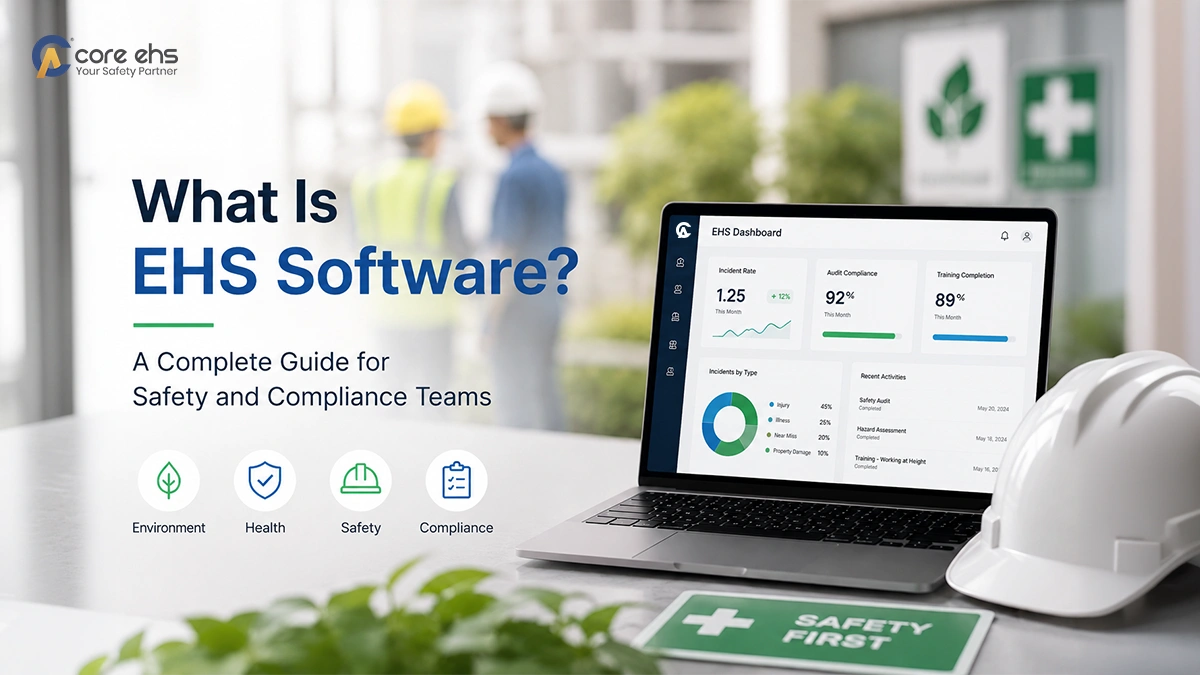
Environment, Health and Safety Software is a digital platform used to manage workplace safety, compliance, incidents, audits, inspections, training, and operational risks across an organisation.
Instead of managing safety activities through spreadsheets, paperwork, emails, or disconnected systems, businesses use EHS management software to centralize safety operations into a single platform. This helps improve visibility, reporting accuracy, compliance tracking, and operational efficiency.
Modern environmental health and safety software allows organisations to automate workflows such as incident reporting, permit approvals, inspections, risk assessments, corrective actions, and compliance monitoring. Many platforms also provide mobile access, real-time dashboards, analytics, and automated notifications to support faster decision-making.
Today, industrial sectors such as manufacturing, oil and gas, construction, infrastructure, mining, chemicals, and energy increasingly rely on digital safety management systems to strengthen workplace safety and reduce operational risks.
As global compliance expectations continue to evolve, HSE Software has become an essential part of modern industrial operations and enterprise risk management.
Why Businesses Need EHS Software in 2026
Industrial operations are becoming more complex, highly regulated, and data-driven. Managing safety activities through spreadsheets, emails, paper forms, or disconnected systems often creates delays, compliance gaps, reporting inaccuracies, and limited visibility across sites.
Modern businesses need digital EHS platforms to improve operational control, streamline compliance processes, and respond faster to workplace risks. Real-time reporting, mobile inspections, automated workflows, and centralised dashboards now play a major role in improving safety performance.
EHS management software also helps organisations standardise safety procedures across multiple plants, projects, contractors, and departments. This becomes especially important for industries such as manufacturing, construction, oil and gas, infrastructure, mining, and energy, where operational risks are significantly higher.
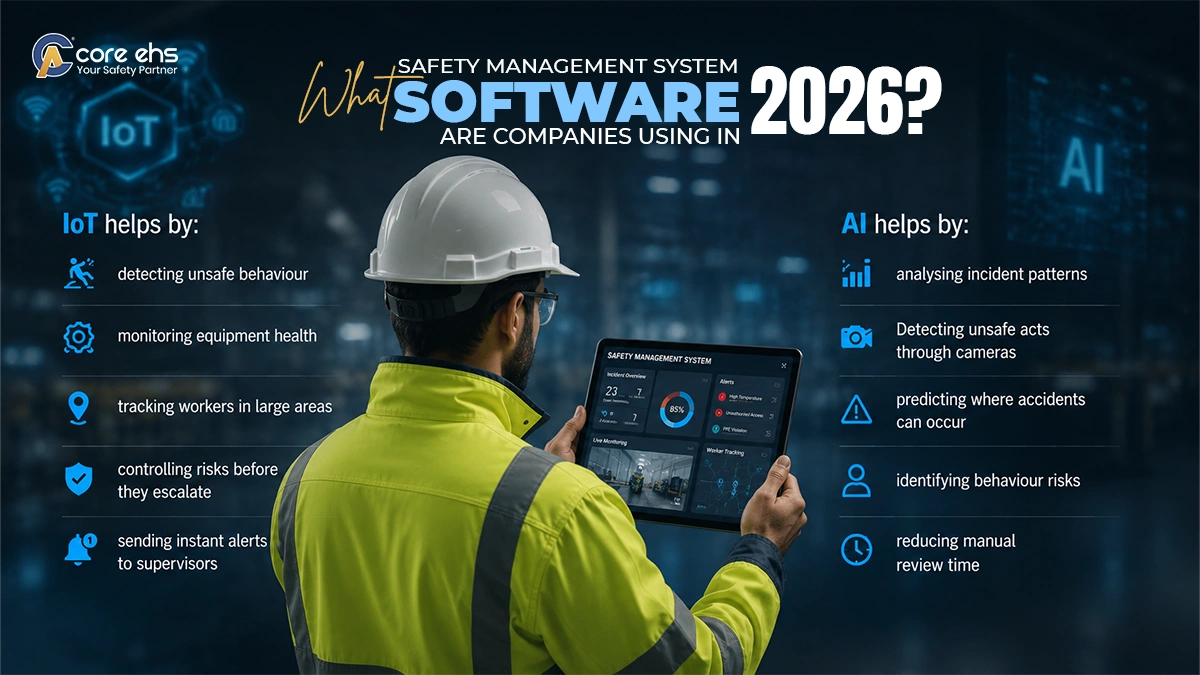
In 2026, many organisations are also adopting AI-powered safety systems, predictive analytics, connected worker technologies, and cloud-based reporting tools to improve decision-making and proactively identify safety trends before incidents occur.
As compliance requirements and operational expectations continue to increase globally, EHS software is no longer viewed as only a compliance tool. It has become a critical business system for improving workplace safety, operational efficiency, and risk management.
Top 10 Best EHS Software Solutions for Modern Industries
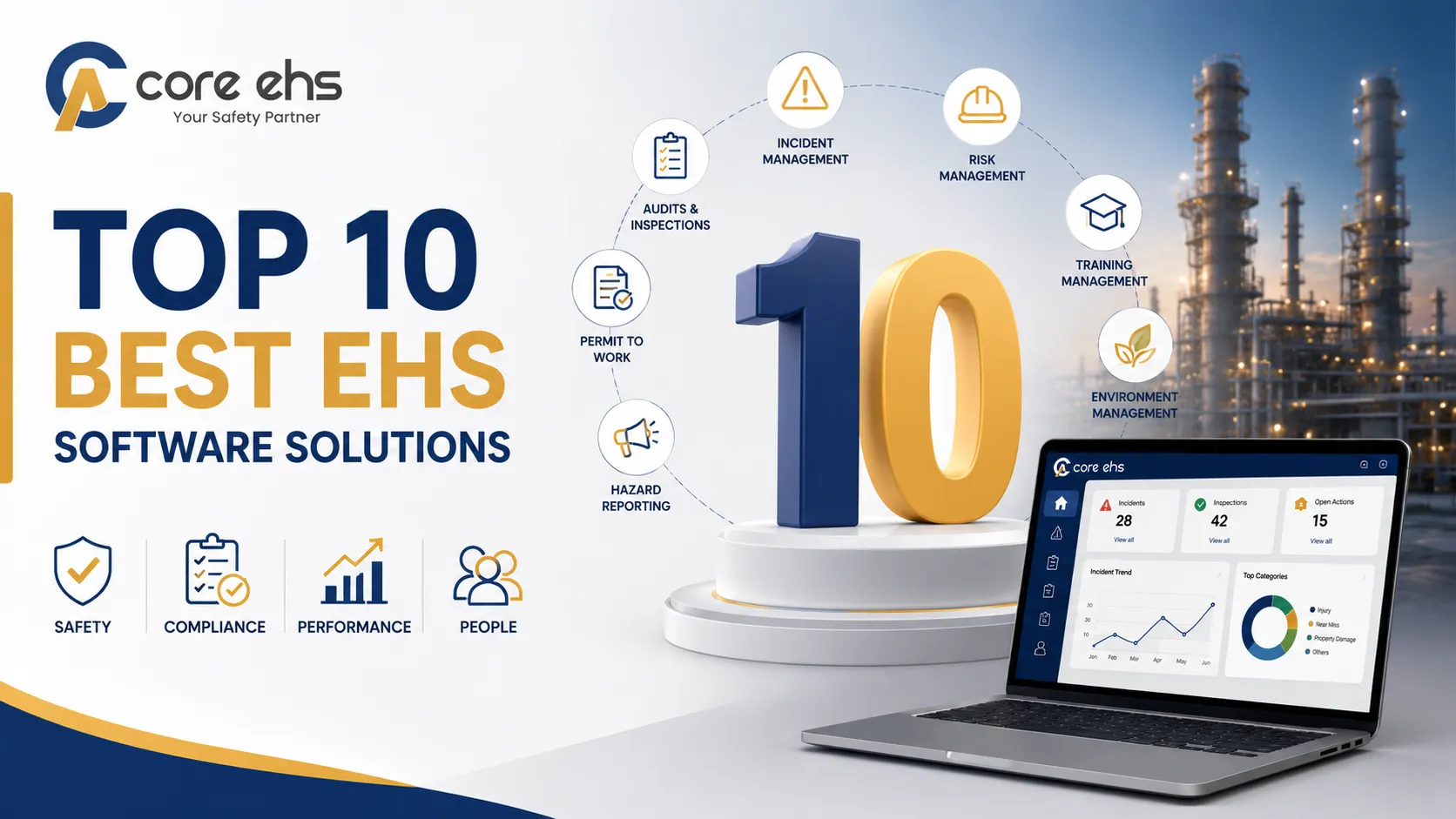
Different industries face different operational risks, compliance requirements, and safety challenges. As a result, modern organisations often use multiple EHS software modules together to improve workplace safety, reporting accuracy, operational visibility, and compliance management.
Below are some of the most important HSE Software solutions businesses should consider in 2026.
1. Incident Management Software
Incident management software helps organisations record, investigate, track, and analyse workplace incidents, near misses, unsafe conditions, and corrective actions through a centralised system.
This type of software improves incident visibility, accelerates investigations, and helps businesses reduce recurring safety incidents through structured corrective action tracking.
Industries such as manufacturing, oil and gas, construction, infrastructure, and energy widely use incident reporting software to improve compliance and operational accountability.
2. Permit to Work Software
Permit to work software helps organisations manage high-risk activities such as hot work, confined space entry, electrical isolation, and work at height through digital permit approval workflows.
Digital PTW systems improve authorisation control, reduce paperwork, and strengthen safety coordination between departments, contractors, and supervisors.
Industries with high operational risks increasingly rely on permit management software to improve worksite safety and compliance visibility.
3. Safety Audit and Inspection Software
Safety audit software helps organisations standardise inspections, audit checklists, compliance reviews, and field observations across multiple sites.
Digital inspection systems improve audit tracking, simplify corrective action management, and help organisations stay audit-ready at all times.
Manufacturing plants, infrastructure projects, construction sites, and industrial operations widely use inspection management systems to improve compliance performance.
4. Hazard Reporting Software
Hazard reporting software allows workers to report unsafe acts, unsafe conditions, near misses, and workplace hazards directly through mobile or web-based systems.
This improves workforce participation, strengthens proactive safety reporting, and helps organisations identify risks before incidents occur.
Many businesses now use digital hazard reporting systems to improve safety culture and encourage employee engagement.
5. Risk Assessment Software
Risk assessment software helps organisations identify hazards, evaluate risks, assign control measures, and standardise safety assessments across operations.
Digital risk management platforms simplify HIRA workflows, improve documentation, and support preventive safety planning.
Industries with complex operational activities use risk assessment software to reduce workplace risks and improve decision-making.
6. Contractor Safety Management Software
Contractor safety management software helps businesses manage contractor onboarding, training records, compliance documents, certifications, and site access approvals.
This improves contractor compliance visibility and reduces operational risks associated with third-party workforce management.
Construction, infrastructure, energy, and industrial projects commonly use contractor management systems to strengthen safety control.
7. Behaviour-Based Safety Software
Behaviour-based safety software helps organisations track unsafe behaviours, safety observations, worker participation, and corrective actions through structured observation programs.
BBS software supports proactive safety culture development by encouraging safer workplace behaviours and employee engagement.
Many organisations use behaviour observation systems to strengthen workforce involvement in safety improvement initiatives.
8. Training Management Software
Training management software helps organisations track employee training programs, certifications, competency records, renewal schedules, and compliance requirements.
Digital training systems improve visibility into workforce competency and help businesses maintain training compliance across multiple locations.
Industries with large workforce operations increasingly use safety training software to manage certification tracking and workforce readiness.
9. Compliance Management Software
Compliance management software helps organisations monitor regulations, track legal requirements, manage compliance deadlines, and maintain audit documentation.
Centralised compliance systems improve visibility into pending actions, regulatory obligations, and corrective measures.
Industries operating under strict compliance frameworks use regulatory compliance software to reduce non-compliance risks.
10. AI-Powered EHS Analytics Platform
AI-powered EHS platforms use analytics, automation, and predictive insights to help organisations identify safety trends, recurring risks, and operational gaps.
Advanced analytics dashboards help businesses make faster and more data-driven safety decisions while improving proactive risk management.
As industrial operations become more connected and data-driven, AI-based EHS Management System is becoming an important part of modern safety transformation strategies.
How to Choose the Right EHS Software for Your Business
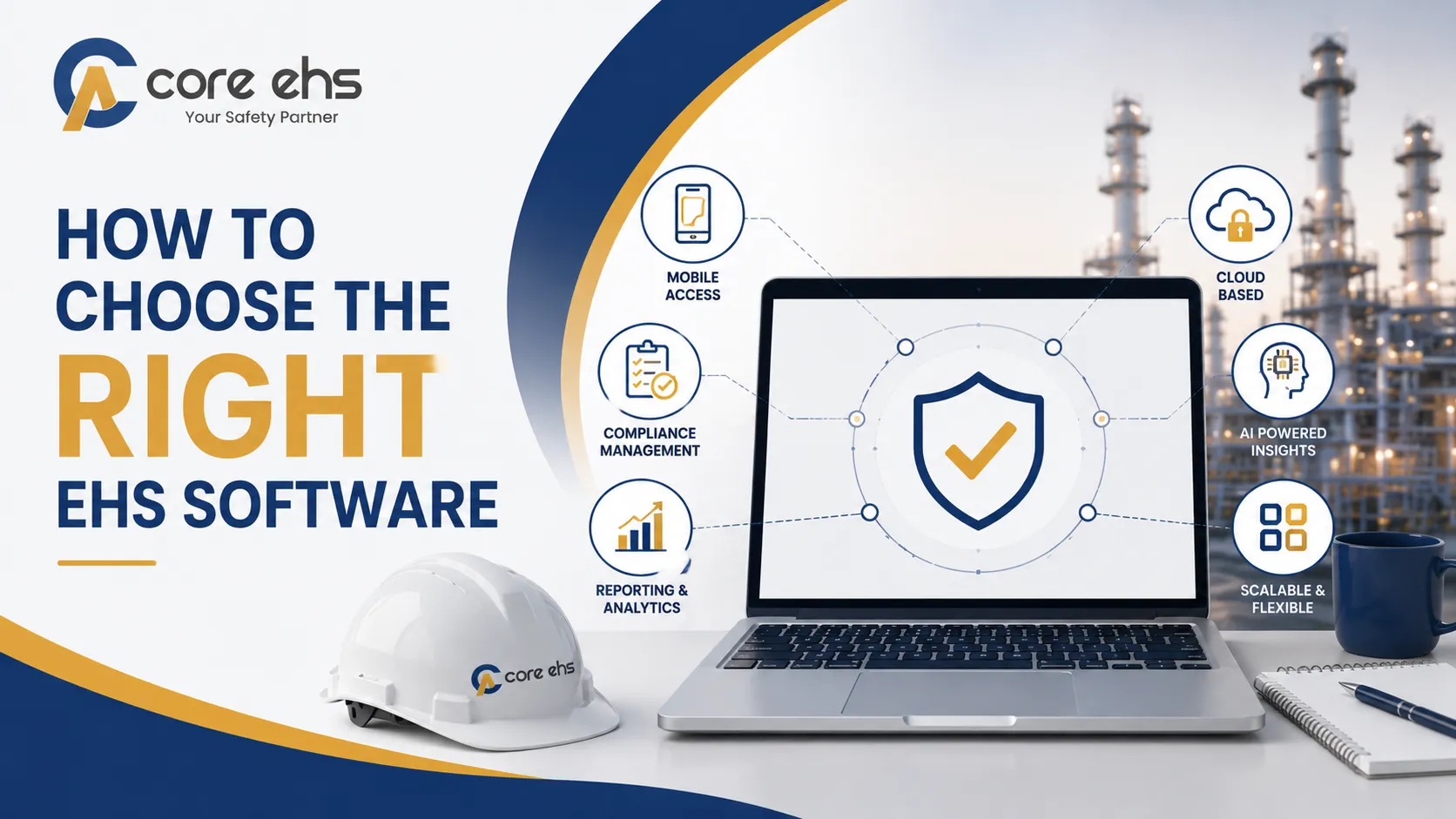
Selecting the right EHS software depends on an organisation’s operational risks, industry requirements, workforce size, compliance obligations, and long-term digital transformation goals.
Many businesses make the mistake of selecting software based only on features without considering scalability, usability, reporting capabilities, or industry-specific workflows. The best EHS management software should not only improve compliance but also simplify day-to-day safety operations.
Here are some important factors businesses should evaluate before selecting an Enterprise EHS Platform:
-
Industry-Specific Workflows
Choose software that supports the operational and compliance requirements of your industry.
-
Scalability
The platform should support multi-site operations, growing workforce requirements, and future expansion.
-
Mobile Accessibility
Mobile-friendly systems improve real-time reporting, inspections, and field-level participation.
-
Ease of Use
User-friendly software improves workforce adoption and reporting consistency.
-
Integration Capabilities
The system should integrate with existing business, ERP, HR, or operational platforms.
-
Real-Time Dashboards and Reporting
Centralised dashboards help leadership teams monitor safety KPIs, compliance status, and operational trends.
-
Customisation and Flexibility
Businesses often require configurable workflows, forms, approval systems, and reporting structures.
-
AI and Analytics Capabilities
Advanced platforms now support predictive analytics, automation, and intelligent risk monitoring.
The right EHS Management Software should help organisations improve operational visibility, strengthen compliance management, and build a proactive safety culture across all levels of the business.
Future Trends in EHS Software
Safety Management Software is rapidly evolving as industries adopt smarter and more connected safety technologies. Modern organisations are no longer looking only for compliance management tools. They now expect digital platforms that support real-time monitoring, predictive analytics, automation, and data-driven decision-making.
One of the biggest trends in 2026 is the growing use of AI-powered EHS systems. Businesses are using predictive analytics to identify recurring risks, detect unsafe trends, and improve proactive safety planning before incidents occur.
Industrial organisations are also integrating IoT devices, connected worker technologies, mobile inspections, and cloud-based reporting systems to improve operational visibility across multiple sites.
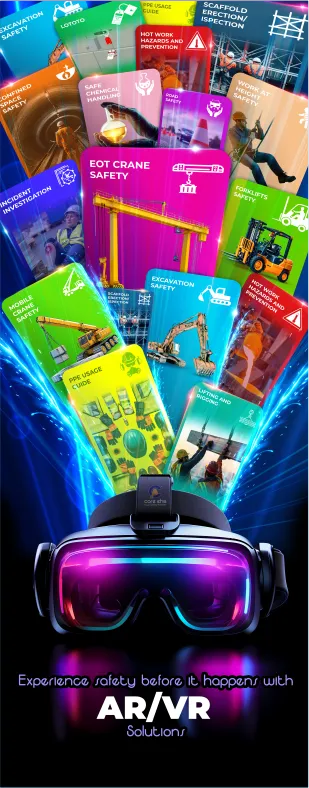
Technologies such as drone inspections, VR safety training, smart dashboards, and automated workflows are also becoming increasingly important in digital safety transformation strategies.
As workplace safety expectations continue to evolve globally, future-ready EHS software platforms will play a major role in improving compliance, operational efficiency, and workforce safety performance.
Why CORE-EHS Software Solutions
CORE-EHS provides industry-focused EHS software solutions designed to help organisations improve workplace safety, compliance visibility, operational control, and digital safety management.
The platform supports multiple safety workflows, including incident management, permit to work, audits and inspections, hazard reporting, risk assessments, contractor safety management, and compliance tracking through a centralised system.
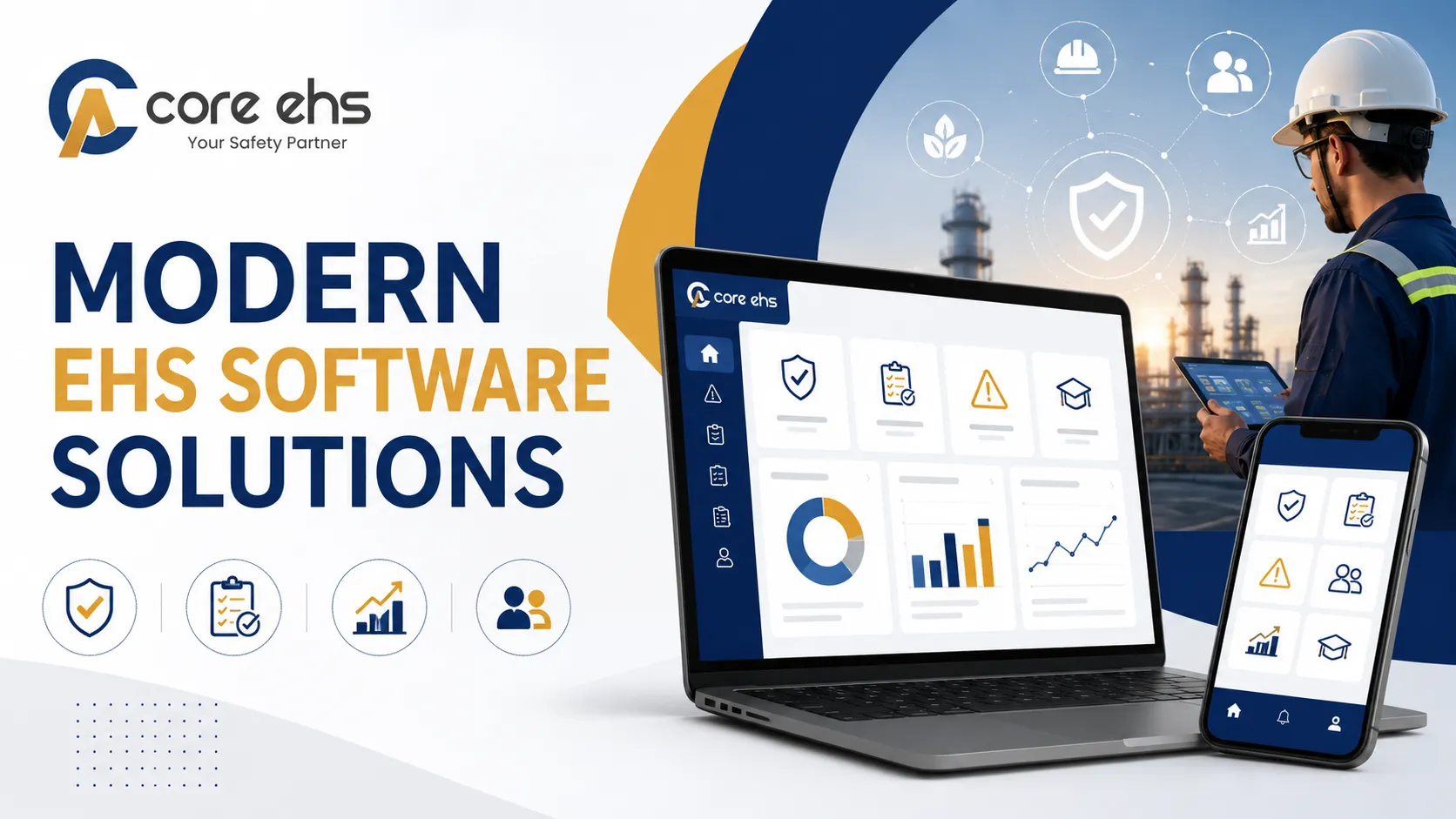
Designed for industrial operations, CORE-EHS solutions support multi-site management, mobile reporting, real-time dashboards, configurable workflows, and scalable enterprise deployment.
With growing demand for connected and data-driven safety systems, organisations are increasingly adopting digital EHS platforms to strengthen compliance performance and build proactive safety cultures.
Final Thoughts
Choosing the best EHS software in 2026 depends on the complexity of operations, compliance requirements, industry risks, and long-term business goals. Modern organisations increasingly rely on digital safety platforms to improve operational visibility, automate safety processes, reduce compliance gaps, and strengthen workplace safety culture.
From incident management and permit-to-work systems to AI-powered analytics and compliance management platforms, today’s EHS software solutions help businesses build more connected, proactive, and data-driven safety operations.
As industrial safety expectations continue to evolve globally, investing in the right EHS software platform can help organisations improve compliance performance, reduce operational risks, and support long-term digital transformation initiatives.