 +91 72929 29159













Workplace Safety Challenges in 2026: Key Lessons and Priorities for 2027
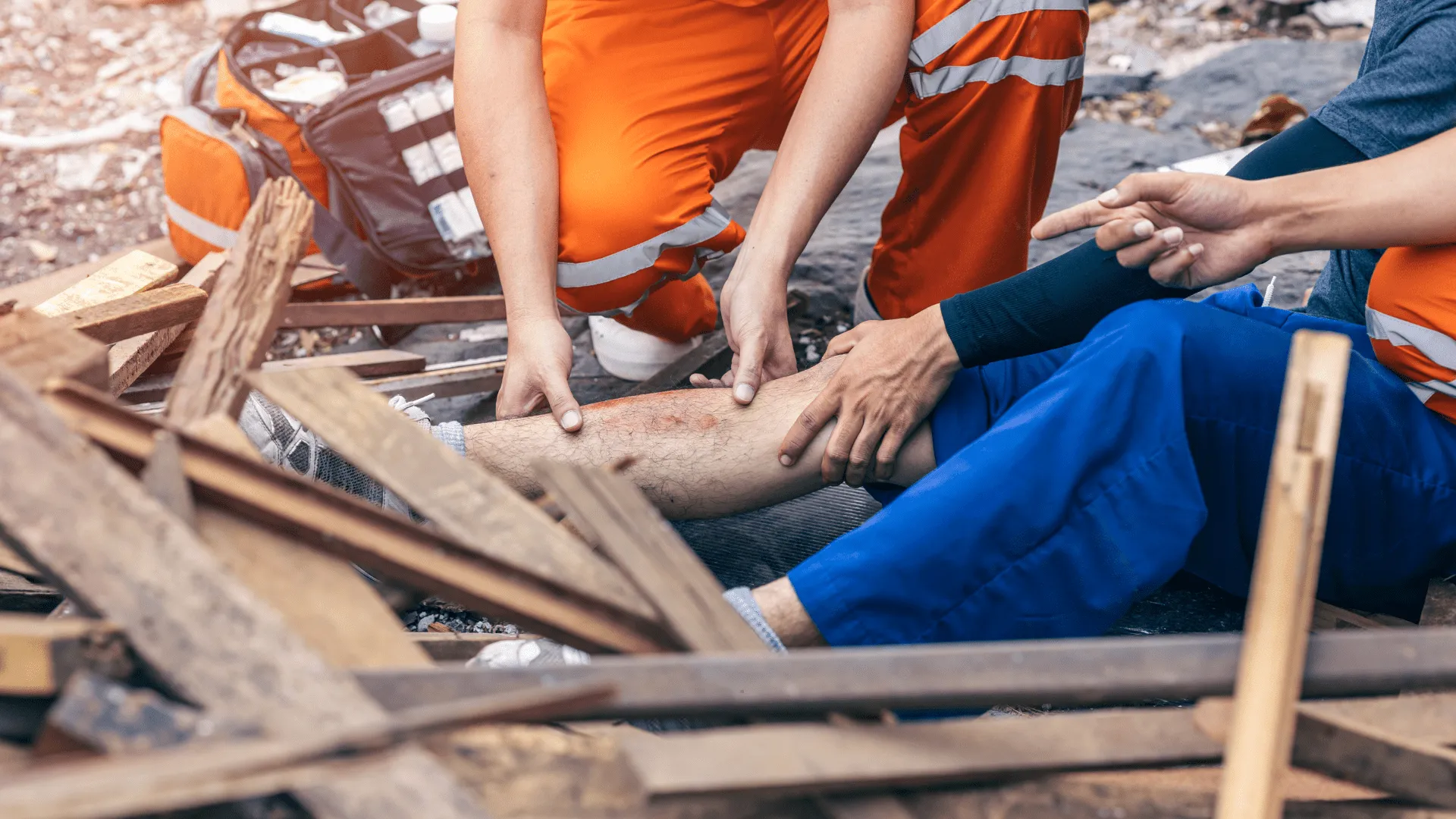
Workplace safety in 2026 presents a familiar challenge: organizations have more safety procedures, training resources and monitoring technologies than ever, yet many preventable hazards continue to expose workers to serious harm.
Falls from height, hazardous energy, machinery, chemical exposures and vehicle movements remain critical concerns. At the same time, heat stress, psychosocial risks, contractor coordination and the growing use of artificial intelligence are changing how businesses approach occupational health and safety.
The biggest workplace safety challenges in 2026 are not limited to identifying hazards. They also involve ensuring that preventive controls work, frontline concerns are reported, corrective actions are completed, and management decisions reflect actual operating conditions.
For safety leaders planning ahead to 2027, the priority is clear: strengthen risk controls, verify their effectiveness and turn safety information into timely preventive action.
What Does Workplace Safety Data Reveal in 2026?
Recent findings from international organizations and occupational safety regulators show why businesses cannot afford to become complacent.
According to the U.S. Bureau of Labor Statistics, 5,070 fatal work injuries occurred in the United States in 2024, compared with 5,283 in 2023. The findings were released in February 2026. Although the figures show an improvement, they also demonstrate the continuing scale of workplace fatalities.
Meanwhile, OSHA’s preliminary FY2026 list of frequently cited standards, covering inspections through August 31, 2026, places fall protection, hazard communication, hazardous energy control, scaffolding and ladder safety among the leading compliance concerns.
These are U.S. regulatory findings, not a global ranking of accident causes. However, the underlying hazards are relevant to many construction, manufacturing, infrastructure and industrial operations worldwide.
Occupational health is also receiving greater attention. The International Labour Organization (ILO) dedicated World Day for Safety and Health at Work 2026 to creating healthy psychosocial working environments. Its report emphasizes workload, working hours, job design, organizational support and management practices as factors affecting worker health and performance.
Together, these developments highlight an important shift: effective workplace safety management must address both established physical hazards and risks arising from the way work is organized.
Major Workplace Safety Challenges in 2026
1. Working at Height and Fall Protection Failures
Falls remain a major concern in construction, industrial maintenance, shutdown activities and infrastructure projects.
Risk increases when work is conducted near unprotected edges, on incomplete scaffolds, or with unsuitable ladders and access systems. Incorrect anchorage, poorly maintained fall protection equipment and inadequate rescue planning introduce further danger.
A common weakness is treating a fall protection permit or checklist as proof that the worksite is safe. Documentation is important, but it cannot replace physical verification.
How organizations can reduce the risk:
- Prioritize collective protection, including suitable guardrails and properly designed working platforms.
- Inspect scaffolds, ladders, anchorages and access arrangements before use.
- Verify equipment compatibility, worker competency and continuous fall protection where required.
- Prepare rescue arrangements before initiating work that relies on personal fall arrest systems.
- Reassess controls when weather, work location or site conditions change.
The objective is to prevent falls through reliable controls rather than depending solely on individual precautions.
2. Hazardous Energy and Inadequate Machine Isolation
Maintenance and servicing activities create serious risks when machinery or equipment can unexpectedly start, move, become energized or release stored energy.
Electrical, mechanical, hydraulic, pneumatic, thermal and other energy sources may remain hazardous even after a machine is switched off.
OSHA’s 2026 preliminary citation list continues to highlight the control of hazardous energy, commonly known as lockout/tagout (LOTO).
Organizations should therefore examine whether isolation procedures are applied correctly at the point of work, not simply whether the relevant procedure exists.
Key improvement priorities include equipment-specific isolation instructions, identification of all energy sources, individual protection for authorized workers, verification of zero-energy conditions where applicable, and controlled restoration of equipment.
Digital permit and isolation records can improve traceability, but the physical isolation and verification process must remain the foundation of safety.
3. Process Safety, Chemical Hazards and Fire Prevention
In high-hazard industries, a single loss of containment can create consequences extending far beyond the immediate work area.
Chemical leaks, fires, explosions, overpressure, equipment failures and uncontrolled reactions may arise from weaknesses in design, maintenance, operational discipline or protective systems.
Unlike routine occupational injuries, major process safety events may be infrequent but potentially catastrophic. This makes reliance on injury statistics alone inadequate.
High-hazard facilities should place particular emphasis on:
- Process hazard analysis, including HAZOP and other suitable assessment methods.
- Mechanical integrity and preventive maintenance.
- Critical alarm, interlock and safety barrier verification.
- Management of change before equipment or process modifications.
- Competency of operators and maintenance personnel.
- Emergency preparedness and realistic response exercises.
Organizations should assess the condition of their critical barriers and the consequences of their failure.
A structured Process Safety Management approach connects engineering controls, operating procedures, maintenance, risk assessment and management accountability.
4. Contractor Safety and Multiple Work Activities
Contractors are essential to construction, maintenance, plant shutdowns and major industrial projects. However, their activities can introduce additional coordination challenges.
A contractor may be working at height while another team handles lifting equipment nearby. Hot work may take place close to temporary storage areas, or multiple maintenance groups may interact with the same energy systems.
Even when each task has an approved permit, combined activities can introduce hazards that individual assessments fail to capture.
Effective contractor safety management requires clear responsibility, competency verification, appropriate supervision and coordination between the site owner and contractors.
Joint pre-job reviews, suitable job hazard analysis, contractor onboarding, permit coordination and periodic field inspections can strengthen control.
Contractor performance should be assessed through actual risk management practices—not only injury rates or training attendance.
5. Vehicle Movement, Material Handling and Workplace Traffic
Forklifts, cranes, loaders, trucks and other mobile equipment operate close to workers in warehouses, manufacturing facilities, ports, mines and construction sites.
Restricted visibility, pedestrian interaction, reversing movements, poor traffic layouts and unstable loads can create collision or struck-by risks.
OSHA’s preliminary FY2026 list also includes powered industrial trucks among frequently cited standards.
A practical prevention strategy should focus on separating pedestrians from moving equipment wherever feasible, reviewing vehicle routes, controlling reversing activities, maintaining equipment and verifying operator competence.
Where appropriate, proximity detection, speed monitoring and collision warning systems can provide additional information. These should supplement, rather than replace, physical segregation and other established controls.
6. Heat Stress, Fatigue and Psychosocial Risks
Occupational health challenges increasingly extend beyond visible physical hazards.
The ILO’s research on heat at work estimated that approximately 2.41 billion workers worldwide are exposed to excessive heat annually. Its estimates also associate occupational heat exposure with millions of injuries worldwide.
Workers in construction, agriculture, manufacturing, transportation and other physically demanding activities may face elevated risks depending on environmental and operational conditions.
Heat exposure requires controls suited to the work, such as hydration, rest, acclimatization, cooling arrangements, exposure monitoring and emergency response planning.
Fatigue and psychosocial risks deserve equal attention.
Long working hours, unclear responsibilities, excessive workload, poor communication and inadequate support can undermine health and safety performance.
The ILO’s 2026 report on psychosocial working environments reinforces the importance of addressing these risks through job design and organizational practices.
For employers, this means evaluating work schedules, staffing, workload, role clarity and worker feedback alongside traditional occupational hazards.
7. Underreporting of Hazards and Delayed Corrective Actions
Many incidents are preceded by warning signs: an unsafe condition, repeated equipment malfunction, near miss or observation that remains unresolved.
The problem is not always that workers fail to notice risks. They may lack a convenient reporting method, worry about negative consequences, or believe previous reports did not lead to action.
Even where reporting systems exist, delays in investigation, poor action ownership and ineffective closure verification can allow hazards to recur.
Organizations should make reporting accessible to employees and contractors, communicate outcomes, and distinguish between submitting a report and actually eliminating or controlling the risk.
A reliable process follows the full cycle:
Identify → Report → Assess → Assign → Correct → Verify → Close → Learn
Digital hazard reporting and EHS software can centralize observations, responsibilities, reminders and corrective action records. Its effectiveness, however, depends on timely decisions and verified field-level improvements.
8. Introducing AI and Digital Tools Without Creating New Risks
Artificial intelligence, connected sensors, wearables, drones and digital monitoring tools are changing the capabilities available to safety teams.
These technologies can assist with hazard identification, remote inspection, equipment condition monitoring, worker alerts and analysis of recurring safety observations.
Yet technology adoption creates its own questions.
Can a detection system miss a hazard? Are alerts producing unnecessary distractions? Is the workforce trained to respond correctly? Who verifies the accuracy of the information? How are employee privacy and access to monitoring data managed?
The ILO’s 2025 report on AI and digitalization at work examines both the potential safety benefits and the new risks associated with these technologies.
Organizations should evaluate digital safety tools through controlled trials, validation, appropriate governance and worker participation.
Technology should strengthen professional judgment and established risk controls—not substitute for them.
What Have Recent Safety Challenges Taught Organizations?
Despite differences between industries, several recurring weaknesses explain why workplace hazards persist.
Lesson 1: Compliance Does Not Automatically Mean Risk Is Controlled
A completed audit, approved permit or signed checklist establishes that a process was followed or documented. It does not, by itself, prove that equipment is safe or controls are functioning.
For example, an approved permit for work at height offers limited protection if the installed anchorage is unsuitable or the working platform is incomplete.
Safety verification must therefore examine the condition and effectiveness of controls at the workplace.
Lesson 2: Small Warning Signs Can Reveal Serious System Weaknesses
Repeated near misses, equipment defects and unsafe conditions may indicate broader problems with maintenance, supervision, work planning or operational control.
Investigations should identify contributing organizational and technical factors instead of automatically attributing incidents to human error.
Corrective actions should address the underlying causes and be reviewed for effectiveness.
Lesson 3: Historical Industrial Disasters Remain Relevant
The 1984 Bhopal Gas Disaster continues to serve as an important reminder of the severe consequences associated with chemical process hazards and inadequate prevention and emergency protection.
Its lasting relevance is not simply historical. Organizations handling hazardous processes must continually verify equipment integrity, the availability of safeguards, emergency readiness and management oversight.
Lessons from major accidents should inform contemporary risk assessments, emergency drills and investment decisions.
Lesson 4: Safety Culture Is Reflected in Everyday Decisions
An organization cannot establish a strong safety culture through slogans or awareness campaigns alone.
The real test is whether employees can raise concerns, supervisors address unsafe conditions, contractors receive appropriate protection, and leaders allocate time and resources to preventive action.
Safety becomes part of organizational culture when these practices are consistent, including during production pressure, maintenance emergencies and project deadlines.
How Can Organizations Improve Workplace Safety in 2027?
Planning for 2027 should begin with a review of current risks and the effectiveness of existing controls.
1. Move from Hazard Identification to Verified Risk Reduction
Finding more hazards is valuable only when the information leads to meaningful preventive action.
Review the organization’s high-risk tasks and critical processes. Evaluate whether the selected controls follow the hierarchy of controls, prioritizing elimination, substitution and engineering solutions where feasible.
Then verify whether the measures actually work.
2. Strengthen Safety Audits and Field-Level Assurance
A strong audit program examines actual operating conditions, worker knowledge, equipment integrity and the effectiveness of established procedures.
Risk-based inspections should focus on high-consequence exposures rather than giving equal attention to every minor observation.
Independent or specialist-led safety audits can identify weaknesses that routine inspections may overlook.
Management must ensure that important findings are assigned, addressed and independently verified where appropriate.
3. Make Safety Training Role-Specific and Measurable
Training attendance and course completion are useful administrative records, but they do not demonstrate operational competence.
A worker may complete a module successfully yet struggle to recognize a hazard during an unfamiliar maintenance task.
Organizations should combine technical instruction with demonstrations, supervised practical assessments, coaching and periodic competency reassessment.
For complex or high-risk work, VR safety training and simulations can supplement established methods by allowing trainees to rehearse decisions and procedures in controlled scenarios.
Training effectiveness should be evaluated through demonstrated capability and workplace observations, not completion rates alone.
4. Improve Leadership Accountability and Worker Participation
Effective safety leadership requires more than reviewing dashboards.
Senior managers and operational leaders should participate in field walkthroughs, examine high-risk findings, resolve resource constraints and monitor repeated safety concerns.
Workers should be involved in risk assessments, incident reviews and control selection because they understand the practical demands and changing conditions of their work.
Clear responsibilities, documented follow-up and transparent communication strengthen trust in the safety management system.
5. Use Leading Indicators Alongside Injury Statistics
Lost-time injuries and other outcome measures remain important, but they describe events that have already occurred.
Leading indicators provide information about preventive activities and whether important controls are being maintained.
OSHA recommends combining both approaches to evaluate occupational safety performance.
Useful indicators include:
| Safety indicator | What it measures |
|---|---|
| Critical control verification | Whether essential high-risk safeguards are in place and functioning |
| Corrective action closure | Whether risk-reduction actions are completed and verified on time |
| Near-miss and hazard reporting | Participation, emerging risks and opportunities for prevention |
| Preventive maintenance compliance | Timely completion of required equipment maintenance |
| Competency verification | Whether workers demonstrate the skills needed for assigned tasks |
| Repeat high-risk findings | Whether previous corrective actions have prevented recurrence |
An increase in reported hazards does not necessarily mean a workplace has become less safe. It may indicate improved reporting confidence.
The more important questions are whether serious risks are being identified early, responses are timely, and exposure is being reduced.
6. Integrate Digital Monitoring With Safety Management Processes
Digital tools create value when the information they capture leads to reliable action.
Organizations can use mobile reporting, centralized dashboards, electronic permits, equipment monitoring and inspection records to improve visibility across locations.
However, software should have clearly defined responsibilities, escalation rules, data quality checks and verification requirements.
A sensible starting point is one high-priority problem, such as overdue corrective actions or repeated high-risk observations, before expanding to more complex automation.
Workplace Safety Challenges and Recommended Controls
The following framework can support an initial risk review. Control selection must reflect site-specific assessments and applicable regulations.
| Safety challenge | Preventive priority | Indicator to monitor |
|---|---|---|
| Falls from height | Safe platforms, edge protection and verified fall protection arrangements | Critical fall protection defects |
| Hazardous energy | Equipment-specific isolation and verification procedures | Isolation verification compliance |
| Process safety failures | Critical barrier inspection and mechanical integrity | Overdue safety-critical maintenance |
| Contractor coordination | Joint risk reviews and simultaneous-operation controls | Repeat high-risk contractor findings |
| Vehicle–pedestrian interaction | Traffic segregation and controlled vehicle movement | High-risk traffic conflicts |
| Heat and fatigue | Exposure assessment and suitable work-rest arrangements | Exposure exceedances and reported symptoms |
| Unreported hazards | Accessible reporting and timely action | Reporting participation and corrective action effectiveness |
| Digital safety system limitations | Testing, validation and human oversight | Detection failures and unresolved system alerts |
The purpose of this framework is to support prevention, not to create another reporting exercise.
A Practical 90-Day Workplace Safety Improvement Plan
Organizations do not need to overhaul every safety process at once. A focused 90-day program can establish priorities and provide evidence of progress.
| Timeline | Priority actions | Expected deliverable |
|---|---|---|
| Days 1–30 | Review incidents, near misses, existing risk assessments, overdue actions and high-hazard activities | Prioritized risk register and critical control inventory |
| Days 31–60 | Verify critical safeguards, address urgent gaps, review contractor interfaces and assess competencies | Risk-reduction action plan with accountable owners |
| Days 61–90 | Validate completed actions, review leading indicators, obtain worker feedback and report findings to leadership | Verified improvement report and next-quarter priorities |
Urgent or imminent dangers must be controlled immediately; they should never be deferred to a later phase of the improvement plan.
The 90-day approach is an implementation framework, not a guarantee of measurable injury reduction within that period.
Workplace Safety Priorities for 2027: Management Checklist
Before finalizing the next annual safety plan, leadership teams should confirm:
- High-risk activities and critical safeguards have been identified and reviewed.
- Serious audit findings and overdue corrective actions have accountable owners.
- Contractor activities and simultaneous operations are properly coordinated.
- Workers are competent for the risks associated with their assigned jobs.
- Heat stress, fatigue and psychosocial hazards are included in relevant assessments.
- Safety data is reviewed for emerging patterns, not just incident counts.
- Digital monitoring tools are validated and supported by human oversight.
- Emergency response arrangements are tested for credible high-consequence scenarios.
These priorities should be incorporated into routine operational planning and management reviews.
Conclusion: Turning the Lessons of 2026 Into Safer Workplaces
The workplace safety challenges of 2026 underline a persistent reality: procedures, audits and technology deliver value only when they result in effective control of actual risks.
Organizations preparing for 2027 should focus on the quality of hazard assessments, reliability of critical safeguards, workforce involvement and timely resolution of safety concerns.
New technologies can strengthen monitoring and decision-making, but sustainable performance still depends on leadership accountability, competent workers and well-designed systems.
The most meaningful measure of safety progress is not how many activities an organization completes, but whether its people face fewer uncontrolled risks.
For industrial organizations seeking to strengthen their safety management practices, CORE-EHS provides consulting, audits, workforce training and digital safety solutions designed around operational requirements.
Connect with CORE-EHS to discuss your workplace safety priorities and improvement opportunities.
Research and References
- OSHA — Top 10 Most Frequently Cited Standards, FY2026 Preliminary
- U.S. Bureau of Labor Statistics — National Census of Fatal Occupational Injuries in 2024
- ILO — The Psychosocial Working Environment, 2026
- ILO — Revolutionizing Health and Safety: The Role of AI and Digitalization at Work, 2025
- ILO — Heat at Work: Implications for Safety and Health
- OSHA — Leading Indicators
- OSHA — Hazard Prevention and Control