 +91 72929 29159














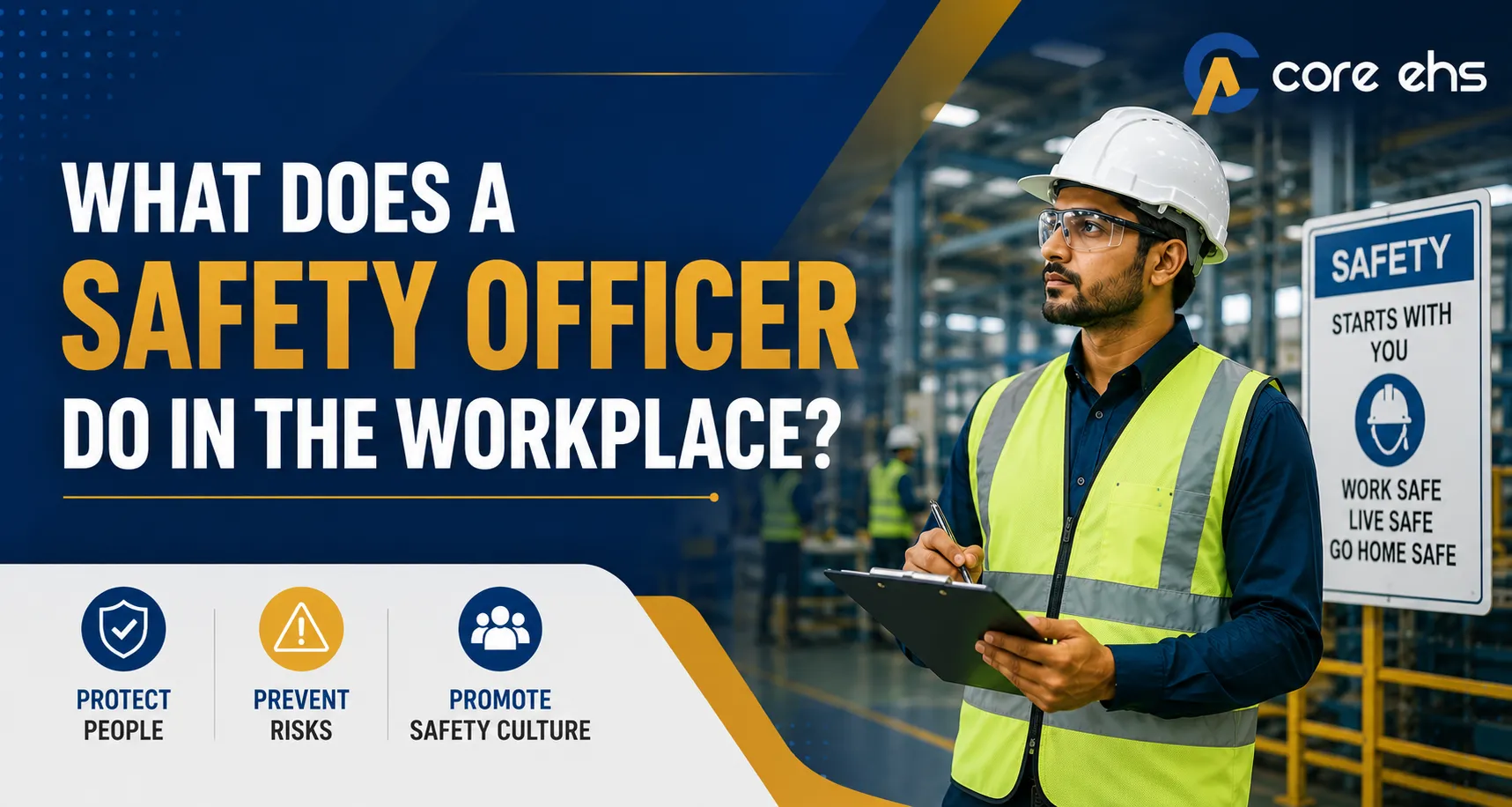
A safety officer is a trained professional responsible for identifying workplace hazards, conducting risk assessments, ensuring compliance with safety regulations, investigating incidents, delivering safety training, and helping create a safer work environment for all employees and contractors. Understanding what does a safety officer do in the workplace is essential for any organisation committed to protecting its people and maintaining safety standards.
In high-risk industries such as construction, manufacturing, oil and gas, mining, logistics, and warehousing, safety officers are the backbone of every effective safety program. They don’t just respond to accidents; they work proactively to prevent them. Their responsibilities span regulatory compliance, workforce engagement, hazard control, and emergency preparedness, making them one of the most critical roles in any operational environment.
Who Is a Safety Officer?
A safety officer, also referred to as a workplace safety officer or occupational safety officer, is a qualified professional appointed to oversee and implement health, safety, and environmental (HSE) programs within an organisation.
Their purpose is straightforward: protect workers, visitors, and contractors from harm, while helping the organisation meet its legal and regulatory obligations. The role exists across virtually every sector, including construction, oil and gas, energy, manufacturing, infrastructure, mining, and logistics.
It’s worth distinguishing between a Safety Officer and a Safety Manager. A Safety Officer typically operates on-site, conducting daily inspections, delivering training, and monitoring compliance at the ground level. A Safety Manager takes a broader strategic role, overseeing multiple officers, setting safety policy, and engaging with senior leadership. In smaller organisations, one person may do both.
Key Responsibilities of a Safety Officer
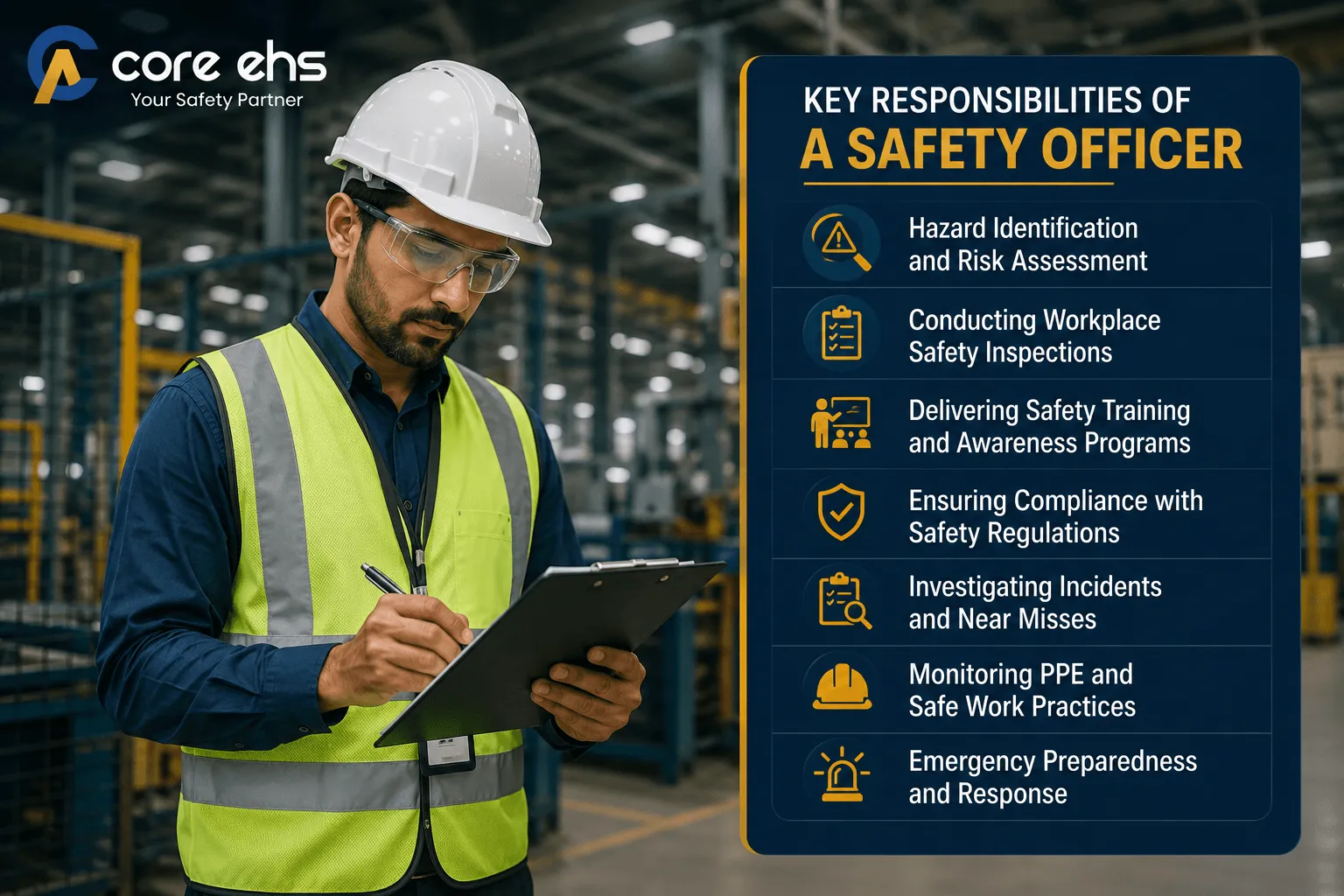
While specific duties vary by industry, the core responsibilities of a safety officer remain consistent across sectors. Below is a detailed breakdown of what a safety officer does day-to-day.
1. Hazard Identification and Risk Assessment
One of the most fundamental safety officer responsibilities is identifying potential hazards before they cause harm. This involves:
- Conducting regular site inspections to identify unsafe acts and conditions
- Evaluating physical, chemical, biological, and ergonomic hazards
- Performing structured risk assessments to evaluate the likelihood and severity of identified hazards
- Prioritising risks based on their potential impact and recommending control measures
- Documenting workplace hazards and tracking corrective actions to closure
Effective hazard identification is not a one-time activity. Safety officers continuously monitor the work environment, especially when new tasks, equipment, or personnel are introduced.
2. Conducting Workplace Safety Inspections
Routine safety inspections are the safety officer’s eyes and ears on the ground. These typically include:
- Daily walkthroughs to observe active work areas and identify immediate risks
- Weekly formal inspections with documented checklists
- Safety observations, structured observations of worker behaviours and practices
- Compliance checks against internal procedures, permit requirements, and regulatory standards
Inspections are not about fault-finding. They are a proactive tool for identifying gaps before incidents occur. Consistent inspection schedules also send a clear message to workers: safety is taken seriously here.
3. Delivering Safety Training and Awareness Programs
A safety officer is responsible for building a workforce that understands hazards and knows how to work safely. This includes:
- Employee induction training for all new hires and site visitors
- Toolbox talks, short and focused safety briefings delivered at the start of shifts
- Refresher training on emergency procedures, equipment handling, and regulatory updates
- Contractor safety training to ensure third-party workers meet the same standards as direct employees
Effective training is delivered in clear, practical language. Safety officers tailor content to the audience because what a maintenance crew needs to know differs significantly from what a logistics team requires.
4. Ensuring Compliance with Safety Regulations
Every workplace must operate within a framework of safety regulations set by government bodies and industry standards. The safety officer’s role here includes:
- Monitoring compliance with local and national regulations (OSHA, ISO 45001, local labour laws, etc.)
- Ensuring adherence to industry-specific standards relevant to the organisation’s sector
- Maintaining accurate documentation, including permits, inspection records, training logs, and incident reports
- Managing record keeping to meet audit and legal requirements
Non-compliance carries significant financial, legal, and reputational consequences. Safety officers act as the organisation’s first line of defence against regulatory breaches.
5. Investigating Incidents and Near Misses
When an incident or near miss occurs, the safety officer leads the investigation. This involves:
- Conducting root cause analysis to identify underlying factors, not just surface-level causes
- Recommending corrective actions to eliminate or control identified causes
- Implementing preventive actions to reduce the likelihood of recurrence
- Sharing learnings from incidents with the broader workforce to raise awareness
Near-miss reporting is particularly valuable, as these events are warning signals that an incident is waiting to happen. A strong safety officer actively encourages workers to report near misses without fear of blame.
6. Monitoring PPE and Safe Work Practices
Personal protective equipment is the last line of defence between a worker and a hazard. Safety officers ensure:
- Regular PPE inspections to verify equipment is in good condition and fit for purpose
- Safe behaviour monitoring, observing whether workers are following established procedures
- Focused attention on high-risk activities such as working at heights, confined space entry, and heavy equipment operation
Monitoring safe work practices requires both technical knowledge and interpersonal skill. Corrective conversations need to be handled in a way that reinforces safety culture rather than creating defensiveness.
7. Emergency Preparedness and Response
Safety officers play a central role in ensuring the organisation is ready to respond to any emergency:
- Developing and maintaining emergency response plans tailored to site-specific risks
- Organising and conducting fire drills and emergency evacuation exercises
- Establishing clear evacuation procedures and assembly point protocols
- Coordinating rescue operations when incidents involve injured workers
Preparedness is tested before an emergency happens. Safety officers ensure that every employee knows exactly what to do and where to go when an alarm sounds.
A Typical Day in the Life of a Safety Officer
Understanding safety officer duties in practice helps illustrate how demanding and varied the role truly is.
| Time | Activity |
| Morning | Site inspection: walkthrough of active work areas, checking for hazards and compliance |
| Mid-Morning | Toolbox talk: briefing the workforce on the day’s key safety priorities |
| Afternoon | Risk assessment: reviewing upcoming tasks and evaluating associated hazards |
| Late Afternoon | Incident review: investigating a reported near miss or safety observation |
| End of Day | Reporting and follow-up: completing inspection logs, updating corrective action trackers, and preparing next-day priorities |
No two days are identical. A safety officer must be ready to pivot from planned activities to urgent incident response at any moment.
Essential Skills Every Safety Officer Needs
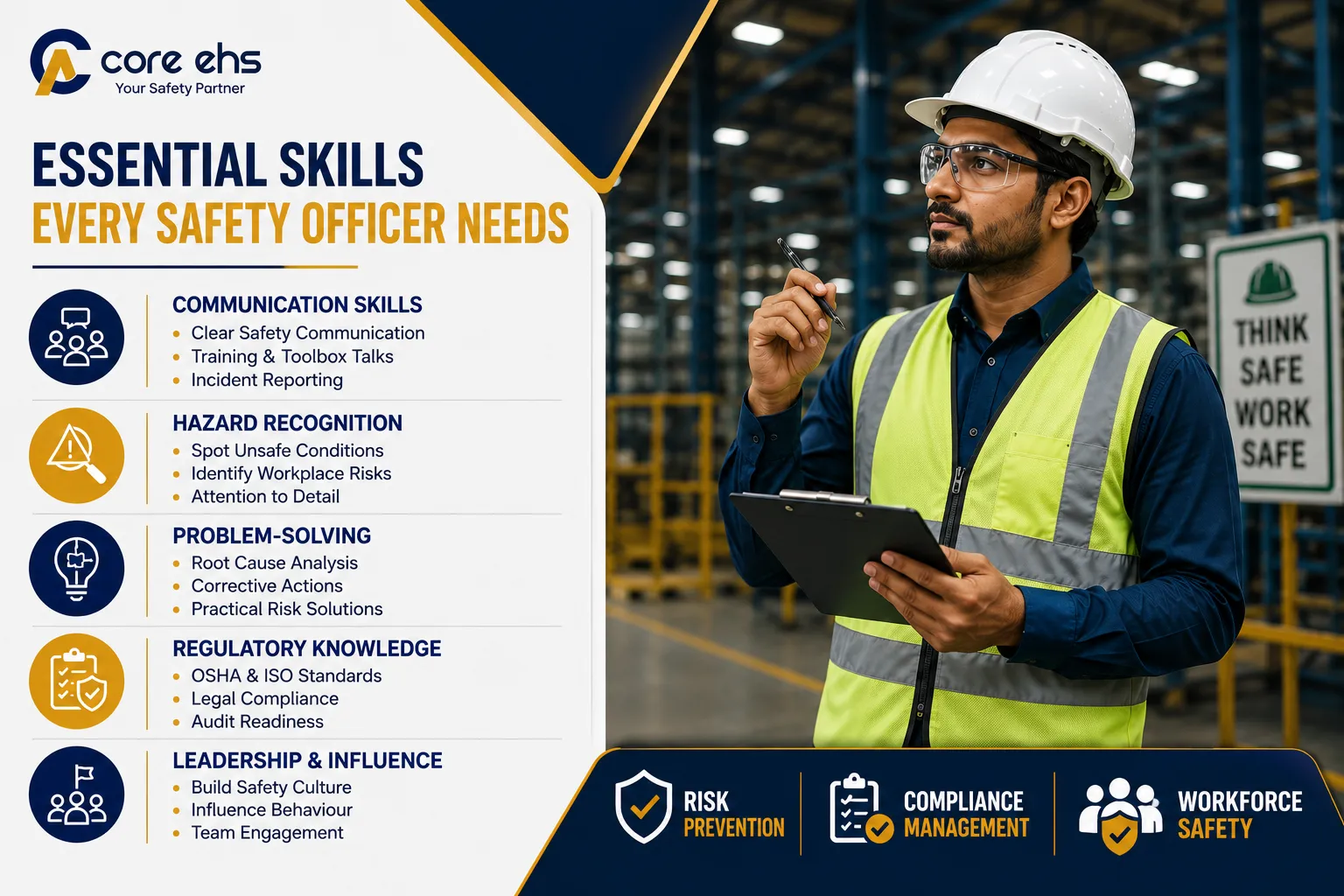
Technical knowledge alone is not enough. The best safety officers combine regulatory expertise with strong human skills.
-
Communication Skills
Safety information must be delivered clearly across diverse teams, from senior management to frontline workers. Safety officers write reports, deliver training, conduct interviews, and present findings, often under pressure.
-
Observation and Hazard Recognition
Experienced safety officers develop a trained eye. They notice the slightly misaligned guardrail, the worker who hesitates before a task, or the minor spill that could become a serious slip hazard. This skill is built through experience and continual attention to detail.
-
Problem-Solving Ability
When a hazard or incident is identified, a safety officer needs to think critically about root causes and practical solutions, ones that work within operational constraints while genuinely reducing risk.
-
Regulatory Knowledge
Safety regulations change. A competent safety officer stays current on evolving legislation, standards updates, and industry best practices to ensure the organisation remains compliant.
-
Leadership and Influence
Safety officers rarely have direct authority over operational teams. They lead through influence, building trust, demonstrating credibility, and making a compelling case for safe behaviour at every level of the organisation.
Why Safety Officers Are Important for Every Organisation
The value of a competent safety officer extends far beyond regulatory compliance. Organisations with strong workplace safety management programs and dedicated safety professionals experience measurable benefits:
- Fewer incidents and injuries, as proactive hazard management reduces accident frequency
- Improved compliance, since systematic monitoring reduces the risk of regulatory penalties
- Protected workers, because employees who feel safe are more confident and productive
- Enhanced productivity, with fewer disruptions from accidents, investigations, and downtime
- Stronger safety culture, as visible safety leadership changes how workers think and behave
- Reduced business risk, through lower insurance premiums, fewer legal exposures, and a stronger operational reputation
Organisations that invest in qualified safety officers are not just meeting legal requirements. They are making a strategic decision to protect their most valuable asset: their people.
Challenges Faced by Safety Officers Today
The safety officer role is rewarding, but it is not without its difficulties. Common challenges include:
- Changing regulations, keeping pace with frequent updates to safety legislation across jurisdictions
- Contractor management, ensuring third-party workers comply with site safety requirements
- Workforce engagement, motivating workers to participate actively in safety programs
- Technology adoption, learning and implementing new digital safety tools
- Reporting and documentation, managing increasing administrative demands without compromising field presence
- Multi-site operations, maintaining consistent safety standards across geographically dispersed locations
Addressing these challenges requires ongoing professional development, strong organisational support, and increasingly, the right technology.
How Technology Is Changing the Role of Safety Officers
Digital safety management is reshaping the way safety officers operate. Modern EHS software and safety technology solutions enable safety professionals to work smarter, faster, and with greater visibility than ever before.
Key developments include:
- Mobile inspections, conducting and documenting inspections on handheld devices in real time
- Hazard reporting apps, empowering workers to report hazards instantly from anywhere on site
- Incident management systems, streamlining investigations, corrective actions, and trend analysis
- AI and analytics, identifying patterns in safety data to predict and prevent future incidents
- IoT safety solutions, using connected sensors to monitor environmental conditions such as gas levels, temperature, and noise
- Digital permits to work, replacing paper-based permit systems with controlled, auditable digital workflows
Platforms such as CORE-EHS integrate these capabilities into a unified system, giving safety officers real-time insight across operations and reducing the administrative burden that can pull them away from frontline activity.
Conclusion
What does a safety officer do? In short, they are the professionals who stand between a hazard and harm. They identify risks, ensure compliance, train workers, investigate incidents, and embed safety officer responsibilities into the daily rhythm of organisational life.
The role is demanding, multi-disciplinary, and critically important. As workplaces grow more complex and regulatory expectations increase, the safety officer’s contribution only becomes more valuable.
For organisations that want to protect their people, meet their legal obligations, and build a genuine safety culture, investing in qualified safety officers and equipping them with the right training and technology is not optional. It is essential.
Whether you’re building your safety program from the ground up or strengthening an existing one, the right combination of skilled people, clear processes, and modern EHS tools will define your success.