 +91 72929 29159













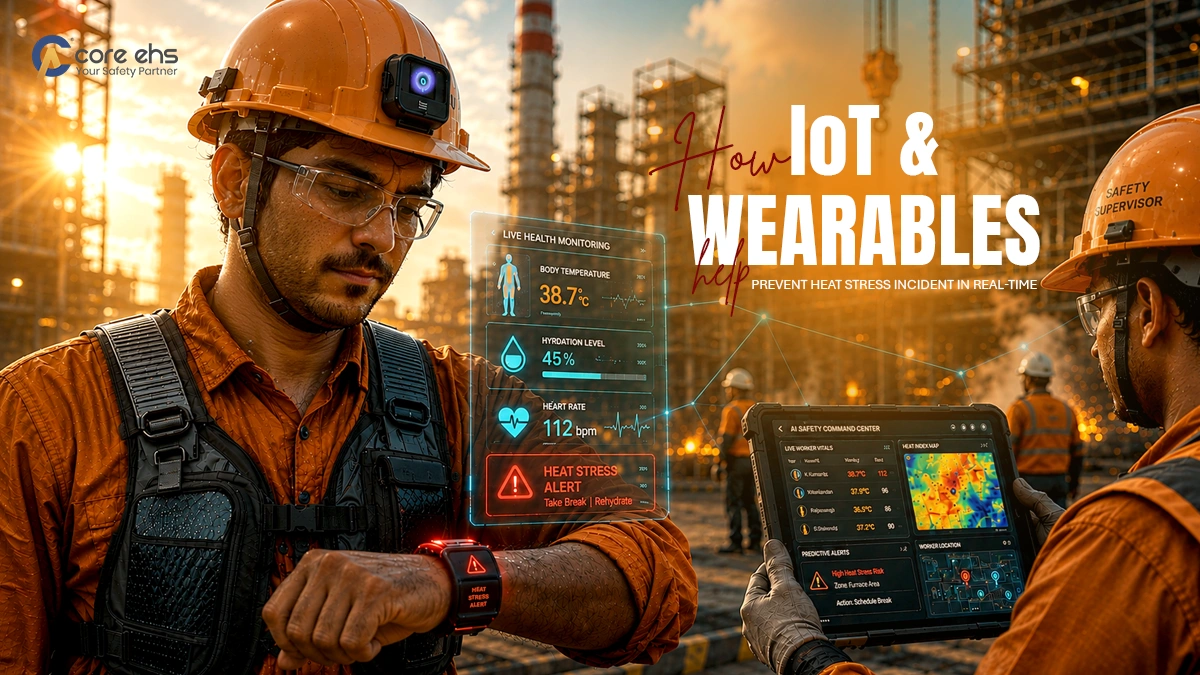
Heat stress incidents are often detected too late, when symptoms have already started affecting the worker. But with the rise of IoT and wearable technology, workplaces can now monitor heat stress in real time and act before conditions become dangerous. This blog explains how connected devices, smart wearables, and data-driven systems are transforming heat stress prevention at the workplace, helping organizations move from reactive response to proactive safety.
The Real Problem with Heat Stress Isn’t Awareness. It’s Timing.
Most teams today are aware of heat stress at the workplace. Workers are told to stay hydrated. Supervisors are trained to watch for symptoms. Breaks are scheduled during extreme heat.
And yet, incidents still happen.
The issue is not a lack of knowledge. It’s the delay between when the body starts experiencing stress and when someone actually notices it.
By the time a worker says, “I’m feeling dizzy,” or a supervisor observes fatigue, the body has already been under strain for some time. That window, where the risk exists but isn’t visible, is where most heat stress incidents begin.
This is exactly the gap that technology is now addressing.
Why Traditional Heat Stress Prevention Has Limits
For years, heat stress prevention has depended heavily on human observation and routine practices. While these methods are important, they are inherently reactive.
Workers often ignore early symptoms of heat stress, assuming it is just part of working in hot conditions. Supervisors, on the other hand, are managing multiple responsibilities and may not always detect subtle changes in behaviour or physical condition.
Environmental conditions can also shift quickly. A sudden rise in temperature or humidity may not be immediately recognised, but it can significantly increase risk.
As a result, action is often taken only after symptoms of heat exhaustion start to appear. At that point, the situation has already escalated.
How IoT is Changing Workplace Safety
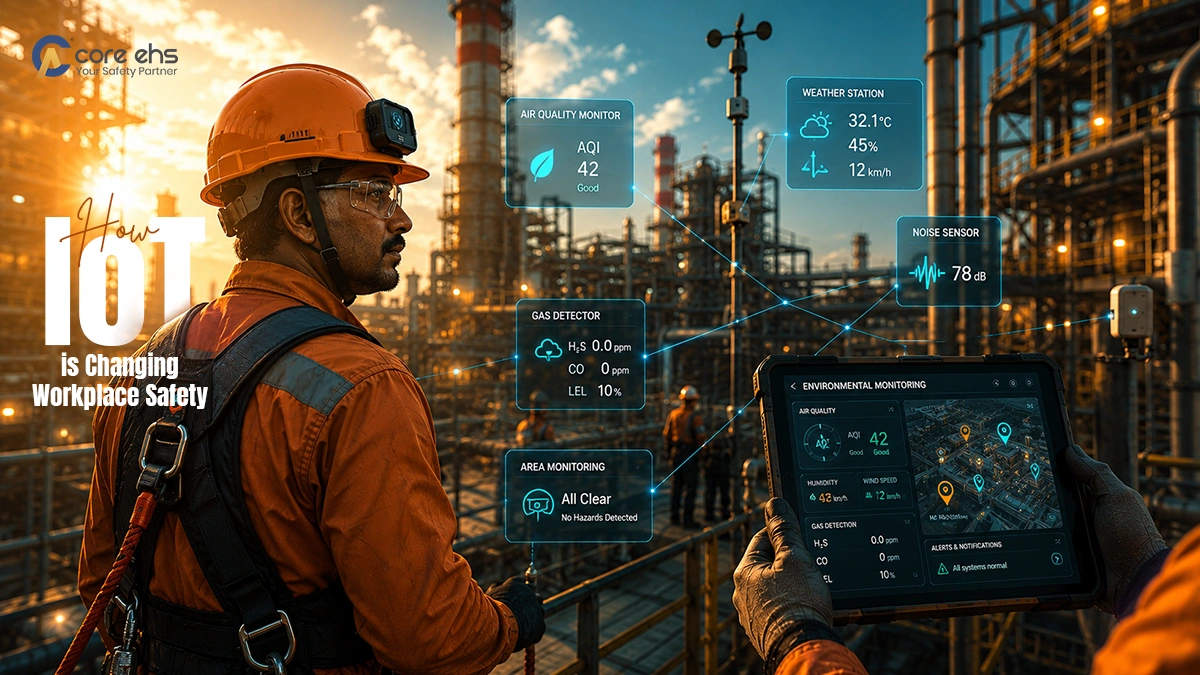
The introduction of IoT (Internet of Things) in workplace safety is changing how risks are identified and managed. Instead of relying solely on observation, IoT systems continuously monitor both the worker and the environment.
These systems collect data in real time and analyze it instantly. The goal is not just to understand what is happening, but to identify when conditions are becoming unsafe, even before visible symptoms appear.
This shift from observation to continuous monitoring allows organisations to move from reactive safety practices to proactive prevention.
The Role of Wearable Technology
Wearable devices are at the center of this transformation. These devices are designed to be worn by workers and can track key physiological indicators such as body temperature, heart rate, and activity levels.
What makes wearables powerful is their ability to detect internal changes that are not immediately visible. For example, when the body is exposed to excessive heat, the heart rate may increase as it works harder to regulate temperature. Similarly, body temperature may rise gradually before any external signs appear.
By capturing this data continuously, wearable devices can identify patterns that indicate early heat stress. This allows timely intervention, often before the worker is even aware of the risk.
In environments where even a small delay can lead to serious consequences, this early detection becomes critical.
Monitoring the Environment Alongside the Worker
While wearables focus on the worker, environmental sensors provide insight into the surrounding conditions. These sensors track factors such as temperature, humidity, and heat index, all of which contribute to heat stress risk.
Heat stress is not determined by temperature alone. High humidity, for example, reduces the body’s ability to cool itself through sweating. Similarly, confined or poorly ventilated spaces can trap heat, increasing exposure.
By continuously monitoring these environmental factors, organisations can better understand when and where risks are highest. This information can be used to adjust work schedules, redistribute tasks, or introduce additional control measures.
Real-Time Alerts: Acting Before It’s Too Late
One of the most significant advantages of IoT-based systems is the ability to generate real-time alerts. When certain thresholds are reached, whether related to body condition or environmental exposure, the system can trigger immediate notifications.
These alerts can be directed to the worker, the supervisor, or a centralised safety team. This ensures that action can be taken without delay.
For example, if a worker’s physiological data indicates rising stress levels, they can be advised to take a break. If environmental conditions reach a critical level, work can be temporarily paused or adjusted.
This kind of immediate response helps prevent heat stress from progressing into more serious conditions like heat exhaustion or heat stroke.
Related Read: How Early Reporting and Hot Work Supervision Prevent Major Fire Incidents
Using Data to Improve Long-Term Safety
Beyond real-time intervention, IoT systems also provide valuable insights over time. The data collected can reveal patterns that are not immediately obvious.
Organisations can identify which areas of a site are consistently exposed to higher heat levels, which time periods carry greater risk, and which tasks contribute most to heat stress.
This information allows for better planning and decision-making. Instead of reacting to individual incidents, organisations can address underlying risk factors and improve overall safety systems.
In this way, heat stress prevention becomes not just a response strategy but a continuous improvement process.
Strengthening Incident Investigation and Reporting
Another important benefit of digital monitoring is its role in incident investigation and reporting. When an incident occurs, data from wearables and sensors can provide a clear picture of the conditions leading up to it.
This includes the worker’s physiological state, environmental conditions, and the sequence of events. Such data adds accuracy and depth to incident investigation, reducing reliance on assumptions or incomplete information.
It also supports more structured and reliable incident investigation and reporting, helping organisations identify root causes more effectively and implement meaningful corrective actions.
The Impact on Workplace Safety Culture
When technology is used effectively, it does more than prevent incidents; it changes how safety is perceived.
Workers feel more supported when they know their well-being is being actively monitored. Supervisors gain confidence in making decisions based on real data rather than assumptions.
Over time, this leads to a more proactive safety culture, where prevention becomes the priority and not just compliance.
Looking Ahead
The use of IoT and wearable technology in heat stress prevention is still evolving, but the direction is clear. Workplaces are moving towards systems that are more connected, data-driven, and responsive.
As technology continues to improve, the ability to predict and prevent risks will become even stronger. This will further reduce the gap between when a risk develops and when action is taken.
Heat stress at the workplace has always been a challenge, not because it isn’t understood, but because it is often detected too late.
What’s changing now is the approach.
At CORE-EHS, the focus is on helping organisations move beyond reactive safety practices to real-time prevention. By combining IoT-enabled monitoring, wearable technology, and data-driven insights, workplaces can identify risks early, respond faster, and prevent heat stress incidents before they escalate.
But technology alone is not the solution.
It’s about integrating the right systems, training teams to act on insights, and building a safety culture where prevention is the priority.
Connect with our EHS experts today & explore how IoT can strengthen your EHS culture.