
 +91 72929 29159














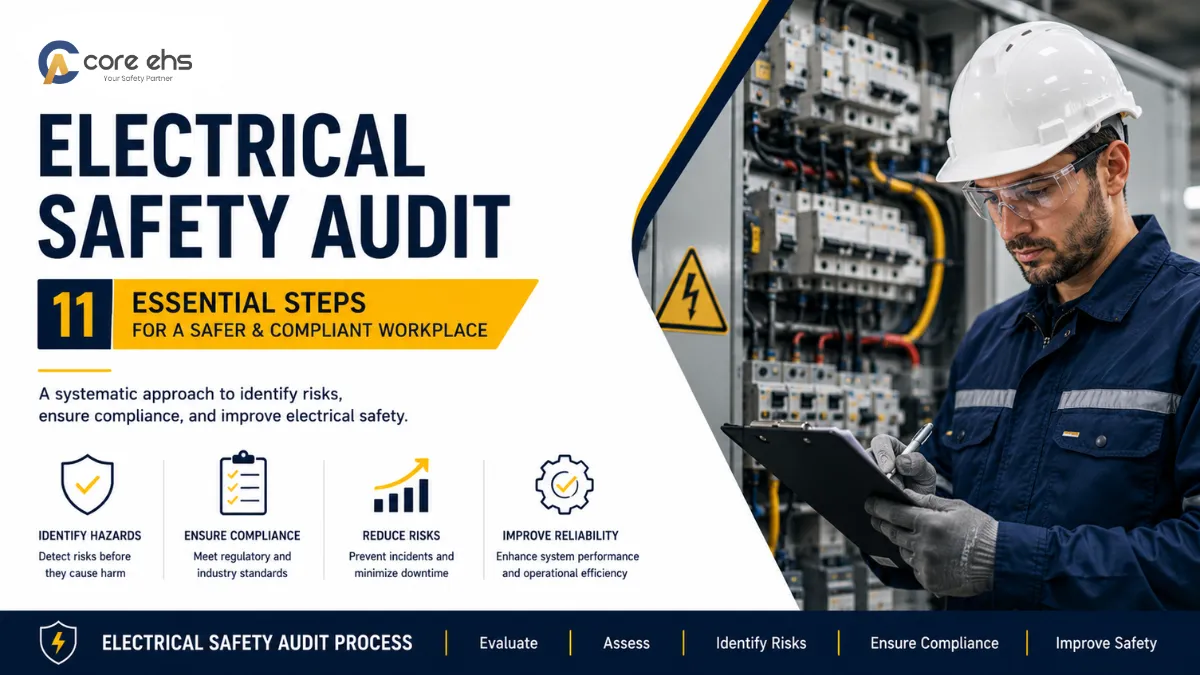
Steps to Conduct an Electrical Safety Audit
Conducting an electrical safety audit is crucial for ensuring workplace safety and compliance. It involves a systematic evaluation of electrical systems to identify potential hazards. As part of a broader compliance audit process, this electrical audit verifies adherence to codes and best practices.
This process helps prevent electrical accidents and ensures that facilities adhere to safety standards. Many organisations engage accredited electrical safety audit services when internal resources are limited.
An electrical safety audit includes inspecting installations, equipment, and practices. It also involves reviewing maintenance records and compliance with regulations. Auditors often rely on a safety audit checklist to ensure no critical element is overlooked.
By following a structured approach, organisations can enhance safety and operational efficiency.
This guide will walk you through the essential steps to conduct an effective electrical safety audit. It also points to an electrical safety audit report sample and templates you can adapt.
What is an Electrical Safety Audit?
If you’re searching online for ‘what is electrical safety audit’, it refers to a formal, documented review focused on assessing electrical systems within a facility. It aims to ensure safety and compliance with industry standards.
This audit involves a detailed inspection of electrical installations and equipment. It ensures that these elements are in safe and optimal working condition.
Key components of an electrical safety audit include:
- Reviewing electrical system designs
- Inspecting the condition of installations and equipment
- Assessing compliance with safety standards
- Conducting an electrical risk assessment of tasks and environments
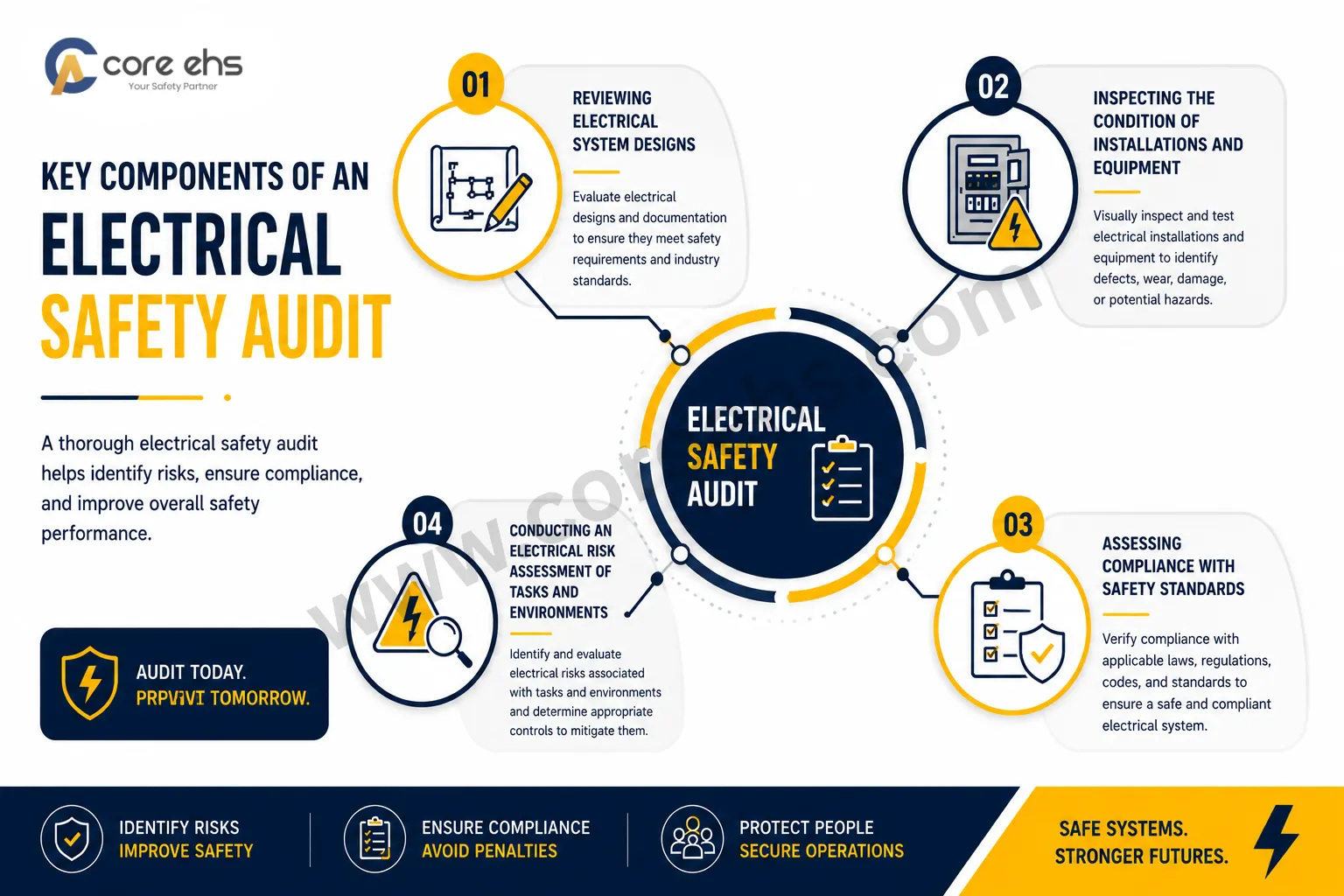
The main aim of an electrical safety audit is to identify potential hazards. This assists in mitigating risks associated with electrical components and practices.
By addressing these areas, organisations can create safer work environments for all stakeholders.
Why Electrical Safety Audits are Important
Electrical safety audits play a vital role in preventing accidents and ensuring workplace safety. By identifying potential hazards, they help mitigate risks associated with electrical systems.
Regular audits ensure that a facility complies with national and international safety standards. This compliance is crucial to avoid legal issues and potential fines.
Key benefits of electrical safety audits include:
- Enhancing overall safety practices
- Reducing the chances of electrical failures
- Lowering maintenance costs through early detection
Through these audits, organisations can improve operational efficiency. By addressing safety concerns proactively, they also strengthen their safety culture, benefiting employees and visitors alike.
Preparing for the Electrical Safety Audit
Proper preparation is key to a successful electrical safety audit. Begin by understanding the facility’s electrical layout and equipment. This knowledge helps in setting realistic objectives and expectations.
Gathering and reviewing previous audit results and incident reports is crucial. It provides valuable insights into existing vulnerabilities and areas needing improvement. Align preparation with your broader compliance audit process and EHS objectives. Where required, prepare an electrical safety audit tender package or scope of work for transparent procurement of qualified providers.
Having a well-organised plan ensures no aspect is overlooked during the audit. The plan should include timelines, responsibilities, and necessary resources.
Essential preparation steps include:
- Identifying key areas and equipment
- Reviewing past audit findings
- Setting clear objectives and timelines
Make sure all team members understand their roles and responsibilities. This collective effort sets the stage for a thorough and effective audit.
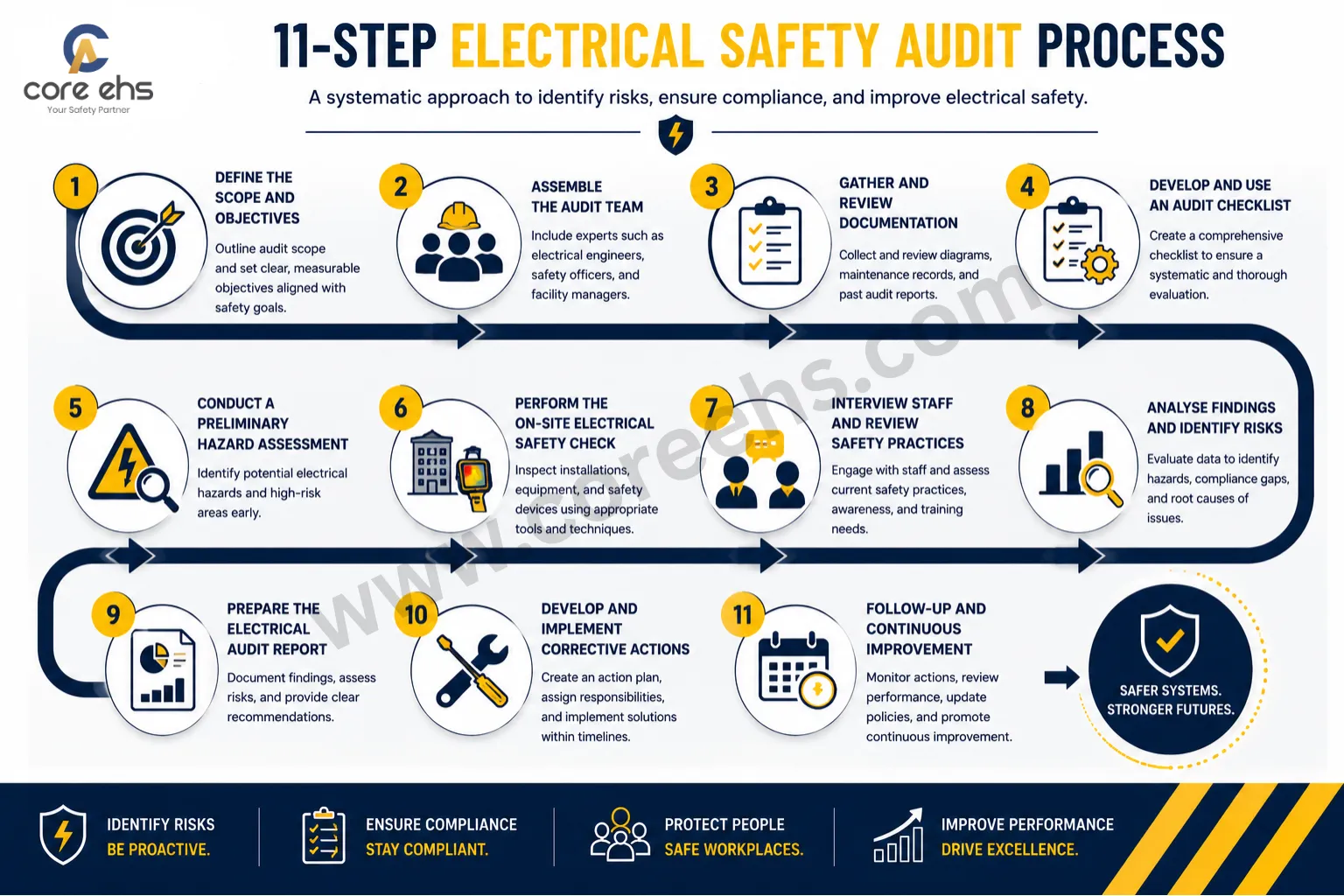
Step 1: Define the Scope and Objectives
The first step in any electrical safety audit is defining its scope and objectives. Clearly outline which areas and systems will be included in the audit. This ensures all critical components get the attention they need.
Objectives should be specific, measurable, and achievable. They guide the entire process and align with broader safety goals.
Some potential objectives include:
- Identifying hazardous conditions
- Ensuring compliance with safety standards
- Enhancing operational efficiency
By defining the scope and objectives early on, you provide clarity and direction to the audit team. This strategic approach sets the foundation for a comprehensive safety evaluation.
Step 2: Assemble the Audit Team
Gathering the right team is crucial for an effective electrical safety audit. Ensure the team includes experienced professionals with diverse expertise. Key members might include:
- Electrical engineers
- Safety officers
- Facility managers
Each member brings valuable insights. A well-rounded team enables a thorough and efficient audit process. This collaboration fosters a comprehensive approach to identifying and addressing safety risks. When specialised expertise is needed, supplement the team with third-party electrical safety audit services.
Step 3: Gather and Review Documentation
Begin by collecting all relevant documents necessary for the audit. These provide a basis for evaluating safety compliance. Key documents to gather include:
- Electrical installation diagrams
- Maintenance records
- Previous audit reports
Thoroughly review these documents to gain insights into existing safety practices. Understanding past incidents helps highlight potential areas of risk. This information guides the audit team in focusing their efforts effectively, ensuring the audit covers all critical aspects.
Step 4: Develop and Use an Electrical Safety Audit Checklist
Creating a comprehensive checklist is fundamental to an effective electrical safety audit. This tool ensures the audit process is systematic and thorough. Start by identifying key areas that need evaluation.
The checklist should cover:
- Electrical wiring and installation condition
- Earthing and bonding practices
- Equipment maintenance status
- Safety device functionality
Using this checklist, auditors can systematically cover all necessary areas without overlooking critical components. It’s a vital reference throughout the auditing process. Customise the list based on facility-specific needs to enhance relevance and effectiveness. Include a safety audit checklist section for general EHS items that intersect with electrical controls.
Employing this checklist also assists in standardising audits across different sites or departments. It serves as a guide for ensuring no aspect of electrical safety is missed.
Step 5: Conduct a Preliminary Electrical Hazard Assessment
A preliminary electrical hazard assessment is essential to identify potential risks. This assessment focuses on areas with the highest risk of electrical faults. The goal is to pinpoint hazards before they lead to incidents. This preliminary electrical risk assessment complements the hazard review and prioritises controls.
Key assessment components include:
- Inspecting high-risk equipment and areas
- Evaluating past incident reports
- Reviewing emergency procedures
Conducting this assessment helps prioritise areas needing immediate attention. It sets the stage for in-depth analysis during the main audit. This proactive step is crucial in minimising potential electrical hazards and ensuring safety.
Step 6: Perform the On-Site Electrical Safety Check
An on-site electrical safety check involves a thorough inspection of the facility. This step ensures that electrical systems are operating safely and efficiently. Physical inspections are critical for verifying compliance with safety standards.
The on-site check covers several aspects, such as:
- Evaluating electrical installations and equipment condition
- Checking wiring and earthing integrity
- Testing safety devices functionality
This process also includes using diagnostic tools like thermal imaging. Such tools help detect overheating components which may pose risks. By taking these measurements, you ensure that hidden hazards are uncovered.
Engaging facility staff during this check fosters better awareness. Their input can reveal additional concerns or insights into daily practices. Collaborating with staff is vital for a comprehensive evaluation.
Step 7: Interview Staff and Review Safety Practices
Engaging with staff offers valuable insights into daily operations. Interviews reveal gaps in understanding and application of safety practices. This step is key to identifying training and awareness needs.
Key points to cover in interviews:
- Understanding of current safety protocols
- Employee comfort level with safety equipment
- Observations on past electrical incidents
Review safety practices to assess their effectiveness. Determine if procedures align with industry standards and regulations. Staff feedback can highlight areas for process improvement.
Step 8: Analyse Findings and Identify Risks
Thoroughly analyse the data gathered during the audit. This involves identifying any potential electrical hazards and compliance gaps. Highlight patterns or recurring issues that might indicate systemic problems.
Critical areas to evaluate include:
- Faulty wiring or connections
- Overloaded circuits or equipment
- Ineffective safety controls
Addressing these risks is crucial for improving safety. By recognising the root causes of issues, you can develop targeted corrective actions. This analysis helps prioritise the most significant risks, ensuring that resources are focused where needed most.
Step 9: Prepare the Electrical Audit Report
After completing the analysis, document your findings in a structured electrical audit report. This report should detail every significant observation from the audit and highlight recommendations for improvements.
Essential components of the report include:
- Executive summary
- Detailed findings
- Risk assessment
- Recommended corrective actions
The report serves as a crucial communication tool.
It informs stakeholders about identified risks and the necessary steps to enhance safety. A clear, concise report helps in prioritising actions effectively and ensuring all parties are on the same page. If stakeholders are unfamiliar with the format, share an electrical safety audit report sample to set expectations.
Step 10: Develop and Implement Corrective Actions
Once the electrical audit report is complete, the next step is crucial. Develop a corrective action plan to address identified issues and ensure compliance.
This plan should include:
- Specific actions for each finding
- Assigned responsibilities
- Implementation timelines
Implement these actions promptly to mitigate any risks. Continuous monitoring and adjustments during the implementation phase can significantly enhance workplace safety. Collaborate with relevant stakeholders to ensure all corrective measures align with organisational goals.
Step 11: Follow-Up and Continuous Improvement
The audit process doesn’t end with implementing corrective actions. Regular follow-ups ensure these actions are effective and sustainable over time. Continuous improvement should be embedded into the organisational culture.
Consider the following steps:
- Schedule regular reviews of implemented actions.
- Update safety policies based on audit findings.
- Encourage ongoing staff training and feedback.
These efforts help maintain compliance and enhance overall electrical safety audit effectiveness, ensuring a safer workplace environment.
Compliance Standards and Regulatory Requirements
Understanding compliance standards is vital for conducting a successful electrical safety audit. These standards ensure that the audit aligns with national and international safety norms. In India, specific guidelines govern how audits should be conducted. For electrical safety audit India requirements, consult national regulations and standards (such as CEA regulations and applicable BIS/IS codes) along with guidance from local authorities and state inspectorates. Integrate these references into your internal compliance audit process.
To align with regulatory requirements:
- Familiarise with OSHA and NFPA standards.
- Ensure compliance with local electrical codes.
- Update safety protocols regularly.
By adhering to these standards, organisations can avoid penalties, ensuring their electrical safety audit process meets all necessary legal and safety requirements.
Sample Electrical Safety Audit Report and Templates
Having a structured electrical audit report is crucial for clear communication. It summarises the findings and recommendations from the audit process. Templates can guide this process and ensure consistency. Download a reusable electrical safety audit report sample and editable templates to accelerate documentation. Pair these resources with your electrical safety audit checklist to standardise reporting across sites.
Key sections often include:
- Executive summary.
- Findings and analysis.
- Recommendations for improvement.
Utilising these templates ensures thorough documentation and easier follow-up actions to maintain electrical safety in any facility.
Conclusion: Building a Safer Workplace Through Electrical Safety Audits
Electrical safety audits are fundamental for a secure workplace. They ensure systems are reliable and up to standard. By identifying hazards and implementing corrective actions, businesses can prevent costly incidents and enhance safety culture.
Regular audits foster continuous improvement and compliance with regulations. Investing in these audits not only protects your assets but also promotes a safety-first mindset within the organisation.