 +91 72929 29159














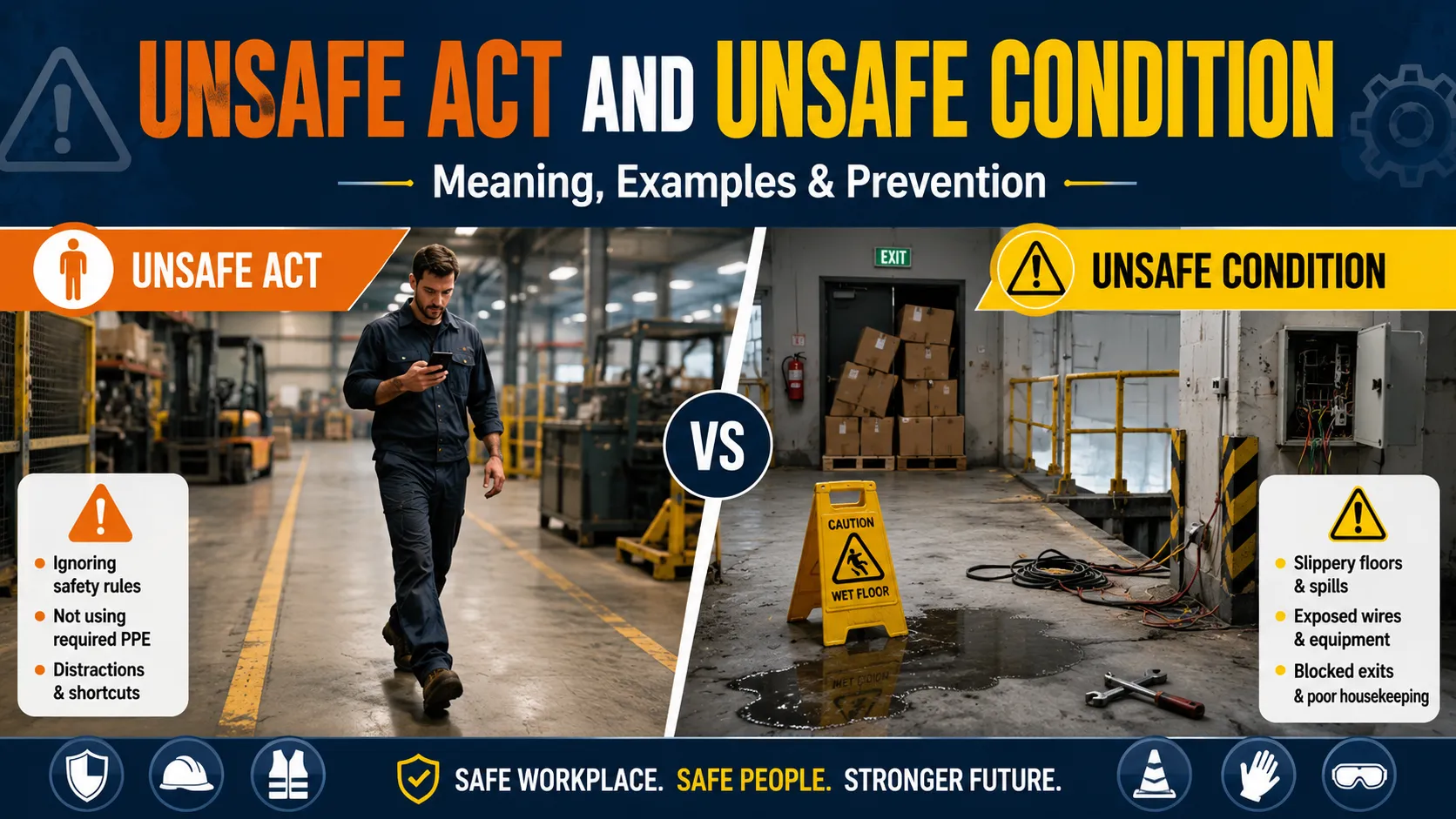
Unsafe acts and unsafe conditions in the workplace are two important warning signs that can lead to near misses, injuries, property damage, or serious accidents if they are not identified and controlled on time.
In workplace safety, incidents rarely happen without warning. Many accidents begin with an unsafe act, an unsafe condition, or a combination of both. An unsafe act is usually linked to a person’s behaviour or decision, while an unsafe condition refers to a hazardous situation in the workplace environment.
Understanding the difference between unsafe act and unsafe condition is important for safety officers, supervisors, workers, and EHS teams. When both are identified early, organisations can take corrective action, prevent near misses from becoming serious incidents, and build a stronger safety culture.
This blog explains the meaning of unsafe act and unsafe conditions, their key differences, practical workplace examples, and effective prevention methods.
What Is the Difference Between Unsafe Act and Unsafe Condition in the Workplace?
An unsafe act is an unsafe behaviour, action, or decision made by a person that can increase the chance of an accident. Examples include not wearing PPE, bypassing safety procedures, using the wrong tool, or working at height without fall protection.
An unsafe condition is a hazardous physical or environmental situation in the workplace. Examples include damaged equipment, exposed wiring, poor lighting, oil spills, missing machine guards, or blocked emergency exits.
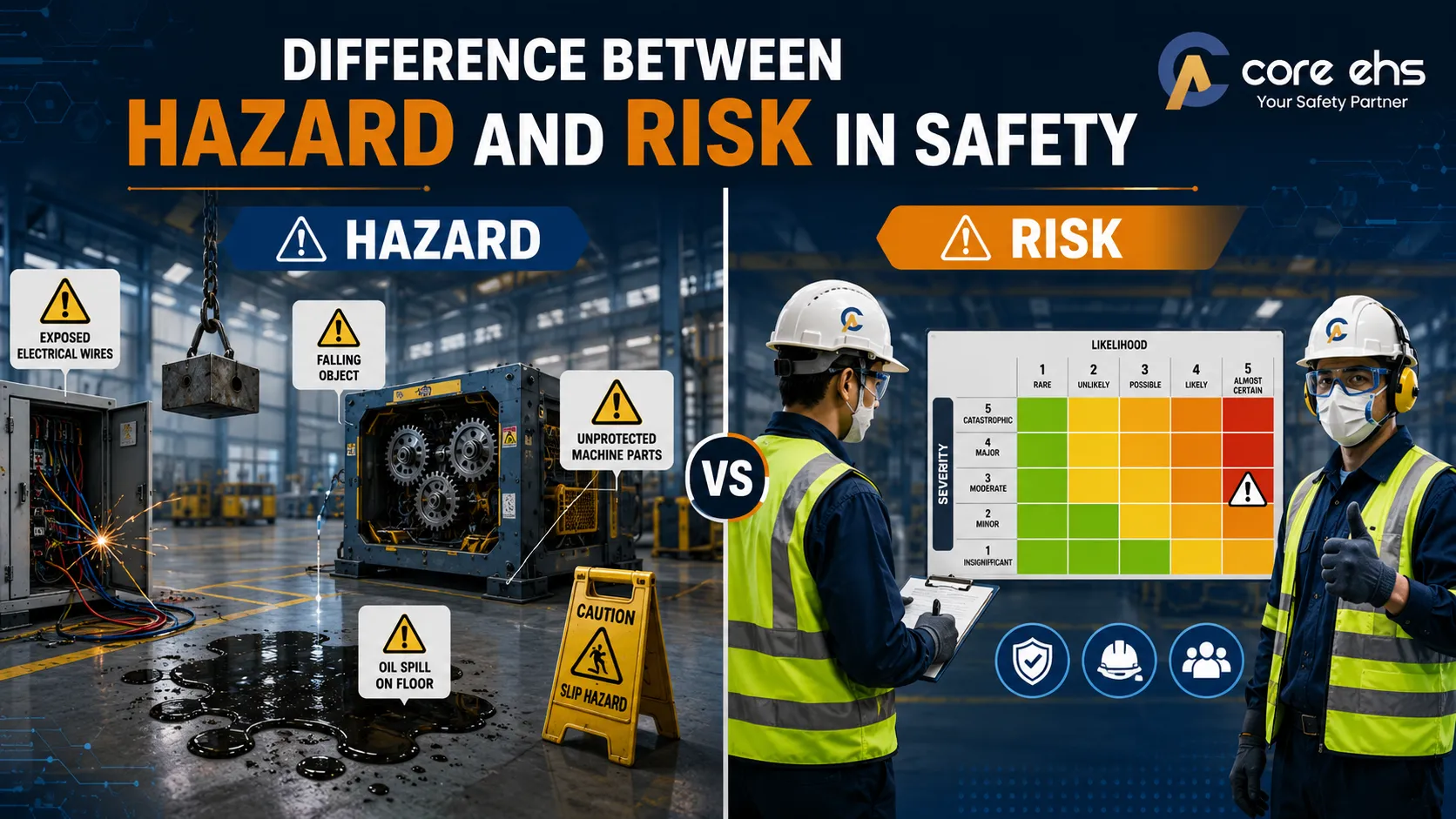
In simple words, an unsafe act is related to what a person does, while an unsafe condition is related to the hazard present in the workplace. Understanding unsafe act vs unsafe condition in workplace safety helps organisations identify risks early and prevent incidents before they happen
What Is an Unsafe Act?
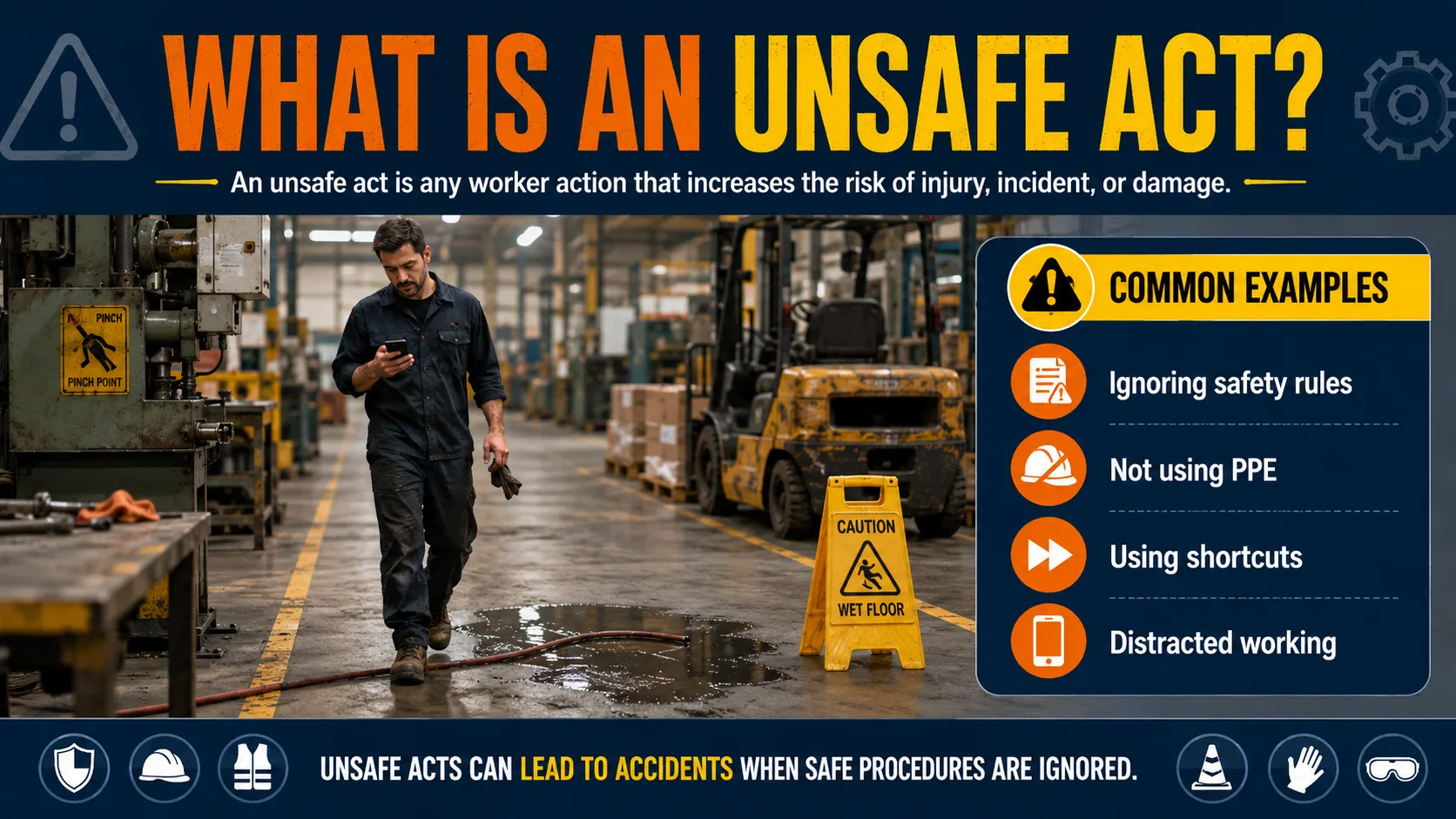
An unsafe act is any action, behaviour, or decision by a person that increases the risk of injury, illness, property damage, or workplace incident. It may happen when a worker ignores a safety rule, takes a shortcut, uses equipment incorrectly, or performs a task without proper precautions.
However, an unsafe act should not always be seen as “worker carelessness.” In many cases, unsafe acts happen because of poor training, time pressure, lack of supervision, fatigue, overconfidence, unclear procedures, or weak safety communication.
Common unsafe act examples include:
- Not wearing required PPE
- Bypassing lockout/tagout procedures
- Working at height without fall protection
- Operating machinery without authorisation
- Using damaged or incorrect tools
- Ignoring warning signs or barricades
- Standing under a suspended load
- Taking shortcuts during maintenance or production work
Identifying unsafe acts early helps organisations improve training, strengthen supervision, encourage safe behaviour, and prevent incidents before they occur.
What Is an Unsafe Condition?
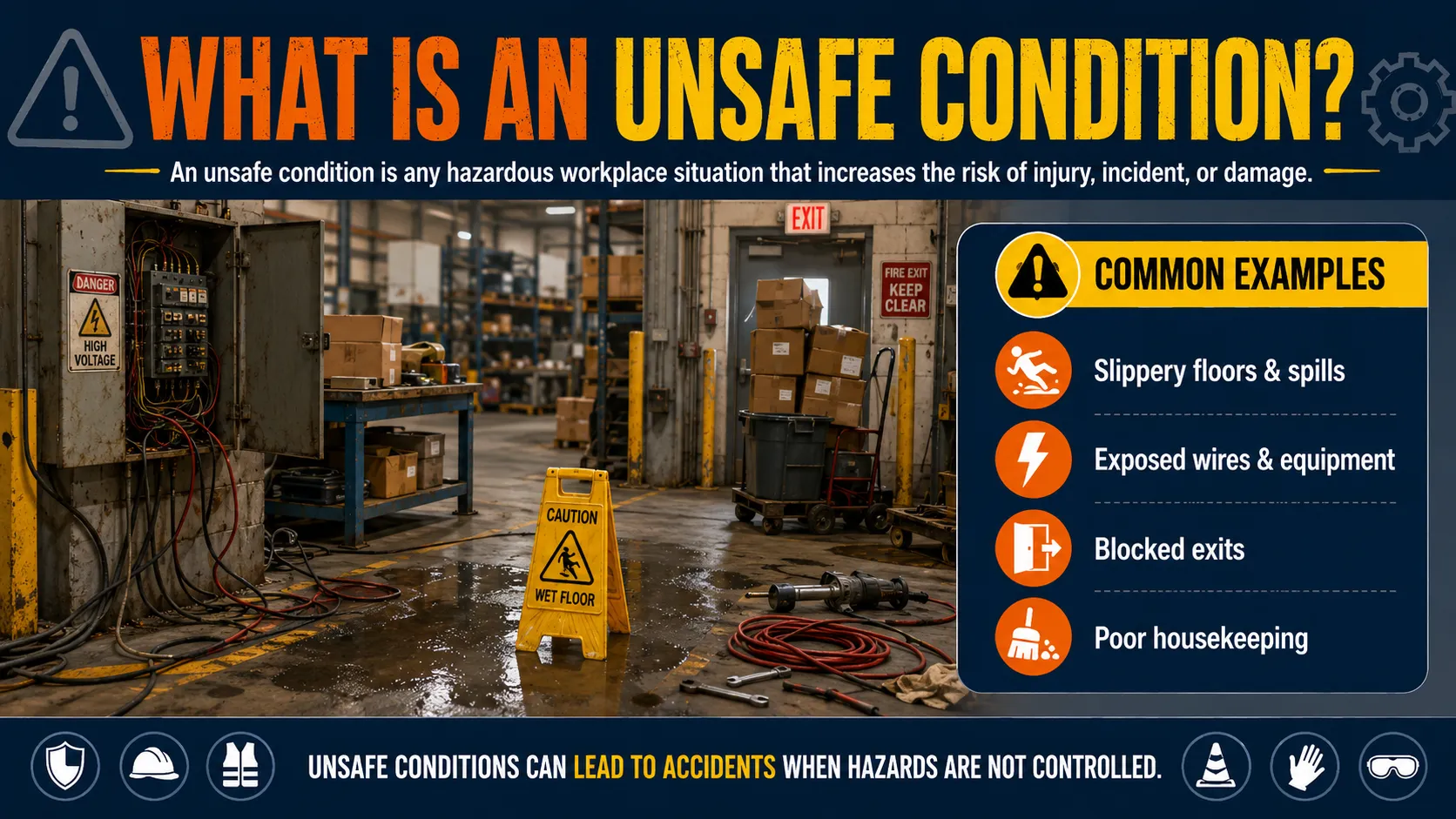
An unsafe condition is a hazardous physical, environmental, or equipment-related situation in the workplace that can lead to an accident, injury, illness, or property damage. Unlike an unsafe act, which is linked to a person’s behaviour, an unsafe condition already exists in the workplace and can expose workers to risk if it is not corrected in time.
Unsafe conditions may be caused by poor maintenance, weak inspection systems, poor housekeeping, equipment failure, damaged tools, unsafe workplace design, or delayed corrective actions.
Common unsafe condition examples include:
- Wet or slippery floors
- Damaged electrical cables
- Poor lighting in work areas
- Missing or broken machine guards
- Defective ladders, scaffolds, or platforms
- Blocked emergency exits
- Improper chemical storage
- Poor housekeeping
- Unmarked excavation areas
- Damaged lifting tools, hooks, or slings
Identifying and reporting unsafe conditions is important because these hazards can remain unnoticed until someone gets injured. Regular workplace inspections, hazard reporting, maintenance checks, and timely corrective actions help prevent unsafe conditions from turning into serious incidents.
Unsafe Act vs Unsafe Condition in Workplace Safety
Unsafe acts and unsafe conditions are both important risk factors in workplace safety, but they are not the same. An unsafe act is linked to human behaviour or the way a task is performed, while an unsafe condition is linked to the workplace environment, equipment, tools, or physical hazards.
| Point of Difference | Unsafe Act | Unsafe Condition |
| Meaning | An unsafe behaviour, action, or decision by a person | A hazardous physical, environmental, or equipment-related condition |
| Main Source | Human action or unsafe work practice | Workplace, equipment, tools, materials, or environment |
| Example | A worker does not wear required PPE | PPE is damaged, unavailable, or not suitable for the task |
| Another Example | A worker bypasses lockout/tagout procedures | Electrical panel has exposed live wiring |
| Control Method | Training, supervision, coaching, toolbox talks, and behaviour observation | Inspection, maintenance, engineering control, housekeeping, and corrective action |
| Reporting Method | BBS observation, supervisor observation, safety observation, or unsafe act reporting | Hazard reporting, inspection checklist, near-miss reporting, or unsafe condition reporting |
| Prevention Focus | Improving safe behaviour and decision-making | Removing hazards and improving workplace conditions |
In many cases, an unsafe act and unsafe condition can exist together. For example, if a worker climbs a damaged ladder without checking it, the unsafe act is using the ladder without inspection, while the unsafe condition is the damaged ladder itself.
Understanding unsafe act vs unsafe condition in workplace safety helps organisations take the right corrective action. Unsafe acts often require training, coaching, and behaviour improvement, while unsafe conditions require inspection, maintenance, and hazard control.
Examples of Unsafe Acts and Unsafe Conditions in the Workplace
Unsafe acts and unsafe conditions can appear in almost every workplace activity, from routine maintenance to high-risk operations. The easiest way to understand the difference is to look at the same work situation and identify what the person is doing unsafely and what hazard is already present in the workplace.
-
Working at Height:
An unsafe act occurs when a worker does not use a safety harness or lifeline. An unsafe condition exists when the anchor point is missing, weak, or damaged.
-
Electrical Work:
An unsafe act is when a worker touches an electrical panel without following lockout/tagout (LOTO) procedures. An unsafe condition is the presence of exposed live wires or damaged electrical cables.
-
Lifting Operation:
An unsafe act is when a worker stands under a suspended load. An unsafe condition includes defective slings or hooks, or poor barricading around the lifting area.
-
Housekeeping:
An unsafe act occurs when a worker ignores an oil spill while walking through the area. An unsafe condition is when the oil spill remains unattended on the floor.
-
Confined Space Entry:
An unsafe act is when a worker enters a confined space without a valid permit or proper gas testing. An unsafe condition includes poor ventilation or the presence of hazardous gases.
-
Machine Operation:
An unsafe act is when a worker removes or bypasses a machine guard. An unsafe condition exists when the machine guard is missing, broken, or not installed.
-
Chemical Handling:
An unsafe act occurs when a worker handles chemicals without the required personal protective equipment (PPE). An unsafe condition is when chemical containers are not labelled or stored properly.
-
Fire Safety:
An unsafe act is when a worker blocks access to a fire extinguisher. An unsafe condition exists when the fire extinguisher is expired, damaged, or not available.
These unsafe act examples and unsafe condition examples show that risk is often created by both behaviour and workplace conditions. For example, standing under a suspended load is an unsafe act, but poor barricading around the lifting area is an unsafe condition.
For effective workplace safety, organisations should not focus only on what the worker did wrong. They should also check whether the workplace, tools, training, supervision, and safety systems were suitable for the task.
Common Causes Behind Unsafe Acts and Unsafe Conditions
Unsafe acts and unsafe conditions do not happen without a reason. They are often the result of gaps in training, supervision, planning, maintenance, communication, or workplace systems. To improve workplace safety, organisations must understand the causes behind both.
Common causes of unsafe acts include:
- Lack of safety training or task-specific knowledge
- Overconfidence during routine work
- Time pressure to complete the job quickly
- Fatigue, stress, or lack of attention
- Poor supervision or unclear instructions
- Habit of taking shortcuts
- Low awareness of risk
- Ignoring safety procedures or warning signs
Common causes of unsafe conditions include:
- Poor housekeeping
- Delayed maintenance of tools and equipment
- Weak workplace inspection system
- Damaged machines, cables, ladders, or lifting tools
- Poor lighting or ventilation
- Lack of proper barricading or warning signs
- Unsafe workplace layout
- Delay in closing reported hazards or corrective actions
It is important not to treat every unsafe act as worker carelessness. Many unsafe acts happen when workers are not properly trained, work procedures are unclear, or unsafe conditions are not corrected on time. A strong safety system looks at the root cause, not just the immediate mistake.
How to Prevent Unsafe Acts and Unsafe Conditions in the Workplace
Preventing unsafe acts and unsafe conditions requires a proactive safety approach. Organisations should not wait for an accident to happen before taking action. Regular training, inspections, reporting, supervision, and corrective actions help identify risks early and reduce the chance of workplace incidents.
To prevent unsafe acts, organisations should:
- Provide regular safety training and refresher sessions
- Conduct toolbox talks before high-risk activities
- Clearly communicate safe work procedures
- Improve supervision during critical tasks
- Encourage workers to stop work when they notice serious risks
- Use behaviour-based safety observations to identify unsafe behaviour
- Coach workers instead of blaming them
- Recognise and reinforce positive safety behavior
To prevent unsafe conditions, organisations should:
- Conduct regular workplace inspections
- Maintain tools, machines, ladders, scaffolds, and lifting equipment
- Improve housekeeping across work areas
- Remove spills, waste, and obstructions immediately
- Provide proper lighting, ventilation, barricading, and signage
- Repair damaged cables, guards, platforms, and safety devices
- Use hazard reporting systems to capture unsafe conditions
- Track corrective and preventive actions until closure
Prevention becomes more effective when unsafe acts and unsafe conditions are reported quickly. Every observation should be reviewed, assigned to the right person, corrected within a defined timeline, and verified after closure.
A strong prevention system focuses on both behavior and workplace conditions. Safe behavior reduces risk during the task, while safe conditions ensure that the workplace itself does not expose people to unnecessary danger.
Role of Reporting in Controlling Unsafe Acts and Conditions

Reporting plays an important role in controlling unsafe acts and unsafe conditions before they lead to accidents. When workers report hazards, near misses, unsafe behaviors, and unsafe workplace conditions on time, safety teams can take corrective action before the risk becomes serious.
An effective reporting system should be simple, quick, and easy for workers to use. It should allow employees to report unsafe acts and unsafe conditions with details such as location, category, severity, description, photo evidence, and responsible department or person.
Reporting should also be non-punitive. Workers must feel confident that reporting an unsafe act or unsafe condition will lead to improvement, not blame. This helps build trust and increases participation in workplace safety programs.
Digital hazard reporting software can make this process faster by helping organisations capture observations in real time, assign corrective actions, send alerts, track closure status, and review repeated safety trends through dashboards. This turns reporting into a proactive safety tool, not just a compliance activity.
Conclusion
Unsafe act and unsafe conditions are two important factors in workplace safety. An unsafe act is linked to unsafe behaviour or a wrong decision during work, while an unsafe condition is linked to a hazardous workplace situation, equipment issue, or environmental risk.
Both can lead to near misses, injuries, property damage, or serious incidents if they are not identified and controlled on time. By improving safety training, workplace inspections, hazard reporting, supervision, and corrective action tracking, organisations can reduce risks before they turn into accidents.
At CORE EHS, we believe that safety is not just a requirement but a core value. By fostering a proactive safety culture, encouraging accountability, and using smart EHS solutions, organisations can effectively identify and control unsafe acts and unsafe conditions.
The goal is simple: identify unsafe acts and unsafe conditions early, take timely action, and create a safer workplace for everyone.