 +91 72929 29159














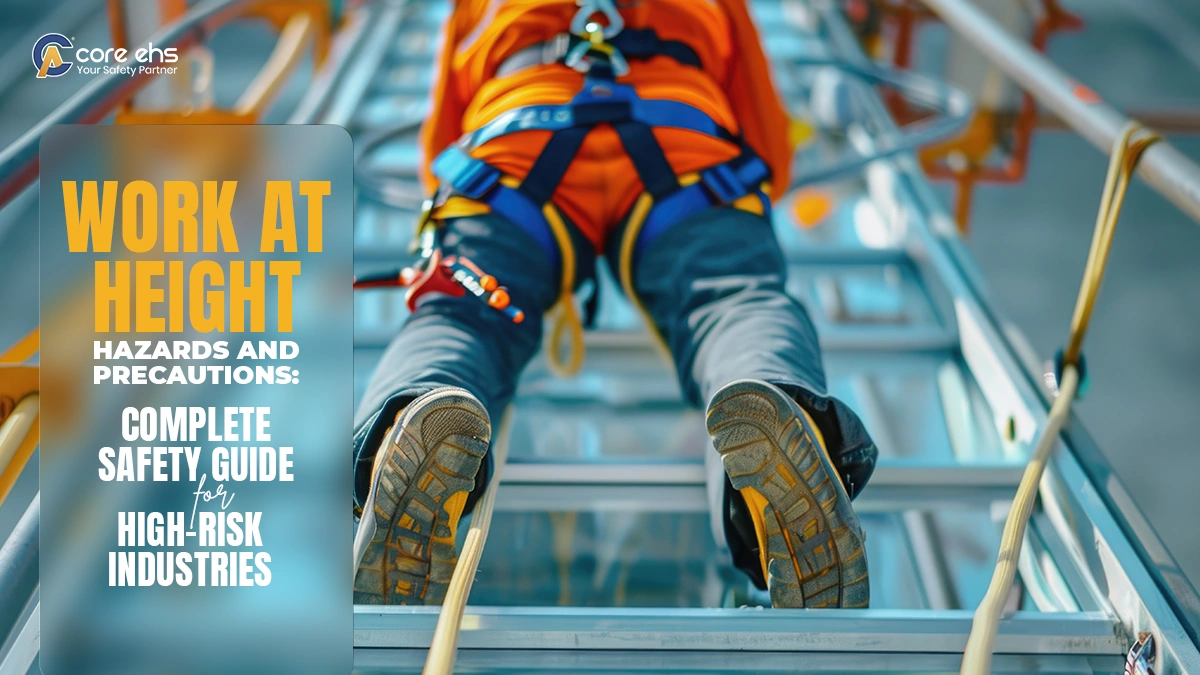
Work at height hazards and precautions are critical considerations for any industry where employees operate above ground level. From construction sites and oil refineries to manufacturing plants and warehouses, working at height remains one of the leading causes of serious injuries and fatalities worldwide. Understanding these risks and implementing the right control measures is not just a compliance requirement but a business necessity.
This guide explains the most common hazards, practical precautions, and advanced safety strategies to help organisations build a safer, zero-incident workplace.
What Is Work at Height?
Work at height refers to any activity where a person could fall from one level to another and suffer injury. This includes working on ladders, scaffolding, rooftops, platforms, or even near open edges and floor openings.
It is not limited to high-rise construction. Even working near pits, trenches, or loading docks falls under this category.
Common examples include:
- Construction and maintenance work
- Industrial equipment servicing
- Warehouse racking operations
- Oil and gas shutdown activities
Understanding the scope is the first step toward effective risk control.
Why Work at Height Remains One of the Deadliest Workplace Risks
Globally, falls from height account for a significant percentage of workplace fatalities, especially in construction and heavy industries. According to safety reports, falls are among the top three causes of occupational deaths.
In India, a large portion of construction-related injuries are linked to falls from ladders, scaffolds, and elevated surfaces. The impact is not just human, but also financial, leading to project delays, legal liabilities, and reputational damage.
Common Work at Height Hazards
1. Falls from Height
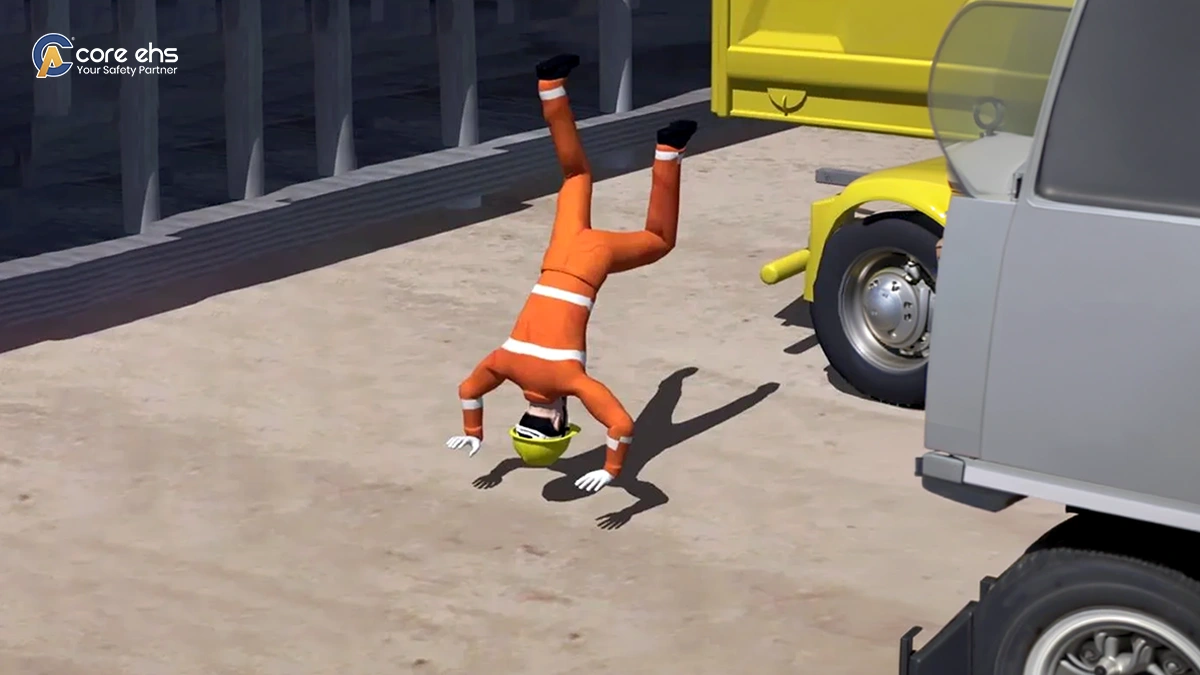
The most critical hazard. Workers on rooftops, scaffolding, or elevated platforms are constantly exposed to fall risks. In refinery shutdowns, even a minor slip can lead to fatal consequences.
2. Falling Objects and Tools
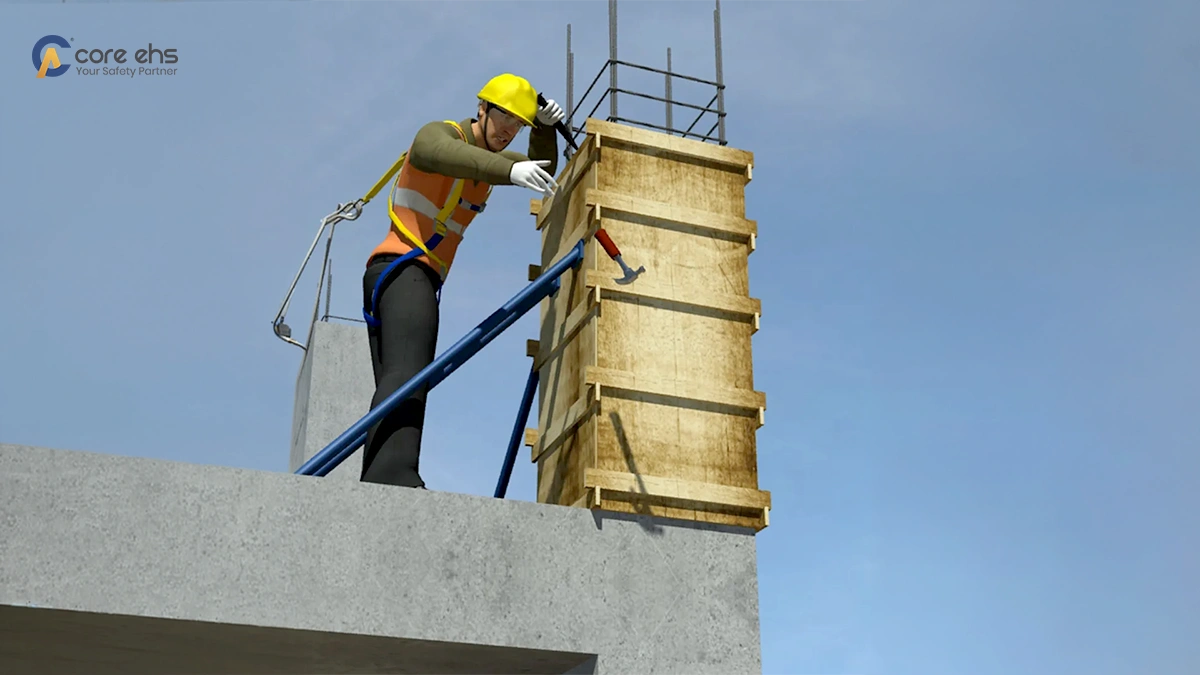
Tools or materials dropped from height can injure workers below. In fabrication yards, falling bolts or equipment can cause serious head injuries.
3. Unstable and Fragile Surfaces
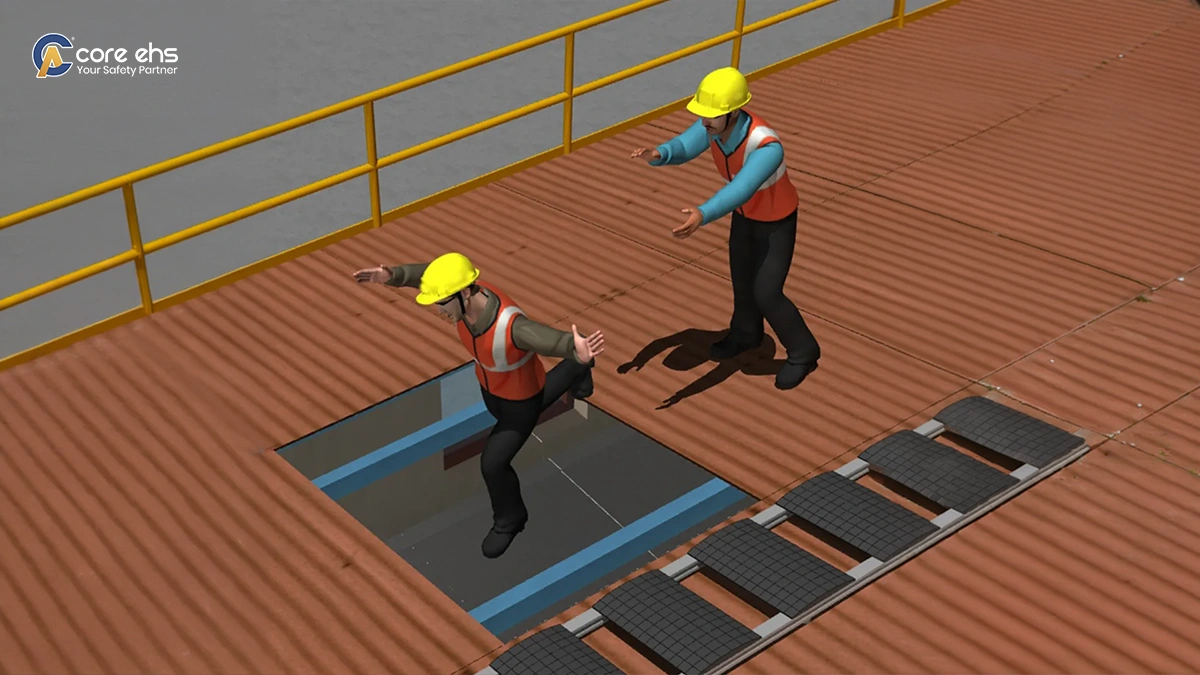
Working on corroded platforms or fragile roofs increases the risk of collapse. This is common in older industrial plants.
4. Ladder and Access Equipment Failures
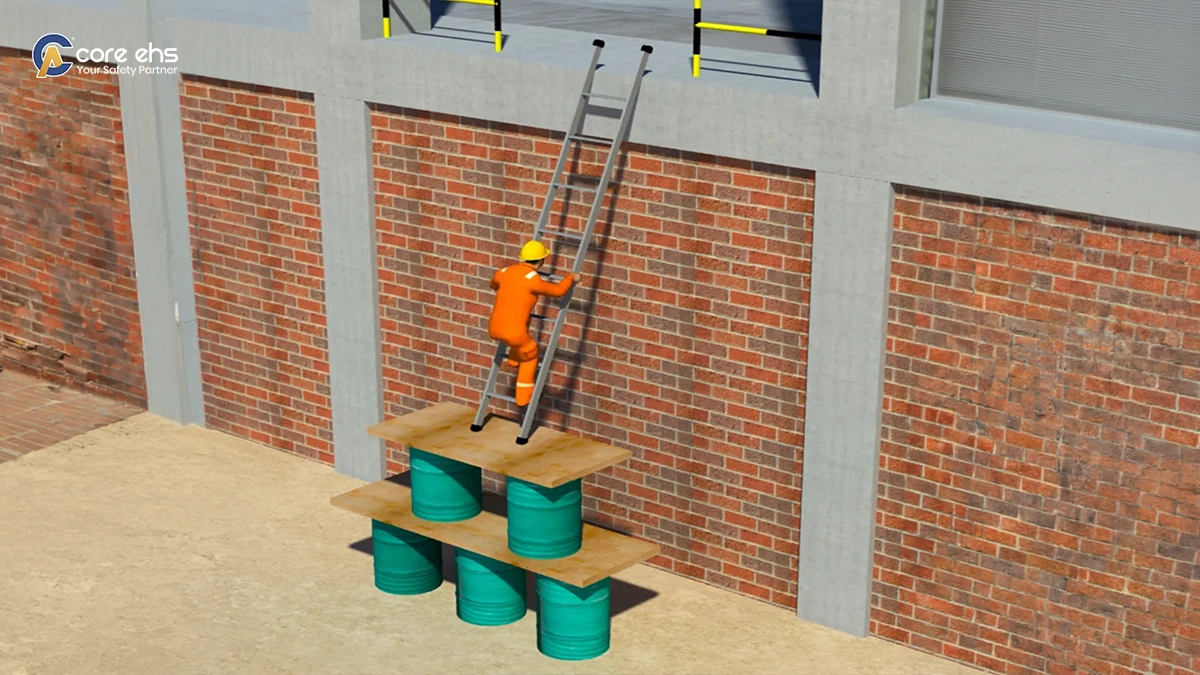
Incorrect ladder positioning or damaged equipment is a frequent cause of incidents, especially during quick maintenance tasks.
5. Unguarded Edges and Openings
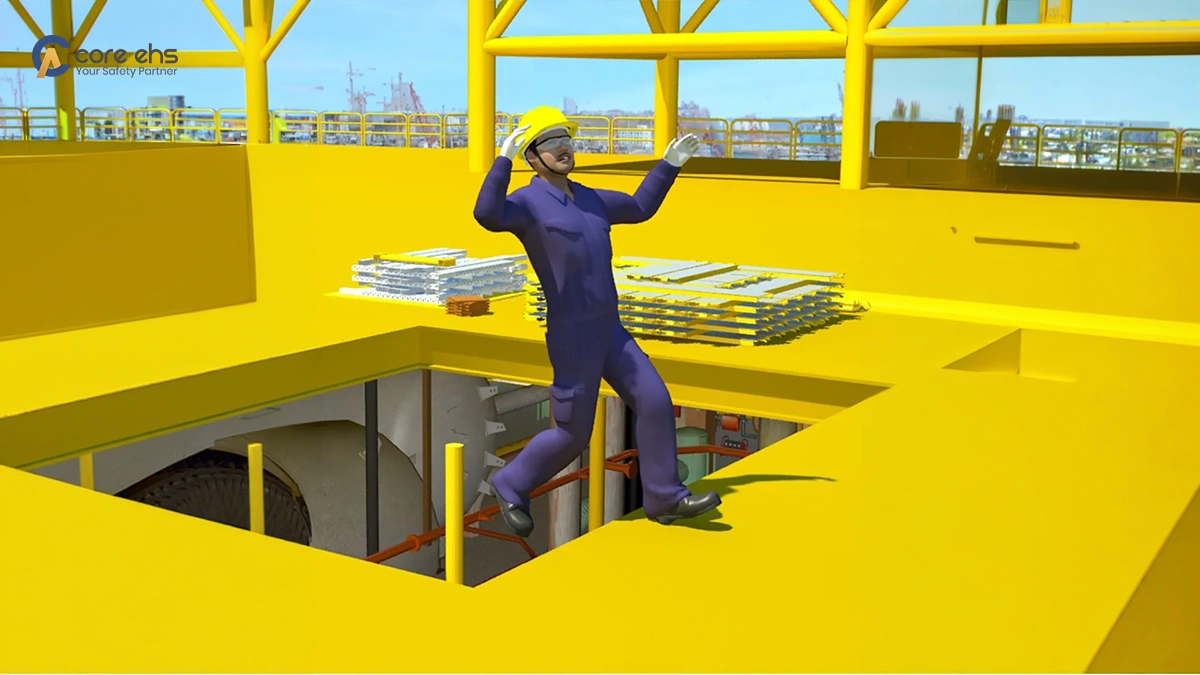
Open shafts, roof edges, and floor gaps without proper protection create high-risk zones.
6. Weather and Environmental Conditions
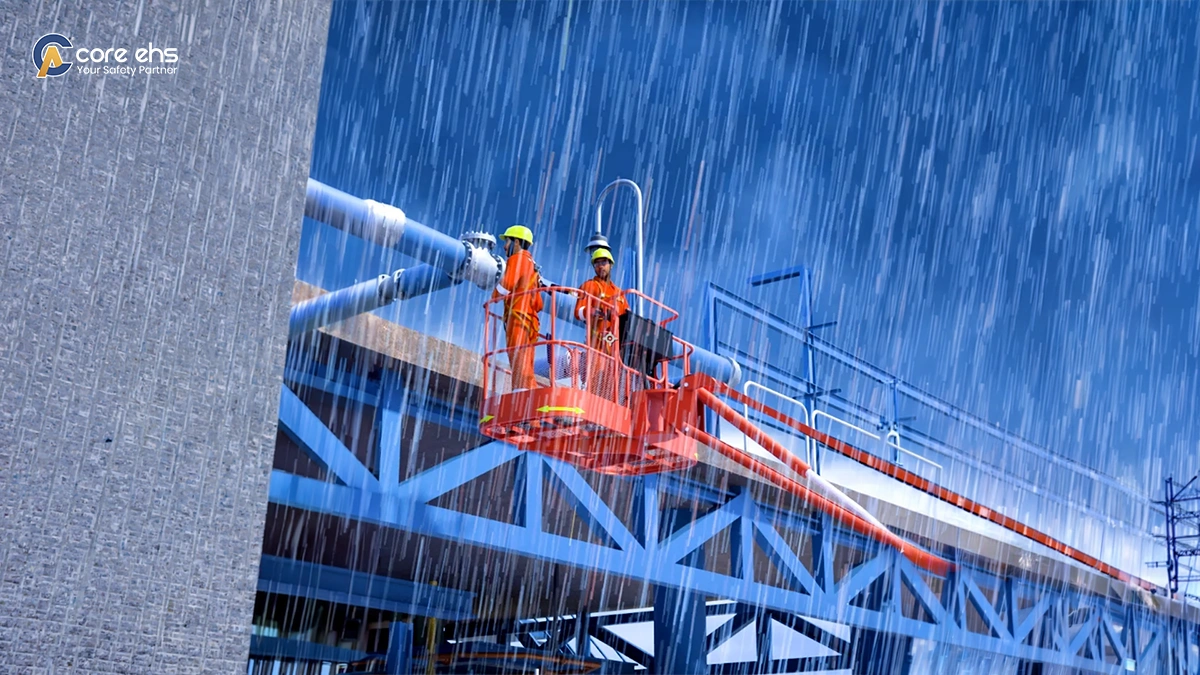
Wind, rain, and heat reduce stability and visibility. Offshore platforms and construction sites are particularly vulnerable.
7. Human Factors and Unsafe Behaviour
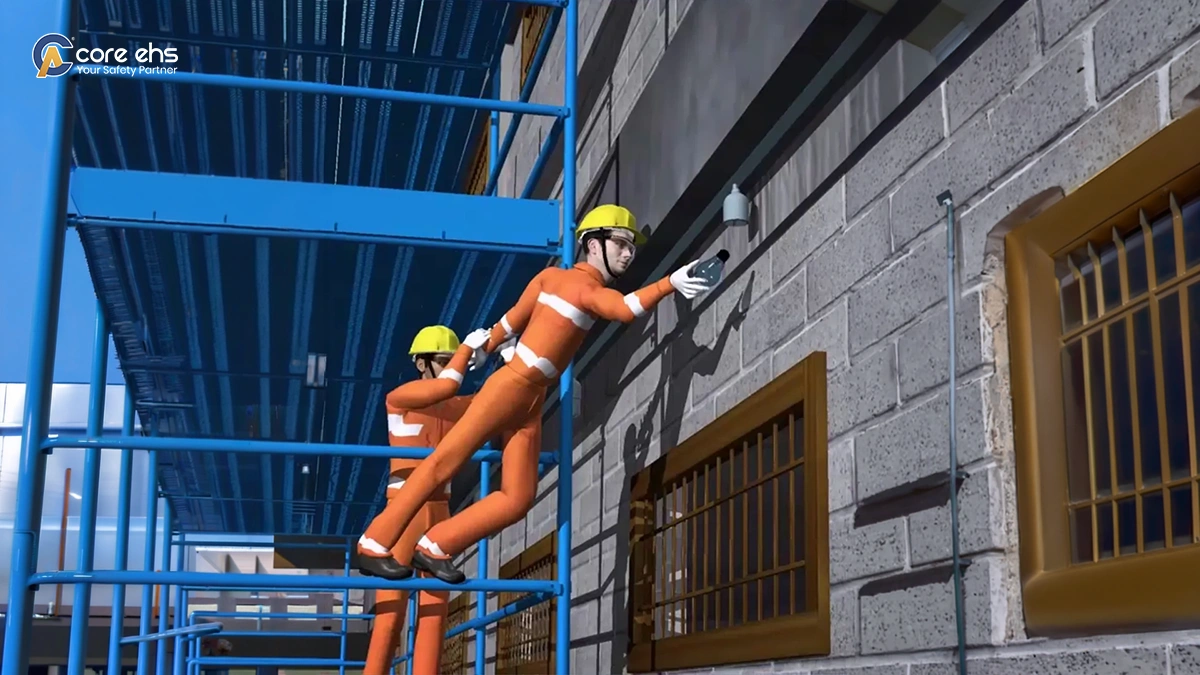
Fatigue, rushing work, or bypassing safety procedures often lead to accidents.
8. Inadequate Risk Assessment and Planning
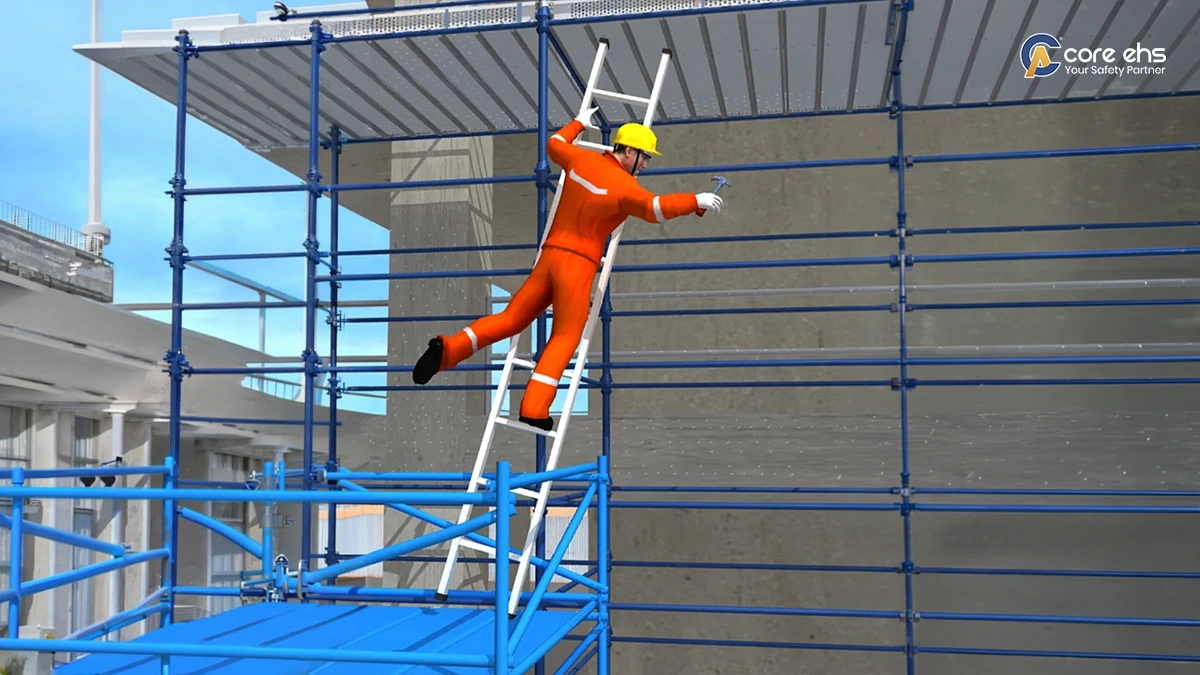
Poor planning results in unidentified hazards and insufficient control measures.
Root Causes of Work at Height Incidents
Beyond visible hazards, many incidents occur due to systemic failures, such as:
- Lack of supervision on-site
- Inadequate competency verification
- Weak permit-to-work systems
- Production pressure overrides safety priorities
Addressing these root causes is essential for long-term risk reduction.
Hierarchy of Controls for Work at Height Safety
Elimination
Avoiding working at height wherever possible by redesigning tasks.
Substitution
Using tools or methods that reduce exposure, such as extendable equipment.
Engineering Controls
Installing guardrails, working platforms, and access systems.
Administrative Controls
Implementing SOPs, permits, and supervision around risks.
PPE
Using harnesses, lanyards, and helmets when other controls are not sufficient.
Key Precautions for Working at Height (Actionable Guide)
1. Conduct Detailed Risk Assessment
Use Job Safety Analysis or HIRA to identify hazards before work begins.
2. Use Certified Access Equipment
Ensure ladders, scaffolds, and platforms meet safety standards.
3. Install Collective Protection Systems
Guardrails and safety nets protect multiple workers simultaneously.
4. Ensure Proper Fall Protection Systems
Use harnesses and lifelines where required.
5. Implement Permit to Work System
Control high-risk tasks through structured approvals.
6. Ensure Worker Training and Competency
Only trained personnel should perform work at height.
7. Emergency Rescue Planning
Prepare rescue procedures in case of a fall incident.
Work at Height Safety Checklist (Pre-Work Inspection)
Before starting work, ensure:
- Equipment is inspected and certified.
- Anchor points are verified.
- Weather conditions are safe.
- PPE is properly worn.
- Rescue plan is in place.
Industry-Specific Risks and Precautions
-
Construction Industry
High exposure to scaffolding and edge work. Requires strict supervision and fall protection systems.
-
Oil and Gas
Shutdown activities involve complex, elevated work. Requires permit systems and advanced monitoring.
-
Manufacturing Plants
Maintenance at height near machinery increases risk. Requires lockout-tagout integration.
-
Warehousing and Logistics
Working on racks and loading bays requires fall prevention and training.
Role of Technology in Work at Height Safety
Modern safety solutions are transforming how risks are managed:
- IoT wearables for worker monitoring
- Smart helmets with alerts
- Digital permit-to-work systems
- VR-based safety training simulations
These technologies help reduce human error and improve real-time safety visibility.
Real Case Example
A manufacturing plant reduced height-related incidents by implementing a digital permit system and mandatory training. Within six months, near-miss reporting increased while actual incidents decreased significantly.
Legal and Compliance Requirements
Organisations must follow safety standards such as:
- OSHA guidelines
- National safety regulations
- Industry-specific compliance frameworks
Compliance ensures both worker safety and legal protection.
Conclusion: Building a Zero-Fall Workplace
Preventing work at height incidents requires more than basic precautions. It demands a structured approach combining planning, training, supervision, and technology. Organisations that invest in safety not only protect their workforce but also improve operational efficiency and compliance.
Strengthen Your Work at Height Safety with CORE-EHS
At CORE-EHS, we help organisations reduce height-related risks through:
- Certified Work at Height Training Programs
- Digital Permit to Work Systems
- IoT-based safety monitoring solutions
- VR and simulation-based safety training
If you are looking to improve safety performance and prevent costly incidents, connect with our experts today for a customized solution.