 +91 72929 29159














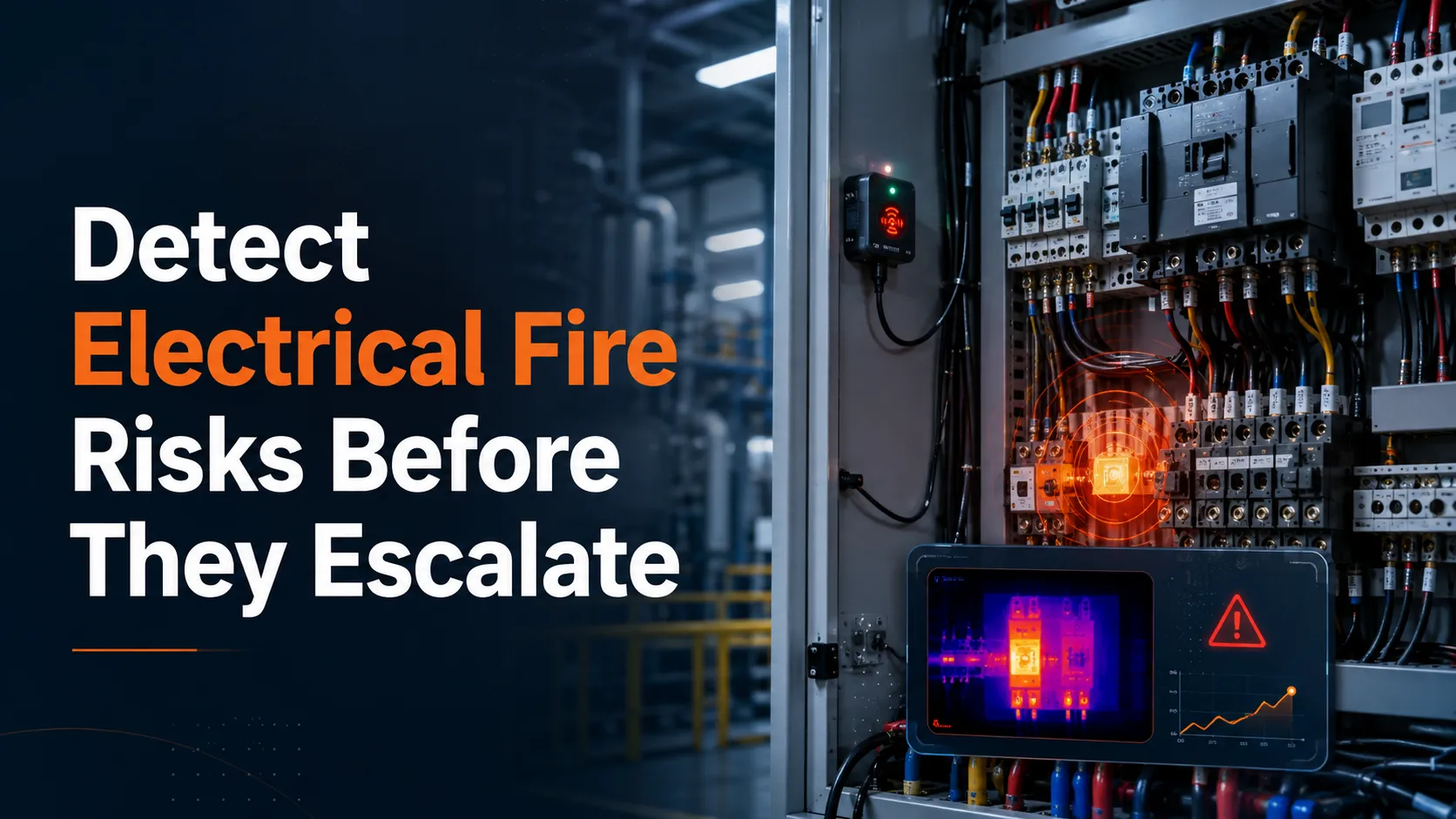
Electrical fires in industrial facilities rarely begin as dramatic events. More often, they develop small warning signs such as overheating components, loose connections, damaged insulation, overloaded circuits, or recurring electrical faults. That is why effective electrical fire prevention depends on identifying risk conditions before they escalate. Along with regular inspections and preventive maintenance, early detection and continuous visibility can help safety and maintenance teams respond faster, protect critical electrical assets, and reduce the likelihood of serious fire incidents.
What Causes Electrical Fires in Industrial Facilities?
Electrical fires in industrial facilities often start when electrical equipment operates under unsafe or deteriorating conditions. Common causes include loose connections, overloaded circuits, damaged insulation, overheating components, arcing, and poorly maintained electrical panels or switchgear. These problems can create excessive heat or electrical faults that may ignite nearby combustible materials if they are not identified in time.
In many plants, the risk also increases as equipment ages or operates continuously under changing loads. Dust, moisture, vibration, poor ventilation, and delayed maintenance can further affect electrical reliability.
A strong electrical fire prevention program should therefore focus not only on visible damage, but also on the underlying electrical hazards that can develop gradually inside panels, transformers, cables, and other critical electrical equipment.
What Are the Early Warning Signs of an Electrical Fire?
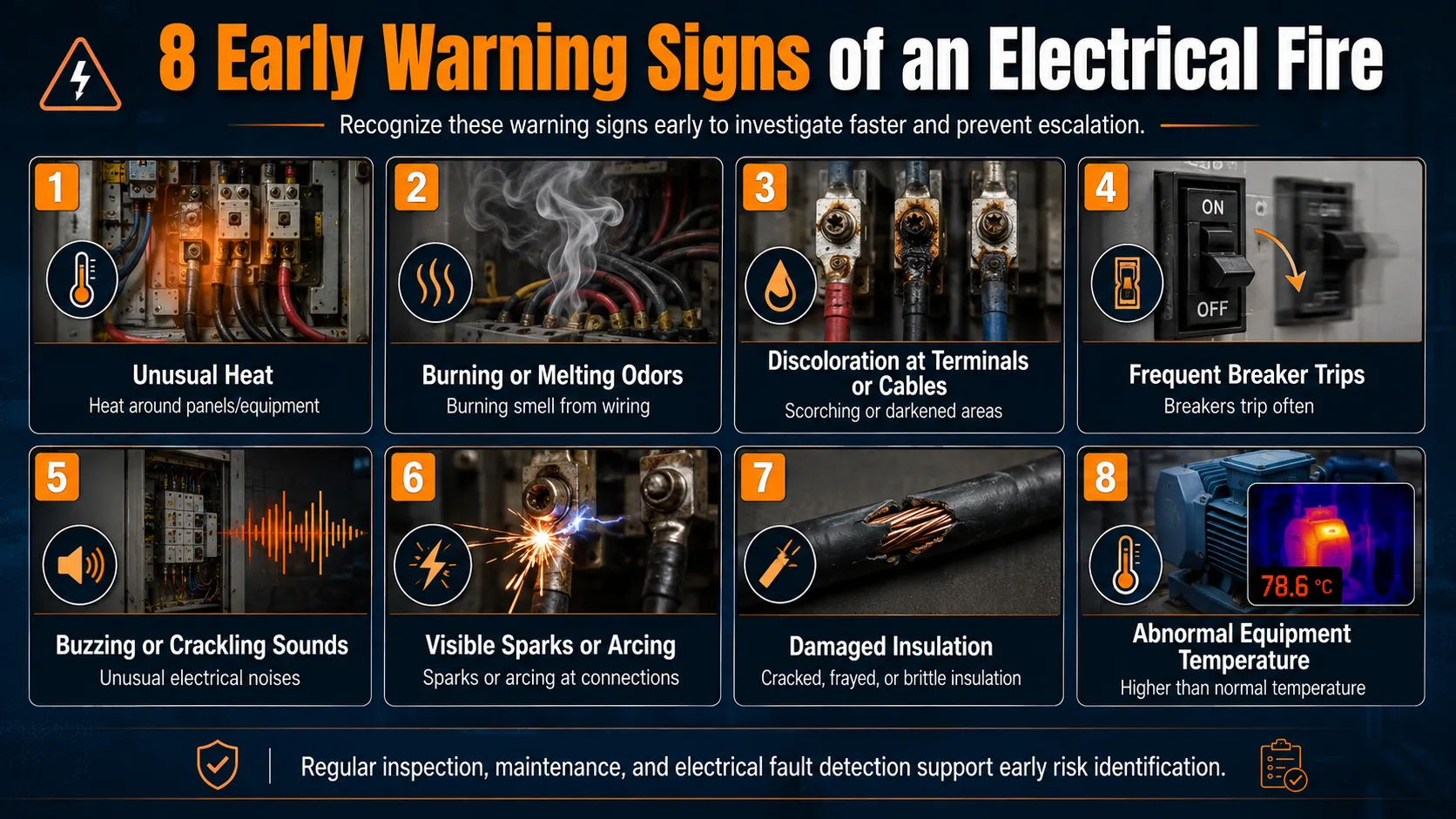
Electrical problems often show warning signs before they develop into a serious fire risk. Recognizing these signs early can give maintenance and safety teams valuable time to investigate and take corrective action.
Common warning signs include:
- Unusual heat around electrical panels or equipment
- Burning or melting odors
- Discoloration around terminals, cables, or panel components
- Frequent circuit breaker trips
- Buzzing, humming, or crackling sounds
- Visible sparks or signs of arcing
- Damaged or deteriorated insulation
- Repeated electrical faults or abnormal equipment temperatures
Some developing electrical hazards may not be obvious during routine visual checks. This makes regular inspection, maintenance, and appropriate electrical fault detection especially important for early risk identification.
How Can Electrical Fires Be Prevented in Industrial Facilities?
Effective electrical fire prevention starts with controlling the conditions that allow heat, faults, and equipment deterioration to develop. In industrial facilities, this requires a combination of sound electrical design, regular inspection, preventive maintenance, and safe operating practices.
Key prevention measures include:
- Inspecting electrical panels, cables, connections, and equipment at planned intervals
- Repairing loose, damaged, or overheated components promptly
- Avoiding circuit and equipment overloading
- Replacing worn cables and deteriorated insulation
- Maintaining proper ventilation around electrical panels and switchgear
- Using suitable protective devices and correctly rated electrical equipment
- Keeping electrical areas clean, dry, and free from unnecessary combustible materials
- Ensuring only competent personnel perform electrical work
- Monitoring critical electrical assets where additional visibility is required
No single control can eliminate every electrical risk. A strong electrical safety program combines engineering controls, electrical preventive maintenance, inspection, trained personnel, and timely corrective action.
Why Periodic Electrical Inspections May Not Provide Continuous Risk Visibility
Periodic inspections are essential for identifying visible defects, maintenance needs, and compliance gaps in electrical systems. However, they only provide a snapshot of equipment condition at the time of inspection.
Electrical conditions can change between scheduled checks. Load fluctuations, loose connections, insulation deterioration, vibration, rising temperatures, or developing faults may appear after an inspection has been completed.
This creates a visibility gap, especially around critical assets such as electrical panels, transformers, and switchgear. Electrical preventive maintenance remains essential, but combining it with electrical condition monitoring can give maintenance and safety teams better visibility into changing equipment conditions between inspections.
What Is Electrical Condition Monitoring?
Electrical condition monitoring is the ongoing process of observing the condition of electrical equipment to identify abnormal changes before they develop into serious failures. It gives maintenance and safety teams better visibility into how critical assets are performing over time.
Depending on the equipment and monitoring method, teams may track conditions such as temperature rise, unusual electrical behaviour, insulation deterioration, or other signs of developing faults.
This approach is especially useful for assets such as electrical panels, transformers, switchgear, and substations. When combined with regular inspection and maintenance, an electrical monitoring system can support earlier investigation, faster corrective action, and more proactive risk management.
How Does IoT Help With Electrical Fire Prevention?
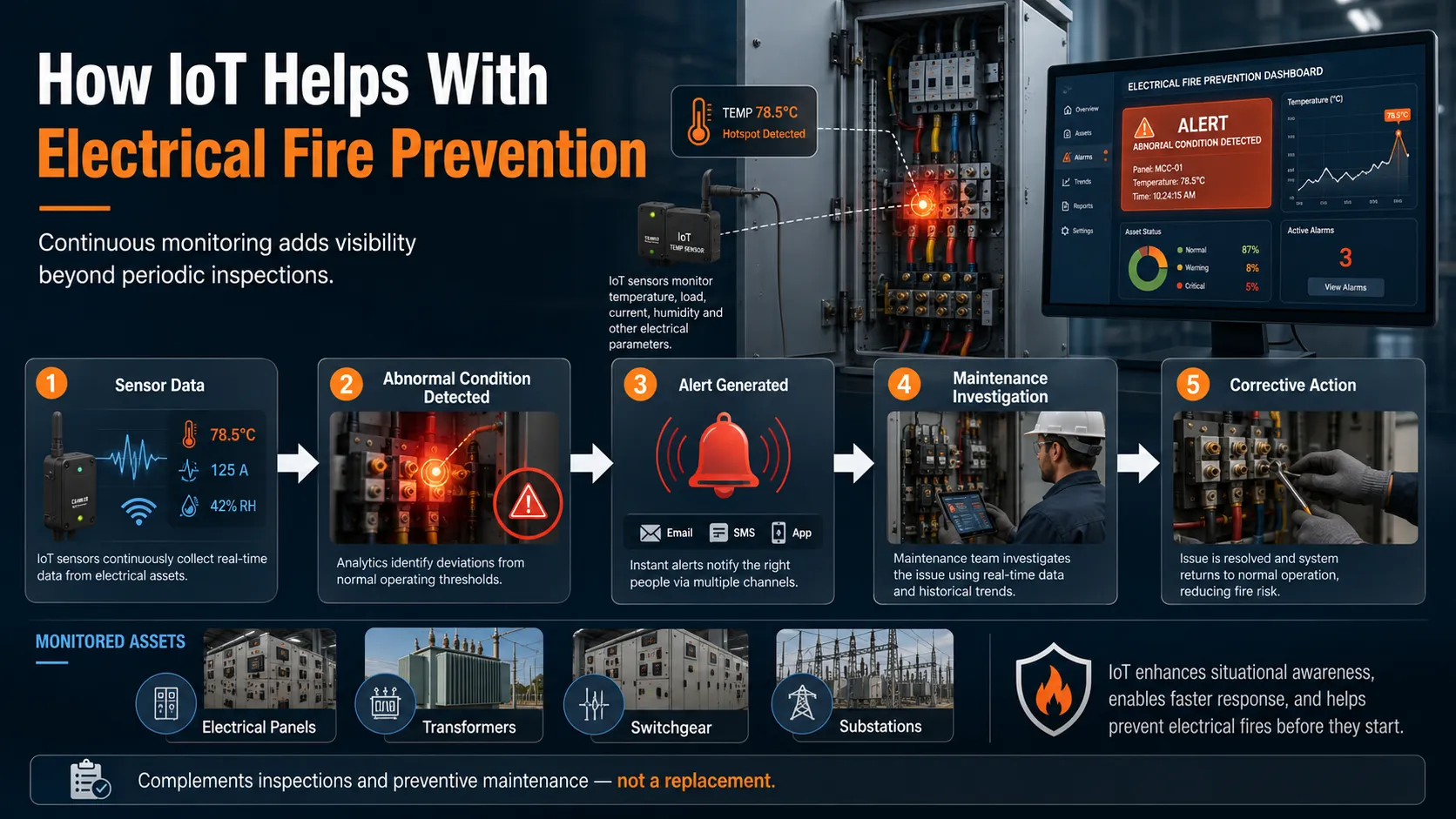
IoT can strengthen electrical fire prevention by providing continuous visibility into critical electrical assets and alerting teams when abnormal conditions begin to develop. Instead of relying only on scheduled checks, sensors can monitor equipment performance and highlight changes that may require attention.
A typical IoT-based monitoring flow looks like this:
Sensor Data → Abnormal Condition Detected → Alert Generated → Maintenance Investigation → Corrective Action
Depending on the application, IoT electrical monitoring can be used across electrical panels, transformers, switchgear, and substations to track conditions such as unusual temperature rise or other electrical abnormalities.
This does not replace inspections or preventive maintenance. It adds another layer of visibility, allowing safety and maintenance teams to identify developing risks earlier and respond before the condition becomes more serious.
Periodic Inspection vs Continuous Electrical Monitoring
Periodic inspections and continuous monitoring serve different purposes, and both have an important role in electrical safety. An inspection gives teams a detailed view of equipment condition at a specific point in time, while continuous monitoring provides ongoing visibility between those scheduled checks.
| Periodic Inspection | Continuous Monitoring |
| Point-in-time assessment | Ongoing condition visibility |
| Performed at scheduled intervals | Monitors selected conditions continuously |
| Relies on physical inspection and testing | Uses sensors and digital monitoring |
| Identifies observed defects | Can flag developing abnormalities |
| Supports preventive maintenance | Supports earlier investigation and response |
For stronger electrical fire prevention, continuous monitoring should complement, not replace, regular inspection and electrical preventive maintenance.
Where Can Continuous Electrical Monitoring Be Used?
Continuous electrical monitoring can be applied across critical assets where overheating, faults, or equipment deterioration could create safety or operational risks.
Common applications include:
- Electrical panels and distribution boards
- Transformers
- Substations
- Motor control centers
- Critical power distribution equipment
- Other high-risk electrical assets identified through site risk assessment
The right monitoring approach depends on the equipment, operating environment, and risk profile. Used alongside inspections and maintenance, electrical panel monitoring and transformer monitoring can improve visibility into changing equipment conditions.
How VoltSafe-IoT Supports Early Electrical Risk Detection
VoltSafe-IoT helps safety and maintenance teams move from periodic checks toward more continuous visibility of critical electrical assets. The system can monitor equipment such as electrical panels, transformers, and substations for developing conditions including overheating, arcing, and insulation-related failures.
When an abnormal condition is detected, alerts can help responsible teams investigate the issue earlier and plan corrective action before the risk becomes more serious.
By combining IoT electrical monitoring with routine inspection and maintenance, VoltSafe-IoT supports a more proactive approach to electrical fire prevention and electrical risk management.
Building a More Proactive Electrical Fire Prevention Strategy
Effective electrical fire prevention requires more than a single control. Safe electrical design, regular inspection, preventive maintenance, competent personnel, timely corrective action, and continuous risk visibility all play an important role in reducing electrical hazards.
At CORE-EHS, our approach combines practical EHS expertise with digital safety technology to help organisations move from reactive action toward more proactive risk management. With experience supporting industrial organisations across diverse sectors, we focus on solutions that strengthen visibility, enable earlier intervention, and support safer day-to-day operations.
Technologies such as VoltSafe-IoT add another layer to this approach by helping teams continuously monitor critical electrical assets and identify developing abnormalities sooner.
The objective is not simply to collect more data. It is to give safety and maintenance teams the right information at the right time so they can act before a developing electrical risk becomes a serious incident.