In the world of workplace safety and compliance, the difference between EHS and HSE is one of the most commonly searched and misunderstood topics.
Safety professionals, engineers, students, and even senior management often hear both terms used interchangeably, leading to confusion about whether they mean the same thing or represent different safety systems.
Simply put, EHS and HSE are closely related concepts that focus on protecting people, the environment, and organisations from harm. However, the way these terms are used can vary based on geography, industry practices, and organisational structure. Understanding this distinction is important for compliance, reporting, audits, and communication across global operations.
This guide explains the difference between EHS and HSE in clear, practical language, with real-world context to help you understand when and why each term is used.
What Does EHS Stand For? (Environment, Health, and Safety)
EHS stands for Environment, Health, and Safety. It is a structured approach used by organisations to manage environmental impact, protect employee health, and ensure workplace safety through policies, procedures, and measurable controls.
In an EHS framework, environmental responsibilities such as waste management, emissions control, energy usage, and regulatory reporting are treated as an integral part of safety management. Health aspects focus on occupational illnesses, ergonomics, industrial hygiene, and long-term worker well-being, while safety covers hazard identification, risk assessment, incident prevention, and emergency response.

The term EHS is widely used in the United States, Asia-Pacific, and by multinational corporations operating across multiple regions. Many global companies prefer EHS because it aligns well with integrated management systems, sustainability goals, and ESG reporting. In practice, EHS is often supported by digital EHS management systems that centralise incident reporting, audits, inspections, and compliance tracking under one platform.
What Does HSE Stand For? (Health, Safety, and Environment)
HSE stands for Health, Safety, and Environment. It is a safety management approach that places primary emphasis on protecting workers from injuries and illnesses, while also addressing environmental protection and regulatory compliance.
In an HSE structure, health and safety are typically prioritised at the operational level. This includes safe work procedures, permit-to-work systems, toolbox talks, personal protective equipment, contractor safety, and emergency preparedness. Environmental responsibilities such as pollution control, waste handling, and compliance with local environmental laws are also covered, but they usually follow the health and safety focus.
The term HSE is most commonly used in the United Kingdom, Europe, the Middle East, and other Commonwealth regions. It is deeply embedded in regulatory language, industry standards, and site-level safety roles such as HSE officers and HSE supervisors. In many organisations, HSE reflects a strong compliance-driven approach aimed at meeting statutory safety requirements and preventing workplace incidents.
EHS vs HSE – Key Differences Explained Clearly
To understand the difference between EHS and HSE, it helps to compare how these terms are used in real organisational settings. While both aim to achieve the same outcome of safe people, compliant operations, and protected environments, their emphasis and usage differ slightly.
Below is a simple comparison table that highlights the key differences between EHS and HSE in a practical, easy-to-understand format.
| Basis of Comparison | EHS (Environment, Health, and Safety) | HSE (Health, Safety, and Environment) |
| Full Form | Environment, Health, and Safety | Health, Safety, and Environment |
| Primary Focus | Environmental impact integrated with health and safety | Worker health and operational safety first |
| Typical Usage Regions | United States, Asia-Pacific, global enterprises | UK, Europe, Middle East, Commonwealth countries |
| Management Approach | Strategic and system-driven | Operational and compliance-driven |
| Corporate Alignment | Often linked with ESG, sustainability, and corporate governance | Strongly aligned with statutory and regulatory compliance |
| Common Job Titles | EHS Manager, EHS Head, EHS Lead | HSE Officer, HSE Supervisor, HSE Manager |
| Industry Preference | Multinational corporations, manufacturing, chemicals, technology | Construction, oil and gas, infrastructure, heavy industry |
In summary, the difference between EHS and HSE lies more in terminology, regional preference, and organisational emphasis rather than in safety objectives. Both frameworks aim to prevent incidents, protect workers, and ensure environmental responsibility when implemented effectively.
Are EHS and HSE the Same in Practice?
In day-to-day operations, EHS and HSE function in very similar ways. In practice, both frameworks involve:
- Identifying workplace hazards and assessing risks
- Preventing incidents through controls and safe work procedures
- Protecting worker health and well-being
- Ensuring compliance with applicable safety and environmental laws
- Conducting safety training, audits, inspections, and emergency preparedness activities
The key differences are mainly related to structure and language, not execution:
- EHS frameworks often integrate environmental performance metrics, sustainability goals, and corporate-level reporting
- HSE frameworks typically emphasise site-level controls, permits, inspections, and regulatory compliance
From the perspective of employees, contractors, and regulators, there is little operational difference between EHS and HSE when systems are implemented effectively. What matters most is not the terminology used, but how consistently risks are managed, incidents are reported, and corrective actions are implemented and closed.
Which Term Should Your Organization Use – EHS or HSE?
Choosing between EHS and HSE is less about right or wrong and more about alignment with your organisation’s context. To make this decision easier, consider the following points:
- Geographic presence:
- Use EHS if your operations span the United States, Asia-Pacific, or multiple global regions
- Use HSE if your primary operations are in the UK, Europe, or the Middle East
- Regulatory environment:
- EHS is commonly used where environmental compliance and corporate sustainability reporting are strongly integrated
- HSE is often preferred where local safety regulations and statutory compliance dominate
- Organisational structure:
- EHS fits well with centralised, system-driven safety management models
- HSE aligns with site-focused, operational safety teams
- Client and stakeholder language:
- Many multinational clients expect EHS terminology in reports and audits
- Local contractors and regulators may be more familiar with HSE terminology
In practice, many organisations use both terms interchangeably while maintaining one standardised safety management system. What matters most is consistency, clarity, and effective implementation across all sites and teams.
Role of Digital Systems in EHS and HSE Management

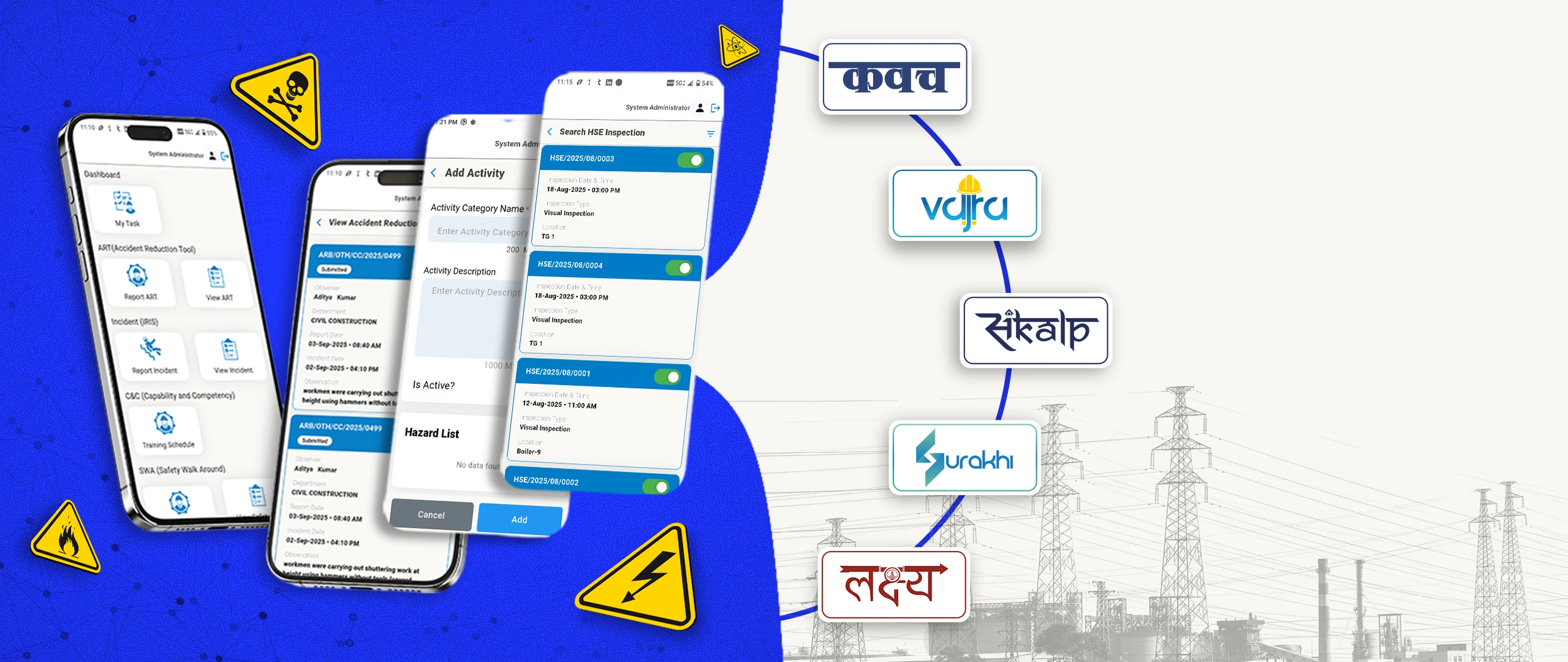
Whether an organisation uses the term EHS or HSE, modern safety performance increasingly depends on how well systems are digitised. Digital platforms help standardise processes, improve visibility, and ensure consistent implementation across sites and regions.
Key ways digital systems support EHS and HSE management include:
- Centralised incident reporting to capture near misses, unsafe acts, and accidents in real time
- Structured hazard identification and risk assessment workflows to reduce reliance on manual paperwork
- Digital audits and inspections with automated checklists and evidence capture
- Real-time corrective and preventive action tracking to ensure timely closure
- Analytics and dashboards that provide actionable insights for management decisions
By using digital EHS or HSE management software, organisations can move beyond terminology differences and focus on measurable safety outcomes, regulatory compliance, and continuous improvement across operations.
How CORE-EHS Adds Value to EHS and HSE Management
At CORE-EHS, we help organisations move beyond terminology and focus on what truly matters, safer workplaces and stronger compliance. Our digital safety solutions are designed to support both EHS and HSE frameworks by simplifying incident reporting, hazard identification, audits, and corrective action tracking. By combining practical safety expertise with technology-driven systems, CORE-EHS enables organisations to improve visibility, standardise processes, and achieve measurable safety performance across sites and regions.
+91 72929 29159