 +91 72929 29159













3D Animated Safety Training is revolutionizing how we approach occupational health and safety across various industries.
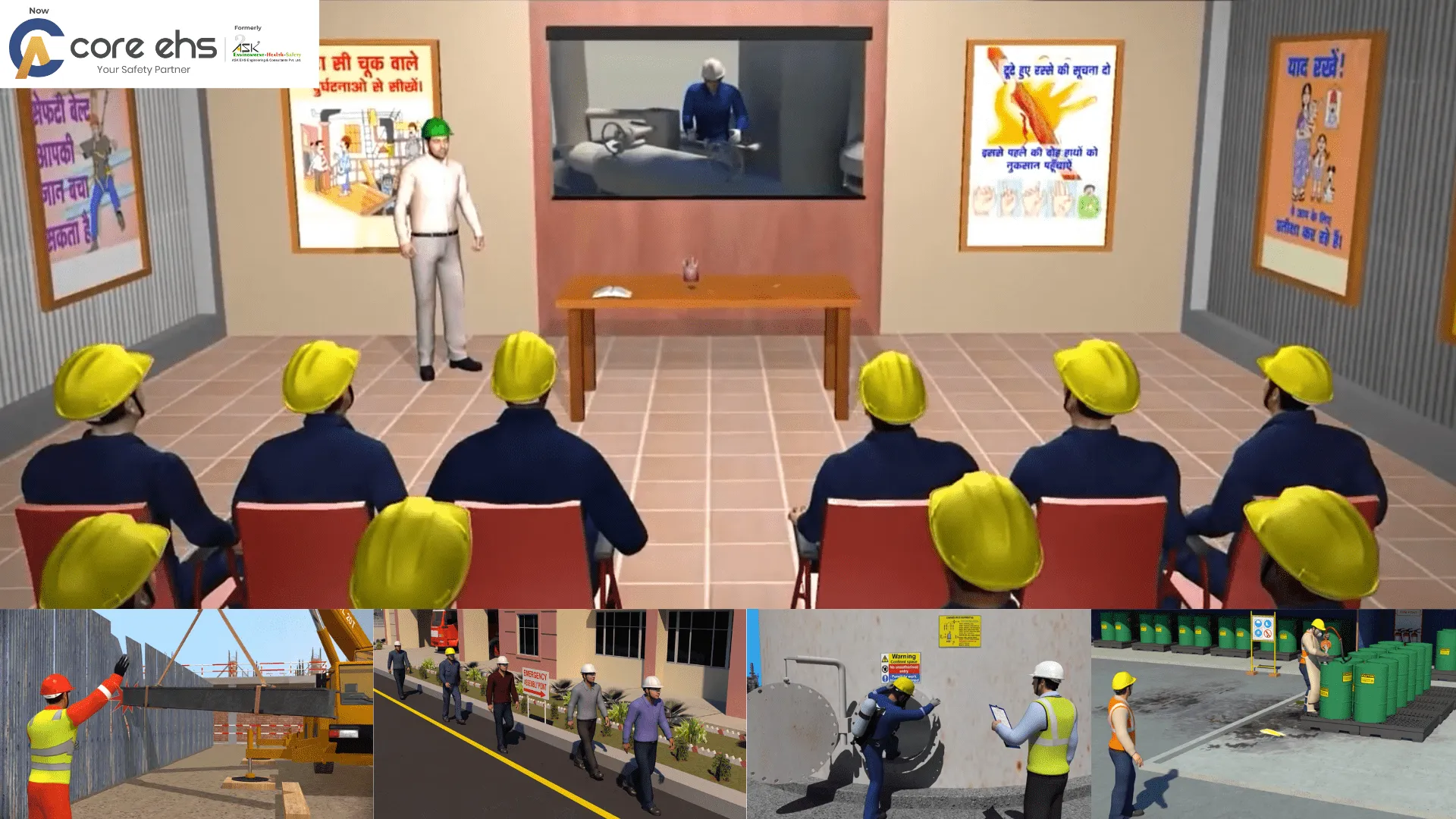
3D Animated Safety Training is redefining how organizations educate their workforce on workplace hazards, safe work procedures, and emergency response. Traditional safety training methods often struggle with low engagement and poor knowledge retention, especially in high-risk industries. Visual, scenario-based learning bridges this gap by helping workers see risks before they face them in real life.
By using realistic animations that replicate actual work environments, 3D safety animation training enables organizations to improve hazard awareness, reduce unsafe acts, and strengthen safety compliance across sites and industries.
What Is 3D Animated Safety Training?
3D Animated Safety Training is a visual training method that uses computer-generated environments to demonstrate workplace hazards, unsafe behaviors, and correct safety procedures in a controlled, risk-free setting.
These animations recreate real job conditions, equipment, and operational processes so workers can understand:
-
How incidents occur
-
What unsafe actions look like
-
How correct decisions prevent injuries
Because learning is visual and scenario-driven, workers understand complex safety concepts faster and retain them longer compared to text-based or lecture-only training.
Why 3D Animated Safety Training Video Is More Effective
Traditional safety training relies heavily on presentations, manuals, and verbal instructions. While informative, these methods often fail to translate knowledge into safe behavior on site.
3D safety animation training improves effectiveness by:
-
Making hazards visible and relatable
-
Allowing safe simulation of high-risk tasks
-
Delivering consistent training across locations
-
Supporting multilingual and diverse workforces
Visual learning reduces ambiguity and helps workers recall correct actions during real work situations.
3D Animated Safety Training vs Traditional Safety Training
| Training Method | Engagement Level | Risk-Free Learning | Knowledge Retention |
|---|---|---|---|
| Classroom lectures | Low | Yes | Low |
| PPT-based training | Low | Yes | Very low |
| 2D safety videos | Medium | Yes | Medium |
| 3D safety animation training video | High | Yes | High |
This makes 3D animation video one of the most effective formats for safety-critical learning.
Key Applications of 3D Safety Animation Training
1. Confined Space Safety Training
Confined space work involves hazards such as oxygen deficiency, toxic gases, and limited rescue access. 3D safety animation training allows workers to experience these risks visually without real exposure. Scenarios can be customized for tanks, pits, silos, tunnels, and underground spaces, helping workers understand entry procedures, monitoring requirements, and emergency response.
2. Working at Height Safety Training
Falls remain a leading cause of serious workplace injuries. 3D animations demonstrate correct harness usage, anchorage points, unsafe movements, and fall consequences in a realistic but safe environment. Workers gain clarity on risks before working on ladders, scaffolding, rooftops, or elevated platforms.
3. Material Handling and Ergonomics
Improper lifting techniques and unsafe equipment handling lead to long-term injuries and productivity loss. 3D safety animation training visually demonstrates correct lifting postures, machinery operation, and unsafe practices that are difficult or unsafe to recreate during live training.
4. Visitor Safety Induction Programs
Visitor induction is critical in high-risk facilities. Animated safety training videos ensure consistent safety communication for contractors, auditors, and guests. Visual layouts, restricted zones, PPE requirements, and emergency exits are easier to understand through animation, especially for first-time visitors.
5. Employee Induction Training
New employees absorb safety expectations faster when they can see real-world scenarios. 3D safety animation training during induction helps establish a safety-first mindset from day one while standardizing safety messaging across departments and locations.
6. Incident Recreation for Learning
Past incidents can be recreated using 3D animation to analyze unsafe acts, procedural gaps, and root causes. These visual reconstructions allow teams to learn from real events without blame while reinforcing preventive actions and safer decision-making.
Industries Using 3D Safety Animation Training
3D safety animation video training is widely adopted across:
-
Construction and infrastructure
-
Manufacturing and engineering
-
Oil, gas, and energy
-
Warehousing and logistics
-
Power plants and utilities
-
Healthcare and laboratories
Each industry benefits from customized animations aligned with its specific hazards, processes, and compliance requirements.
Supporting Safety Standards and Compliance
3D safety animation training supports alignment with:
-
OSHA safety requirements
-
ISO 45001 occupational health and safety standards
-
Contractor safety management systems
-
Site induction and permit-to-work processes
Visual demonstrations make safety standards easier to understand, remember, and follow on site.
When Should Organizations Adopt 3D Safety Animation Training?
Organizations should consider adopting 3D safety animation training when:
-
Incident or near-miss rates remain high
-
Workforce includes multiple languages or literacy levels
-
Traditional training fails to engage workers
-
Tasks involve high risk or complex procedures
-
Safety behavior needs continuous reinforcement
Conclusion
3D safety animation training is no longer a trend. It is a practical and effective solution for improving workplace safety in high-risk environments. By helping workers visualize hazards, understand consequences, and practice correct actions before entering real work conditions, organizations can significantly reduce incidents and strengthen safety culture.
When combined with animated safety training videos tailored to actual site risks, this approach transforms safety training from a compliance exercise into a meaningful learning experience that protects people and operations.