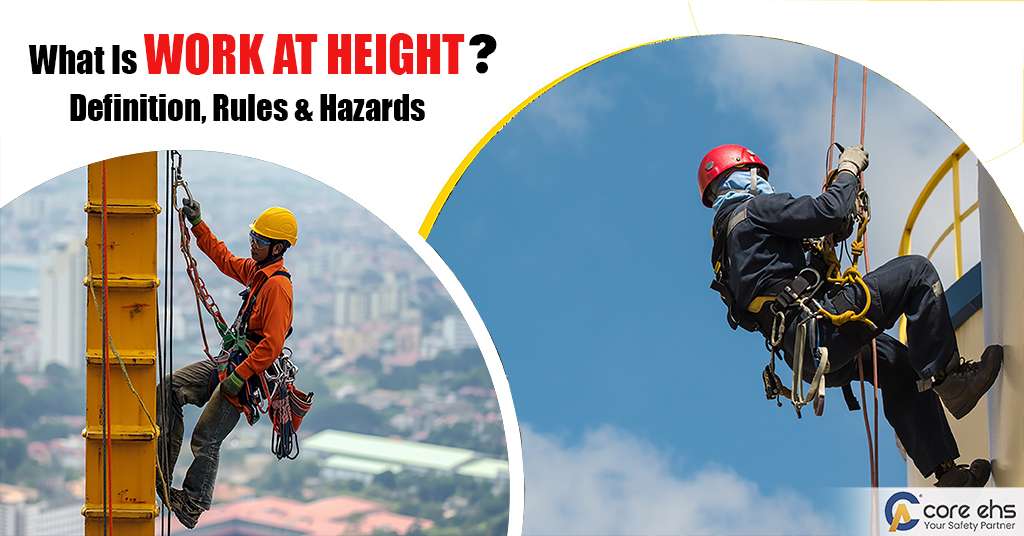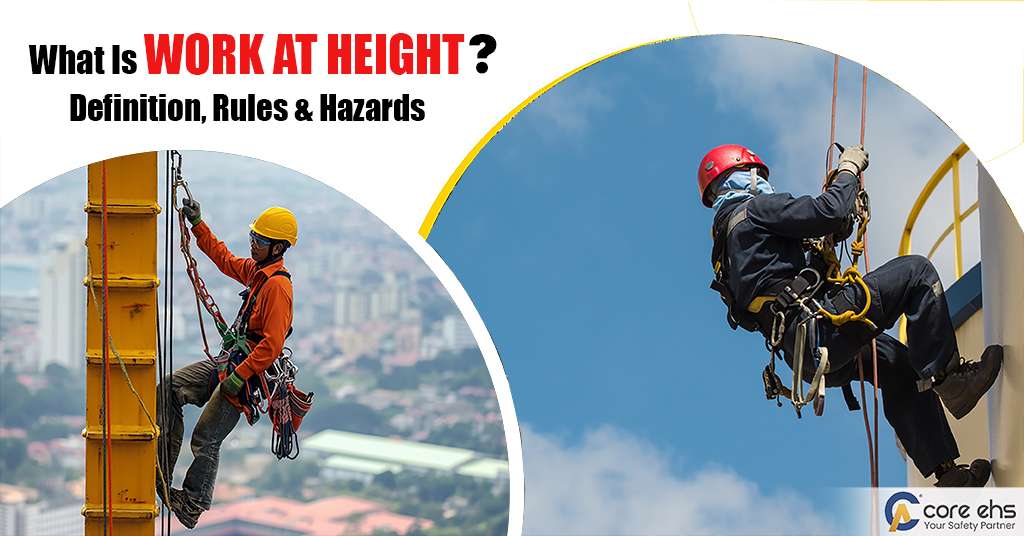
Work at height means performing any task where a worker could fall and get injured if proper safety controls are not in place. According to OSHA, work at height begins at 4 feet in general industry and 6 feet in construction. Under the Indian Factories Act and state rules, any job done above ground level, near open edges or fragile surfaces is considered working at height. Understanding these definitions is essential because falls remain one of the leading causes of workplace injuries worldwide.
Knowing what is work at height helps employers plan safety measures, train workers and ensure full compliance with legal requirements. It is a critical element of workplace safety for construction, maintenance, manufacturing, telecom, utilities and industrial operations.
Definition of Work at Height
Work at height means performing any task where a person could fall from one level to another and suffer an injury if safety measures are not applied. This includes working on ladders, scaffolds, rooftops, elevated platforms, mobile towers, open edges, fragile surfaces or near openings.
According to leading authorities:
OSHA defines work at height at 4 feet in general industry and 6 feet in construction.
ILO considers any job where a worker could fall from one level to another as working at height.
Indian Factories Act classifies any work above ground level or close to openings, pits or edges without guardrails as work at height.
Understanding the working at height definition helps safety managers identify hazards and apply the right fall protection systems before starting work.
Work at Height Definition as per OSHA
OSHA defines work at height as any job performed:
4 feet or more above ground in general industry
6 feet or more in construction
10 feet or more on scaffolding
OSHA requires employers to provide fall protection systems such as guardrails, safety nets or personal fall arrest systems. This clear definition helps safety managers determine when fall protection is legally mandatory.
Work at Height Standard (India + Global)
Work at height standards refer to rules, guidelines, and legal requirements that ensure safety during elevated work. Standards from OSHA, ILO, ISO 45001.
Indian Factories Act require employers to identify fall hazards, provide safe access, use guardrails, and ensure proper training. These standards help companies prevent falls and ensure full compliance during safety audits.
What is Considered Work at Height in the Workplace?
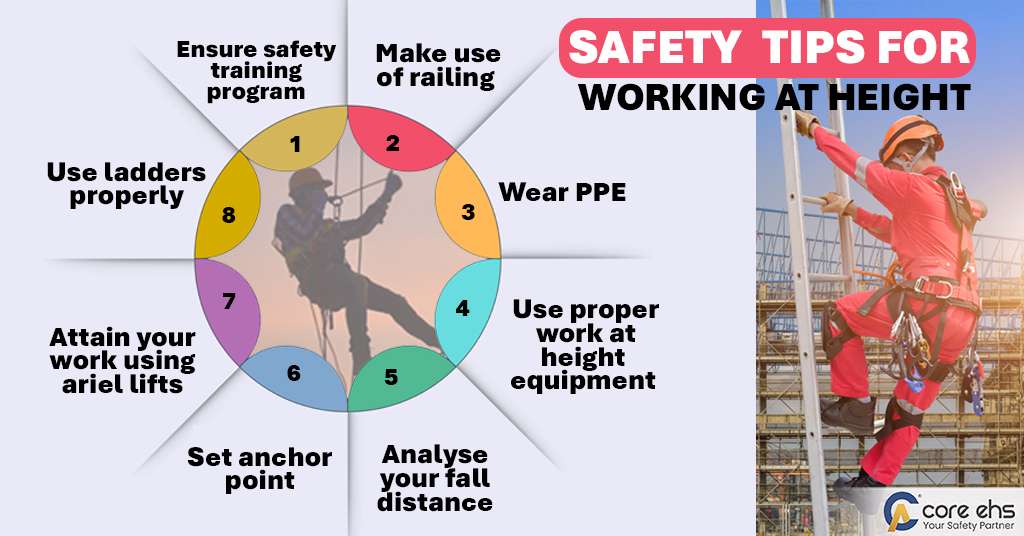
Work at height refers to any activity where a person works above ground level and could fall and get injured. This includes working on ladders, scaffolds, rooftops, towers, cranes, mobile elevated platforms, near open edges, on fragile roofs or around floor openings where no protective barriers are installed.
Safety regulations consider work at height not only when someone is high above the ground but also when they could fall into a hole, pit, shaft or through a fragile surface.
Recognizing what is considered work at height helps organizations plan safety controls, conduct risk assessments, allocate proper PPE and assign trained workers for elevated tasks.
Common Work at Height Examples Across Industries
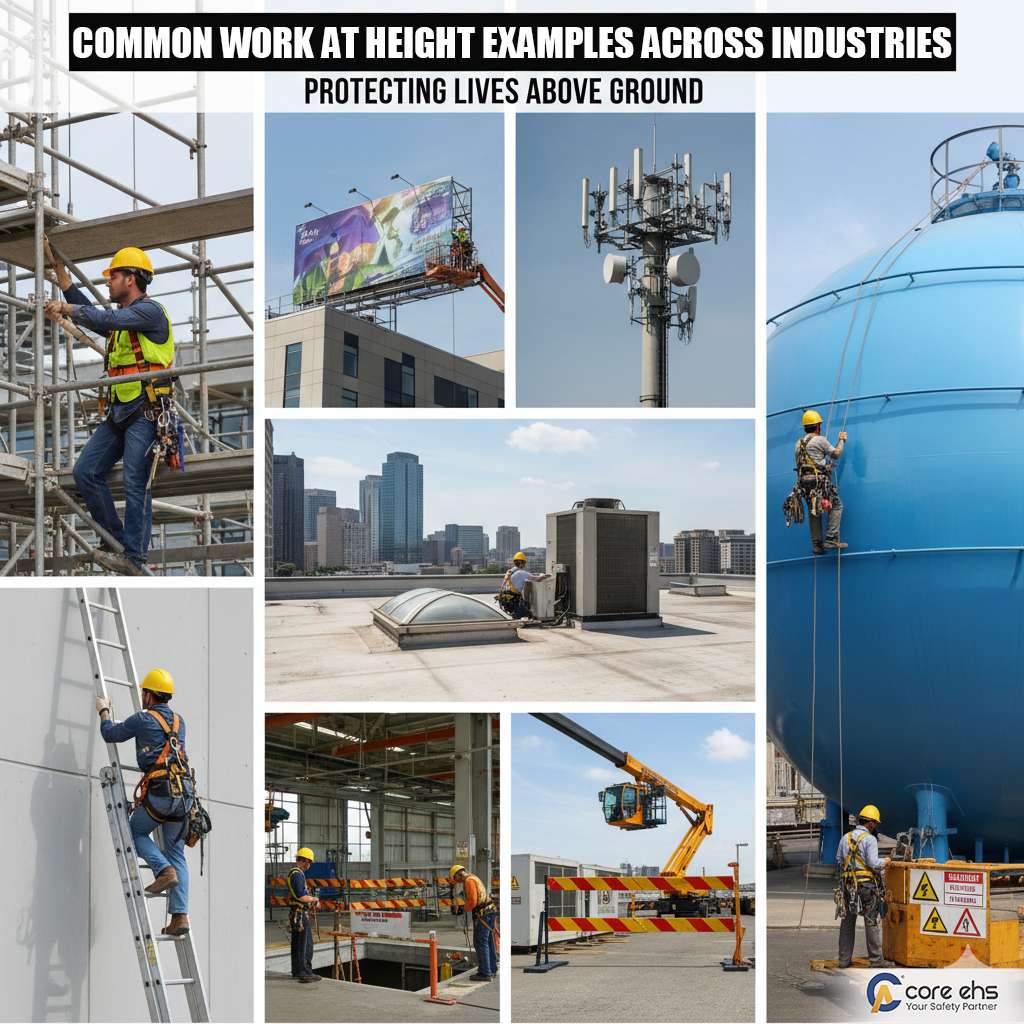
Work at height fall protection examples include tasks where there is a risk of a fall. These activities are common in construction, maintenance, electrical work, oil and gas, telecom, manufacturing and facility operations.
Common examples include:
Working on scaffolding or mobile towers
Climbing or working from ladders
Repairing or cleaning rooftops
Installing lights, CCTV or signage
Painting tall structures, chimneys or tanks
Working on cranes, towers or telecom poles
Performing work near open edges, pits or fragile surfaces
These tasks appear routine but carry high fall risk. Even short-duration work at height requires proper planning and protective equipment.
What Are the Major Work at Height Hazards?
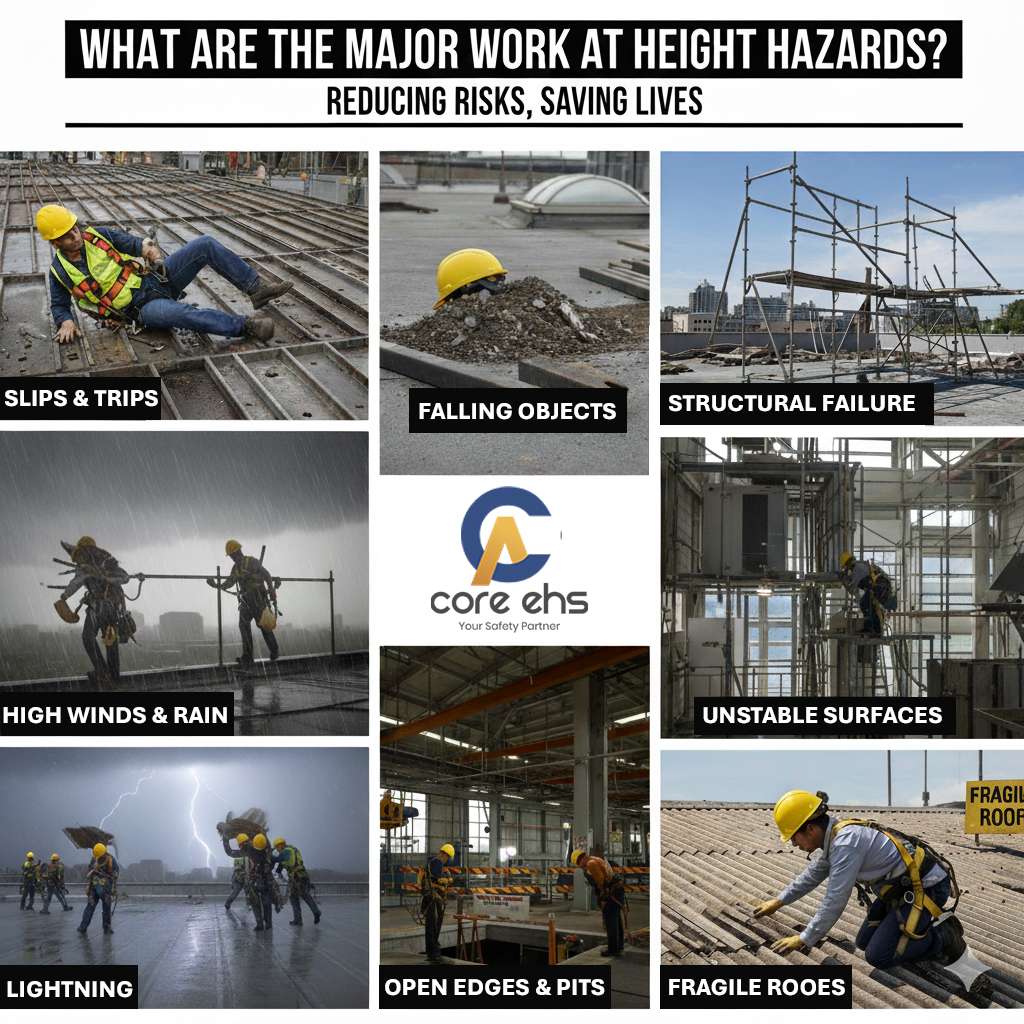
Hazards of working at height are risks that can cause injuries or fatalities when work is performed above ground. Falls from height are among the top causes of workplace deaths globally.
Major hazards include:
Slips or trips on slippery or unstable surfaces
Falling tools, materials or debris
Structural failure of scaffolding or fragile roofs
Working in high wind, rain or low visibility
Poor lighting or cluttered work areas
Incorrect use of ladders or access equipment
Identifying hazards early and using proper PPE, supervision and safe work procedures can prevent serious incidents.
Working at height Safety Rules and Control Measures
Work at height safety depends on applying the right control measures before any task begins. As per the ILO, OSHA, and the Indian Factories Act, employers must follow a clear hierarchy of controls to prevent falls.
Key control measures include:
- Risk assessment: Identify hazards and evaluate risks before starting work.
- Permit to work: Use formal permits for high-risk jobs to ensure safety checks are done.
- Safe access: Provide guardrails, ladders, platforms, and stable working surfaces.
- Fall protection: Use safety harnesses, lifelines, anchor points, and safety nets.
- Training: Ensure all workers are trained and competent to work at height.
- Supervision: Assign experienced supervisors to monitor the work.
- Weather checks: Avoid work during strong winds, rain, or poor visibility.
Following these working at height safety control measures reduces the risk of accidents and improves safety performance. It also ensures compliance with legal standards. Employers should regularly review and update their procedures to match global best practices and site conditions. Prioritizing these safety rules protects workers and helps build a strong safety culture.
Essential PPE and Equipment for Work at Height Safety
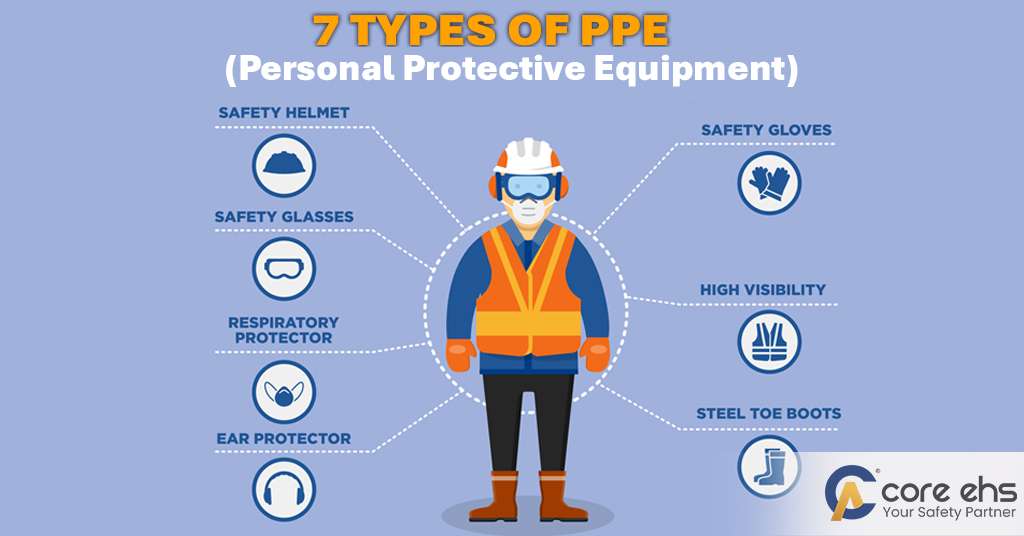
Work at height PPE protects workers from serious injuries. Regulations require employers to provide suitable PPE and ensure correct usage.
Essential equipment includes:
Safety helmets to protect against falling objects
Full-body safety harnesses
Lanyards, lifelines and shock absorbers
Non-slip safety footwear
Protective gloves and clothing
Guardrails, barricades and toe boards
Regular inspection, training and maintenance of PPE are essential for safe working at height.
Global Standards and Legal Requirements for fall protection systems
Understanding legal requirements helps companies stay compliant.
Key requirements:
Conduct risk assessments before work at height
Provide guardrails or fall protection at required height thresholds
Ensure safe access and egress
Use personal fall arrest systems where needed
Train workers and maintain competence
Inspect equipment regularly
Applying these rules reduces fall risks and protects workers.
Why Work at Height Training and Certification are Essential
Work at height training is crucial for preventing accidents and ensuring workers understand how to perform tasks safely. Even with the best equipment and safety systems, untrained workers can make mistakes that lead to serious injuries or deaths.
Providing working at height certification also proves compliance during audits and inspections. It shows that the employer has taken steps to protect their workforce and follow legal rules. Regular refresher training helps keep workers updated on new safety practices.
Investing in proper training builds a strong safety culture, reduces incidents, and ensures every worker returns home safely.
Conclusion
Work at height is one of the highest-risk activities in any workplace. Understanding the definitions, hazards, standards and safety rules helps reduce accidents and ensures full compliance. Employers must plan each task carefully, provide the correct PPE and ensure workers are fully trained before starting elevated work.
If you want to improve safety and compliance in your workplace, explore our Core EHS training programs. Our expert-led sessions help your team work safely and confidently at height.
If you want to improve safety and compliance in your workplace, explore our Core EHS programs. Our expert-led training will help your team gain the knowledge, skills, and confidence to work safely at height.