Difference Between Hazard and Risk in Safety
In workplace safety, the difference between hazard and risk is one of the most commonly misunderstood concepts.
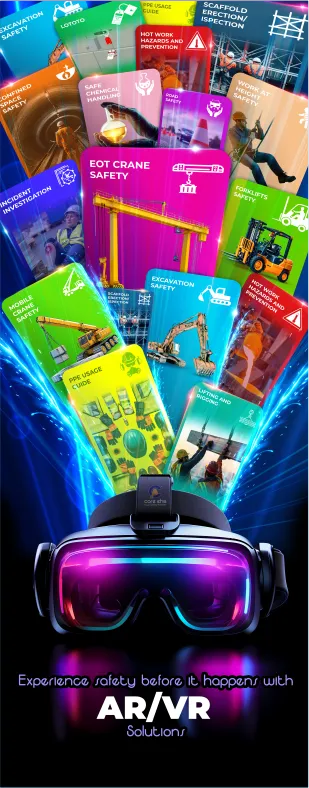
Traditional safety training tells employees what to do. Gamified learning from CORE-EHS helps them live it, feel it, and remember it.
Our Safety Games & Assessments redefine how organisations build safety awareness. Through experiential, game-based challenges, employees actively participate, think critically, and apply safety principles in real-world scenarios, not just the classroom.
By transforming learning into a hands-on, interactive experience, we create lasting behavioural change that drives a safer, more engaged workforce.
Let’s understand the Psychology Behind Gamified Safety Learning
Gamified safety training isn’t just fun, it’s rooted in proven behavioural science
Let’s understand the Psychology Behind Gamified Safety Learning
When employees experience real-time consequences in a simulated environment, their brains form stronger memory links between actions and outcomes.
Employees don’t just learn about safety, they practice it, test it, and make it instinctive.
This process, known as experiential learning, drives better retention than traditional lectures or e-learning modules.
Gamified safety programs also tap into positive reinforcement and healthy competition, which trigger emotional engagement and intrinsic motivation.
Over time, these repeated experiences shape habitual safe behaviour, transforming safety from a rule to a reflex.
From passive learning to active mastery, gamified safety transforms how people think, act, and respond to risk.Every challenge build muscle memory and confidence, making safety second nature.
Engineering
Automobiles
Automotive & Mobility
Power
Iron & Steel
Cement Industry
Metal & Mining
Shipping & Marine
Construction & Infrastructure
Chemicals & Fertilizer
Pharmaceutical& Life Science
Food FMCG & Agriculture
Electrical & Electronics
Retails & Consumer Durable
Petrochemical, Oil, Gas & Refinery
Safety Games & Assessments are designed to work hand-in-hand with the CORE-EHS Learning Platform.
All game results, assessments, and performance scores flow directly into your EHS training software, so every activity counts toward employee learning records and compliance tracking.
This seamless EHS gamification approach lets safety leaders monitor progress, identify knowledge gaps, and measure real safety performance improvement, all from one centralised dashboard.
Managers can instantly see who’s excelling, who needs refresher training, and how gamified learning is strengthening the overall safety culture across sites.
To know more about us
CORE EHS offers gamified safety learning solutions that use interactive games, challenges, and simulations to improve safety awareness, behaviour, and decision-making at the workplace.
Yes. CORE-EHS designs customised safety games based on industry type, job roles, hazard profiles, learning objectives, and organisational safety culture.
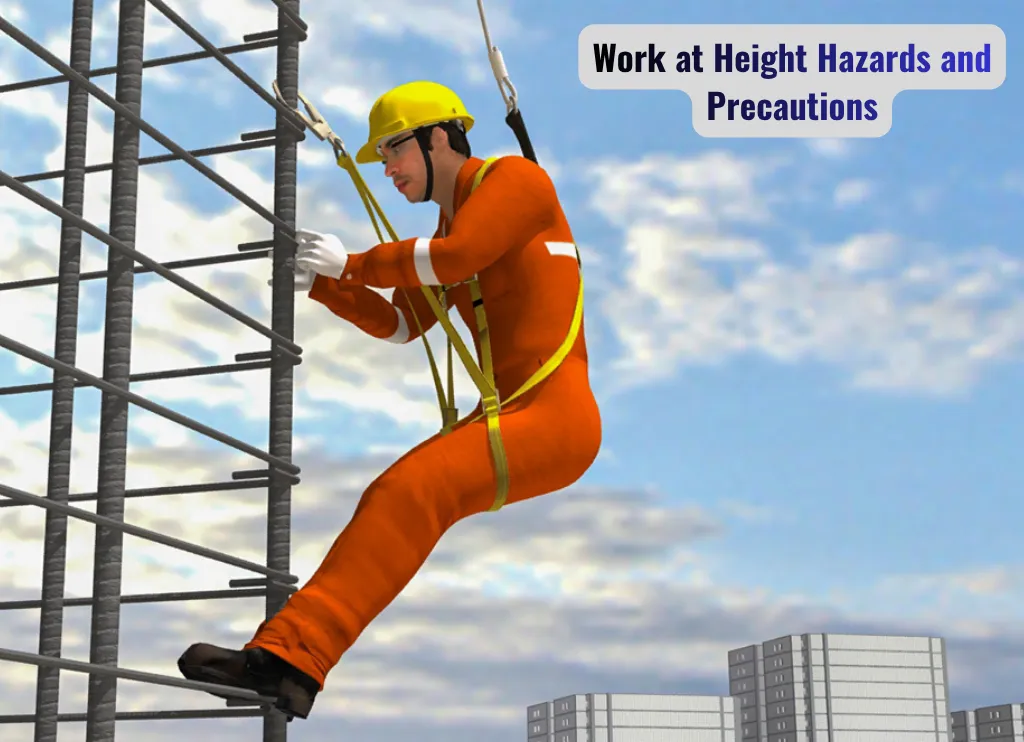
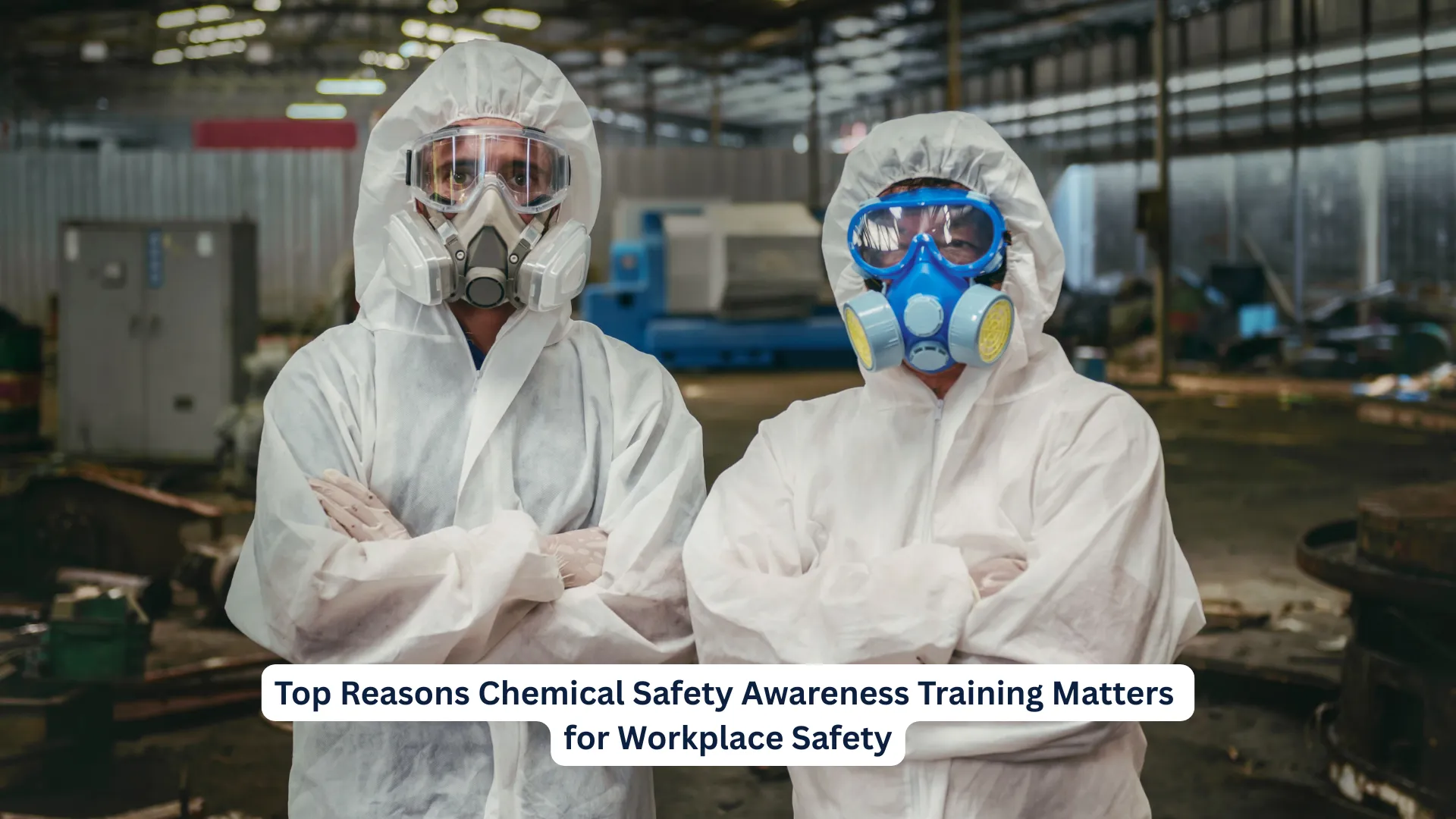
Gamified learning covers topics such as work at height, electrical safety, confined space, fire safety, PPE compliance, hazard identification, and behavioural safety.
Safety games are suitable for workmen, supervisors, engineers, safety officers, managers, and leadership teams, depending on game design and objectives.
Yes. CORE-EHS safety games can be integrated with classroom training, eLearning modules, toolbox talks, and safety campaigns.
Yes. CORE-EHS safety games are scalable and suitable for large groups, making them ideal for plant-wide training and safety events.
Learning outcomes are ensured through clear objectives, scenario-based challenges, scoring systems, debrief sessions, and performance analysis.
Yes. Gamified learning strongly supports behaviour-based safety by reinforcing safe choices, consequences, and positive reinforcement.
Yes. CORE-EHS offers both digital gamified learning solutions and physical safety games, depending on training needs and site conditions.
Organisations can start by requesting a demo or safety game concept, after which a customised gamified learning plan is developed.
Here’s what we've been up to recently.
In workplace safety, the difference between hazard and risk is one of the most commonly misunderstood concepts.
Sitting for long hours at a desk can do more harm than most of us realise. A poorly arranged workspace often leads to neck strain, wrist pain, or chronic fatigue that silently reduces focus and energy.
Safety expectations around the world are changing fast. Companies across oil and gas, manufacturing, construction, chemicals, power plants, logistics, and many other sectors now depend on digital tools to keep workers safe
Over 90% of road crashes are caused by human behaviour rather than road or vehicle conditions.