What Is the Difference Between EHS and HSE?
In the world of workplace safety and compliance, the difference between EHS and HSE is one of the most commonly searched and misunderstood topics.
Gain company-wide visibility and control of your training program.
Deploy courses constructed by industry experts for this modality.
Align training to your employees preferred and natural learning styles.
Serve all employees with a multi-lingual course library.
Integrate your own course material into the LMS.
Develop and use new course materials.
Oversee every aspect of your training program.
Provide real-time insights to stakeholders across facilities.
Our EHS Safety Training include structured evaluation and certification to validate workforce competence and regulatory compliance.
Our Environment, Health and Safety (EHS) Trainings cover critical risk areas across industrial operations. Each training module is designed to address site-specific hazards, operational risk exposure, and regulatory requirements while ensuring practical skill development and compliance alignment.
Our structured industrial safety training solutions deliver measurable improvements in compliance performance, workforce competence, and incident reduction across high-risk industries.
EHS TRAINING SUBJECTS DEVELOPED & DELIVERED
WORKMEN, ENGINEERS, MANAGERS ETC. TRAINED
CUSTOMIZED ON-SITE TRAININGS CARRIED OUT
SCAFFOLDING TRAININGS DONE ON A GLOBAL LEVEL
RIGGING & LIFTING PROGRAMS CARRIED OUT
BEHAVIOUR BASED SAFETY TRAINING PROGRAMS EXECUTED
GOVERNMENT CERTIFIED PROGRAM CARRIED OUT
SUCCESSFUL BATCHES OF INTERNATIONAL CERTIFICATIONS CONDUCTED (NEBOSH, IGC & IOG)
Our commitment to enhancing global safety knowledge and practices cements our position as a premier partner in EHS and ESG training and consultancy.
We provide customized safety programs tailored to each industry's risk exposure, regulatory needs, and operational challenges worldwide.
Engineering
Automobiles
Automotive & Mobility
Power
Iron & Steel
Cement Industry
Metal & Mining
Shipping & Marine
Construction & Infrastructure
Chemicals & Fertilizer
Pharmaceutical& Life Science
Food FMCG & Agriculture
Electrical & Electronics
Retails & Consumer Durable
Petrochemical, Oil, Gas & Refinery
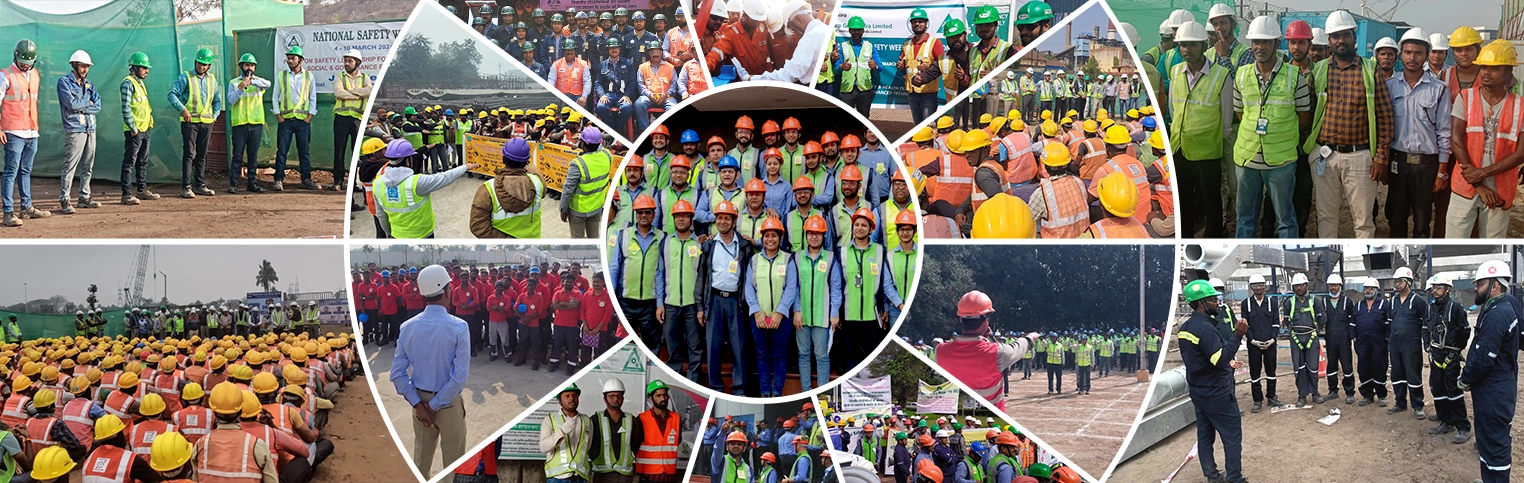
We have successfully delivered certified safety training programs across industrial sites, manufacturing units, and high-risk project environments worldwide.
23
Sep
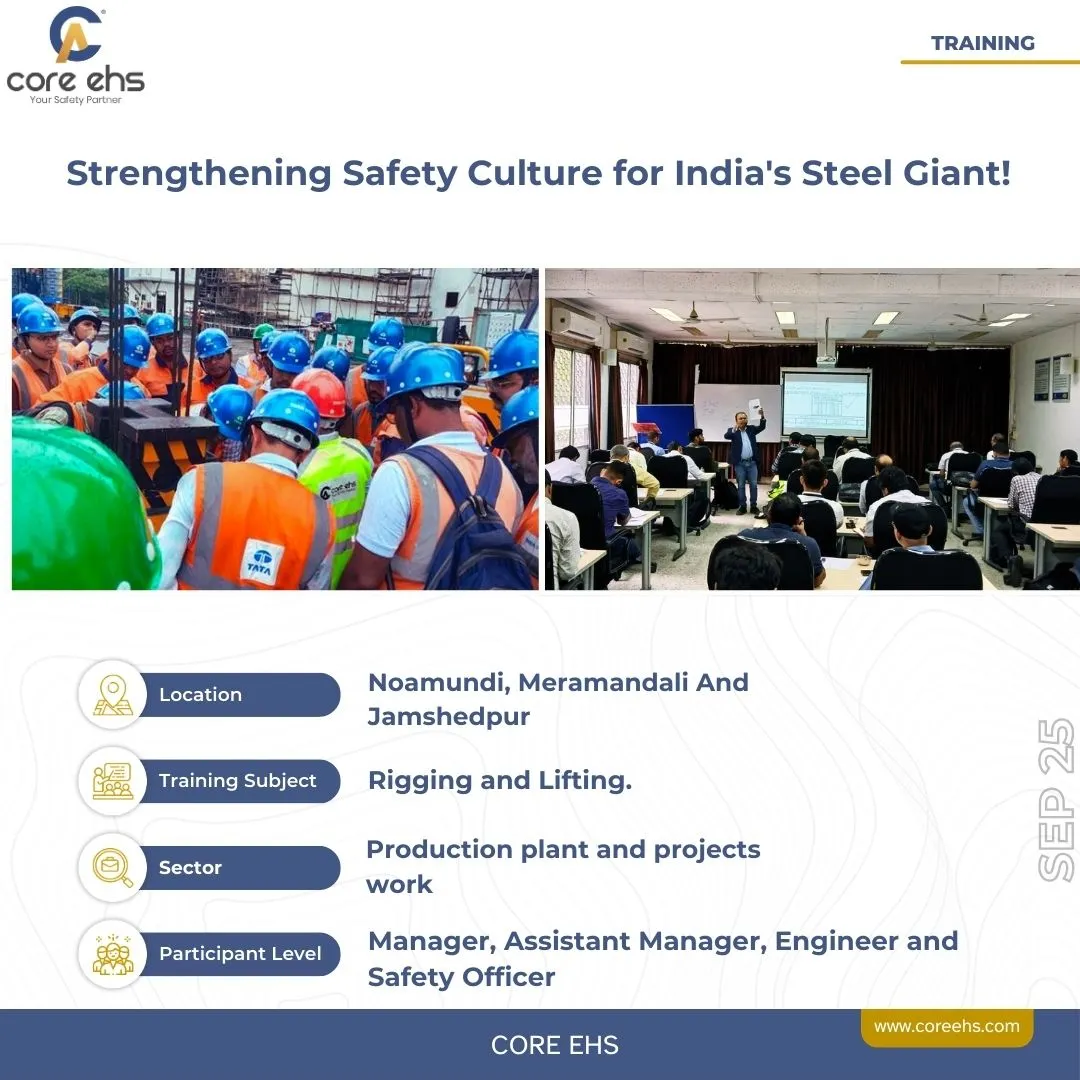
Strengthening Safety Culture for India’s Steel Giant
Rigging & Lifting Training significantly strengthened Tata Steel employees’ safety skills, reinforcing workplace safety.
10
Oct
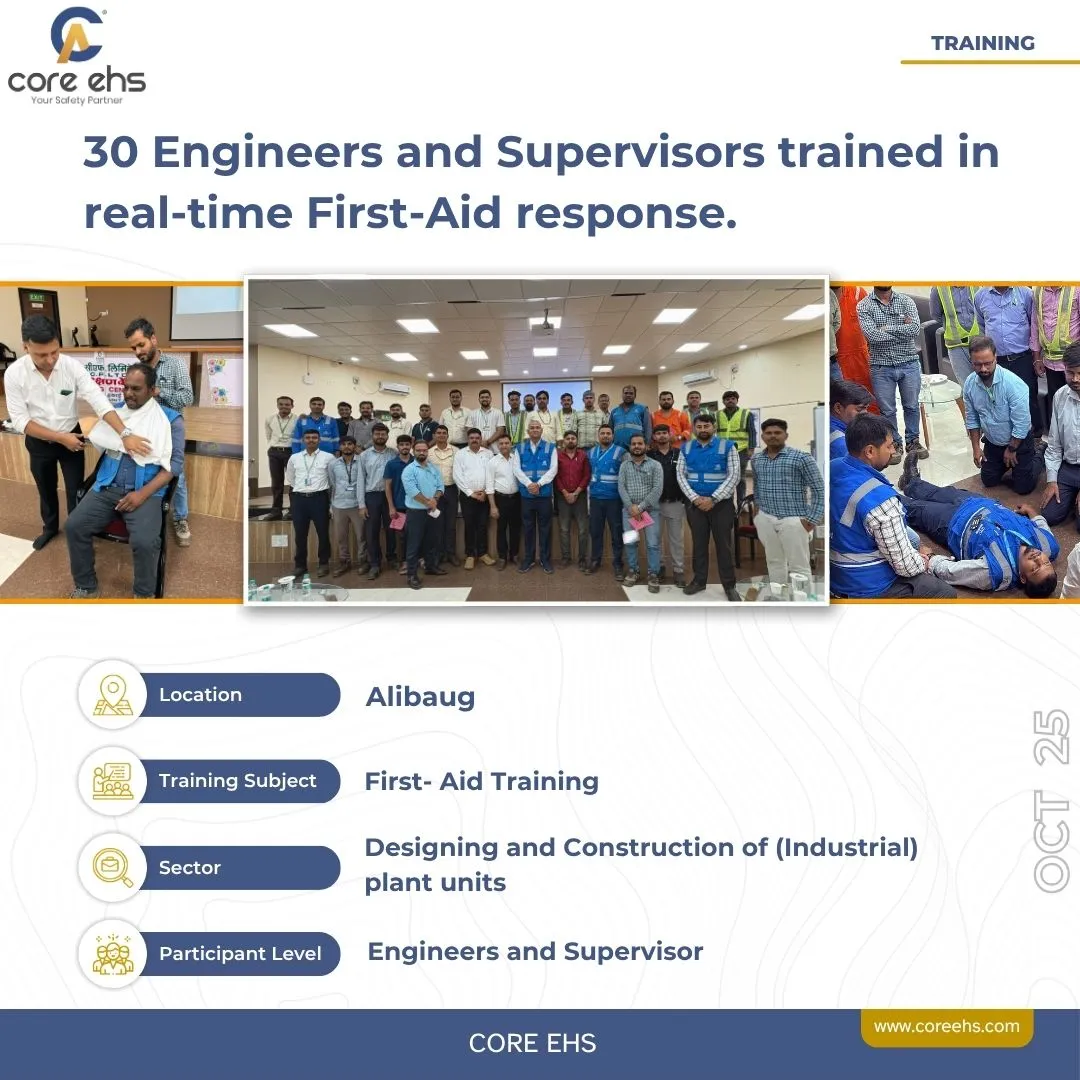
Engineers and Supervisors trained in real-time First-Aid response.
Engineers and supervisors trained in real-time First Aid by CORE-EHS at Alibaug—because preparedness saves lives
04
Nov
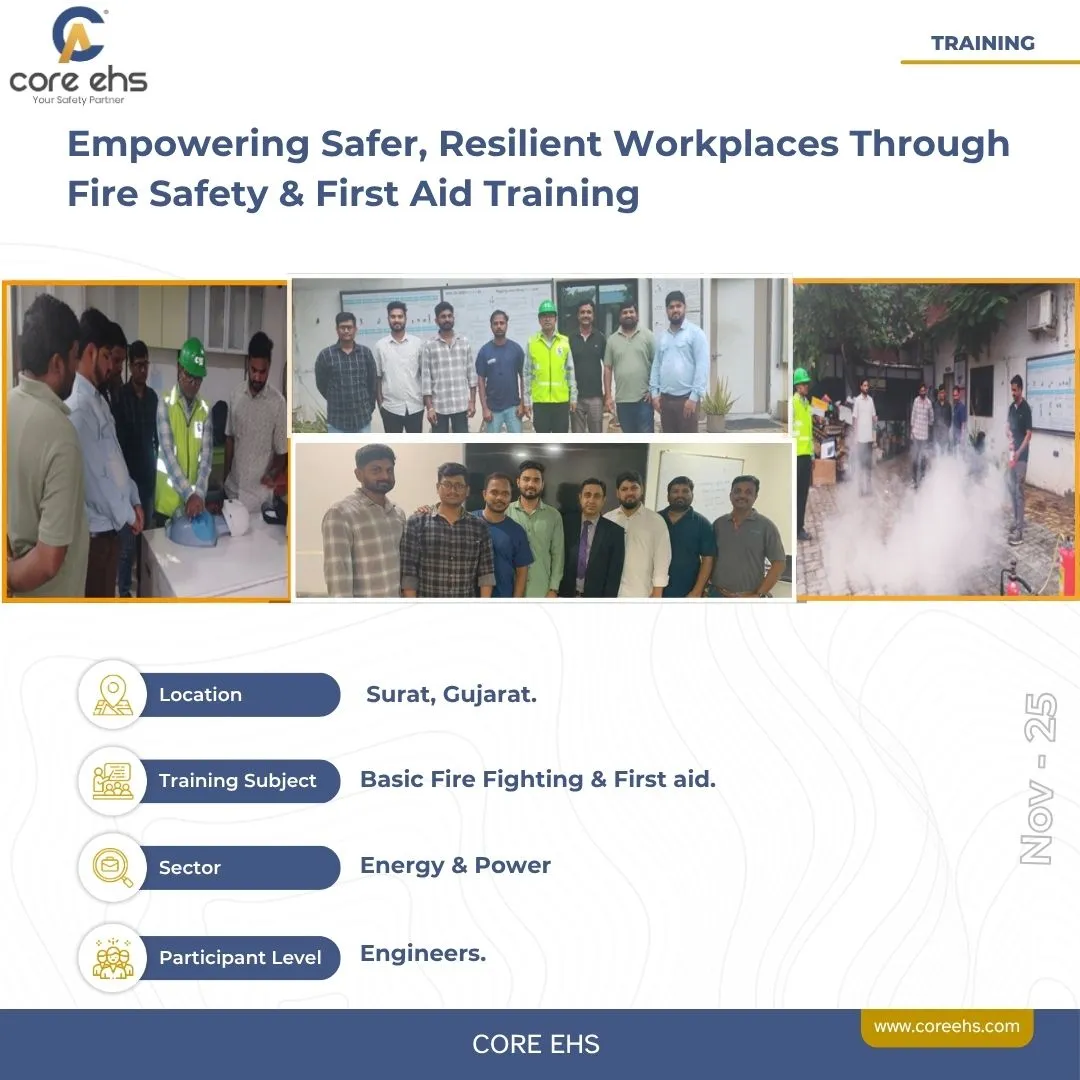
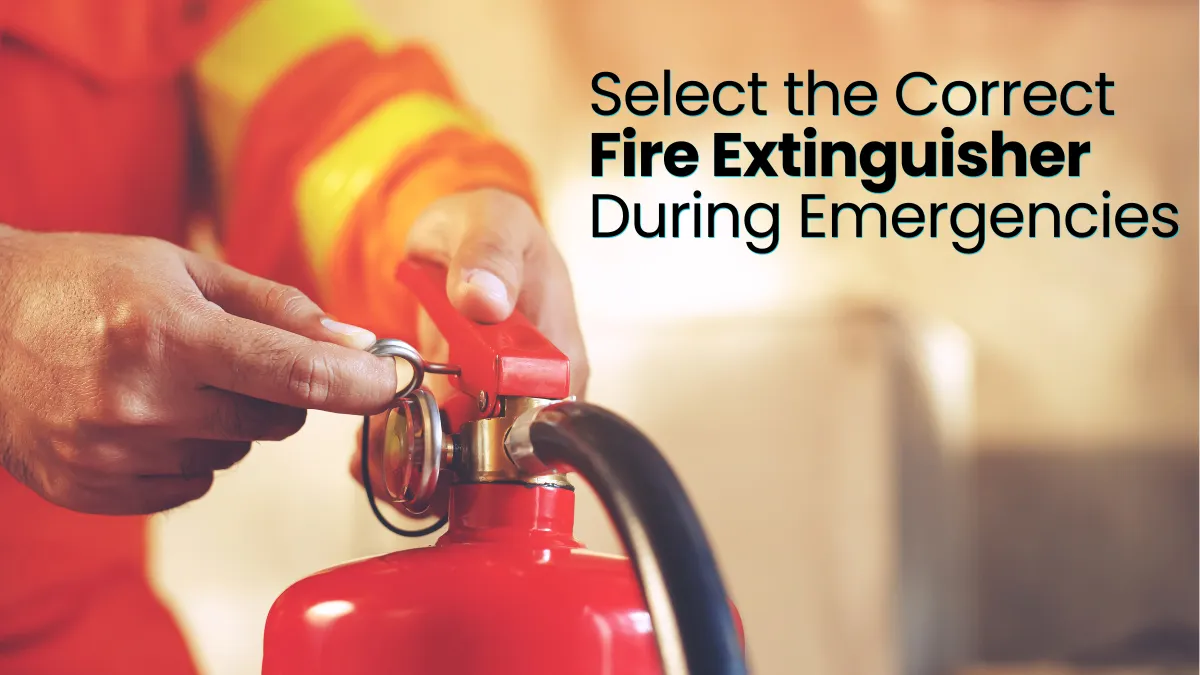
Empowering Safer, Resilient Workplaces Through Fire Safety And First Aid Training
CORE-EHS Solutions delivered Fire Safety and First Aid Training to strengthen workplace safety and emergency readiness.
21
Nov
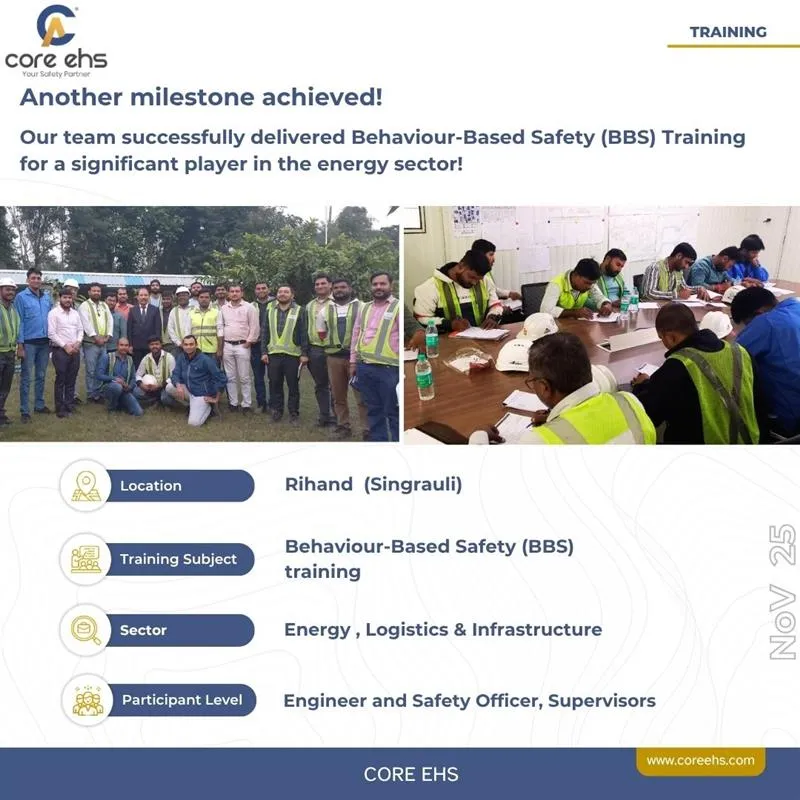
Building Safer Workplaces Through Behavior-Based Safety
Behaviour-Based Safety training reinforced safe behaviours and safer work practices at Mitsubishi Heavy Industries, Rihand.
04
Dec
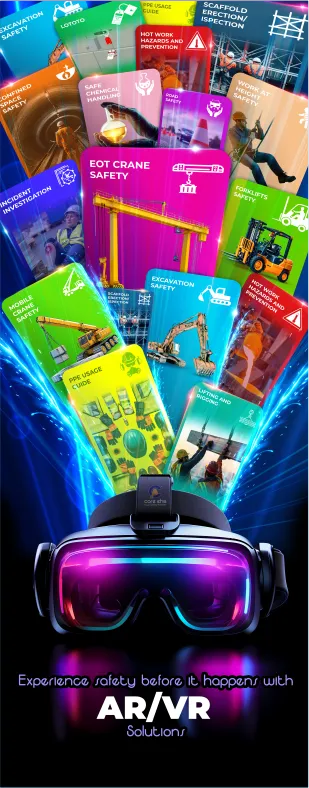
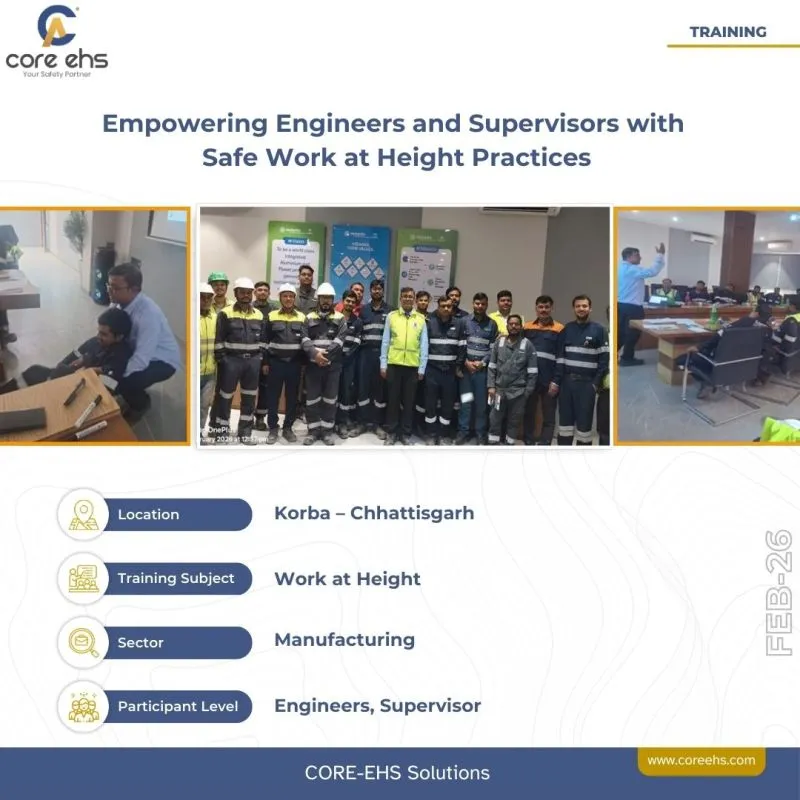
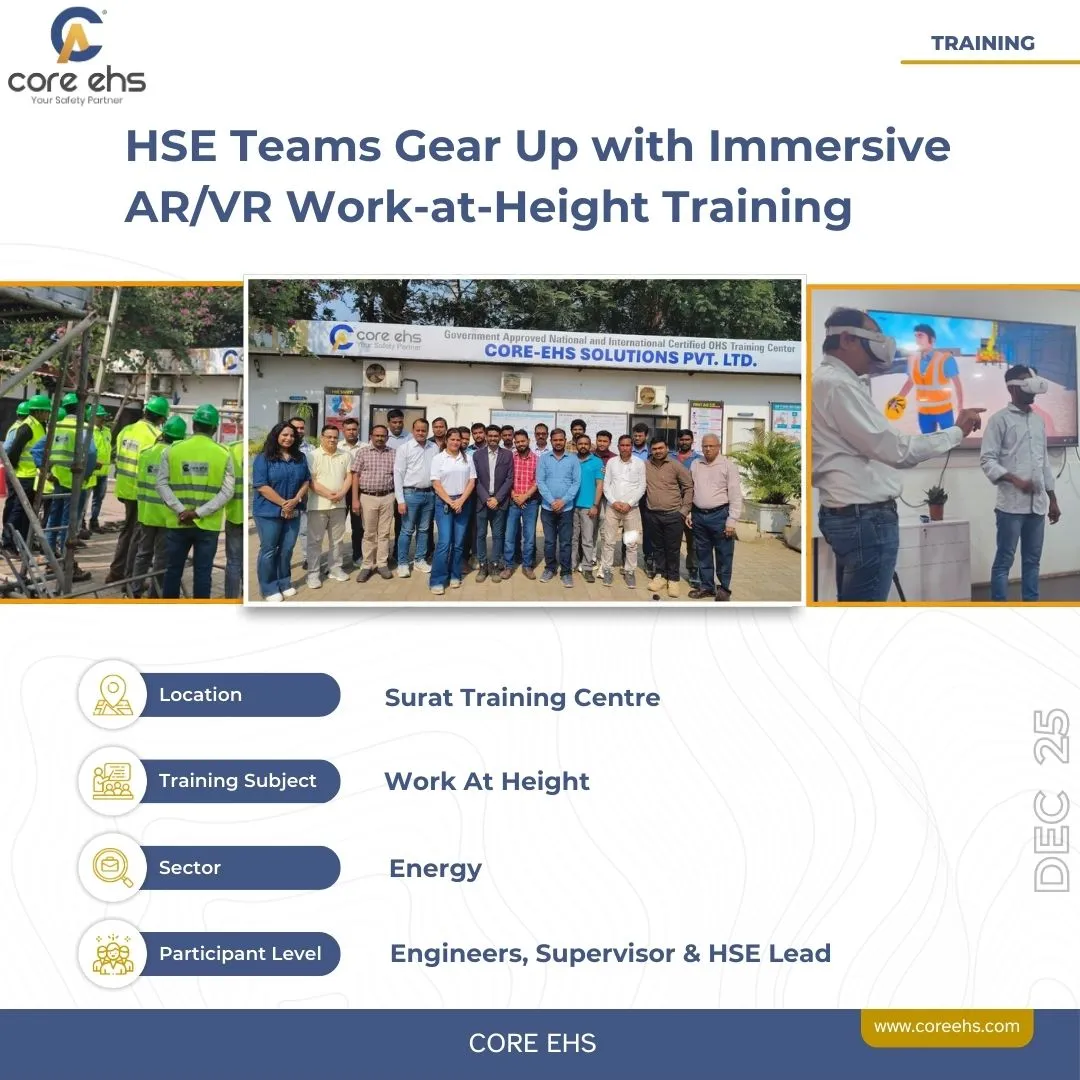
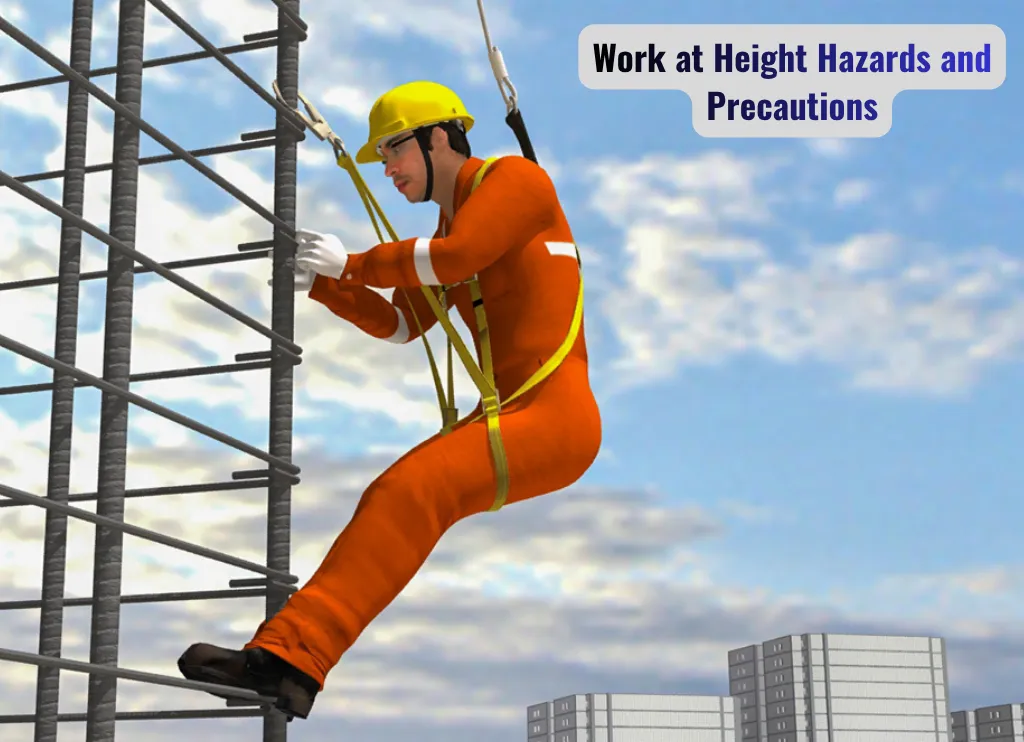
HSE Team Gear Up With immersive AR/VR Work at Height Training
Work at Height training improved Safety Supervisors’ and HSE Leads’ skills using AR/VR, practical exercises, and theory.
05
Sep
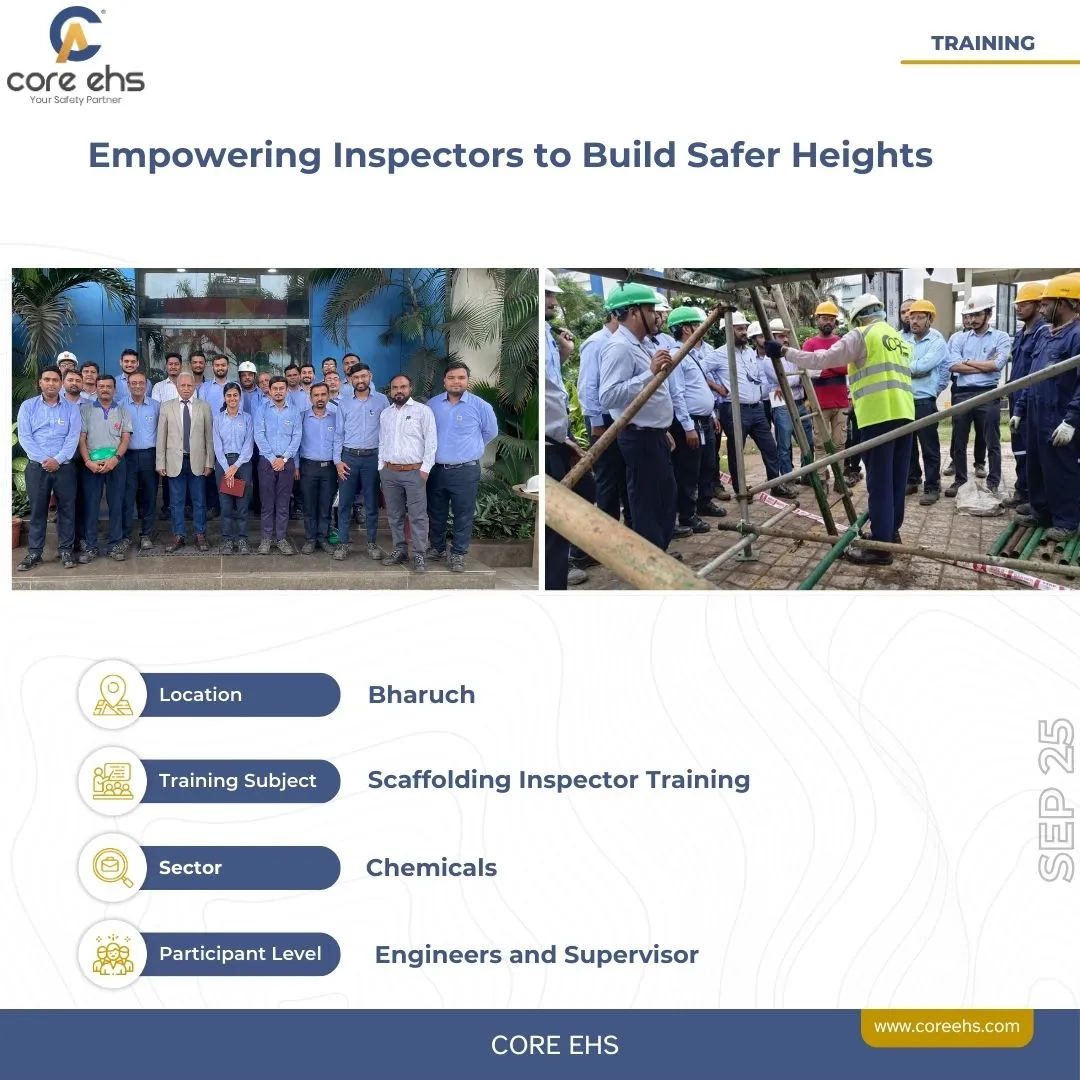
Empowering Inspectors to Build Safer Heights
Conducted a Scaffolding Inspector Training in Bharuch, equipping 30 engineers and supervisors with essential inspection, compliance, and risk-identification skills to strengthen scaffolding safety.
We partner with leading industrial organizations worldwide to deliver industrial safety training programs that enhance compliance, reduce incidents, and build safer workplaces.
To know more about us
EHS safety training equips employees with the knowledge, skills, and awareness required to identify workplace hazards, follow safe work practices, respond to emergencies, and comply with applicable Environment, Health, and Safety regulations.
EHS safety training is essential to prevent accidents, reduce unsafe acts, protect employees, and ensure legal compliance. It also strengthens safety culture and improves overall operational performance.
Yes. CORE-EHS provides customised on-site EHS safety training based on your industry, site conditions, hazard profile, job roles, and regulatory requirements, ensuring practical relevance and immediate applicability.
EHS safety training is required across industries such as manufacturing, construction, oil & gas, power plants, chemicals, pharmaceuticals, logistics, infrastructure, and project sites.
Training topics include work at height, confined space, electrical safety, fire safety, rigging and lifting, behaviour-based safety, accident investigation, contractor safety, and emergency response, among others.
CORE-EHS training programs are aligned with applicable Indian safety laws, statutory requirements, and regulatory guidelines, supporting compliance and audit readiness.
CORE-EHS supports organisations through internationally recognised safety frameworks and best practices and can guide learners towards globally accepted certifications such as NEBOSH through structured learning pathways.
Pre and post assessments help measure knowledge gaps, evaluate learning effectiveness, and ensure competency development, enabling organisations to track real improvement rather than just attendance.
Training sessions are conducted by experienced EHS professionals and industry practitioners with hands-on exposure to industrial operations, audits, and safety implementation.
Yes. EHS training directly supports the ‘Social’ pillar of ESG by improving worker safety, competence, and wellbeing, contributing to responsible and sustainable business practices.
Here’s what we've been up to recently.
In the world of workplace safety and compliance, the difference between EHS and HSE is one of the most commonly searched and misunderstood topics.
In workplace safety, the difference between hazard and risk is one of the most commonly misunderstood concepts.
Sitting for long hours at a desk can do more harm than most of us realise. A poorly arranged workspace often leads to neck strain, wrist pain, or chronic fatigue that silently reduces focus and energy.
Safety expectations around the world are changing fast. Companies across oil and gas, manufacturing, construction, chemicals, power plants, logistics, and many other sectors now depend on digital tools to keep workers safe