+91 72929 29159


RACI Software
Projects fail not because of lack of effort, but because of unclear roles and responsibilities. Miscommunication, overlapping tasks, and accountability gaps often derail project timelines and outcomes.




 Solutions

All your EHS & ESG needs
Empowering responsible decisions through unified EHS and ESG solutions

Read our success stories
Explore how we have transformed safety cultures with our EHS solutions.
.
.
Resources
About Us
Our Mission
Our mission is to empower industries to achieve their safety, health,and environmental objectives, integrating Environmental, Social, and Governance (ESG) principles into our strategic insights, expert guidance, and innovative solutions. We are dedicated to advancing sustainable and responsible practices across all sectors.
Our Vision
Our vision is to become the foremost provider of exceptional safety services, enabling organizations to not only meet but excel in their safety, health, and environmental goals, while fully embracing and
implementing ESG standards for a sustainable future.
Ask What-If. Prevent What-Next.
CORE PHA (What-If?) – A digital hazard identification and risk assessment platform that transforms What-If Analysis into a structured, collaborative, and auditable process under Process Safety Management (PSM).
Every process, piece of equipment, or operational change introduces potential hazards — the challenge lies in identifying and controlling them before they escalate. The What-If Analysis method, recognized under Process Safety Management (PSM), helps teams proactively ask “What if…?” to uncover failures, abnormal situations, and unsafe conditions. CORE PHA (What-If?) transforms this methodology into a digital, collaborative, and data-driven system that guides users through structured brainstorming sessions, risk ranking, and control mapping. By replacing manual spreadsheets and scattered documentation with one centralized platform, CORE PHA (What-If?) ensures consistent hazard analysis, transparent follow-up, and complete traceability — empowering organizations to build safer operations and stronger compliance frameworks.








PHA – Trusted Safety Software for Modern Industries
CORE PHA turns “What-If” scenarios into ranked risks, mapped controls, assigned actions, and traceable follow-up.
Contact Us
Supports safety teams in managing safety activities, organizing reports, and improving overall safety performance across the organization.

Gives leaders better visibility into safety performance and trends, helping them make informed decisions and support risk reduction efforts.

Enables employees to follow safety processes easily, report issues when needed, and stay actively involved in improving workplace safety.
Organizations still using manual or fragmented methods for What-If Analysis often experience:

Missed failure scenarios due to inconsistent brainstorming or lack of structure.

Scattered or lost What-If records that weaken compliance traceability.

Delayed communication and unclear accountability for corrective actions.

Inconsistent scoring or lack of defined risk matrices.

Difficulty involving cross-functional experts during analysis sessions.

Lack of digital records and verifiable action history during inspections.
With a top-notch What-If Analysis Software (PHA), businesses can experience:

Supports structured brainstorming with customizable templates and hazard categories.

Enables multi-user participation with real-time data entry and discussion tracking.

Quantify hazards using standardized severity and likelihood matrices.

Link every identified risk to preventive and mitigative controls.

Assign responsibilities, set deadlines, and monitor closure of follow-up actions.
Notify stakeholders of pending reviews and overdue actions.
Maintain digital records of all findings, actions, and decisions for compliance verification.
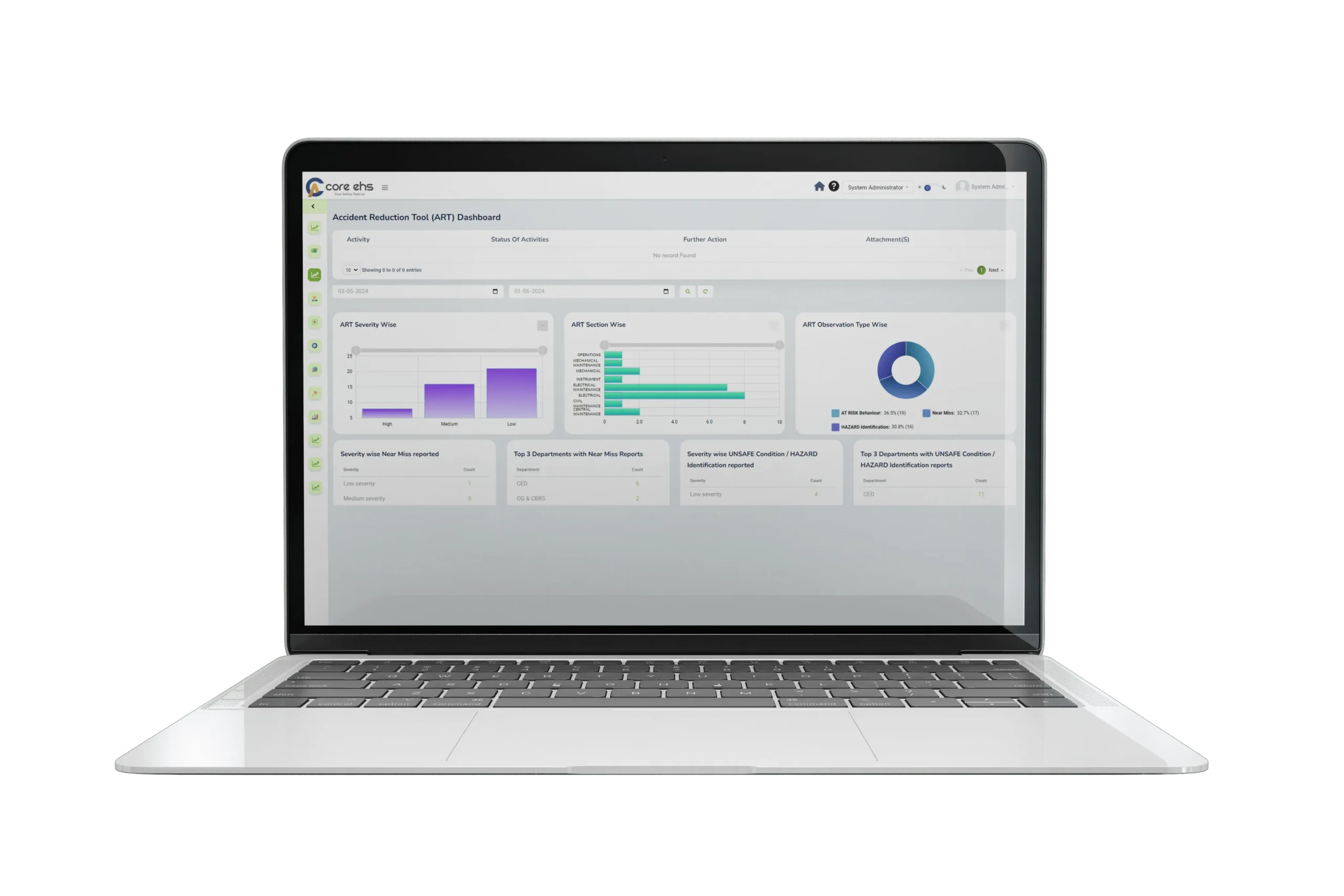
Visualize risk distribution, trends, and team performance across projects or plants.

Engineering

Automobiles

Automotive & Mobility

Power
Iron & Steel

Cement Industry

Metal & Mining

Shipping & Marine

Construction & Infrastructure

Chemicals & Fertilizer

Pharmaceutical& Life Science

Food FMCG & Agriculture

Electrical & Electronics

Retails & Consumer Durable
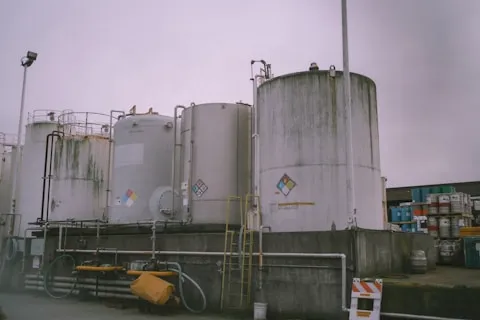
Petrochemical, Oil, Gas & Refinery
With CORE-EHS, organizations gain access to a range of powerful capabilities, such as








To know more about us
EHS software is a digital platform that helps organizations manage environmental, health, and safety activities such as incidents, hazards, audits, permits, corrective actions, and compliance in one centralized system instead of relying on spreadsheets and paper-based processes.
EHS management software supports regulatory compliance by standardizing safety workflows, maintaining digital records, tracking corrective actions, and keeping documentation audit-ready. CORE-EHS can be configured to support requirements related to frameworks such as OSHA, ISO 45001, and applicable regional regulations.
Yes. CORE-EHS is designed for organizations managing multiple sites, plants, and regions. It supports role-based dashboards, multilingual workflows, centralized reporting, and configurable compliance requirements across different locations.
CORE-EHS runs 41+ purpose-built modules on one connected platform and supports operations across 30+ countries. It also works offline in the field, so data capture, sign-off, and sync happen whether or not your team has signal.
Yes. We supports risk assessment, hazard tracking, trend analysis, corrective actions, and risk monitoring across EHS workflows.
Yes. It is mobile-first. Workers can scan, capture, and sign off on inspections and incidents directly from a phone or tablet, even offline, with data syncing once connectivity returns.
Timelines depend on the number of modules and sites. CORE-EHS includes dedicated onboarding, configuration support, and training, so most enterprise deployments are live and running within weeks, not months.
Book a free demo. Our team will review your current safety processes and recommend the right modules for your industry and site structure.
Industries such as manufacturing, construction, oil and gas, power, chemicals, infrastructure, logistics, mining, and pharmaceuticals commonly use EHS safety software due to complex operations and strict compliance requirements.
A safety software platform typically includes incident reporting, hazard and near-miss management, inspections and audits, corrective action tracking, document control, dashboards, and analytics to support informed decision-making.
Expert resources on safety management software, risk control systems, compliance strategies, and digital transformation in industrial safety.