+91 72929 29159


Assess
Evaluate & Analyze




 Solutions

All your EHS & ESG needs
Empowering responsible decisions through unified EHS and ESG solutions

Read our success stories
Explore how we have transformed safety cultures with our EHS solutions.
.
.
Resources
About Us
Our Mission
Our mission is to empower industries to achieve their safety, health,and environmental objectives, integrating Environmental, Social, and Governance (ESG) principles into our strategic insights, expert guidance, and innovative solutions. We are dedicated to advancing sustainable and responsible practices across all sectors.
Our Vision
Our vision is to become the foremost provider of exceptional safety services, enabling organizations to not only meet but excel in their safety, health, and environmental goals, while fully embracing and
implementing ESG standards for a sustainable future.
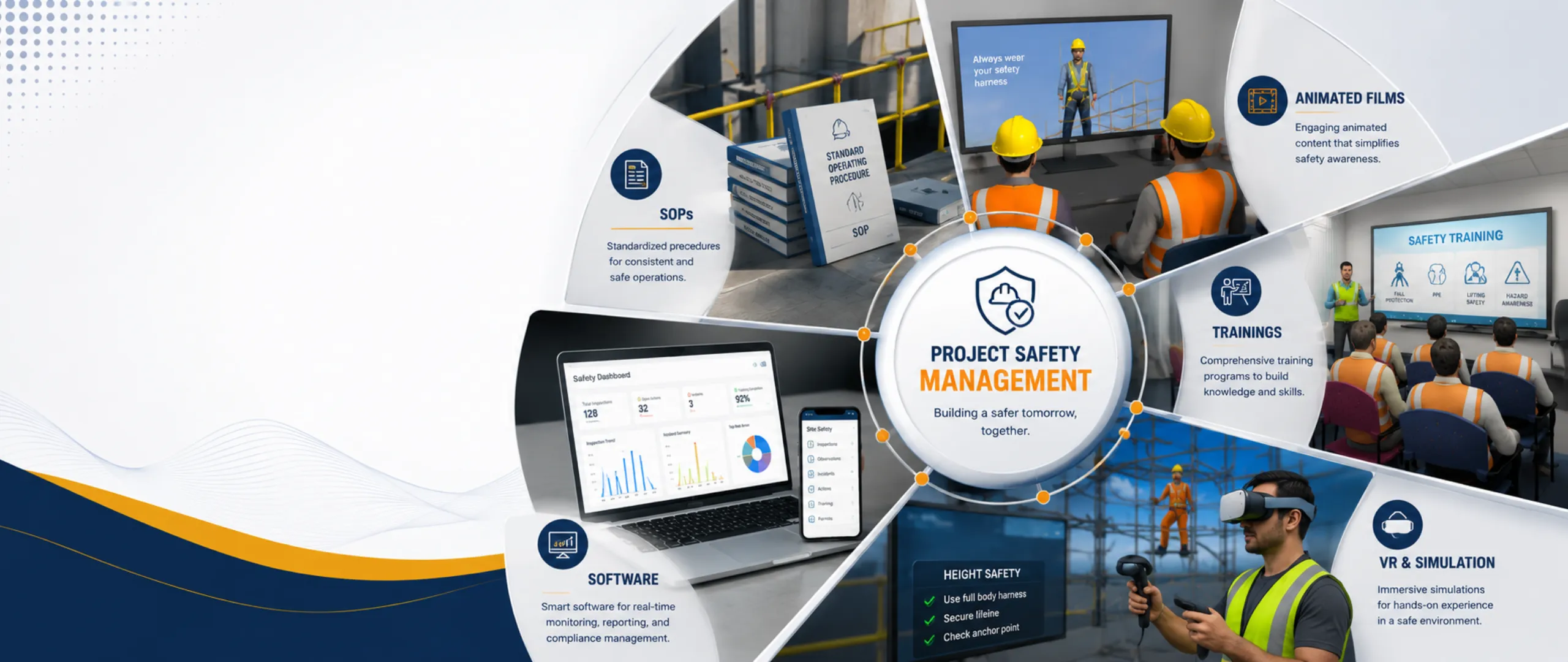
Driving safety excellence through culture, competence & technology, powered by expert EHS teams and real-time digital governance.
Proven, structured methodology for greenfield & brownfield projects.








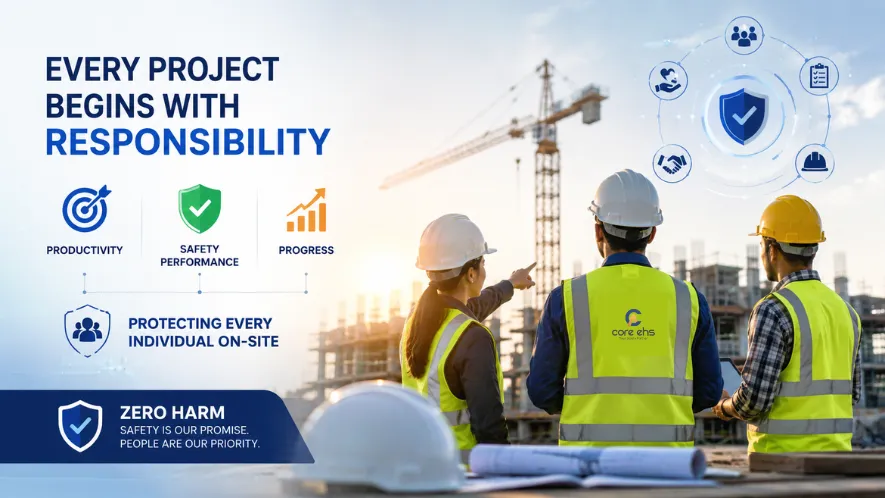
Every project begins with goals of productivity, safety performance, and progress. These objectives drive timelines, budgets, and stakeholder expectations. But behind every successful project lies a deeper responsibility that cannot be compromised or delayed: protecting every individual on-site.
At CORE-EHS, we strengthen this responsibility through a value-driven, Zero Harm approach – integrated seamlessly with operational excellence so safety becomes a project advantage, not a project obstacle.
Safety performance in large-scale projects depends on three critical pillars working in harmony – leadership, workforce competence, and systems/technology. CORE-EHS aligns these pillars through a structured methodology that has been proven across diverse industrial project environments.
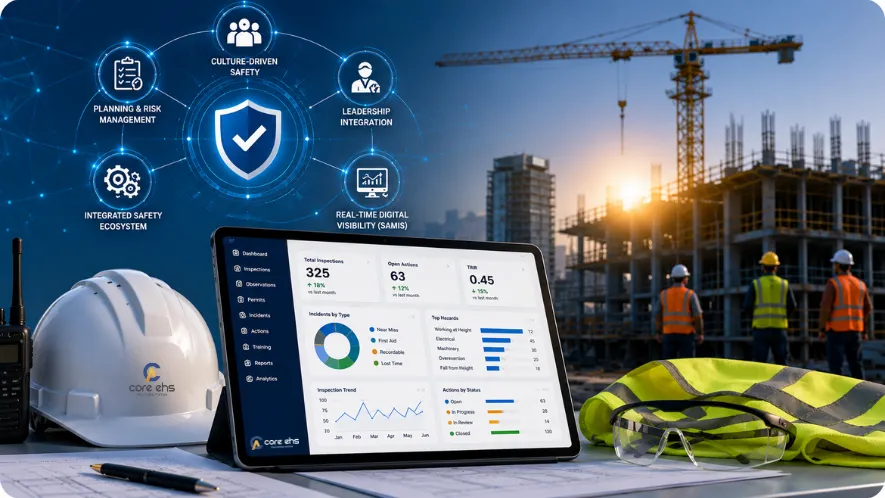
Project Safety Activities Management (P-SAM) is a comprehensive project safety management model designed to transform safety performance from the ground up- by combining:
 Culture-driven safety
 Leadership integration
 An integrated safety ecosystem
 Real-time digital visibility using SAMIS (Safety Activities Management Information System)
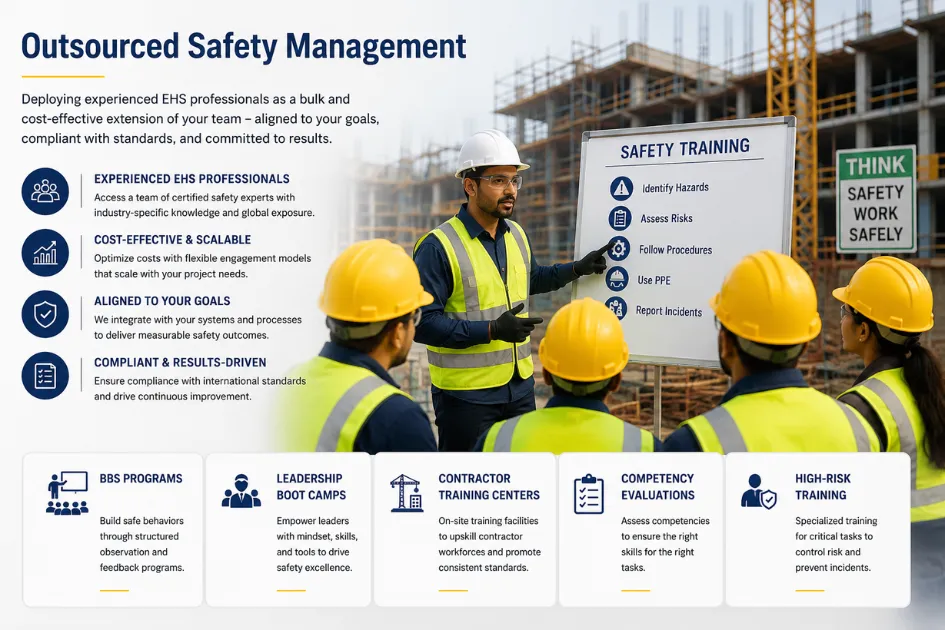
Outsourcing project safety management delivers strategic and financial benefits that in-house teams often struggle to match – especially in dynamic, high-pressure project environments.
You gain:
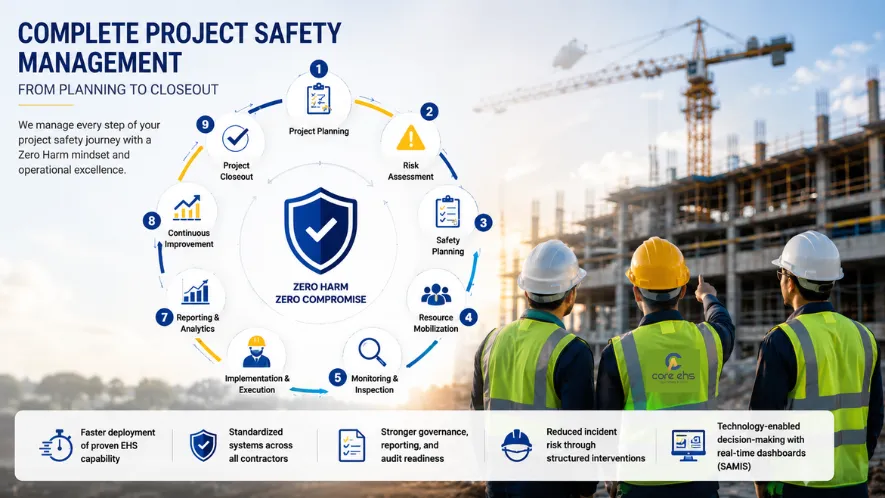
The CORE-EHS transformation unfolds across integrated phases, beginning with assessment and culminating in sustained excellence. Each phase is designed to deliver visible progress, measurable outcomes, and stronger safety maturity over time.

Evaluate & Analyze

Strategize & Design

Implement Solutions

Automate Processes

Optimize & Enhance

Maintain & Support

Target 30–50% reduction in safety incidents within two years through proven practices, behavioral programs, and digital monitoring that identifies risks before injuries occur.

Improve regulatory compliance and governance efficiency with standardized protocols, automated documentation, real-time audit readiness, and consistent enforcement.

Create a transparent contractor safety ecosystem with consistent standards across all contractors—removing variations and driving accountability.

Boost morale, competency, and productivity as workers gain safer environments, consistent training, and visible leadership commitment.

Strengthen ESG outcomes, accelerate Zero Harm goals, and build safety leadership positioning that improves stakeholder confidence and project credibility.

Investing in world-class safety management is not a cost - it’s a strategic investment that protects people, reduces risk, and elevates reputation.


KPI accountability + leadership boot camps aligned to ISO 45001 intent

Observation, feedback, and reinforcement to reduce at-risk behaviors

Structured contractor capability-building and consistent governance

SAMIS dashboards and predictive visibility for proactive prevention

Continuous verification aligned with national and global expectations
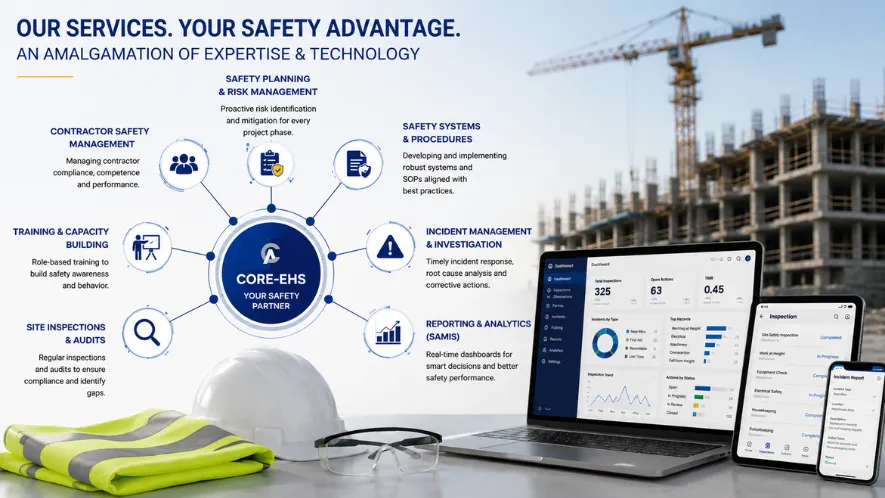
Your project gets end-to-end EHS excellence through five integrated service pillars:
Deploy experienced EHS professionals to build and execute site-specific EHS plans aligned to hazards, workforce mix, and compliance requirements.
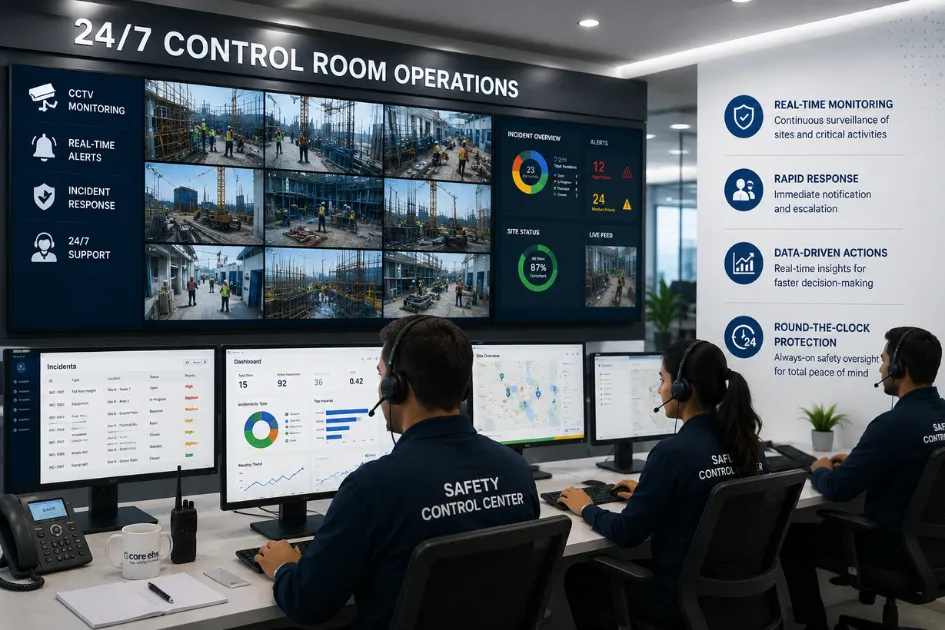
Establish Safety Control Rooms with CCTV monitoring, real-time dashboards, alert systems, and response protocols for immediate intervention.
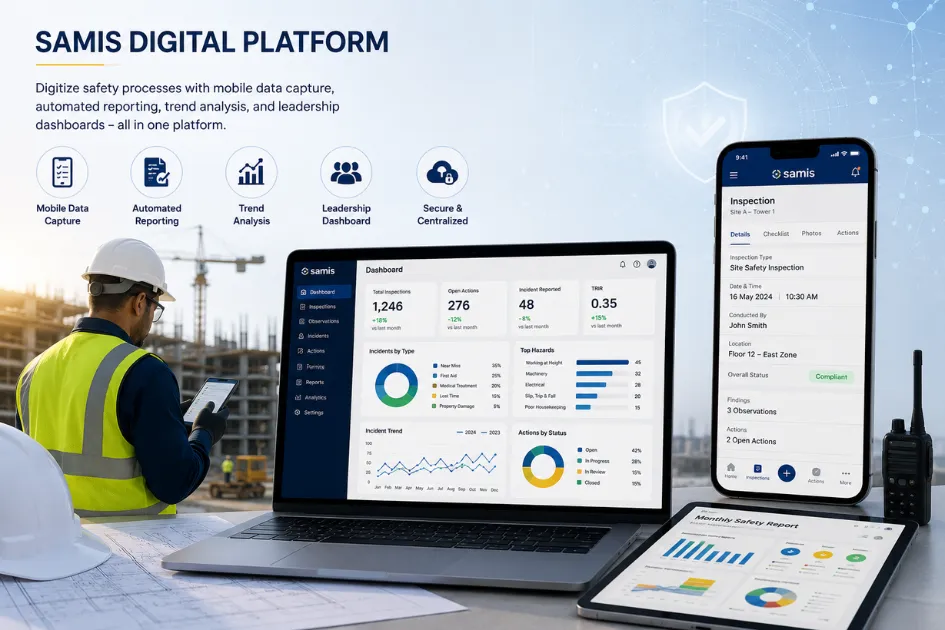
Digitize safety processes with mobile data capture, automated reporting, trend analysis, and leadership decision support across sites.
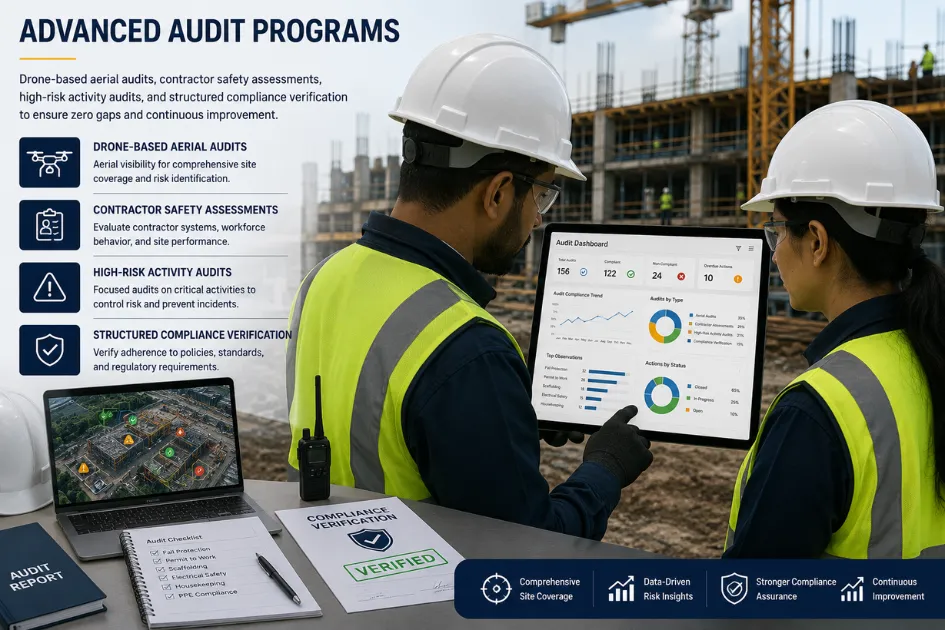
Drone-based aerial audits, contractor safety assessments, high-risk activity audits, and structured compliance verification.
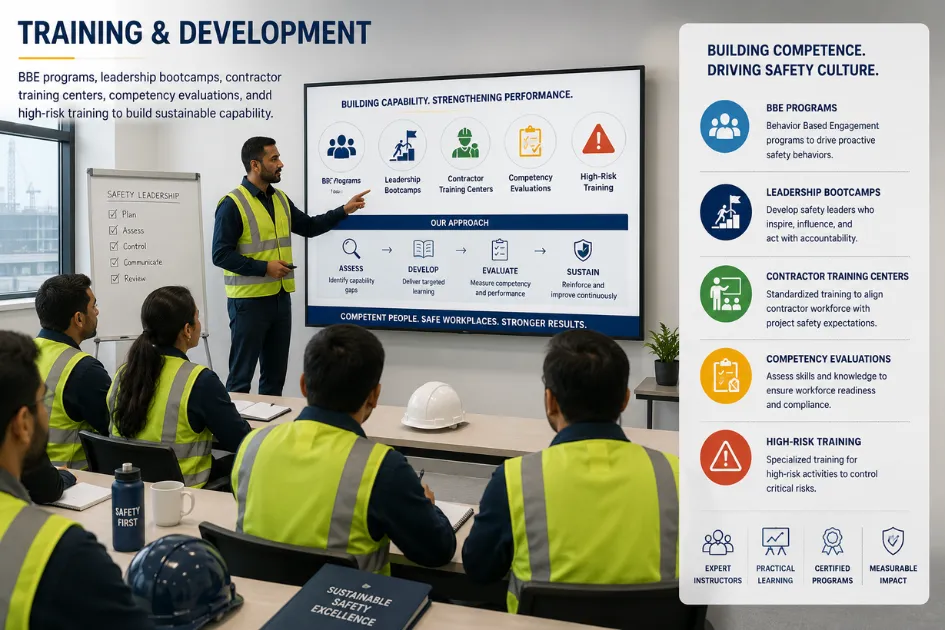
BBS programs, leadership boot camps, contractor training centers, competency evaluations, and high-risk training to build sustainable capability.
To know more about us
CORE-EHS can mobilize a qualified project safety team within a short turnaround time, depending on project scale, location, and specific requirements. With a strong pool of trained safety professionals and structured deployment processes, we ensure timely onboarding without compromising on competency, compliance, or project readiness.
Yes, CORE-EHS provides end-to-end EHS staffing solutions along with structured competency tracking for project teams. We deploy qualified safety professionals based on project requirements and ensure their skills, certifications, and performance are continuously monitored through defined evaluation and tracking systems to maintain safety compliance and effectiveness throughout the project lifecycle.
CORE-EHS standardizes safety training across multiple contractors through structured training frameworks, common safety protocols, and centralized tracking systems. We implement uniform training modules, visual and simulation-based learning, and consistent assessment methods to ensure all contractors receive the same level of safety understanding, regardless of site or team. Training effectiveness is further supported through monitoring, audits, and periodic refreshers to maintain consistency and compliance across the project.
SAMIS (Safety Management Information System) is a digital platform designed to streamline and standardize project safety management. It digitizes key safety processes such as permit-to-work, inspections, incident reporting, audits, compliance tracking, and safety observations. By centralizing data and providing real-time visibility, SAMIS helps improve decision-making, accountability, and overall safety performance across projects.
A safety control room is a centralized hub that monitors and manages site safety in real time. Using integrated systems such as CCTV, IoT sensors, and digital safety platforms, it enables continuous (24×7) surveillance of high-risk activities, equipment, and site conditions. Alerts, incidents, and unsafe behaviours are identified instantly, allowing safety teams to respond quickly, coordinate actions, and maintain consistent oversight across the project.
Contractor safety management involves ensuring that all contractors working on a project follow defined safety standards, procedures, and compliance requirements. On large sites, it often fails due to inconsistent training, varied safety practices across contractors, limited supervision, communication gaps, and lack of centralized monitoring. Without structured systems and real-time visibility, maintaining uniform safety standards becomes challenging. Implementing standardized processes, continuous monitoring, and digital safety platforms helps improve control, accountability, and overall safety performance across multiple contractors.
Outsourced safety management reduces incidents by bringing in experienced safety professionals, standardized processes, and structured oversight across the project. It ensures consistent implementation of safety protocols, regular inspections and audits, effective training, and timely hazard identification. With defined systems, continuous monitoring, and data-driven tracking, risks are identified earlier and corrective actions are implemented faster, helping prevent incidents and improve overall safety performance.
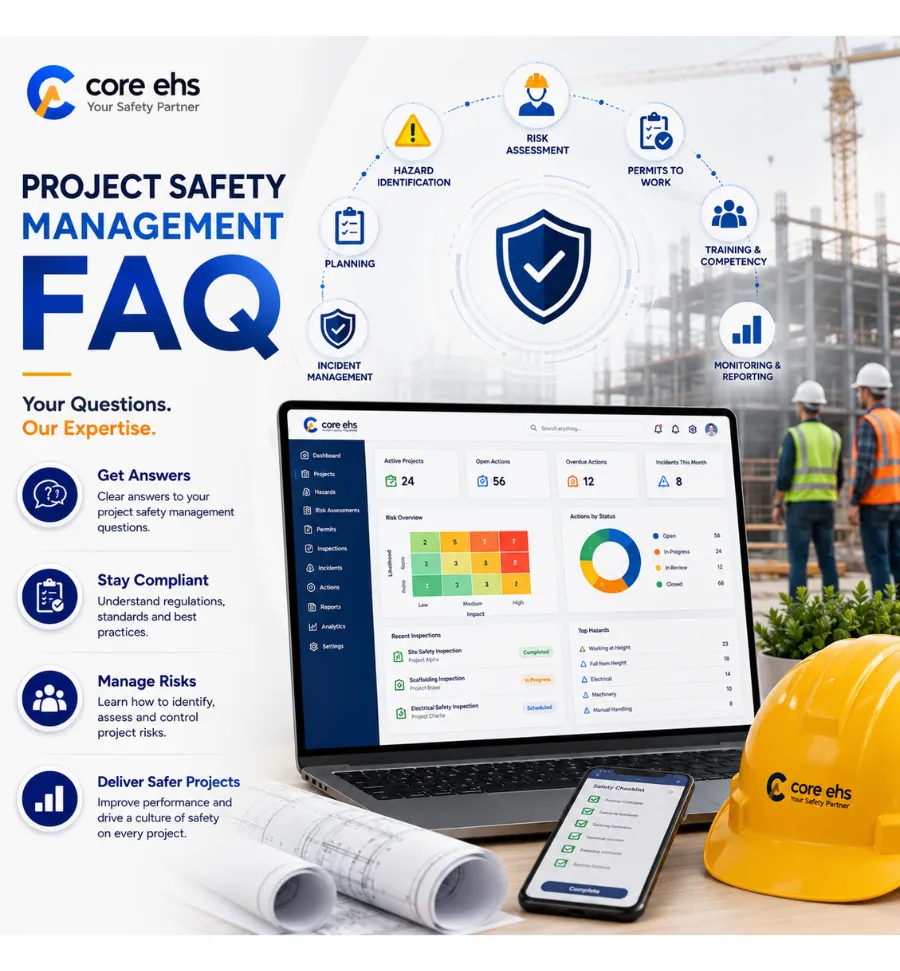
Project safety management in construction involves planning, implementing, and monitoring safety practices to ensure all site activities are carried out without risk to people, equipment, or the environment. It includes hazard identification, risk assessment, safety training, contractor management, inspections, compliance tracking, and emergency preparedness. A structured safety management system helps maintain consistent safety standards, prevent incidents, and ensure regulatory compliance throughout the project lifecycle.
Here’s what we've been up to recently.