What Is the Difference Between EHS and HSE?
In the world of workplace safety and compliance, the difference between EHS and HSE is one of the most commonly searched and misunderstood topics.
SMCS, is a system based on proven and globally accepted Safety Management practices. It incorporates all rewound processes within the larger scope of identifying specific requirements for finding appropriate solutions and implementing these solutions in right earnest. In addition to this, what gives us the competitive edge, is the integration and support, driven from our self-developed technological systems that ensure reduction in effort and maximization of output with minimum chances of human error.
It evaluates organizational safety culture & re-engineers it for reaching world class safety Standards & Benchmarks. We specialize in provisioning a paradigm shift in an organization’s safety culture and transform it into a Safety Champion. We’ve proudly served over 1 million users in 600+ customers spread across 30+ different countries worldwide. Our efforts have been recognized and rewarded through prestigious awards and renowned felicitations making us the preferred choice for implementing safety management systems.
Our re-engineering methodology entails 5 broad stages that define the outcome in a measurable manner. We begin by building governance and follow it up by identifying the needs. Based on these 2 stages, we commence the development of the fresh safety management systems and draw a blueprint / roadmap that would allow us to achieve the expected outcome. To that extent we use our technological proficiencies for developing tools that act as great support in the overall governance, administration and processes of safety. Finally, we continue to support the owner safety teams through periodic reviews and validations for a sustainable outcome.
A Safety Maturity Survey is a tool that will be used to learn and assess the workers, employees and management’s current attitudes and perceptions about the organization and its safety culture. Important, however, is being able to understand the perceptions that influence an individual’s attitudes and behaviours.
CORE-EHS will conduct Safety Maturity Survey with its set of Customized Questionnaire, Interviews, Review of Statistical Data, Previous Audits and Inspection reports having coverage of various category of Management groups and Workmen.
Through this survey and interaction with management and workmen, CORE-EHS will identify and assess the gaps between current Process & Workplace Safety Management System.
After gap analysis, a detailed road map for improvement with roles and responsibilities will be developed in association with Customer Apex Committee for making Robust Safety Management System.
CORE-EHS will ensure road map implementation with hand holding support to manage and contain the risks to acceptable level with continual improvement in safety performance with respect to benchmark – LTIFR (Lost Time Injury Frequency Rate). CORE-EHS will provide dashboard, web based software and mobile APP for this purpose.
The Behavioral Intervention Programme (BIP) which is often described as a Top-down to bottom-up approach (frontline employees). A behaviour based safety approach promotes interventions that are people-focused and often incorporate one-to-one or group observations of employees performing routine work tasks, setting goals carefully and giving timely feedback on safety-related behaviour, coaching and mentoring. The initiatives have a proactive focus, encouraging individuals and their work groups to consider the potential for incident involvement, (accidents) and to assess their own behaviour as safe or unsafe always, no matter what.
A BIP approach is one which:
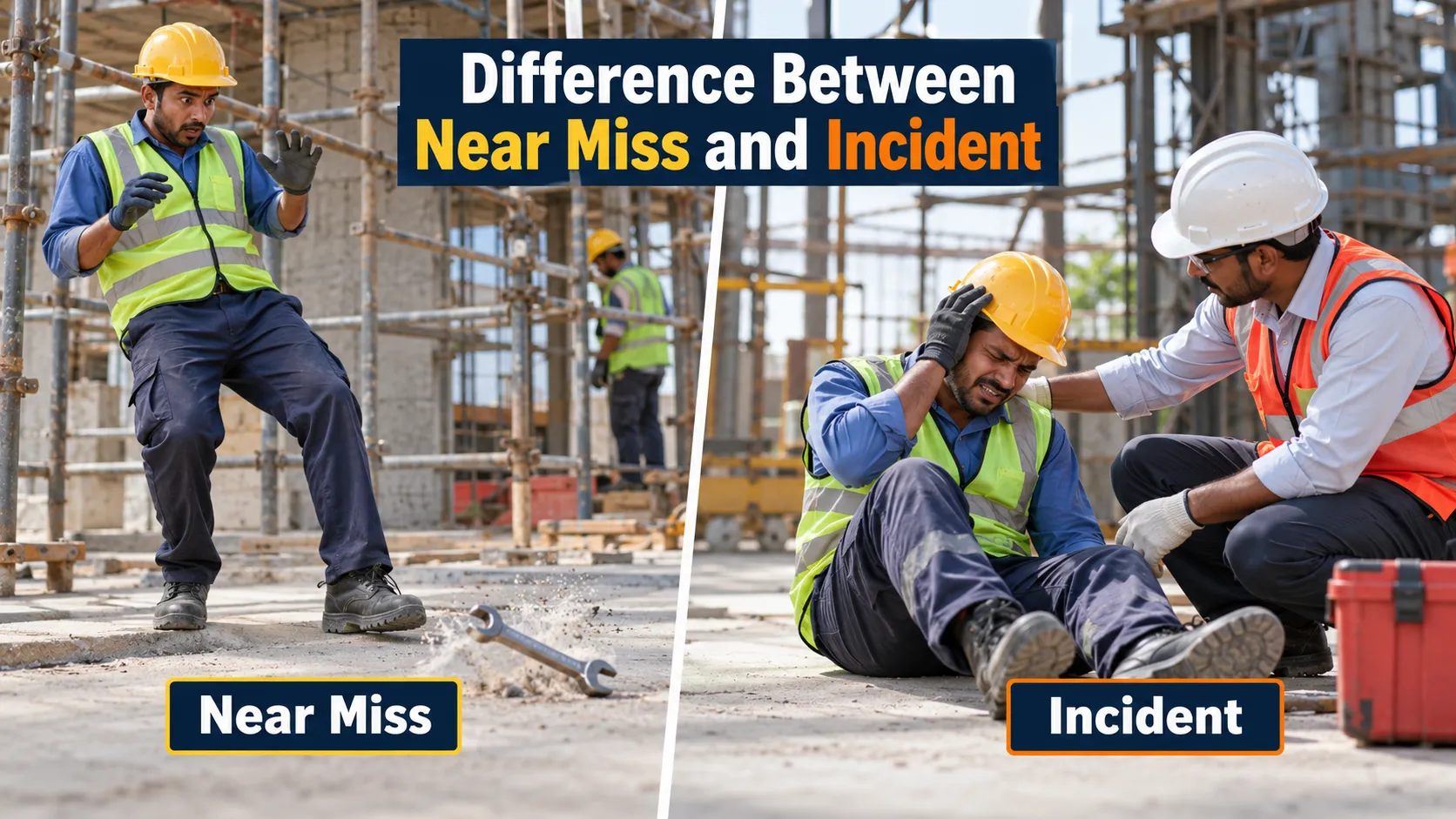
Accident, incident and near-miss reporting is a crucial part of any effective EHS programme to identify trends, establish root causes and prevent recurrence. Management of accident, incident and near miss reporting is a statutory requirement but also acts as a learning tool to help prevent similar accidents occurring in the future. CORE-EHS will support to CUSTOMER in implementing an effective reporting procedure and creating the documents that can be used for reporting these occurrences in analytical form.
Accident Investigation & Root Cause Analysis is determining the factors that have caused an accident in the workplace is crucial in preventing similar accidents in the future.
To make effective Incident Reporting and Investigation System will start from reporting and recordkeeping of “AT Risk Behaviour and Near Miss” by/at all level of personnel.
A contractor safety management (CSM) system is a collection of integrated management processes that is used to control the risks associated with contractor management on an ongoing, real-time basis.
A strong contractor safety program—one that prequalifies contractors before they are hired and monitors and manages ongoing safety performance—can ensure that contractors are adequately equipped to mitigate hazards. This can help to prevent worker injuries, protect corporate reputation, support compliance with government regulations, and avoid hefty fines associated with violations.
Contractor’s safety management begins from selection of contractors to the completion of work and completion of contract including evaluation. The process of contractor’s safety management can be divided into following steps:
The design and production of Engineering processes is inherently hazardous, which is why high hazards process safety is of paramount importance for any industry. With the growing numbers of industries in India, various impacts on environment and health in relation to the workplace has increased. Therefore, understanding the hazardous process is crucial in the development of effective control measures. Hazard Identification, Risk Assessment, and Control measures (HIRAC) acts as an effective tool of Occupational Health and Safety Assessment.
The risk containment study is to identify all the possible hazards at various unit of CUSTOMER, to conduct a risk assessment, to calculate the risk rating based on the risk matrix, and to compare the risk rating before and after the control measures. The hazards, which will have high-risk rating are required to reduce to a level considered As Low as Reasonably Practicable (ALARP) by specific control measures for specific processes.
CORE-EHS are undertaking Risk classification exercise for all activities considering existing control procedures, past major incidents in steel industry globally and segregate into High-Risk, Medium Risk and Low Risk. Risk assessment will be done for High-Risk processes using appropriate tools, software & Risk Assessment Techniques.
The existing safety management systems and standards shall be thoroughly analysed, reviewed and proposed to be upgraded to world class standards currently in practice at globally renowned plants/ organizations.
Once the gaps are known, the same shall be filled up and even further upgraded. This shall be done for at least ten new high risk standards along with Standard Operating Procedures, Work Instructions, Responsibility centers, Accountable personnel with appropriate formats for records.
Develop audit procedures, questionnaires in line with world’s best safety standards, particularly practiced by world’s best Plants/Companies. The plant shall be assisted suitably for implementation in other areas.
Supplied IT Tools shall be integrated to the existing IT tools at CUSTOMER SAP platform.
Safety initiatives are required to be based on the principles of Anticipation, Identification, Evaluation and exercising controls over the foreseeable risks. The present advanced industrial technology incorporating computerized processes, instrumentation, automation and controls requires equally matching operational and safety excellence at all subsequent steps.
Safety Cultural Transformation requires building strong foundation and systems, enhancing visible leadership commitment, building necessary safety structure, development / upgradation of requisite safety management systems and processes and imparting extensive safety best practice training. To meet these requirements, an Integrated Organizational Structure for Safety Management shall be proposed which will help in effective implementation and governance of various safety initiatives and programmes.
Any vital and extra-important decisions taken at the Apex level shall trickle down to the executing agencies with no delays and the same shall attain priority in execution.
A successful Capability Development Program requires conviction, commitment, and confidence of the leadership in inculcating a culture of learning to become a sustainable initiative. A well designed Capability Development program, when leveraged fully and made integral to the DNA of an organization leads to:

While such programs may vary in their construct from organization to organization, a top-down approach is a pre-requisite for all, and bottom-up approach will automatically established. A successful Capability Development Program requires conviction, commitment, and confidence of the leadership in inculcating a culture of learning to become a sustainable initiative.
Road Safety Management (RSM) can be briefly defined as the tasks of preparing and implementing road safety policies, engineering control through artificial intelligence. Many studies have been carried out on RSM, trying to identify success factors and reference best practice examples, but the complexity of the subject and the difficulty of quantitative data collection make it difficult a clear and comprehensive understanding. It’s variable depending upon the type of industry or plant.
Such as every workplace will have risks that are specific to the location, the type of work, the people employed, the vehicles used and the way things are done. The issue of industrial transport in the workplace site are mostly associated with heavy vehicle Vs light vehicle. In any case, a well-designed and maintained workplace will make transport accidents less likely. In every work activities involving vehicles there are common aspects to consider. These include: arrival and departure; travel within the workplace; loading, unloading and securing loads; sheeting; coupling; and vehicle maintenance work.
Process Safety Management is the application of management principles and systems to the identification, understanding, and control of process hazards to protect employees, facility assets and the environment.
PSM refers to a set of inter-related approaches to manage the integrity of hazards associated with industries and is intended to reduce the frequency and severity of incidents resulting from releases of chemicals and other energy sources. These standards are composed of organizational and operational procedures, design guidance, audit programs, and a host of other methods.
PSM begins at the inception of an idea & continues through various stages of development, use & finally removal of the equipment from management process. PSM drives rigour and discipline into an operating organization. An effective PSM framework will also address smaller incidents including those not associated with loss of containment.
Formulating an Action Plan Post-Contract Finalization
Quarterly Expert Site Visits from HQ
Holding coordination meetings with various disciplines and submitting MOM for:
Project Management and Training Support
Additional support
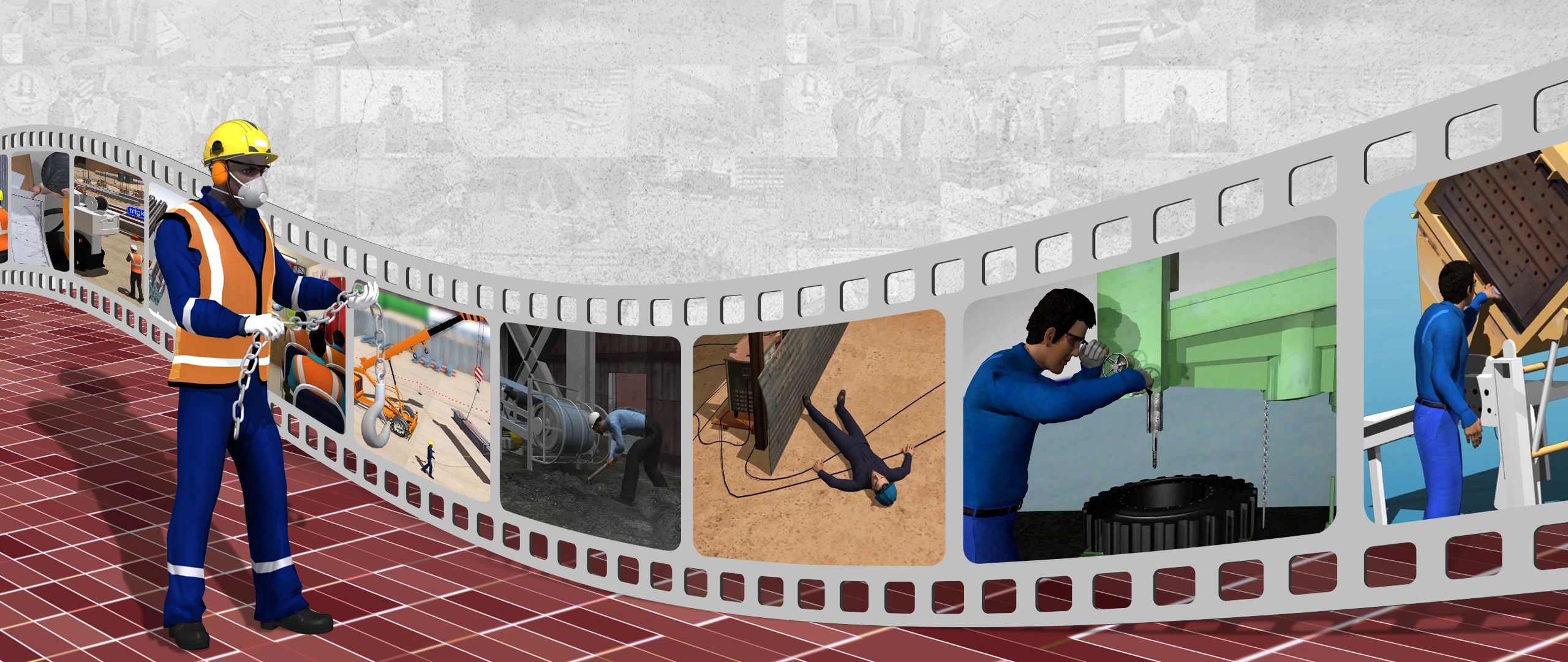
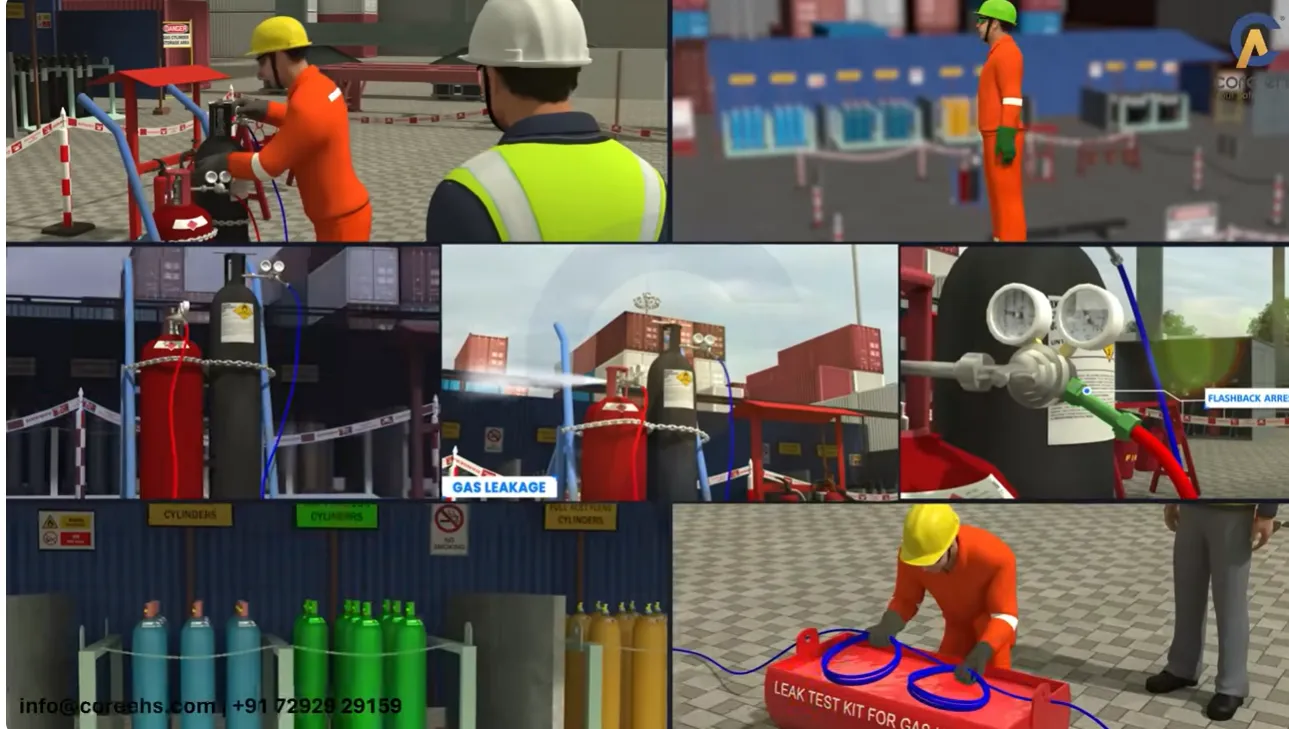
We use 3D safety animations to visually demonstrate hazards, unsafe acts, accident scenarios, and correct procedures, making complex safety concepts easy to understand and consistently communicated across the organisation.
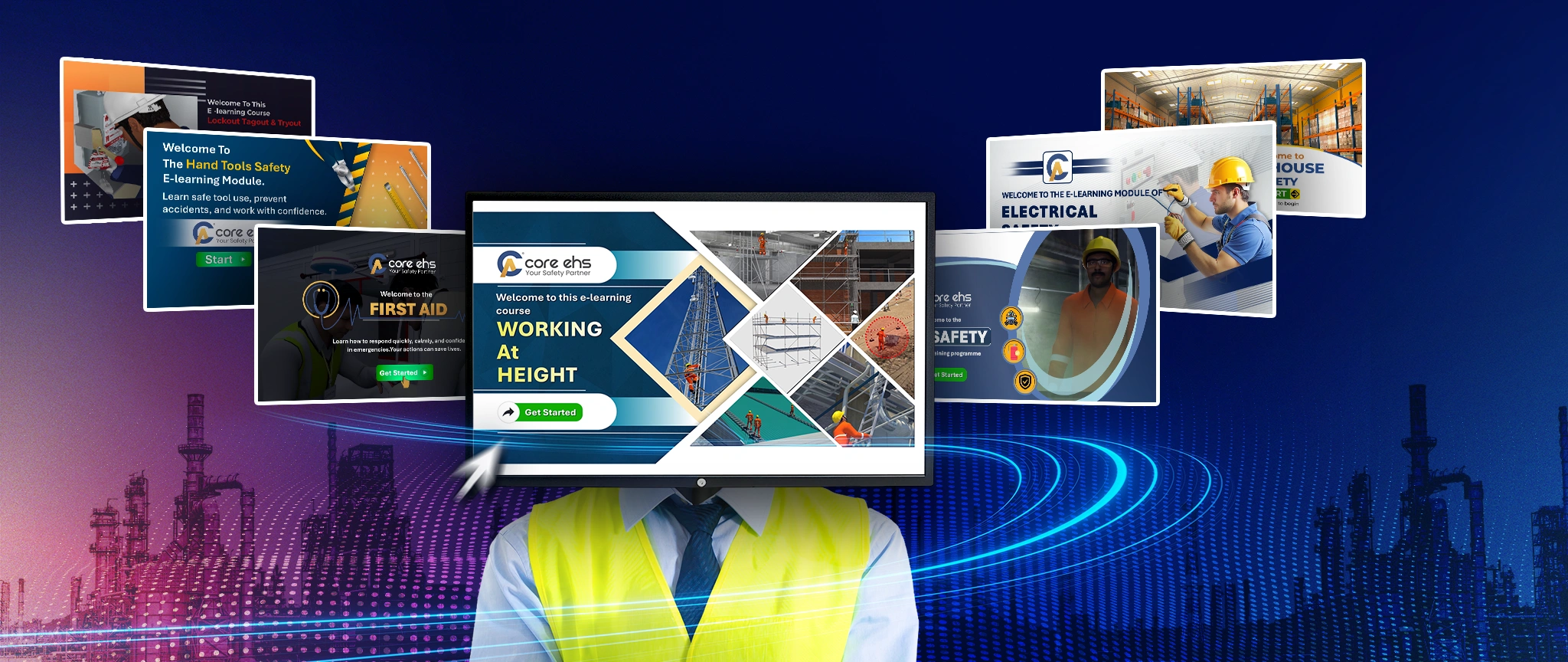
Our EHS eLearning modules enable scalable, standardised, and role-specific safety training, ensuring continuous learning, knowledge retention, and measurable competency development across all workforce levels.
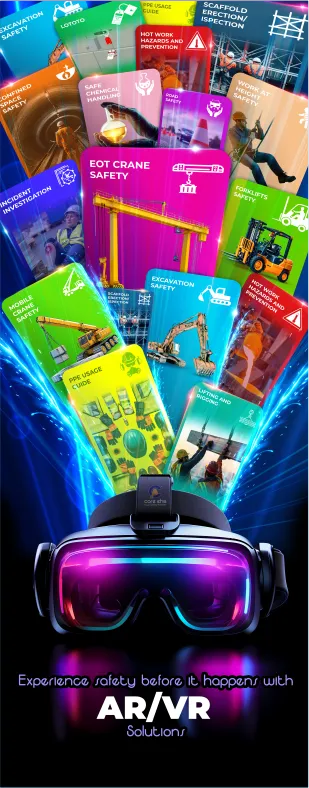
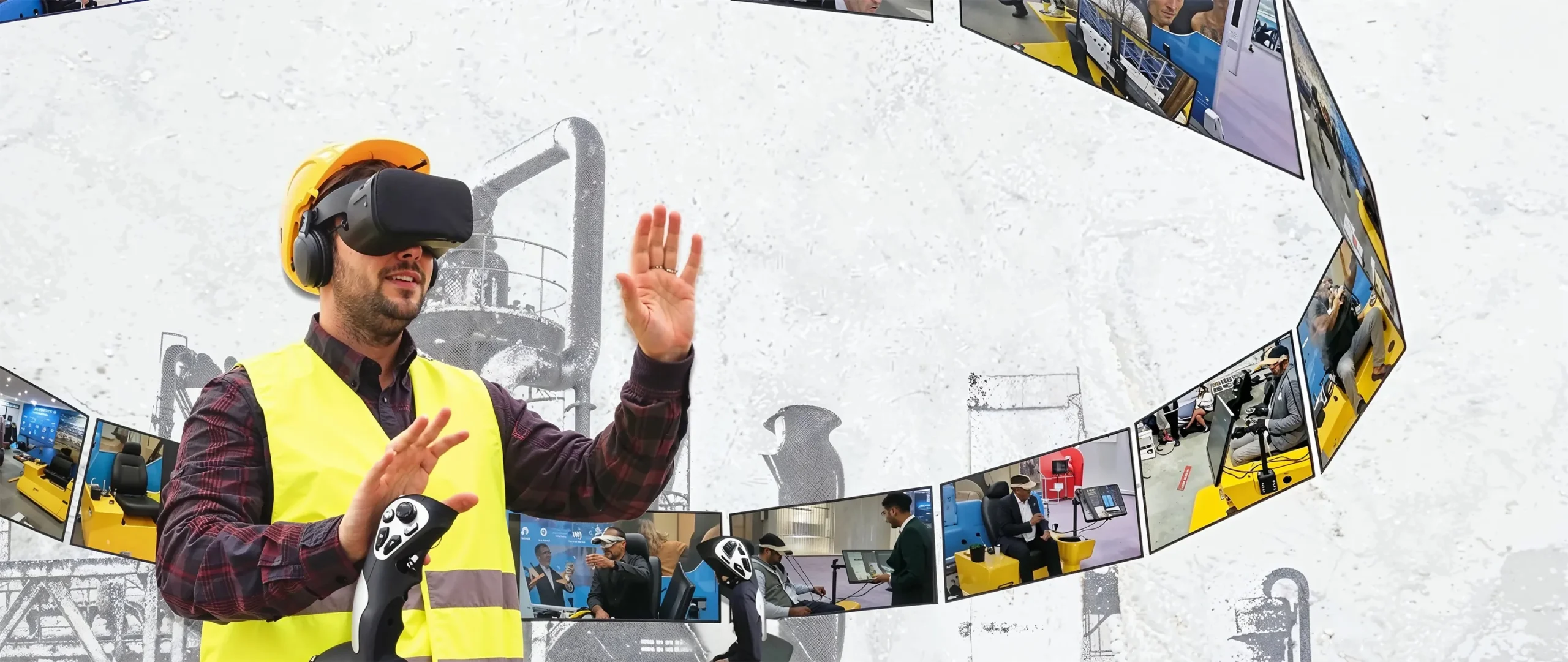
VR-based safety training immerses employees in realistic, high-risk scenarios, allowing them to experience hazards, make decisions, and learn safe responses—without real-world exposure to danger.
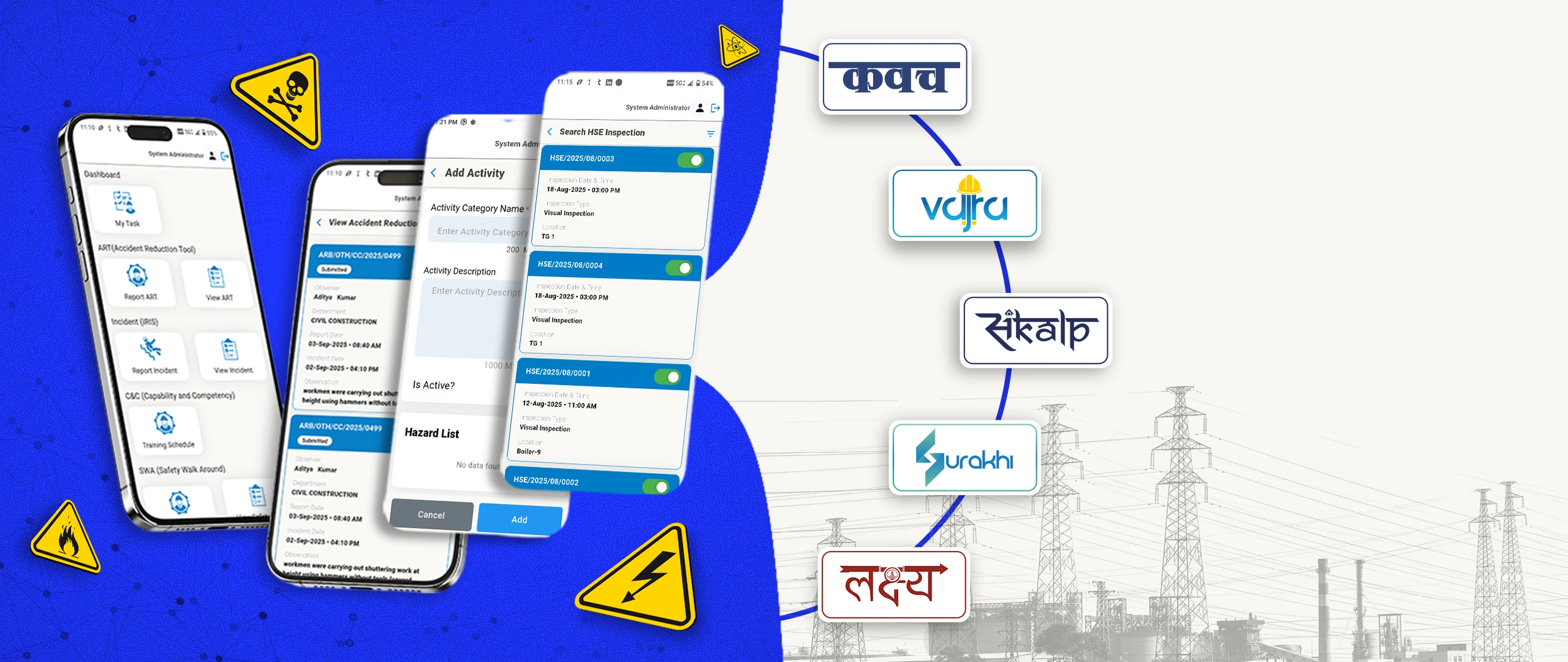
Our safety software solutions digitise safety processes such as reporting, monitoring, compliance tracking, and performance analysis, enabling data-driven decision-making and sustained SCMS implementation.
Here’s what we've been up to recently.
To know more about us
SMCS stands for Safety Management Consulting Services. It is a structured consulting approach designed to improve workplace safety systems, reduce risks, and drive long-term safety culture transformation across organisations.
The primary objective of SMCS is to transform organisational safety culture by identifying gaps, strengthening systems, improving behaviours, and ensuring consistent compliance with safety standards.
SMCS consists of 10 integrated safety elements, including safety maturity assessment, behaviour-based safety, incident management, contractor safety, process safety, competency development, and rail & road safety management.
A Safety Maturity Survey evaluates an organisation’s current safety culture, employee perception, and leadership commitment, helping identify gaps and improvement opportunities for better safety performance.
The survey is conducted using structured tools, data analysis, and stakeholder feedback to assess multiple safety parameters and provide actionable insights for improvement.
A Behavioural Intervention Programme focuses on changing unsafe behaviours through observations, feedback, coaching, and mentoring, helping employees adopt safer work practices consistently.
Behaviour-based safety helps reduce accidents by addressing human factors, encouraging positive safety behaviours, and building employee ownership of safety at all levels.
IRIS is an Incident Reporting and Investigation System that helps organisations report, analyse, and learn from incidents and near-misses to prevent future occurrences.
Contractor Safety Management ensures real-time risk control by monitoring contractor activities, enforcing safety compliance, and integrating contractors into the organisation’s safety systems.
It involves identifying high-risk scenarios, evaluating existing controls, and strengthening safety measures to reduce risks to ALARP (As Low As Reasonably Practicable) levels.
Here’s what we've been up to recently.
In the world of workplace safety and compliance, the difference between EHS and HSE is one of the most commonly searched and misunderstood topics.
In workplace safety, the difference between hazard and risk is one of the most commonly misunderstood concepts.
Sitting for long hours at a desk can do more harm than most of us realise. A poorly arranged workspace often leads to neck strain, wrist pain, or chronic fatigue that silently reduces focus and energy.
Safety expectations around the world are changing fast. Companies across oil and gas, manufacturing, construction, chemicals, power plants, logistics, and many other sectors now depend on digital tools to keep workers safe